



Th Royal Mail has unveiled the final set of stamps featuring the late queen’s silhouette.
To mark the 100th anniversary of steam locomotive the Flying Scotsman, Queen Elizabeth II’s image will appear on the set of special stamps.
The commemorative set features 12 stamps depicting the National Railway Museum’s famous train in various locations across the UK, including crossing the Ribblehead Viaduct in the Yorkshire Dales National Park and at London’s Victoria Station.
A further miniature set of four stamps feature images of the Flying Scotsman and London North Eastern Railway poster artwork from the 1920s and ’30s, when it first began travelling on British rails.
“Flying Scotsman is a national treasure of engineering and design that conjures up the golden age of steam travel,” said David Gold, director of external affairs and policy at Royal Mail.
He said the “remarkable locomotive epitomises the romance of rail travel and is loved” by people all over the world.
“We are honoured to mark this landmark milestone with a set of special stamps,” he added.
Queen Elizabeth's coronation — in pictures
-
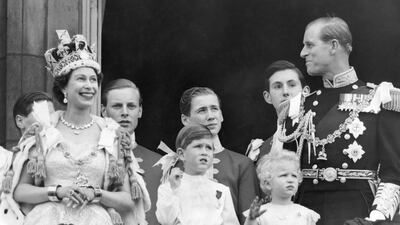
Queen Elizabeth II, Prince Charles, Princess Anne and the Duke of Edinburgh at Buckingham Palace after the Queen's coronation in June 1953. All photos: PA -
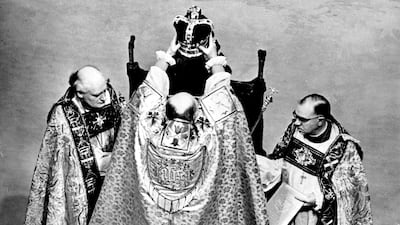
Queen Elizabeth sitting on the St Edward's Chair, as she is crowned by the Archbishop of Canterbury. -

The Duke of Norfolk, the Earl Marshall, paying homage to Queen Elizabeth after her coronation at Westminster Abbey. -
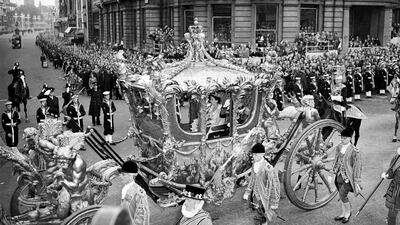
Queen Elizabeth riding with the Duke of Edinburgh in the state coach through Trafalgar Square on the way from Buckingham Palace to Westminster Abbey for her coronation. -
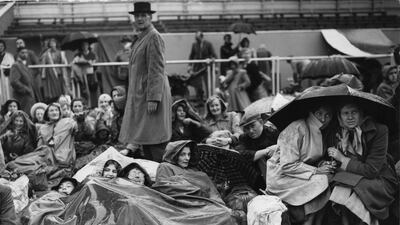
People waiting on The Mall for an all-night vigil before the coronation procession of Queen Elizabeth. -
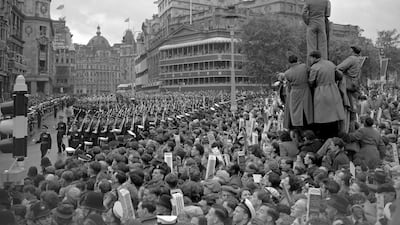
A crowded Trafalgar Square in the rain as troops march past on the return from Westminster Abbey after the coronation of Queen Elizabeth. -
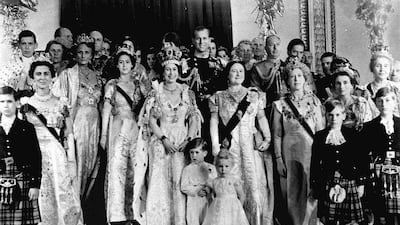
Queen Elizabeth and Prince Philip with son Prince Charles and daughter Princess Anne, other members of the royal family and guests at Buckingham Palace on return from the coronation ceremony at Westminster Abbey. -
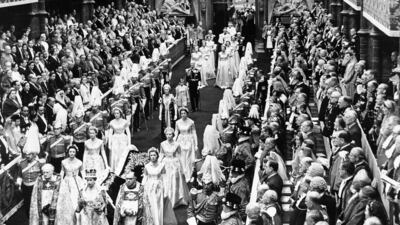
Queen Elizabeth at her coronation in Westminster Abbey. -

The view from the roof of Buckingham Palace showing the state coach carrying Queen Elizabeth to Westminster Abbey. -
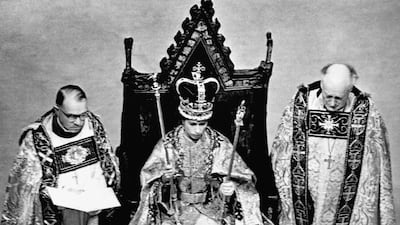
Queen Elizabeth wearing the St Edward Crown and carrying the sceptre and rod after her coronation.


The Flying Scotsman stamp issue will be the last depicting the late queen, whose silhouette has been featured on special stamps since 1966.
Stamp illustrator David Gentleman is responsible for the design, adapted from Mary Gillick’s original, which has been in constant use on British stamps since 1968.
Future special stamps will feature a silhouette of King Charles III, the Royal Mail said.

