


Leading medics are warning that heart patients are bearing the brunt of a collapse in health services triggered by Covid-19 disruption and strikes, with thousands of lives in the UK being put at risk by delays in diagnosis and treatment.
The warning comes as health workers staged Britain's largest ever strike on Monday over pay. It is estimated at least 55,000 appointments could be delayed as a result of this week’s strikes.
The combined walkouts “could see the worst disruption yet”, said Saffron Cordery, deputy chief executive of NHS Providers, which represents hospital trusts across the UK. “We can’t go on like this.”
About 90,000 appointments, including elective procedures, have already been rescheduled due to the strikes that have already taken place, according to NHS data.
Nearly 25,000 appointments needed to be rescheduled on each of the days that nurses walked out in January, when 55 trusts were affected. This week’s action affects 73 trusts.
The delays have been compounded by the Covid-19 pandemic, which resulted in thousands of appointments being cancelled.
The British Medical Association estimates a record 7.2 million patients are waiting for treatment.
Although the issues are affecting all areas of the UK's health system, cardiology is facing one of the largest crises.
British consultant cardiologist Dr Rohin Francis said the delays were so bad that some patients were not surviving long enough to attend their appointments.
“I’ve never known it to be like this before,” he told the i newspaper. “There’s no two ways about it: this is putting patients at risk.
“We know patients are dying waiting for angioplasty and we know patients are dying waiting for bypass [surgery].”
Average waiting time of more than 20 weeks
Some hospitals have an average waiting time of more than 20 weeks for a first outpatient appointment in cardiology while the number of people waiting for an echocardiogram has nearly doubled, research by the paper revealed.
The British Heart Foundation said that without further funding, the total number of people waiting for care and diagnosis could almost double to more than half a million by January 2024.
Latest BHF data shows that 275,000 people were waiting for heart tests, treatment and surgery at the end of September 2021 in England — a rise of 42,500 from the year before the pandemic.
It said the number of people waiting for more than a year (3,575) was 128 times higher than before the pandemic and estimated that 23,000 people in England missed out on being diagnosed during the pandemic and are still missing out on vital treatment.
Cardio backlog could stretch five years
A report by the BHF warns it could take up to five years for the heart care backlog to return to pre-pandemic levels.
“Vital heart tests and surgery can’t be put off — long delays cause anxiety and put people’s lives at risk,” BHF chief executive Dr Charmaine Griffiths said.
“The voices of people with heart and circulatory diseases must be heard as the government considers the action needed to tackle the backlog.”
This week's strikes by nurses and ambulance workers are expected to put further strain on the state-run National Health Service.
Nurses and ambulance workers have been striking separately on and off since late last year but Monday's walkout involving both, largely in England, is the biggest in the 75-year history of the NHS.
-
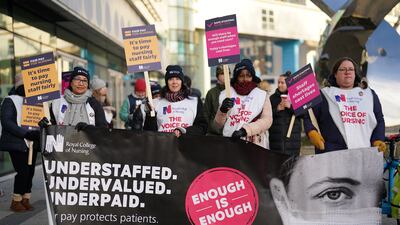
Nurses and ambulance staff on the picket line outside Queen Elizabeth Hospital in Birmingham on Monday, February 6. PA -
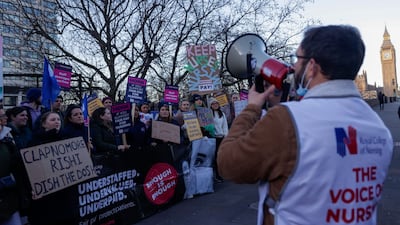
Striking nurses on a picket line outside St. Thomas' Hospital in London. Bloomberg -
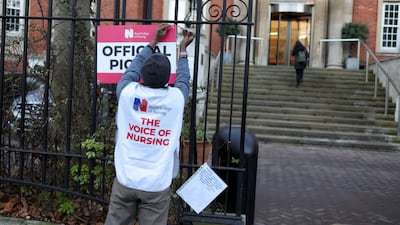
A picket line is set up outside the Royal Marsden Hospital in London. Reuters -
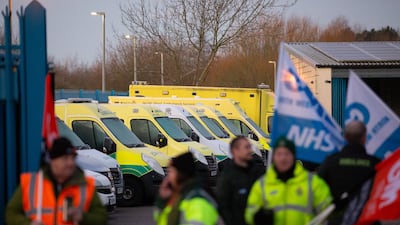
Striking ambulance workers outside Fazakerley Ambulance Station in Liverpool. EPA -
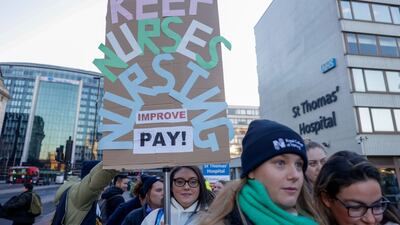
Striking nurses outside St. Thomas' Hospital, London. Bloomberg -
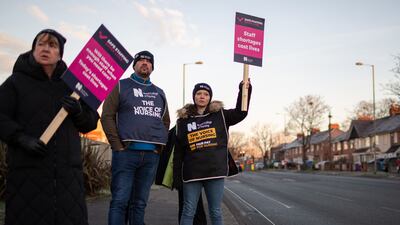
Nurses protest outside Aintree University Hospital in Liverpool. EPA


Nurses will also strike on Tuesday while ambulance staff will walk out on Friday and physiotherapists on Thursday, making the week probably the most disruptive in NHS history, its medical director Stephen Powis said.
They are demanding a pay rise that reflects the worst inflation in Britain in four decades, while the government says that would be unaffordable and cause more price rises, in turn, making interest rates and mortgage payments rise.
Strikes highlight deadlocked pay talks
About 500,000 workers, many from the public sector, have been staging strikes since last summer.
Prime Minister Rishi Sunak, who has made reducing NHS waiting lists and halving inflation two of his government’s five key priorities, is facing mounting pressure to resolve the disputes and limit disruption to public services such as railways and schools.
At the weekend, the Royal College of Nursing trade union wrote to Mr Sunak asking him to bring the nursing strike “to a swift close” by making “meaningful” pay offers.
“We've got one of the busiest winters we have ever had, with record levels of funding going into the NHS to try to manage services,” Maria Caulfield, Minister of Mental Health and Women's Health Strategy, told Sky News on Monday.
“So, every per cent of a pay increase takes money away.”
The RCN says a decade of poor pay had contributed to tens of thousands of nurses leaving the profession — 25,000 over the past year — with the severe staffing shortages affecting patient care.
Last week, Mr Sunak said he would “love to give the nurses a massive pay rise” but said the government faced tough choices, and that it was funding the NHS in other areas such as by providing medical equipment and ambulances.
Chris Hopson, chief strategy officer at NHS England, said the timing of Monday's action means it had made it “difficult to deploy the discharge of patients”.
“We are now entering a new and more difficult phase in the dispute,” he said.
Junior doctors are also calling for a strike and senior medics are in discussions over potential action.
“The real risk was always that rather than being a one-off, the strikes would drag on, cause regular disruptions, and derail efforts to increase overall treatment volumes and tackle waiting lists,” said Ben Zaranko, senior research economist at the Institute for Fiscal Studies.
“There is also a wider risk that an ongoing ill-tempered industrial dispute hits staff morale.”

