


Three Afghan families have taken a legal challenge against Home Secretary Suella Braverman to the High Court.
They allege she failed to fulfil a commitment to help them rebuild their lives in the UK after the Taliban seized power in Afghanistan in the summer of 2021.
They told the court on Tuesday that the government’s decision to move the evacuated families hundreds of miles across England to new temporary accommodation caused “considerable disruption” to the education of children facing exams.
They claim their children were studying and others had jobs and that an offer to transfer them from a London hotel to temporary accommodation in northern England was “unlawful”.
Lawyers for the families say several children still do not have school places months after the move, while one woman is at risk of losing her job in the capital.
They accuse Ms Braverman of failing to take into account the personal circumstances of the Afghan citizens when considering where they could be housed.
The Home Secretary’s lawyers dispute the linked claims, saying individual situations were looked at but the cabinet minister was not under an “enforceable duty” to provide accommodation to the families.
Martin Westgate KC, for the families, told the High Court hearing in London on Tuesday they were brought to the UK via resettlement schemes and settled in the capital over the course of a year.
They experienced “upheaval” when they were offered the move north in September after their hotel ended its contract with the government, the court was told.
Afghan refugee relocation - in pictures
-
People prepare to board a US Air Force aircraft at Hamid Karzai International Airport in Kabul, Afghanistan. Photo: US Department of Defence -
People who fled Afghanistan arrive at Naval Station Rota in Spain. Photo: US Department of Defence -
A command master chief assists an Afghan woman deplaning a US Air Force carrier in Sigonella, Italy. Photo: US Department of Defence -
A National Guard soldier welcomes a young child to Camp Buehring, Kuwait. Photo: US Department of Defence -
A sailor helps a young child try on a new pair of shoes. Photo: US Department of Defence -
A US Air Force servicemember assists an Afghan woman at Naval Air Station Sigonella. Photo: US Department of Defence -
Afghan children interact with a Muppet during a 'Sesame Street' event in Liberty Village, Joint Base McGuire-Dix-Lakehurst, New Jersey. Photo: Tech Sgt Matthew B Fredericks / US Air Force -
An airman assigned to Task Force Holloman paints Afghan children’s faces during the autumn safety festival at Holloman Air Force Base, New Mexico. Photo: Spc Ashleigh Maxwell / US Army -
An Afghan pupil writes her ABCs during the first day of community-based education in Liberty Village, Joint Base McGuire-Dix-Lakehurst, New Jersey. Photo: Sgt Rion Ehrman / US Air Force
Mr Westgate said the families had a “vulnerability to a succession of temporary moves”, with the transfer coming when some children were at a “critical stage” in their education.
The barrister said the families’ situation “applies to many others who are in bridging accommodation” and while he did not have current figures, in August 9,667 people under the resettlement schemes were still living in hotels.
In written arguments, Mr Westgate said the UK government’s Operation Warm Welcome aimed to “ensure Afghans arriving in the UK receive the vital support they need to rebuild their lives, find work, pursue education and integrate into their local communities”.
This involved arranging temporary “bridging accommodation” in hotels until families could secure permanent housing — likely in the private-rented sector — with the support of public funding, Mr Westgate said.
While in London, he said, the families, among the 15,000 Afghans evacuated to the UK during the British military’s Operation Pitting, had “established themselves in the area” and children were making “good progress” in schools and had made friends.
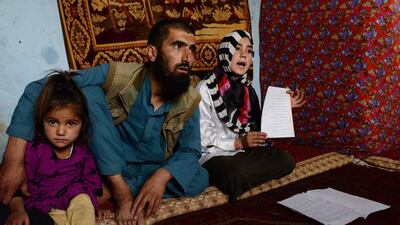
‘Afghan Malala’ speaks up for refugee children - in pictures
-
-
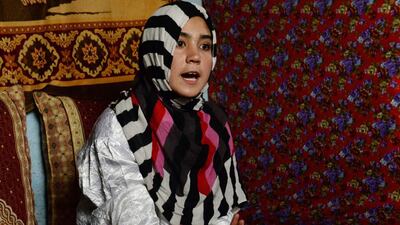
14-year-old Afghan girl, Aziza Rahimzada, who has been nominated for the International Children’s Peace Prize, speaks in her temporary home in Kabul. -

At the age of just 14, Afghan rights activist Aziza Rahimzada has already surmounted legal hurdles preventing 25,000 refugee children from attending school, and cajoled authorities into providing tap water to a camp housing more than 100 families. -
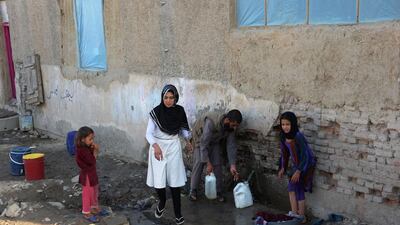
Aziza Rahimzada collects drinking water with slum residents at a refugee camp in Kabul. -

Aziza Rahimzada cleans the courtyard outside her temporary home at a refugee camp in Kabul. -
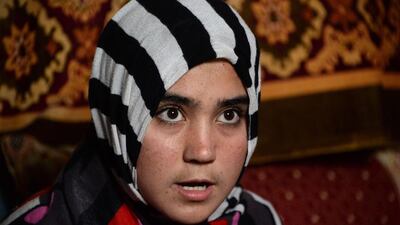
Aziza Rahimzada she has been nominated for the International Children’s Peace Prize -- an award previously won by Malala Yousafzai -- and, like her Pakistani counterpart, hopes to spread her message of universal education and fundamental rights for Afghanistan’s youth. -

Aziza Rahimzada collects drinking water with slum residents near her temporary home at a refugee camp in Kabul. -
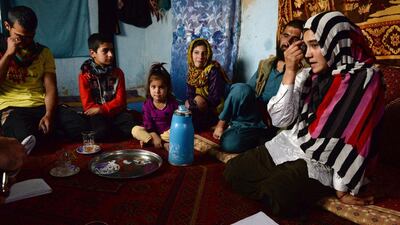
Aziza Rahimzada sits with family members at her temporary home in Kabul. -
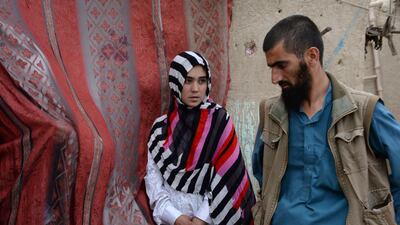
Aziza Rahimzada, who has been nominated for the International Children’s Peace Prize, speaks with her brother Bahram Rahimzada at her temporary home at a refugee camp in Kabul. -
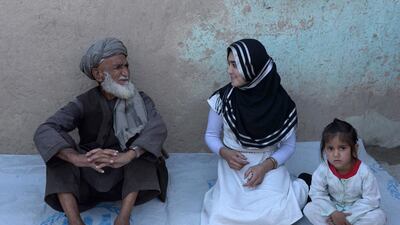
Aziza Rahimzada speaks with her father Jandad Rahimzada.


“The families have been constrained to give up jobs, school places, support networks and other important ties only to be moved to further temporary accommodation, which may itself be brought to an end at any time," said Mr Westgate. "Children were taken out of school with no other placement arranged for them.
“Whilst they remain in temporary accommodation, they are vulnerable to further moves — potentially to an indefinite string of temporary placements — so making it impossible for them to settle or to progress with their education and social development at any location.”
He said there was no evidence the Home Secretary had “balanced the children’s best interests”, no indication there was an inquiry into the availability of new school places and no consideration that several children were sitting exams this year.
While the families had not been forced to live anywhere, he said, the “practical reality” was that they had no option but to move.
General who fought the Taliban stuck in a hotel in the UK - video
Cathryn McGahey KC, representing the government, said in written arguments that the bid to have the accommodation offers quashed and the families rehoused in or near where they previously lived was “misconceived”.
She said the interests of school-aged children had “at all times been central” to decision-making and individual circumstances were considered.
Ms McGahey said the availability of local education was taken into account when commissioning bridging accommodation.
She said a decision last summer to end the temporary housing of evacuated Afghans in London hotels was made due to cost and local “migration pressures” exacerbated by migrants arriving in the UK via small boats across the Channel.
The barrister said that as a result it was “inevitable” the families would be offered accommodation outside the capital, with the concern it was “unrealistic” for Afghans to find permanent rented homes in London.
She said providing temporary accommodation was an “operational measure” and the Home Secretary was “not under any enforceable duty to provide accommodation to the families”.
“There was no published policy through which the Secretary of State purported to commit herself to providing bridging accommodation to these individuals,” she added.
Ms McGahey told the court the Home Secretary’s decisions were “all fully within the lawful exercise of her discretion”.
A claim brought by a fourth family had been withdrawn after private rented accommodation was found, the court was told.
The hearing before Mr Justice Henshaw concluded on Tuesday, with a judgment due at a later date.

