


Under the British government’s own criteria military assistance should only be used as “a last resort”, yet the armed forces have been called on 85 times this year.
On many occasions that was to help the police and Border Force tackle the illegal immigration crisis, with Royal Navy patrol vessels needed for rescues and to provide a deterrent.
But now the British Army is being called in to drive ambulances and act as immigration officials at airports and ports as widespread strikes grip Britain this month.
Any government department can at any time put in what is known as a “MACA request” to the Ministry of Defence. Military Aid to Civilian Authorities is generally used with great effect when a natural disaster hits the country.
Troops have been needed to build flood defences or for rescue missions. During the Covid-19 pandemic they performed numerous tasks and in the London 2012 Olympics they stepped into to make up a shortfall of security staff.
They can also be deployed in more familiar roles, such as providing armed patrols on the streets as they did to help police following the 2017 Manchester Arena suicide bombing.
With Britain not heavily committed to wars as it was a decade ago in Afghanistan, Iraq and Libya, there are plenty of numbers among the 145,000 trained personnel in the armed forces.
However, some military commanders argue that with the significant Russian threat against Nato, help during the strikes should be limited and not become political.
“I think in initiating military support, the government lights a fuse and that is not all that long, because public opinion and the political environment won’t support sustaining this crisis management in this way,” retired Gen Sir Peter Wall told TalkTV.
Strikes across the UK — in pictures
-

National Health Service cleaning staff hold placards during a strike outside a hospital, in London. EPA -
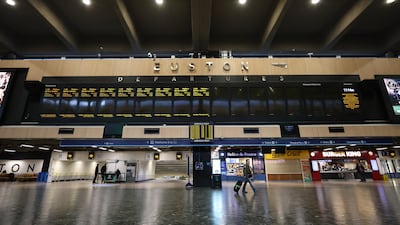
A traveller walks under the departures board of an empty Euston Station in London, as rail workers strike. Getty Images -
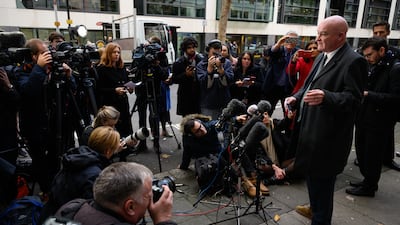
General secretary of the National Union of Rail, Maritime and Transport Mick Lynch speaks outside the Department of Transport in London, after talks with the government. Getty Images -
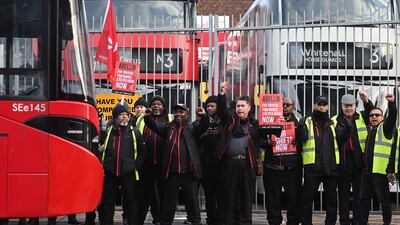
Employees of bus operator Abellio strike outside a depot in London. EPA -
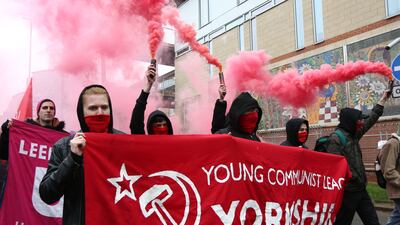
University and College Union members take part in a 'March for higher education', in Leeds. EPA -
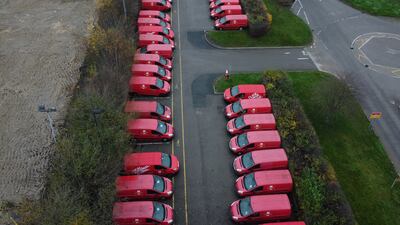
Postal delivery vans are parked as Royal Mail workers strike, in Leeds. EPA -
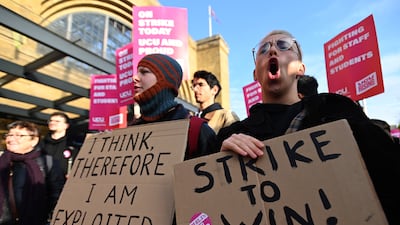
Employees demonstrate during a rally held by University and College Union members, in central London. EPA -
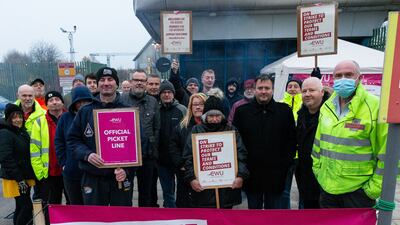
Royal Mail workers strike in Leeds. EPA -
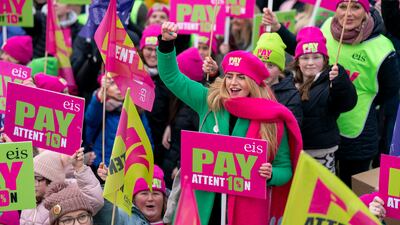
Members of the Educational Institute of Scotland join teachers at a rally outside the Scottish Parliament, in Edinburgh. AP


He said the use of the military to replace those legitimately striking had a “shelf life” of “probably one or two months”.
The point was further emphasised by Mark Serwotka, general secretary of the Public and Commercial Services Union, who said using soldiers was a “knee-jerk response to try to undermine the strike”.
“What next? Will the army be driving trains and teaching and standing in wards?” he added.
For the last week, 600 soldiers have been given training to cover for Border Force strikes over Christmas.
An estimated 200 more have been called up to rapidly learn how to drive ambulances, although it has been reported they will not be allowed to drive at speed or go through red lights when answering emergency calls.
UK rail strikes cause disruption for millions amid cold snap — in pictures
-
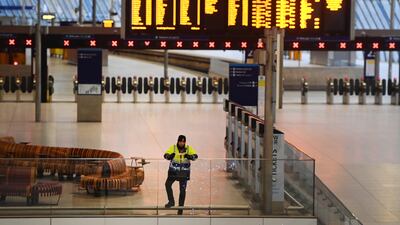
Closed platforms at Waterloo Station in London. A strike by the RMT union is causing major disruption. EPA -
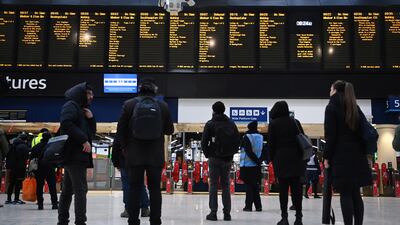
Commuters wait for trains at Waterloo. EPA -
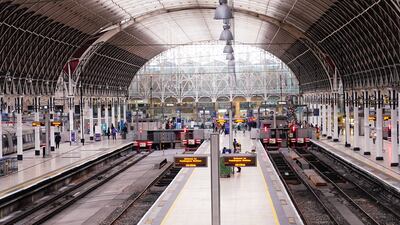
An empty Paddington Station in London. PA -
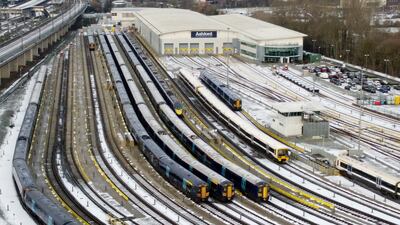
Southeastern trains are parked in sidings near Ashford Station in Kent. PA -
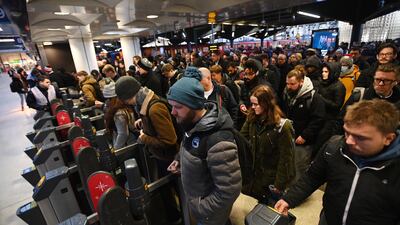
Crowds of commuters arrive at Waterloo Station. EPA -
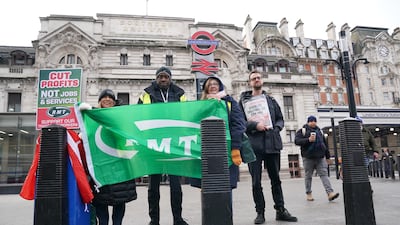
RMT members on the picket line outside Victoria Station in London. PA -
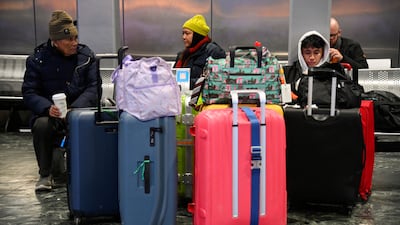
Passengers wait at the concourse of Euston in London. Reuters -
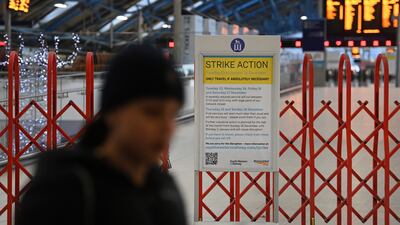
Platforms are shut down at Waterloo. EPA -
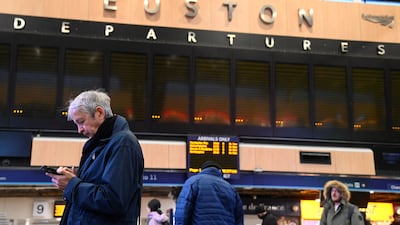
A blank departure display board at Euston. Reuters -
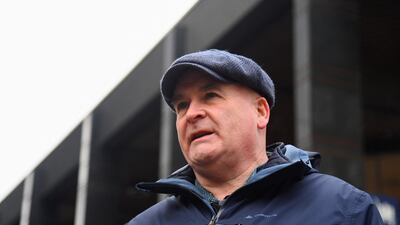
RMT boss Mick Lynch on a picket line outside Euston. Reuters -
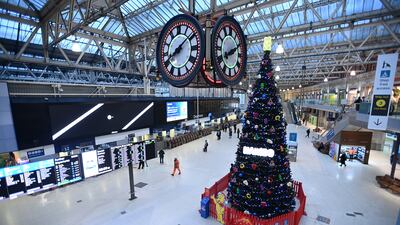
An empty Waterloo during rush hour. EPA


Another extraordinary measure reportedly under consideration is the booking of taxis and Ubers by the health department to bring non-emergency patients into hospitals.
Further details on how the armed forces will be deployed in the coming weeks are expected to emerge after a Cobra emergency meeting on Wednesday.
The soldiers taking over will be aware their civilian peers are striking for pay rises of more than 10 per cent, while the troops received only a 3.75 per cent increase in the last year.

