


Heathrow Airport has been urged to get its act together and address a litany of problems rather than pointing the finger of blame at airlines.
Willie Walsh, director general of the International Air Transport Association (Iata), said it was “unacceptable” for John Holland-Kaye, the airport’s boss, to suggest airlines were somehow in the wrong.
Speaking at the Airlines 2022 conference in London on Monday, Mr Walsh said airlines were in an “extremely difficult” position in their post-pandemic recovery journey, and the issues at Heathrow had had a negative impact on them.
Passengers at the west London airport were this year forced to queue for hours to get through security. A lack of staff meant Heathrow, like other airports, was ill-prepared to cope with a sudden surge in demand for travel after Covid-19 restrictions were lifted in March.
The disruption continued into the summer and the airport made the controversial decision to impose a limit on the number of passengers airlines could fly to and from the airport.
The cap of 100,000 outgoing passengers was introduced in July before being abolished this month.
Mr Walsh said the policy had a noticeably damaging effect on airlines and served as a blockage in their bid to take advantage in an increase in demand for travel.
Responding to a question from The National, the aviation chief said there was “clear evidence that the disruption that Heathrow did have an impact” on airlines.

“If you to go back earlier this year in terms of the booking profiles, there was clear evidence that there was disruption to the pattern that we witnessed in the recovery at Heathrow,” he added. “I think that's been overcome to a large degree.
“But the fact that you had a cap on the number of passengers at Heathrow definitely suppressed the demand. Had that cap not been there, airlines operating at Heathrow would have been carrying more passengers and generating more revenue.
“So given that it largely did reduce the number of flights, it had a marginal effect but it definitely reduced the number of passengers travelling on the flights that were operating, it had a negative financial impact on the airlines operating at Heathrow.”
Mr Walsh said Heathrow continued to be a “major problem” for airlines operating from the hub.
In comments that drew laughter from the audience, he said the only other European airport that has experienced prolonged chaos is Schiphol in the Netherlands — and its chief executive lost his job. While he accused Mr Holland-Kaye of presiding over a mess, he stopped short of suggesting he should step down.
Earlier, Mr Holland-Kaye told The National that caps would be imposed over the Christmas period after recent reports suggested otherwise.
Virgin Atlantic boss Shai Weiss received a round of applause when he told delegates at the conference that Heathrow must operate at full capacity in summer 2023. The airport has said it is aiming to steer clear of passenger caps next summer.
Mr Walsh told the audience at the Airlines conference that the Heathrow boss had previously suggested airlines were partly to blame for the issues at the UK’s busiest airport.
He said the UK government and the Civil Aviation Authority “could have been more vocal in criticising Heathrow for their performance”.
“I think allowing John Holland-Kaye to point a finger at airlines and say 'it's all the airlines’ fault' was unacceptable,” Mr Walsh said.
Mr Holland-Kaye this month accused major airlines such as British Airways and Virgin Atlantic of capitalising on pent-up demand for overseas travel in the summer, maintaining artificially high fares.
Travel chaos at Heathrow - in pictures
-
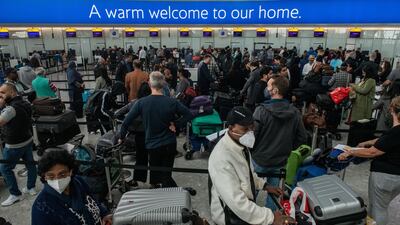
Long queues, cancellations and luggage problems have plagued Heathrow Airport since the travel sector’s comeback from coronavirus restrictions. Bloomberg -

The airport has struggled to cope with a volume of more than 100,000 departing passengers a day, with bags arriving late, queues snaking through terminals and flights being cancelled at the 11th hour. Reuters -
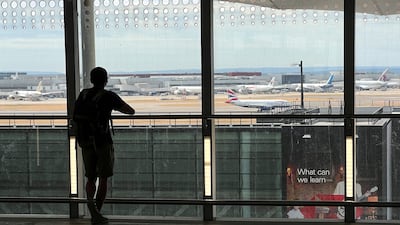
Travelling through Heathrow has been a dire experience for some of late. AP -
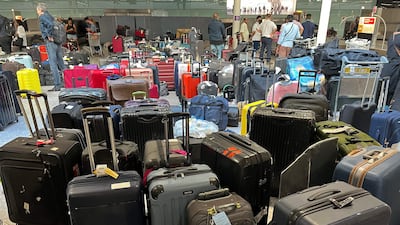
Suitcases uncollected at Heathrow's Terminal 3 baggage reclaim. AFP -
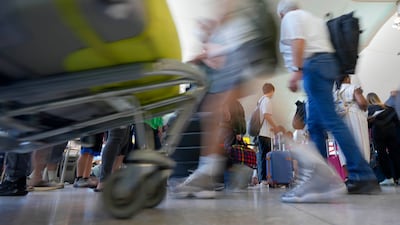
There is a shortage of staff after many people were laid off during the pandemic. AP -
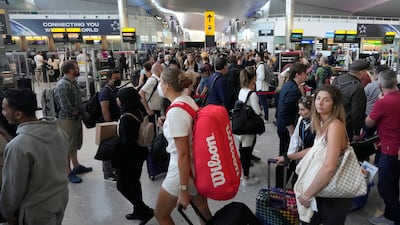
Heathrow rejects the accusation of having failed to prepare, saying it started recruiting extra staff last November. AP -
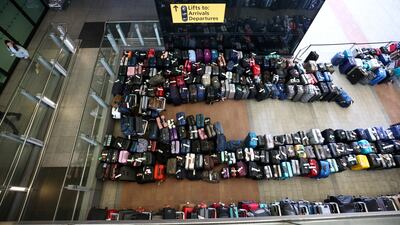
Baggage piles up outside Terminal 2 at Heathrow in June. Baggage issues have bedevilled the airport, with a combination of staff shortages and malfunctioning automated baggage handling systems contributing to the mayhem. Reuters -
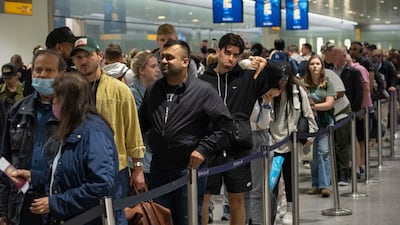
One traveller shows his disappointment while waiting in a long queue to pass through a security check in June. Getty Images -
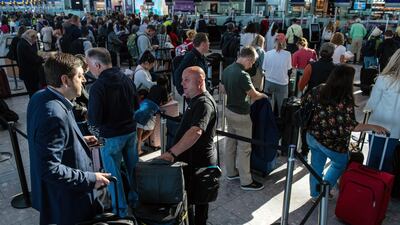
Passengers queue to check in at Terminal 5. Bloomberg -
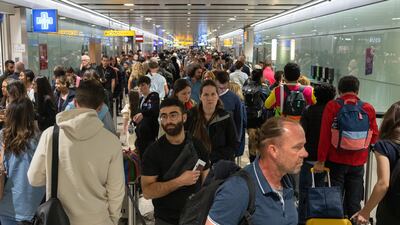
A queue snakes through the airport. Getty Images -
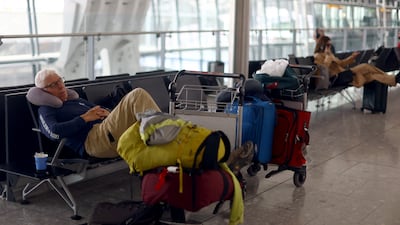
A waiting passenger decides to get some sleep in Terminal 5. Reuters -
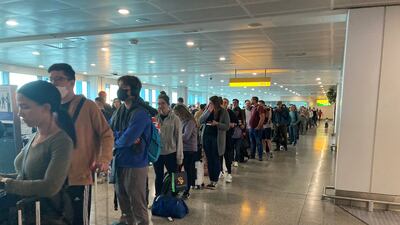
Long queues form through a terminal. PA -
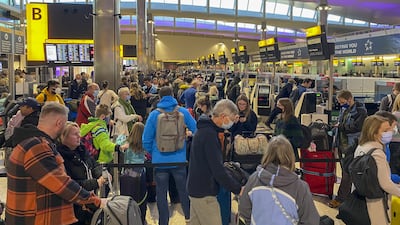
A crowded check in area in Terminal 2 in April. Heathrow rejects the accusation of having failed to prepare, saying it started recruiting months ago. PA -
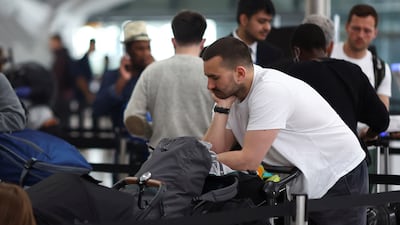
A dejected looking passenger queues for check-in ahead of the Easter Bank Holiday weekend at Heathrow in April. Reuters -
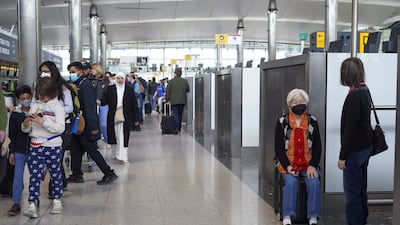
People queuing to go through security at Heathrow. PA -
Queues at arrivals in Heathrow in March. Photo: Sven Kili / Twitter



