An Iranian asylum seeker, who came to the UK a decade ago, has won the first round of his legal fight against US billionaire twins Tyler and Cameron Winklevoss over the purchase of a $650,000 digital painting.
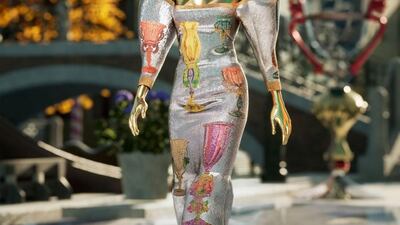
Amir Soleymani is suing their online digital artwork auction site Nifty Gateway over a piece called Abundance by the artist known as Beeple.
Mr Soleymani's offer came third behind a $1.2 million winning bid but under the firm's policy the top 100 bidders are still expected to pay for a different version of the work.
He refused to pay the $650,000 and Nifty Gateway froze his account and took legal action against him in New York.
He lodged a legal claim at London's High Court on the grounds that as a UK bidder he had a right of redress under English consumer law.
Lord Justice Popplewell, sitting with Lord Justice Birss, agreed with Mr Soleymani's claim and said he had the right to challenge the fairness of the company's terms and conditions.
A trial will be held next year.
"In my judgment, the starting point is that this is a case about commerce on the internet in which the trader in question has traded via a website which is — at least well arguably — directed to the UK," Lord Justice Birss said.
"That matters because in a number of areas of law, the problem of which laws apply to activities on the internet is addressed by the question whether the activities are directed to or targeted at this country.
"Mr Soleymani has the better of the argument that the auction contract is a consumer contract under the Consumer Rights Act. This is a critical feature because no matter how global, borderless or decentralised a trader would say its internet business is, if the trader has directed its relevant commercial activities to this country then its dealings with consumers here are subject to our consumer law."
Nifty Gateway is run by technology entrepreneurs the Winklevoss brothers, who were once Olympic rowers and are worth an estimated $4bn.
It has 100,000 registered UK accounts, about a 10th of its global total, and the case could have repercussions for its British market.
"Imagine bidding to win an item, ending up in second place and getting almost the same thing the third bidder gets but with a significant difference in bid amount," Mr Soleymani told The Telegraph.
“This method of auction maximises revenue for the platform and artists but is damaging to collectors. I just want to get my money back."
Mr Soleymani, who lives in Liverpool, moved to the UK in 2011 to seek political asylum and successfully gained citizenship last year.
"He describes himself as a wealthy individual in part as a result of working in the technology sector, amassing significant crypto currency holdings, and in part as a result of substantial family inheritance, much of which is invested in real estate mainly in the United Arab Emirates, Turkey and the UK," Lord Popplewell said.
"He describes himself as an entrepreneur, activist and philanthropist. He collects fine art, and has collected non-fungible tokens associated with art for some time. He has a private gallery to display his art collection.
"For the purposes of the application, Nifty accepts that he has the better of the argument that he is a consumer, and is accordingly to be treated as a consumer for the purposes of that application.
"Nifty does not, however, accept that he is in fact a consumer ... and the transaction involving the purchase of an NFT for $650,000 is not a typical consumer transaction, but nevertheless the arguments with which we are concerned must be tested by reference to the rights and protections afforded to consumers generally."
Before this auction, Mr Soleymani had purchased about 100 NFTs through the platform with a combined value of more than $2.5m and participated in 24 auctions.
"Each of those auctions had been what might be described as a conventional auction, in which there was a single winning bid, the highest bid securing the relevant NFT," the court heard.
"The auction which has given rise to the dispute was a 'ranked' auction in which the 100 highest bidders were successful and each received NFTs associated with the artwork in question. They were in effect awarded a numbered edition of the artwork corresponding to the position of their respective highest bids.
"The effect was that Nifty/the artist was entitled to be paid the total sum of the 100 highest bids. Mr Soleymani says that he was unaware that the auction was in this form and it made little sense commercially for the bidder; editions which are not the 'first edition' carry a significantly lower value, and yet all the bids would have been submitted, he says, on the basis of seeking to obtain the 'first edition'."
It led to Mr Soleymani withdrawing his cryptocurrency held on account on the website so as to avoid paying the amount of his bid in what he regarded as a "deceptive and unfair transaction".
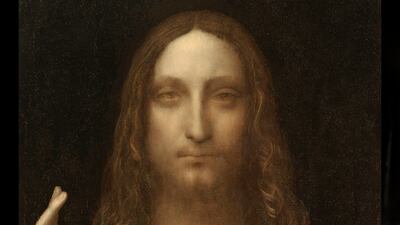
The artist, Beeple, has previously sold an NFT for $69 million at Christie's, the world's most expensive NFT to date.
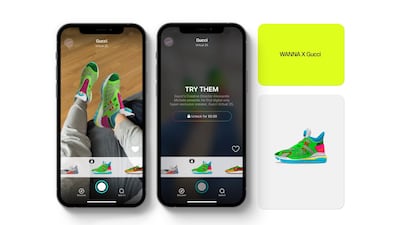
NFTs have developed rapidly as virtual versions of artworks, often fetching huge price tags.
Between May 2020 and April 2021, total sales of NFTs on Nifty Gateway amounted to $303.8m.
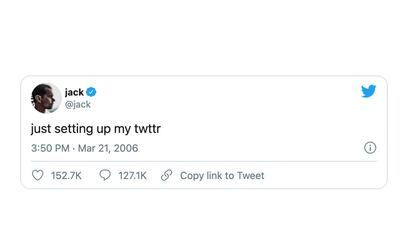
In 2021, an NFT of Twitter co-founder and former chief executive Jack Dorsey’s first tweet sold for about $3m.
NFT sales volume was $24.9bn in 2021, up from $94.9m the year before, according to DappRadar, which collects data from 10 blockchains.

Section 375
Cast: Akshaye Khanna, Richa Chadha, Meera Chopra & Rahul Bhat
Director: Ajay Bahl
Producers: Kumar Mangat Pathak, Abhishek Pathak & SCIPL
Rating: 3.5/5
COMPANY PROFILE
Name: Akeed
Based: Muscat
Launch year: 2018
Number of employees: 40
Sector: Online food delivery
Funding: Raised $3.2m since inception
Kandahar%20
%3Cp%3E%3Cstrong%3EDirector%3A%3C%2Fstrong%3E%20Ric%20Roman%20Waugh%3C%2Fp%3E%0A%3Cp%3E%3Cstrong%3EStars%3A%C2%A0%3C%2Fstrong%3EGerard%20Butler%2C%20Navid%20Negahban%2C%20Ali%20Fazal%3C%2Fp%3E%0A%3Cp%3E%3Cstrong%3ERating%3A%3C%2Fstrong%3E%202.5%2F5%3C%2Fp%3E%0A
TECH%20SPECS%3A%20APPLE%20WATCH%20SERIES%208
%3Cp%3E%3Cstrong%3EDisplay%3A%3C%2Fstrong%3E%2041mm%2C%20352%20x%20430%3B%2045mm%2C%20396%20x%20484%3B%20Retina%20LTPO%20OLED%2C%20up%20to%201000%20nits%2C%20always-on%3B%20Ion-X%20glass%3C%2Fp%3E%0A%3Cp%3E%3Cstrong%3EProcessor%3A%3C%2Fstrong%3E%20Apple%20S8%2C%20W3%20wireless%2C%20U1%20ultra-wideband%3C%2Fp%3E%0A%3Cp%3E%3Cstrong%3ECapacity%3A%3C%2Fstrong%3E%2032GB%3C%2Fp%3E%0A%3Cp%3E%3Cstrong%3EMemory%3A%3C%2Fstrong%3E%201GB%3C%2Fp%3E%0A%3Cp%3E%3Cstrong%3EPlatform%3A%3C%2Fstrong%3E%20watchOS%209%3C%2Fp%3E%0A%3Cp%3E%3Cstrong%3EHealth%20metrics%3A%3C%2Fstrong%3E%203rd-gen%20heart%20rate%20sensor%2C%20temperature%20sensing%2C%20ECG%2C%20blood%20oxygen%2C%20workouts%2C%20fall%2Fcrash%20detection%3B%20emergency%20SOS%2C%20international%20emergency%20calling%3C%2Fp%3E%0A%3Cp%3E%3Cstrong%3EConnectivity%3A%3C%2Fstrong%3E%20GPS%2FGPS%20%2B%20cellular%3B%20Wi-Fi%2C%20LTE%2C%20Bluetooth%205.3%2C%20NFC%20(Apple%20Pay)%3C%2Fp%3E%0A%3Cp%3E%3Cstrong%3EDurability%3A%3C%2Fstrong%3E%20IP6X%2C%20water%20resistant%20up%20to%2050m%2C%20dust%20resistant%3C%2Fp%3E%0A%3Cp%3E%3Cstrong%3EBattery%3A%3C%2Fstrong%3E%20308mAh%20Li-ion%2C%20up%20to%2018h%2C%20wireless%20charging%3C%2Fp%3E%0A%3Cp%3E%3Cstrong%3ECards%3A%3C%2Fstrong%3E%20eSIM%3C%2Fp%3E%0A%3Cp%3E%3Cstrong%3EFinishes%3A%3C%2Fstrong%3E%20Aluminium%20%E2%80%93%20midnight%2C%20Product%20Red%2C%20silver%2C%20starlight%3B%20stainless%20steel%20%E2%80%93%20gold%2C%20graphite%2C%20silver%3C%2Fp%3E%0A%3Cp%3E%3Cstrong%3EIn%20the%20box%3A%3C%2Fstrong%3E%20Watch%20Series%208%2C%20magnetic-to-USB-C%20charging%20cable%2C%20band%2Floop%3C%2Fp%3E%0A%3Cp%3E%3Cstrong%3EPrice%3A%3C%2Fstrong%3E%20Starts%20at%20Dh1%2C599%20(41mm)%20%2F%20Dh1%2C999%20(45mm)%3C%2Fp%3E%0A
England World Cup squad
Eoin Morgan (capt), Moeen Ali, Jofra Archer, Jonny Bairstow, Jos Buttler (wkt), Tom Curran, Liam Dawson, Liam Plunkett, Adil Rashid, Joe Root, Jason Roy, Ben Stokes, James Vince, Chris Woakes, Mark Wood
Quick pearls of wisdom
Focus on gratitude: And do so deeply, he says. “Think of one to three things a day that you’re grateful for. It needs to be specific, too, don’t just say ‘air.’ Really think about it. If you’re grateful for, say, what your parents have done for you, that will motivate you to do more for the world.”
Know how to fight: Shetty married his wife, Radhi, three years ago (he met her in a meditation class before he went off and became a monk). He says they’ve had to learn to respect each other’s “fighting styles” – he’s a talk it-out-immediately person, while she needs space to think. “When you’re having an argument, remember, it’s not you against each other. It’s both of you against the problem. When you win, they lose. If you’re on a team you have to win together.”
Classification of skills
A worker is categorised as skilled by the MOHRE based on nine levels given in the International Standard Classification of Occupations (ISCO) issued by the International Labour Organisation.
A skilled worker would be someone at a professional level (levels 1 – 5) which includes managers, professionals, technicians and associate professionals, clerical support workers, and service and sales workers.
The worker must also have an attested educational certificate higher than secondary or an equivalent certification, and earn a monthly salary of at least Dh4,000.
More from Rashmee Roshan Lall
Mercer, the investment consulting arm of US services company Marsh & McLennan, expects its wealth division to at least double its assets under management (AUM) in the Middle East as wealth in the region continues to grow despite economic headwinds, a company official said.
Mercer Wealth, which globally has $160 billion in AUM, plans to boost its AUM in the region to $2-$3bn in the next 2-3 years from the present $1bn, said Yasir AbuShaban, a Dubai-based principal with Mercer Wealth.
“Within the next two to three years, we are looking at reaching $2 to $3 billion as a conservative estimate and we do see an opportunity to do so,” said Mr AbuShaban.
Mercer does not directly make investments, but allocates clients’ money they have discretion to, to professional asset managers. They also provide advice to clients.
“We have buying power. We can negotiate on their (client’s) behalf with asset managers to provide them lower fees than they otherwise would have to get on their own,” he added.
Mercer Wealth’s clients include sovereign wealth funds, family offices, and insurance companies among others.
From its office in Dubai, Mercer also looks after Africa, India and Turkey, where they also see opportunity for growth.
Wealth creation in Middle East and Africa (MEA) grew 8.5 per cent to $8.1 trillion last year from $7.5tn in 2015, higher than last year’s global average of 6 per cent and the second-highest growth in a region after Asia-Pacific which grew 9.9 per cent, according to consultancy Boston Consulting Group (BCG). In the region, where wealth grew just 1.9 per cent in 2015 compared with 2014, a pickup in oil prices has helped in wealth generation.
BCG is forecasting MEA wealth will rise to $12tn by 2021, growing at an annual average of 8 per cent.
Drivers of wealth generation in the region will be split evenly between new wealth creation and growth of performance of existing assets, according to BCG.
Another general trend in the region is clients’ looking for a comprehensive approach to investing, according to Mr AbuShaban.
“Institutional investors or some of the families are seeing a slowdown in the available capital they have to invest and in that sense they are looking at optimizing the way they manage their portfolios and making sure they are not investing haphazardly and different parts of their investment are working together,” said Mr AbuShaban.
Some clients also have a higher appetite for risk, given the low interest-rate environment that does not provide enough yield for some institutional investors. These clients are keen to invest in illiquid assets, such as private equity and infrastructure.
“What we have seen is a desire for higher returns in what has been a low-return environment specifically in various fixed income or bonds,” he said.
“In this environment, we have seen a de facto increase in the risk that clients are taking in things like illiquid investments, private equity investments, infrastructure and private debt, those kind of investments were higher illiquidity results in incrementally higher returns.”
The Abu Dhabi Investment Authority, one of the largest sovereign wealth funds, said in its 2016 report that has gradually increased its exposure in direct private equity and private credit transactions, mainly in Asian markets and especially in China and India. The authority’s private equity department focused on structured equities owing to “their defensive characteristics.”
Types of bank fraud
1) Phishing
Fraudsters send an unsolicited email that appears to be from a financial institution or online retailer. The hoax email requests that you provide sensitive information, often by clicking on to a link leading to a fake website.
2) Smishing
The SMS equivalent of phishing. Fraudsters falsify the telephone number through “text spoofing,” so that it appears to be a genuine text from the bank.
3) Vishing
The telephone equivalent of phishing and smishing. Fraudsters may pose as bank staff, police or government officials. They may persuade the consumer to transfer money or divulge personal information.
4) SIM swap
Fraudsters duplicate the SIM of your mobile number without your knowledge or authorisation, allowing them to conduct financial transactions with your bank.
5) Identity theft
Someone illegally obtains your confidential information, through various ways, such as theft of your wallet, bank and utility bill statements, computer intrusion and social networks.
6) Prize scams
Fraudsters claiming to be authorised representatives from well-known organisations (such as Etisalat, du, Dubai Shopping Festival, Expo2020, Lulu Hypermarket etc) contact victims to tell them they have won a cash prize and request them to share confidential banking details to transfer the prize money.