



An educational institute once run by Charles Dickens and a hall linked to the legends of King Arthur are among 175 English historic sites at risk of being lost forever.
Historic England has added places over the past year to its Heritage at Risk Register as a result of decay, neglect or inappropriate development.
The organisation publishes the register to give an annual snapshot of the health of valued historic sites, as well as sharing updates on places that have been saved with help from repair grants.
Newly named buildings on the list include the 19th-century Birmingham and Midland Institute, which was key to scientific and technical learning in the region.
Charles Dickens was one its earliest presidents and gave reading recitals in the nearby town hall to raise funds for its development.
Once a bustling cultural centre offering arts and science lectures, exhibitions and concerts, the building has fallen into disrepair in recent years, with a leaking roof and cracked windows.
The top 10 Unesco World Heritage sites - in pictures
-

1. India's Taj Mahal is the world's most searched for Unesco World Heritage site, according to Zitango Travel, travel agents and destination specialists. -

2. Peru's ancient Inca capital Machu Picchu is the world's second most searched for Unesco Heritage site. Photo: Pedro Szekely / flickr -

3. Rio de Janeiro, Brazil, which was added to the Unesco list in 2017. AFP -

4. Yellowstone National Park in western US is the fourth most searched for Unesco heritage site. AP Photo -

5. The stone circle at Stonehenge, Wiltshire, in the UK. PA -
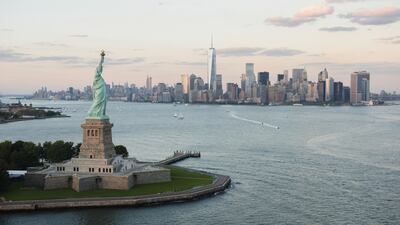
6. The Statue of Liberty in New York. AFP -

7. Petra archeological site is one of Jordan's most famous landmarks. EPA -
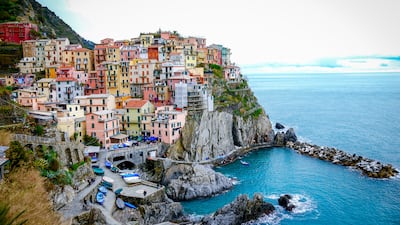
8. Italy's Cinque Terre is ranked eighth globally but first in Europe in the most popular Unesco-listed World Heritage sites. Unsplash / Mark Pecar -
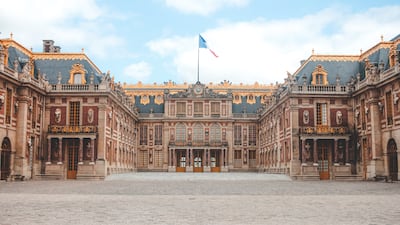
9. France's Palace of Versailles. Unsplash / Matthias Redding -

10. Mexico's Chichen Itza Mayan ruins. Unsplash / Mario La Pergola


Also under threat are King Arthur’s Great Halls in Tintagel, Cornwall, where a group known as the Order of the Fellowship of the Knights of the Round Table once gathered.
The building was designed in the 1930s by Frederick Thomas Glasscock as a meeting place for Arthurian devotees to exchange interpretations of medieval literature.
Its 73 windows depicting the tales of King Arthur are widely considered to be among the finest examples of stained glass workmanship.
Historic England said that while more than 100 sites had been added to the register, 233 places have been rescued with help from volunteers, community groups, charities and councils.
The organisation has awarded £8.66 million ($9.8m) in repair grants to 185 historic places and sites, including conservation areas, over the past year.
Fifteen sites have benefited from £3.25m in grants from the heritage at risk strand of the Culture Recovery Fund during 2021-2022, it said.
Among those to be saved are a pastoral landmark used by Second World War sailors, two well-known sections of the 117-kilometre Hadrian’s Wall and a museum housing the original manuscript of Great Expectations by Dickens.
In Merseyside, a nine-year restoration of the Church of Saints Peter and Paul and St Philomena — known as the Dome of Home that showed the entrance to the River Mersey for the returning Royal Navy — has been completed.
The church, which was a sign to sailors that they had survived the perils of the Atlantic, underwent conservation work to fix its roof, poor insulation and water damage.
Steel Rigg in Northumberland and Port Carlisle in Cumbria, two scenic viewpoints along Hadrian’s Wall, have been protected through conservation work in time for the wall’s 1,900th anniversary this year.
At-risk UK heritage sites - in pictures
-

The 19th-century Birmingham and Midland Institute, which was key to scientific and technical learning in the region, is a recent addition on the Heritage at Risk Register. All photos: Historic England -

The interior of the Birmingham & Midland Institute. -

King Arthur's Great Halls in Tintagel, Cornwall. -

A stained glass window in King Arthur's Great Halls. The house was built in the 1860s and altered and extended in 1927-33 as King Arthur’s Great Halls, the headquarters for the Fellowship of the Knights of the Round Table. -
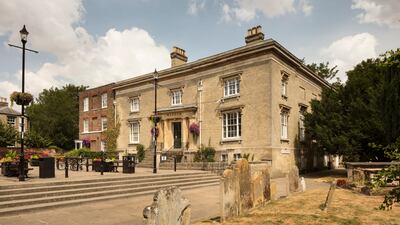
The Wisbech & Fenland Museum. -
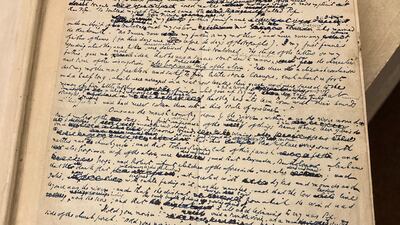
The original manuscript of Charles Dickens' Great Expectations in the Wisbech & Fenland Museum. Photo: Stephen McGregor -

The Old Mint House, in East Sussex, is at risk. -
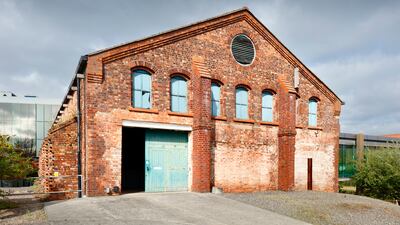
World of Glass in St Helens, Lancashire. It is the best surviving example of 19th century glass-making tank furnace building in England. -
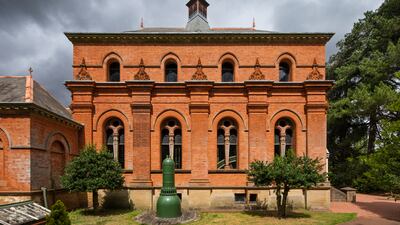
Papplewick Pumping Station in Nottingham, which was added to the register this year. -

Inside Papplewick Pumping Station in Nottingham. -

Boston Manor House in Brentford. -

The interior of Boston Manor House. -

Malmesbury Abbey in Wiltshire. -

The Woodfield Cottages in Heybridge, Maldon. -
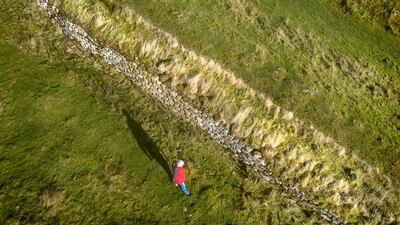
Hadrian's Wall at Steel Rigg, Northumberland. The Wall has been topped with turf to stop people walking on the top. -

The Grade II-listed Rockingham Kiln in Rotherham, South Yorkshire. -
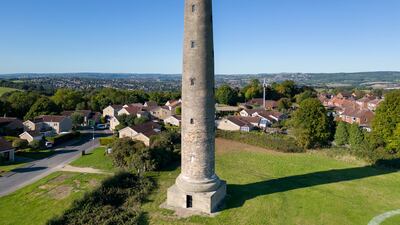
Keppel's Column in Rotherham, South Yorkshire. It is a recently conserved 35-metre column designed by John Carr and built between 1773-1780. -
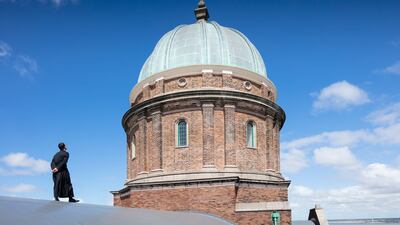
The Church of Saints Peter and Paul and Saint Philomena, New Brighton, Wirral.


Another listed building linked to Dickens is the Wisbech and Fenland Museum in Cambridgeshire, a popular pilgrimage site for enthusiasts because of its display of the original draft of Great Expectations.
The manuscript, full of handwritten pages littered with corrections and notes, was bequeathed to the museum in 1868 and will remain there after a £667,300 grant awarded by Historic England helped with roof repairs.
“Historic England’s Heritage at Risk Register plays a vital role in our ongoing mission to protect and preserve our rich heritage across the country," said Heritage Minister Lord Stephen Parkinson of Whitley Bay.
“It helps to ensure that future generations can continue to benefit from everything our historic sites and buildings have to offer.
“It is also wonderful to see so many heritage sites removed from the register thanks to the support of local communities together with Historic England.
Duncan Wilson, chief executive of Historic England, said: “It is central to Historic England’s mission that we pass on to future generations the rich legacy of historic buildings and places that we have inherited from previous generations.
“Our Heritage at Risk programme is a key contributor to this ambition. With the help of local communities and partners, imaginative thinking and business planning, we can bring historic places back to life.
“As the threat of climate change grows, the reuse and sensitive upgrading of historic buildings and places becomes ever more important.
“Finding new uses for buildings and sites rescued from the register avoids the high carbon emissions associated with demolishing structures and building new."

