


People living under the flight paths of the UK’s major airports, including Heathrow, will take part in studies to assess the impact of night flights on sleep quality, as part of a campaign to curtail take-off times.
Opposition MPs on the flight path to Heathrow are leading the campaign for an end to late-night take-offs and landings.
Psychological assessments of sleep disturbance and sound-level measurements in some participants’ bedrooms will take place.
Liberal Democrat MPs with constituencies near Heathrow Airport want the last take-offs to be earlier, possibly as early as 10pm.
“This is the only way we can be sure that residents will not continue to suffer from noise disruption,” said Sarah Olney, MP for Richmond Park.
“If the government will not commit to this, they must commission a full independent analysis of the impact of night flights on the health of local communities, the environment and the UK economy to inform future policy development.”
Party colleague Munira Wilson, whose Twickenham constituency is close to Heathrow, also wants the government to make the last take-off earlier.
The new research is the first such sleep study in 30 years and could lead to bans or tighter restrictions on late and overnight take-offs.
“Exposure to aviation noise at night can impact on physical and mental well-being, as well as sleep disturbance,” said Transport Minister Richard Holden.
There is a government-imposed annual limit on the number of flights at Heathrow between 11.30pm and 6am.
In July, Heathrow apologised to people suffering “greater disturbance” as more aircraft were arriving and departing later than planned.
-
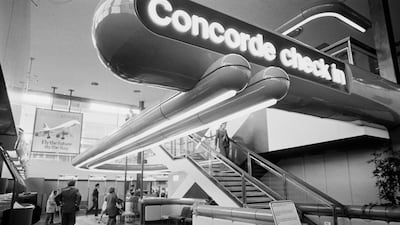
Heathrow Airport in London, the UK's busiest, has been a travel hub for decades. Here The National takes a look back at Heathrow through the years. All photos: Getty Images -
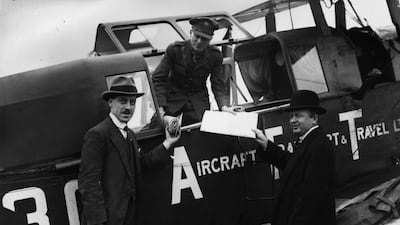
An Airco De Havilland biplane of the British airline, Aircraft Transport and Travel Limited, about to leave on the company’s inaugural flight from Hounslow Heath Aerodrome, later known as Heathrow, to Le Bourget, Paris, in August 1919 -
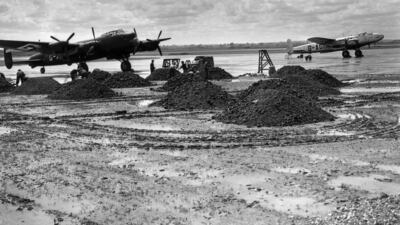
Waterlogged runways at London Airport - Heathrow's original name - one week before it became Britain's main aerial gateway to the US in 1946 -
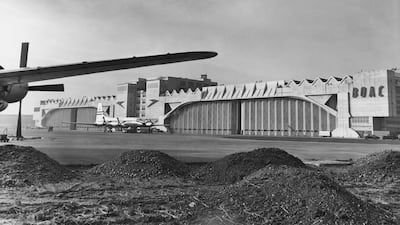
The new BOAC maintenance headquarters at London Airport circa 1955 -
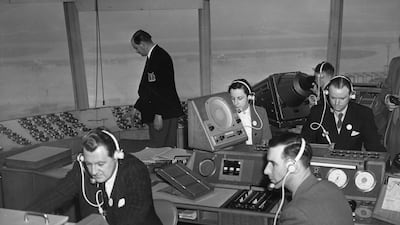
The air traffic control room at the airport's new terminal in 1955 -
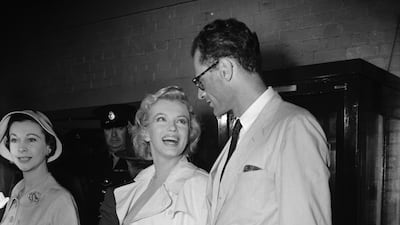
US film star Marilyn Monroe with her husband, playwright Arthur Miller, after arriving at the airport in July 1956 -
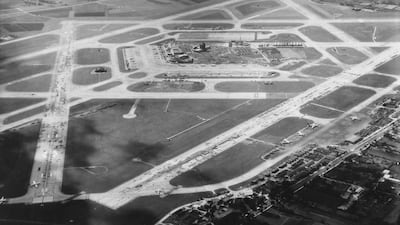
An aerial view showing the runways in 1958 -

The arrivals and departures board in 1960 -

A new airport gift shop, selling items by Chanel, Wedgwood and Pringle of Scotland, in 1961 -
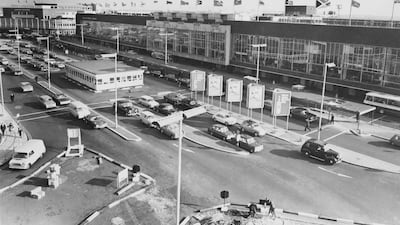
The Queen's Building and the No. 1 Building Europa at Heathrow in 1965 -
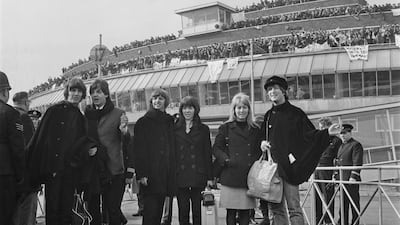
The Beatles leave Heathrow for Salzburg in Austria, to resume filming of the movie Help!, in 1965 -
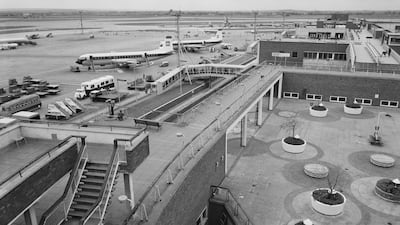
Passenger terminal gates at Heathrow in 1966 -
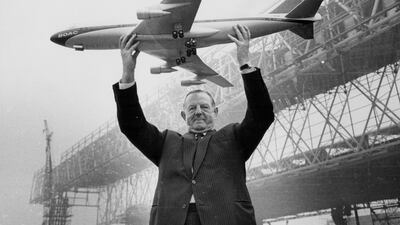
Keith Granville, managing director of BOAC, holding up a model of the Boeing 747 jet, with the new aircraft hangars under construction in the background, at Heathrow in 1969 -
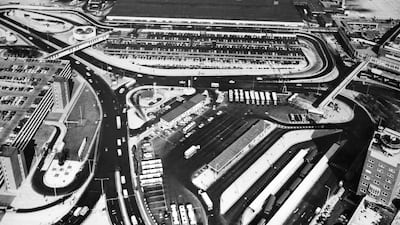
An aerial view of Heathrow in 1970 -
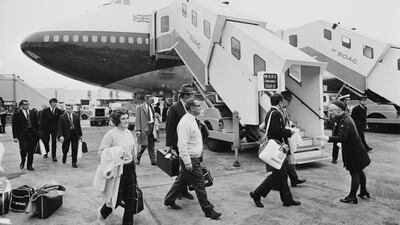
Passengers boarding the first BOAC Jumbo Jet 747 used for a commercial flight, from London Heathrow to New York, in 1971 -
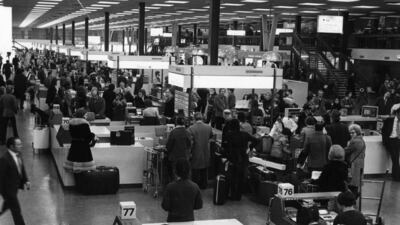
Passengers going through the departure lounge at Heathrow in 1973 -
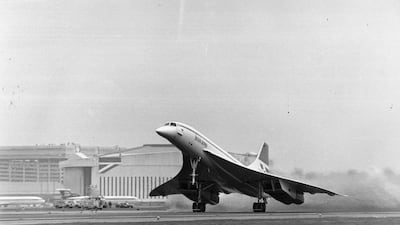
Concorde takes off from Heathrow on her first commercial flight for British Airways in 1976 -
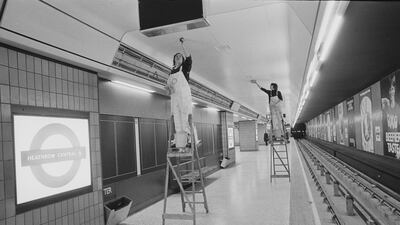
Men at work finalising the Heathrow Central underground station before its opening in 1977 -
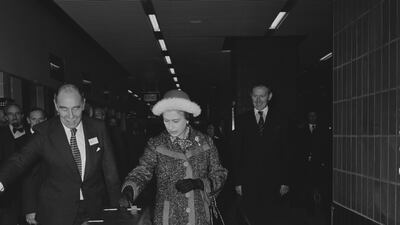
Queen Elizabeth II passing though the Tube gates at Heathrow Central station on its opening in 1977 -
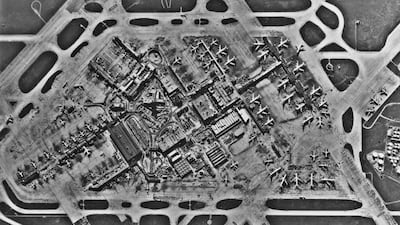
An aerial view of Heathrow in 1978 -

Passengers waiting near a departures board in 1979 -
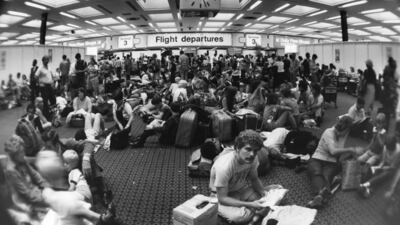
Holidaymakers waiting in the departure lounge at Terminal 3 of Heathrow in 1981 -
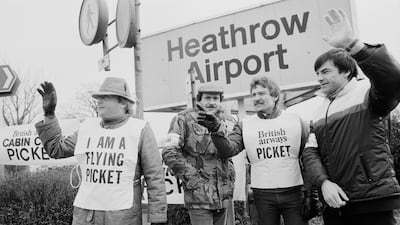
British Airways employees protesting at Heathrow in 1984 -
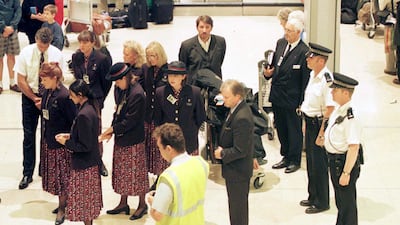
Passengers and staff observe a silence in Heathrow's Terminal One to mark the beginning of the funeral of Diana, Princess of Wales, in 1997 -
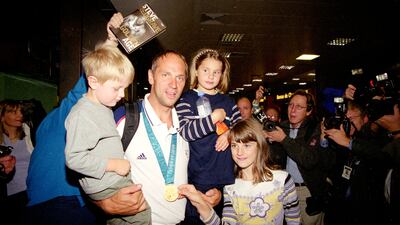
Rower Steve Redgrave at Heathrow with daughters Sophie and Natalie and son Zak after returning from the Sydney 2000 Olympic Games with his gold medal -
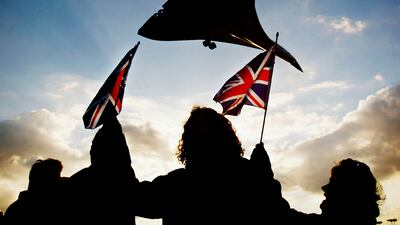
Spectators watch the last Concorde land at Heathrow in 2003 -
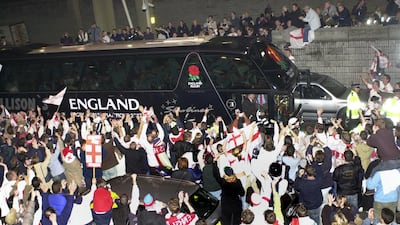
Fans surround the coach carrying the England rugby team at Heathrow, as they arrived from Sydney after winning the World Cup in 2003 -
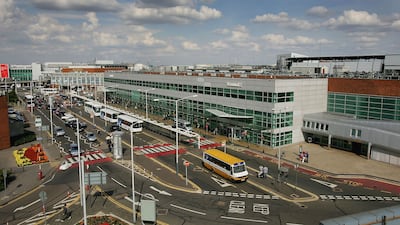
Heathrow's Terminal 2 in 2004 -
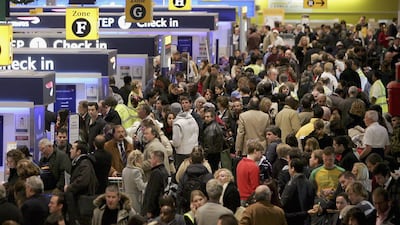
Passengers queue to check in at Terminal 1 of Heathrow Airport during the Christmas 2006 and New Year period -
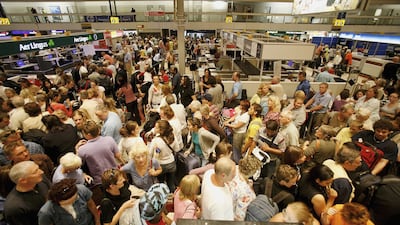
Passengers wait at Terminal 1 on August 10, 2006, after airport security was raised to critical when a terrorist plot to blow up planes in mid-flight from the UK to the US was disrupted by police -
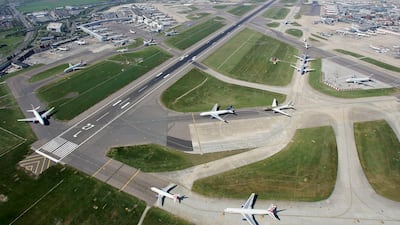
Planes queueing to take off at Heathrow in 2007 -
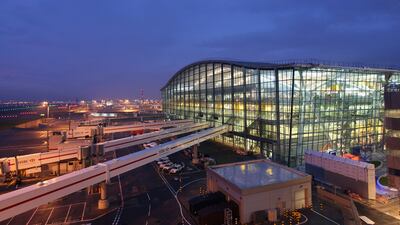
The new Terminal 5 at Heathrow in 2008 -
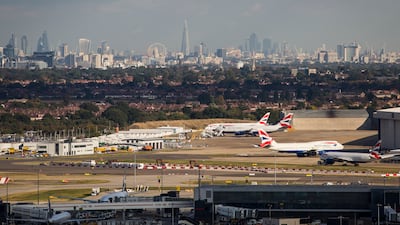
Aircraft at Heathrow Airport in front of the London skyline in 2016 -
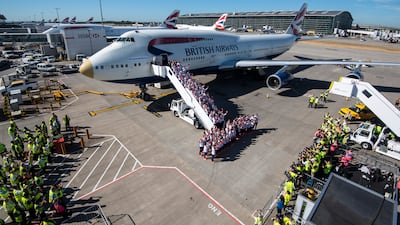
Members of Team GB arrive from Rio de Janeiro at Heathrow, after returning from the 2016 Olympics, which saw Great Britain's strongest performance at the Games in over a century -

A composite photo shows planes taking off from Heathrow in November 2016. Forty-two planes were captured between 10.17am and 11.17am and a montage was created from those single images -
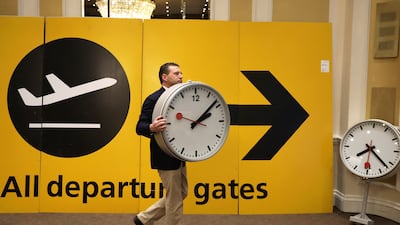
Items are arranged during an auction preview at Heathrow in 2018. The contents of Terminal 1, which closed in 2015, were being sold -
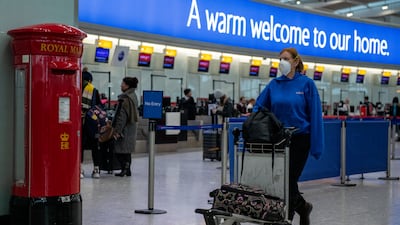
An airline passenger wearing a face mask pushes her bags through Heathrow's Terminal 5 during the coronavirus pandemic in 2020 -
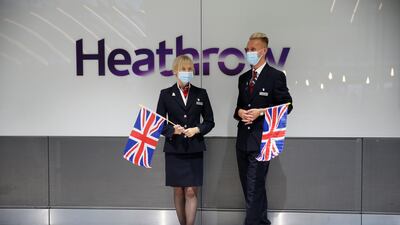
British Airways employees welcome Olympians returning from the Tokyo Olympics in 2021 -
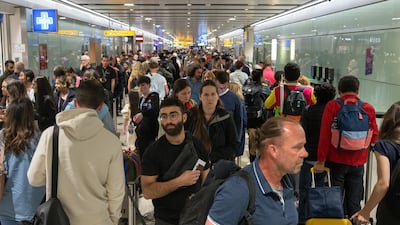
Travellers wait in a long queue to pass through the security check in 2022


Heathrow does not have any scheduled departures between 10.50pm and 6am, or scheduled arrivals between 10.55pm and 4.40am, but take-offs and landings occur within those periods when planes are delayed.
The sleep study has been commissioned after current night-flight restrictions were extended for three years
“To better understand this, the department has commissioned the aviation night noise effects study to examine the relationship between aviation noise and sleep disturbance and annoyance, and how this varies by different times of the night," Mr Holden said.
“It is the first study of aviation noise effects on sleep disturbance in the UK for over 30 years.
“The first stage will involve a cross-section of 4,000 people who live near eight of the major airports in the UK to assess the association between aircraft noise exposure at night and subjective assessments of sleep quality and annoyance.”
“The second stage of the study will involve an observational study of individuals recruited from the survey to assess the association between aircraft noise exposure and objective sleep quality," he added.
“This will involve psychological assessments of sleep disturbance and sound level measurements in participants’ bedrooms.
“That evidence will also be used to inform future policies for night-flight aviation noise exposure, and assist with the management and mitigation of health impacts on local communities, as part of a wider assessment of the costs and benefits of night flying.”
MPs were told that air traffic control disruption has increased the number of late-running flights.
Mr Holden said the government has set noise controls — including restrictions on night operations at Heathrow, Gatwick and Stansted — for several decades.
The study is a collaboration between St George’s University of London, NatCen Social Research, Noise Consultants Ltd and the University of Pennsylvania.

