

Queen Elizabeth II dies — follow the latest news as the world mourns
All four of the queen’s children guarded her coffin for a short vigil of solemn reflection while the first members of the public filed past in Edinburgh on Monday.
Just a few hours after attending a service of thanksgiving for the queen, King Charles III, head bowed, returned to St Giles’ Cathedral with his sister the Princess Royal and brothers the Duke of York and Earl of Wessex.
Just before the vigil began, members of the public were allowed to pass the queen’s coffin for the first time since her death on Thursday.
King Charles, Princess Royal Anne, Prince Andrew and Prince Edward looked sombre as they took their places at the four sides of the oak coffin.
They stood alongside four suited members of the Royal Company of Archers, who were standing guard dressed in long-feathered hats and armed with bows and quivers.
The procession of members of the public queuing to view the coffin on Monday evening was temporarily paused to allow the royals to take their places.
Procession of Queen Elizabeth II's coffin through Edinburgh - in pictures
-
Members of the royal family arrive to attend a vigil at St Giles' Cathedral, in Edinburgh, on Monday for Queen Elizabeth II. AFP -
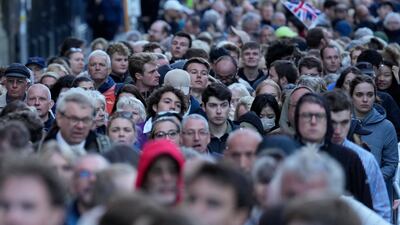
People queue to enter St Giles' Cathedral where Queen Elizabeth's coffin arrived earlier on Monday. It will rest there for 24 hours to enable the people of Scotland to pay their last respects. AP -
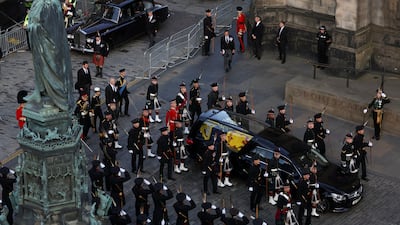
The hearse carrying the coffin of Queen Elizabeth II arrives at St Giles' Cathedral, Edinburgh, for a service of prayer and reflection. -
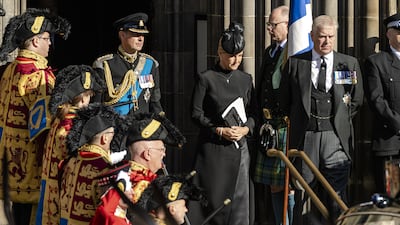
The Earl and Countess of Wessex and the Duke of York leave St Giles' Cathedral after the service of prayer and reflection for the queen's life on Monday. -

The Princess Royal, her husband Vice Admiral Timothy Laurence, King Charles III and the Queen Consort leave St Giles' Cathedral after the service of prayer and reflection for Queen Elizabeth II's life. -

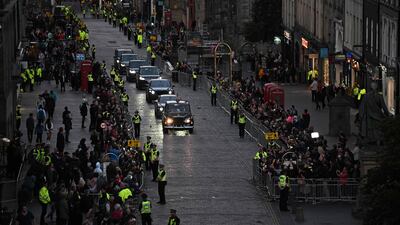
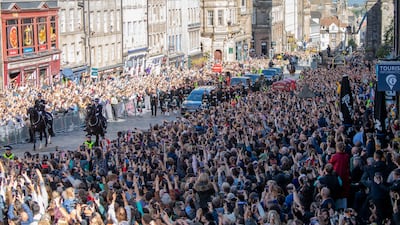
People attend the procession of Queen Elizabeth II's coffin, from the Palace of Holyroodhouse to St Giles' Cathedral, on the Royal Mile in Edinburgh, Scotland, on Monday. AP -
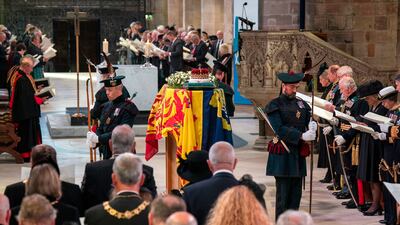
The Crown of Scotland sits on the coffin of Queen Elizabeth II inside St Giles' Cathedral in Edinburgh. AFP -
King Charles, Princess Royal Anne, Prince Andrew, Duke of York, Prince Edward, Earl of Wessex, and Vice Admiral Timothy Laurence walk behind the hearse as it moves along the Royal Mile from the Palace of Holyroodhouse to St Giles' Cathedral in Edinburgh, Scotland. Getty -
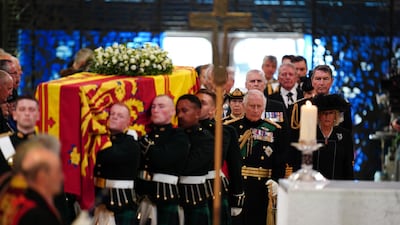
King Charles III follows Queen Elizabeth II's coffin as it enters the cathedral for a service of prayer and reflection at St Giles' Cathedral, Edinburgh. PA -
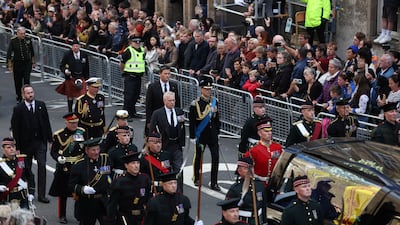
King Charles, Princess Anne, Prince Andrew and Prince Edward follow the hearse carrying the coffin of their mother, Queen Elizabeth, on the Royal Mile in Edinburgh. Reuters -
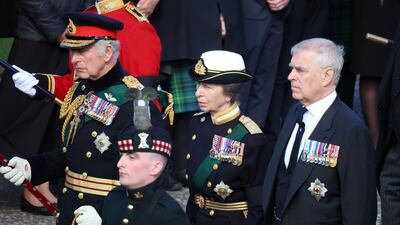
King Charles, Princess Anne and Prince Andrew walk behind the hearse. Reuters -
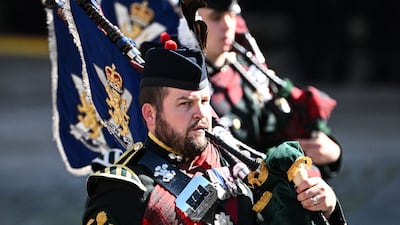
The Royal Company of Archers, the King's Bodyguard for Scotland, arrive at St Giles' Cathedral in Edinburgh. AFP -
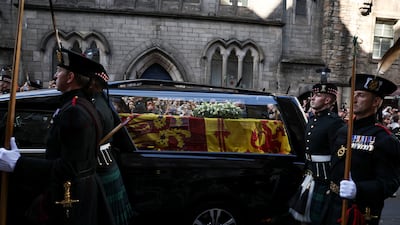
The hearse carrying the coffin of the queen travels slowly on the Royal Mile in Edinburgh. Reuters -
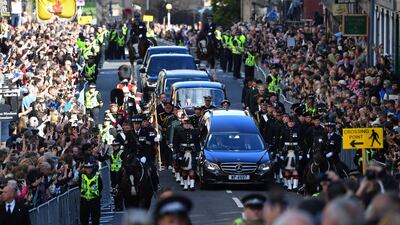
Members of the public gather to watch the procession, from the Palace of Holyroodhouse to St Giles Cathedral, on the Royal Mile. AFP -
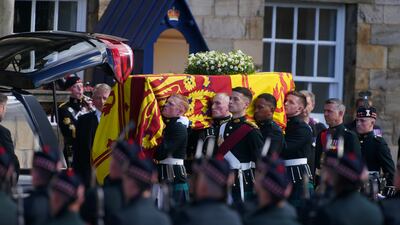
Royal guards carry Queen Elizabeth's coffin at the start of the procession. PA -

Royal archers outside St. Giles' Cathedral. Getty -
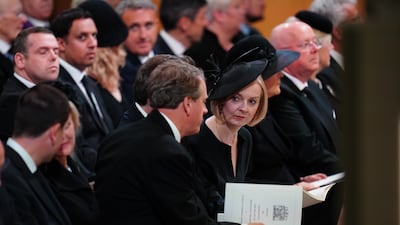
British Prime Minister Liz Truss attends a Service of Prayer and Reflection for the Life of Queen Elizabeth at St Giles' Cathedral. PA -
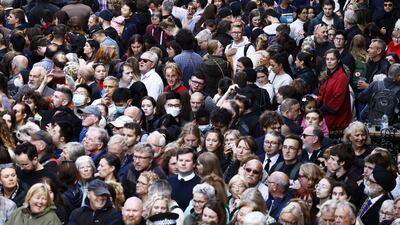
Crowds gather near Mercat Cross ahead of the procession in Edinburgh. PA -
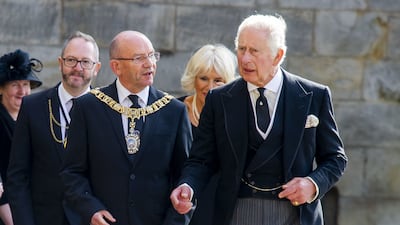
King Charles with Lord Provost of Edinburgh Robert Aldridge at the Ceremony of the Keys at the Palace of Holyroodhouse, Edinburgh. PA -
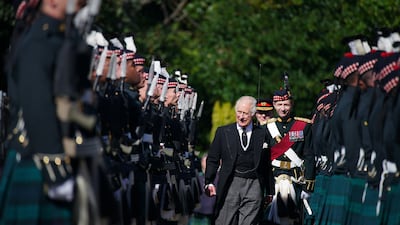
King Charles inspects the Guard of Honour as he arrives for the Ceremony of the Keys at the Palace of Holyroodhouse. Getty -
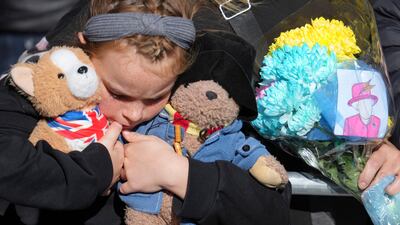
A young girl holds a Paddington bear and a Corgi dog stuffed toys while waiting to watch the procession. Getty -
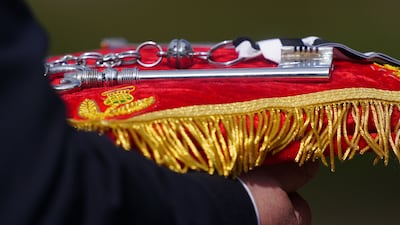
The Keys of the City of Edinburgh, to be offered to King Charles, during the Ceremony of the Keys at the Palace of Holyroodhouse. AFP -
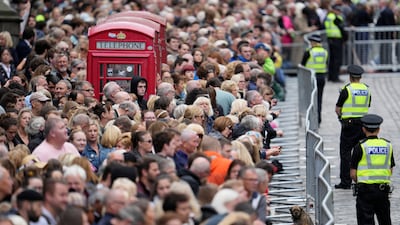
Crowds gather to watch the procession in Edinburgh. AP -
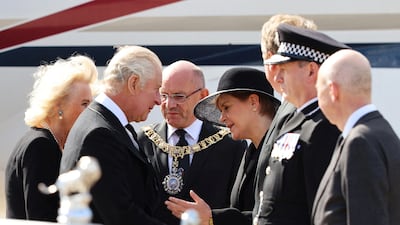
King Charles talks with Scotland's First Minister Nicola Sturgeon as he arrives at Edinburgh Airport. Reuters -
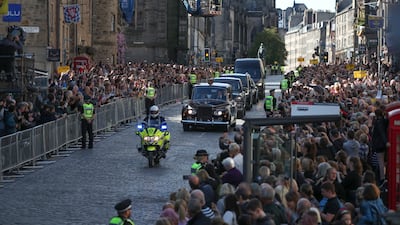
A convoy of cars with King Charles heads to Holyroodhouse. AP -
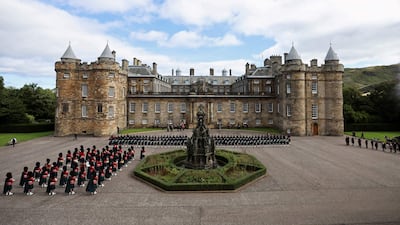
The honour guard outside the Palace of Holyroodhouse. AFP -

Police officers keep guard ahead of the arrival King Charles in Edinburgh. Reuters


Prince Andrew kept his eyes closed for some time during the vigil, while Princess Royal Anne and Prince Edward had their eyes fixed towards the floor.
King Charles, wearing Prince Charles Edward Stuart tartan and white heather in his lapel from Balmoral, kept his hands joined and also looked towards the floor.
Many of those filing past bowed to the new monarch.
The Queen Consort and Countess of Wessex sat on seats opposite the coffin while the vigil, which began at 7.46pm and finished at 7.56pm, took place in the ancient cathedral.
The UK mourns Queen Elizabeth II - in pictures
-
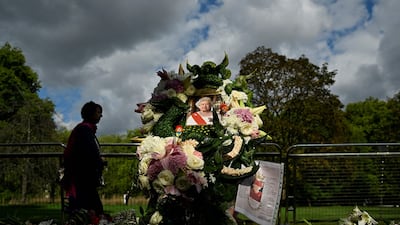
A tribute altar for Queen Elizabeth II in Green Park in London. AFP -
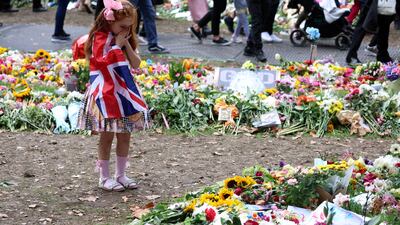
Ann Doran, 6, looks at floral tributes left in Green Park. Reuters -
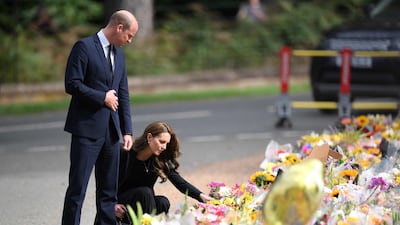
Britain's Prince William, Prince of Wales, and Catherine, Princess of Wales, look at floral tributes on the Sandringham Estate. AFP -
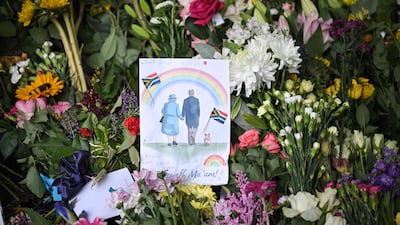
A drawing of the queen and her husband Prince Philip among flowers outside Windsor Castle. AFP -

Members of the public view floral tributes in Green Park, near Buckingham Palace. PA -
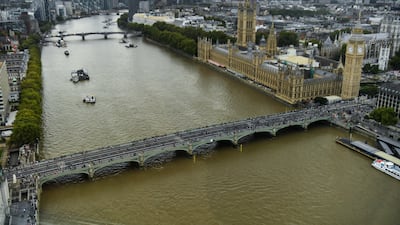
People queue on a bridge over the river Thames to pay their respects to Queen Elizabeth in London. Reuters -
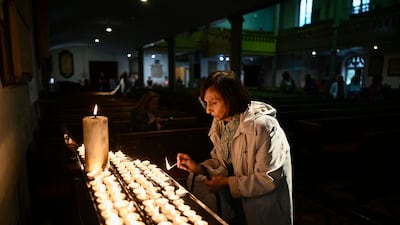
A member of the public lights a candle at Windsor Parish Church. AFP -
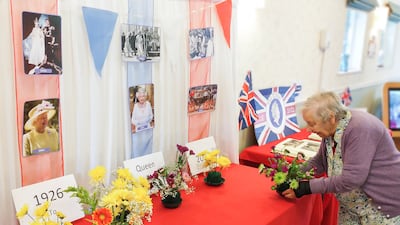
Residents of the Lawn care home in Alton, Hampshire, decorate an area with photographs of Queen Elizabeth, bunting and their own flower arrangements. PA -

Lloyd's of London chief John Neal delivers remarks honouring the life of Queen Elizabeth during a remembrance ceremony in the atrium of the company's offices in London. Getty Images -
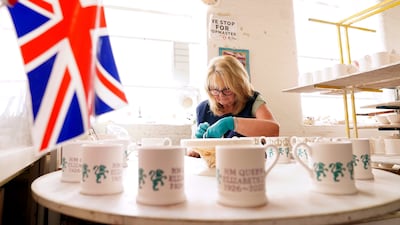
Joyce Buckley, a sponge decorator at Emma Bridgewater pottery in Stoke-on-Trent, Staffordshire, paints a commemorative mug. PA -
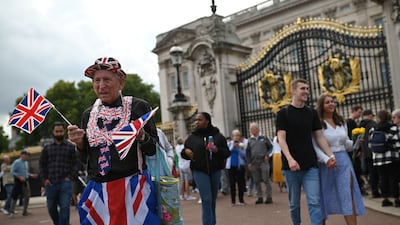
A royalist standing in front of Buckingham Palace. AFP -
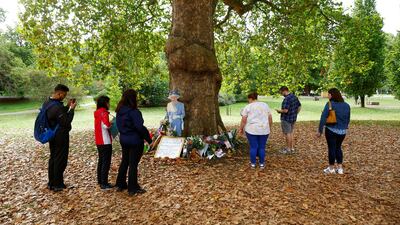
Tributes to Queen Elizabeth are viewed at St James's Park in London. Reuters -
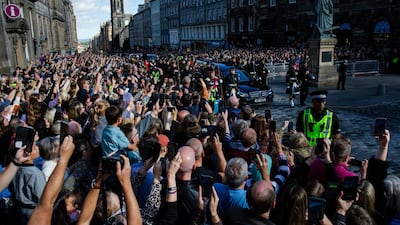
Crowds gather outside St. Giles' Cathedral on the Royal Mile as the queen's coffin passes in Edinburgh. Bloomberg -
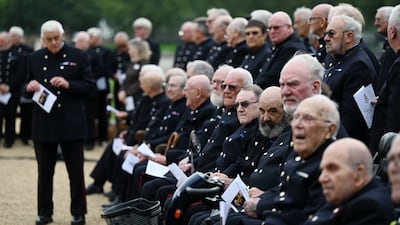
Chelsea Pensioners attend a Drumhead service of remembrance, with readings and prayers, in London. Getty Images -
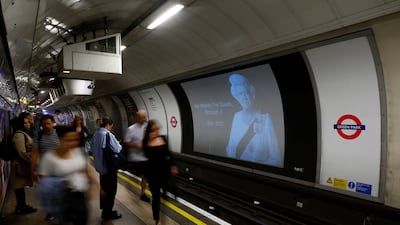
An image of Queen Elizabeth at Green Park Tube station. Reuters -
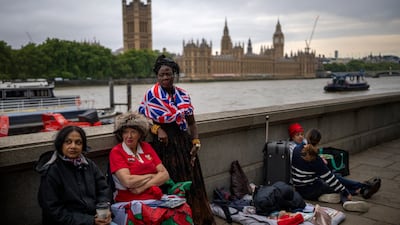
Vanessa, Anne and Grace, from left to right, wait opposite the Palace of Westminster to be first in line bidding farewell to Queen Elizabeth in London. AP -
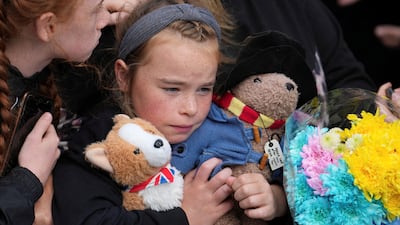
A young girl holds Paddington Bear and Corgi stuffed toys while waiting to watch the procession of Queen Elizabeth's coffin from the Palace of Holyroodhouse to the Royal Mile in Edinburgh. Reuters -
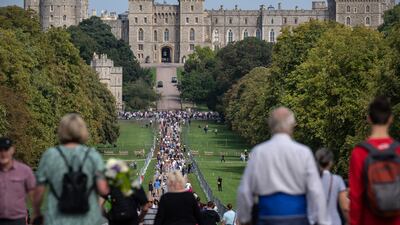
Well-wishers outside Windsor Castle. Getty Images -
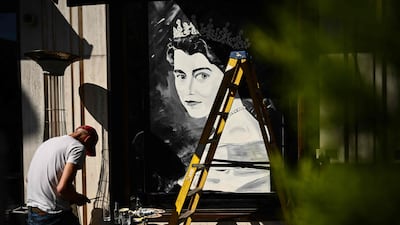
Lloyd Smith paints a portrait of Queen Elizabeth in London. AFP -
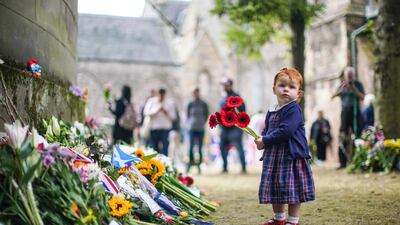
A child lays flowers outside the Palace of Holyroodhouse in Edinburgh. AP -
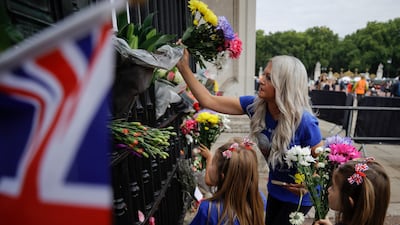
A family leaves flowers outside Buckingham Palace. EPA -
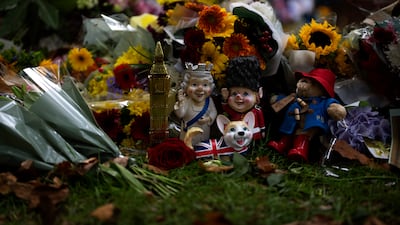
Flowers and tributes, including sunflowers and a Paddington Bear, are left for Queen Elizabeth at the Green Park memorial in London. AP -
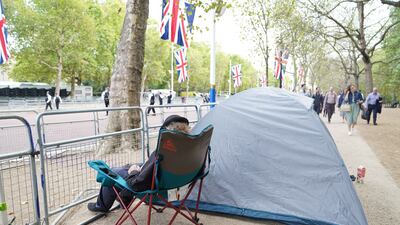
People start to camp on The Mall ahead of Queen Elizabeth's coffin being taken from Buckingham Palace on Wednesday afternoon by procession on a Gun Carriage to the Palace of Westminster. PA -
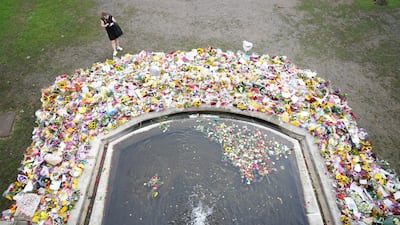
Flowers left in St James's Park, London. PA -
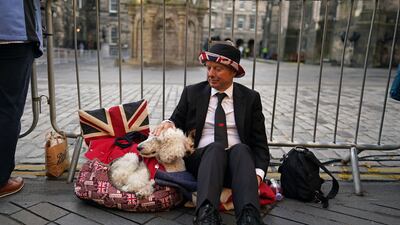
A man with his dog arrive early as they wait to view the cortege carrying the coffin of Queen Elizabeth in Edinburgh. Getty Images -
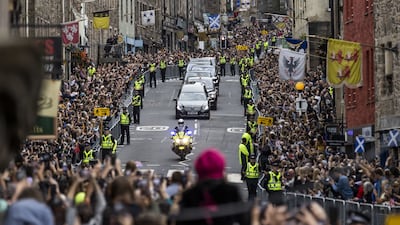
Members of the public gather on the Royal Mile in Edinburgh to watch the hearse carrying the coffin of Queen Elizabeth to the Palace of Holyroodhouse. PA -

Crowds watch as the hearse continues its journey to the Palace of Holyroodhouse from Balmoral. PA -
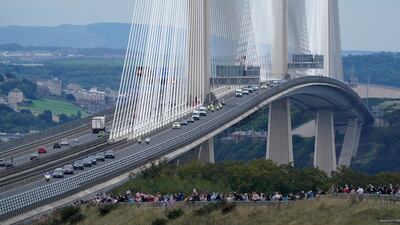
The hearse passing over Queensferry Crossing on its way to Edinburgh. PA -

Flowers left at the Sandringham Estate, one of the queen's residences. EPA -
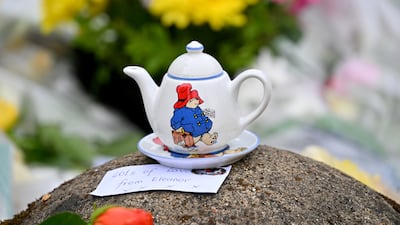
A Paddington Bear teapot at the Sandringham Estate. EPA -
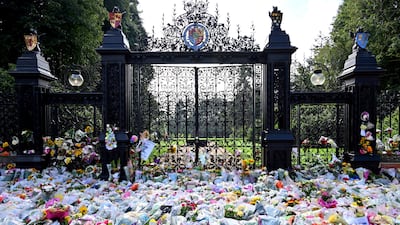
Flowers left at the gates of the Sandringham Estate. EPA -

Flowers, cards and messages left in St James's Park in London. EPA -
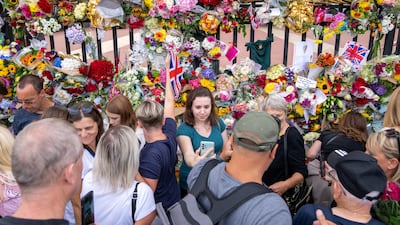
People lay flowers at Buckingham Palace in London. Reuters


The archers have been completing 20-minute periods of standing guard at the coffin, which will remain at St Giles’ for 24 hours before it is taken to London to sit in state.
Members of the crowd cheered as King Charles arrived at the cathedral, and as he departed.
As he drove past them, they took pictures and video and said: “Here he is. Here he is. It’s the king.”
King Charles III leads procession behind queen's coffin in Edinburgh - video
King Charles waved at onlookers waiting at the barriers to see him.
One woman was heard to say: “I missed him earlier and travelled up from Glasgow to see him. I waited five hours — I finally saw him.”

