


Britain has a very strong chance of electing a new prime minister who is from a minority background, due to the number of diverse candidates standing in the Conservative leadership race.
More than half of the declared candidates are from Asian or African backgrounds, and three women have also put themselves forward for the top job.
The 11 candidates seeking to replace Boris Johnson as prime minister were to learn the planned timetable to select the new British leader on Monday, with a large field of would-be runners hoping to declare in the first round later this week.
Mr Johnson was forced out last Thursday after his government imploded over a series of scandals.
Foreign Secretary Liz Truss became the latest high-profile figure to put herself forward, echoing the promises of her rivals to cut taxes and saying she would maintain a tough line against Russian President Vladimir Putin.
With the Conservative Party in the majority, the winner of the leadership contest would become prime minister. The aim is to find a successor by early September.
The Conservatives have been able to attract a large number of black and Asian MPs as it has billed itself “the party of opportunity and aspiration”, one MP said.
David Jones, chairman for the campaign of Suella Braverman — whose family came to Britain via Africa and India — said the Conservative Party was “far more progressive on this issue” than others.
“There is no impediment to anyone joining us because of his or her race or gender,” he told The National.
“The Conservative Party has managed to attract ethnic minorities who have got themselves into get such strong positions. But it is not a question of the party doing this consciously it's because we don't regard it as an issue. The Conservative Party has always tried to be the party of opportunity and aspiration.”
Despite being tough on immigration, in particular the outspoken Home Secretary Priti Patel, Mr Jones argued that the party was “colour blind” and that migrants were not discriminated against on racial grounds but on whether they had a “legitimate right” to live in Britain.
With Rishi Sunak the current front-runner in the contest, there is a strong chance Britain will soon have an ethnic minority prime minister.
There are currently six ethnic minority candidates standing, four men and two women, with potentially a seventh if Ms Patel launches a bid.
Kemi Badenoch
Ms Badenoch, 42, was born in London but lived mostly in Lagos until age 16, when her family returned to Britain. Both her parents are originally from Nigeria: her mother is a professor of physiology and her father is a doctor.
She has described herself as a middle-class Yoruba, referring to the West African ethnic group of about 50 million people.
Suella Braverman
The current solicitor general’s parents emigrated to the UK in the 1960s from Kenya and Mauritius. Both are of Indian origin, with her father having Goan ancestry and her mother from a Tamil Hindu family. The 42-year-old lawyer is also niece to the former Mauritian high commissioner
“Don’t vote for me because I’m a woman, don’t vote for me because I’m brown, vote for me because I love this country and I will do anything for it,” she said during her leadership campaign.
Rehman Chishti
The barrister, 43, was born in Muzaffarabad in Kashmir, Pakistan, to a father who acted as a religious affairs adviser in the area by the country’s prime minister.
Mr Chishti did not see his father for six years after he left Pakistan to become an imam in Britain, though he and his family later joined him in the UK.
He also worked as a political adviser to Benazir Bhutto during the early 2000s after her first term as Pakistan’s prime minister.
Sajid Javid
Britain’s first ethnic minority chancellor was born into a family with roots near Toba Tek Singh, Punjab. They migrated to Britain in the 1960s, with his father working as a bus driver. His mother did not originally speak English for 10 years.
Mr Javid, 53, said he was racially abused at school and also confronted by National Front bigots but was attracted to the Tories by Margaret Thatcher’s privatisation of national industries.
Rishi Sunak
The man who followed Mr Javid as chancellor had, like Ms Braverman, from parents who had migrated to Britain from India via East Africa.
Mr Sunak’s grandparents were from Punjab in British India. His father, a doctor, was raised in Kenya and his mother, a pharmacist, in Tanzania.
Nadhim Zahawi
Mr Zahawi, 53, was born in Baghdad to a family of Kurds originally from northern Iraq. The family fled Iraq in 1978 after his father, a businessman, was tipped off that Saddam Hussein's secret police were coming to arrest him.
Mr Zahawi’s grandfather had been the governor of the Central Bank of Iraq.
Priti Patel
Ms Patel — if she stands — will be another Conservative of Asian heritage who was inspired by Margaret Thatcher.
Her grandparents on her father’s side emigrated from Gujarat in India to Uganda, where they ran a shop in Kampala, the capital. Her parents then emigrated from Africa to Britain in the 1960s, settling in Hertfordshire, where they ran a number of newsagent shops.
Conservative leadership candidates — in pictures
-

Conservative Party members will chose between Liz Truss and Rishi Sunak in the race to become Britain's next prime minister, after Penny Mordaunt was eliminated. PA -
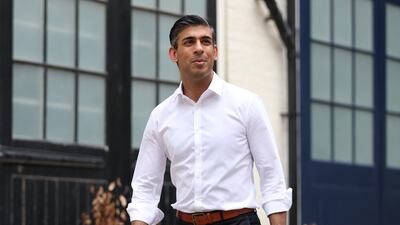
Rishi Sunak — former chancellor who resigned from his position last week. In a slick campaign video he said the government could not afford to fool voters about the difficulties ahead with ‘comforting fairy tales’. Getty Images -
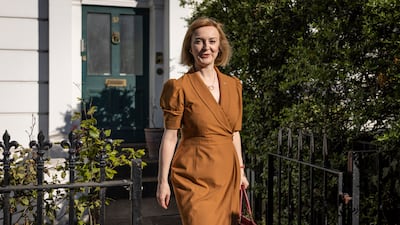
Liz Truss — the UK’s Foreign Secretary has pledged to start cutting taxes 'from day one' if she becomes prime minister, to tackle the cost-of-living crisis. She has also vowed to ‘take the vital steps necessary’ to protect the Good Friday Agreement. Getty Images -
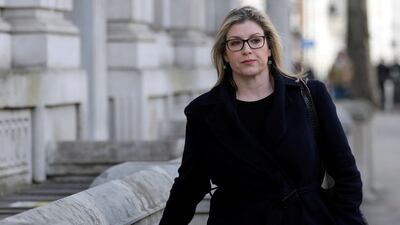
OUT OF THE RACE: Penny Mordaunt — Brexit-backing Trade Minister has insisted the Conservative Party was elected to ‘deliver a manifesto’. She played a prominent role in the Leave campaign in the 2016 referendum. Reuters -
OUT OF THE RACE: Kemi Badenoch — former equalities minister has promised 'limited government' and 'a focus on the essentials'. She has said Boris Johnson was 'a symptom of the problems we face, not the cause of them'. Photo: UK Parliament -
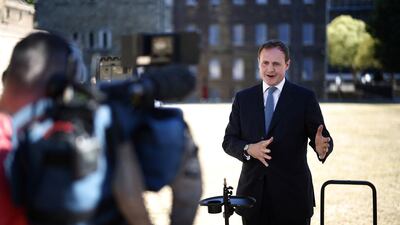
OUT OF THE RACE: Tom Tugendhat —Foreign Affairs Committee chairman and ‘Remainer’ aims to reverse the national insurance rise. He says the presence of Brexit party and Leave figures on his team is reassuring for Brexiteers. Reuters -
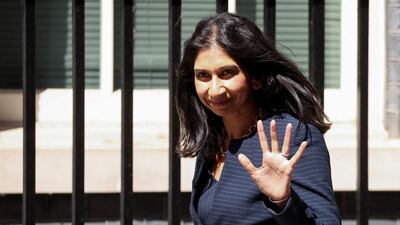
OUT OF THE RACE: Suella Braverman — current Attorney General has promised 'rapid and large tax cuts' to ease inflation. She has said the energy crisis means 'we must suspend the all-consuming desire to achieve net zero by 2050'. Reuters -
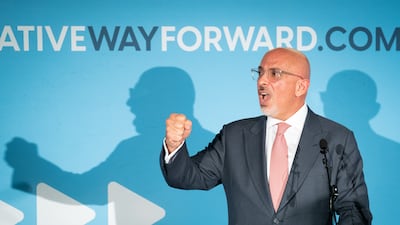
OUT OF THE RACE: Nadhim Zahawi — newly appointed Chancellor has promised to cut taxes and push ahead with the reforms he started in his previous role as education secretary, to ‘deliver a great education for every child’. PA -
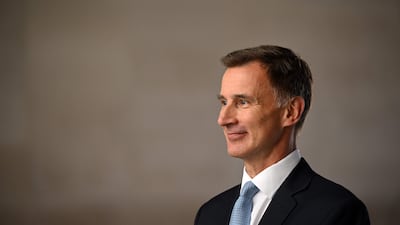
OUT OF THE RACE: Jeremy Hunt — runner-up to Boris Johnson in the 2019 leadership race, who has pledged to slash corporation tax to 15 per cent. He has also promised to back the Northern Ireland Protocol Bill. AFP -
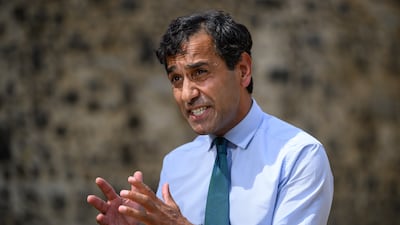
OUT OF THE RACE: Rehman Chishti — newly appointed Foreign Office minister had spoken of the importance of lower taxes and having a small state with a big society. 'It’s about aspirational conservatism, it’s about fresh ideas and then it comes down to having a fresh team.' Getty Images -
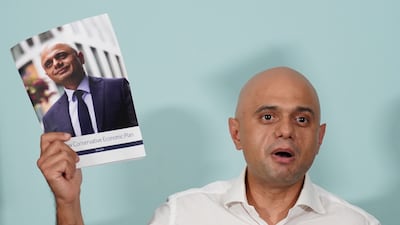
OUT OF THE RACE: Sajid Javid — experienced former health secretary had planned to scrap the government’s national insurance increase, bring forward the proposed 1p income tax cut to next year and introduce a further ‘significant’ temporary reduction on fuel duty. PA -
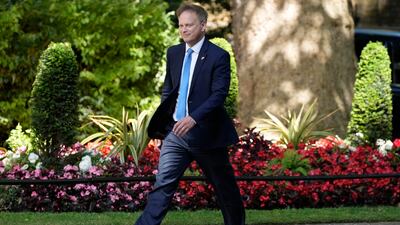
OUT OF THE RACE: Grant Shapps — the Transport Secretary had said on TV: 'I am interested in the bread-and-butter issues that your viewers will be thinking about every single day of the week.' AP



