

A formidable space tourism industry may have a greater climate effect than the aviation industry and undo the recovery of the protective ozone layer if left unregulated, a joint US-UK study published on Saturday suggested.
Researchers from University College London (UCL), the University of Cambridge and Massachusetts Institute of Technology (MIT) used a 3D model to explore the impact of rocket launches and re-entry in 2019 and the effects of projected space tourism scenarios based on the recent billionaire-led space race.
The team found that black carbon (soot) particles emitted by rockets are almost 500 times more efficient at holding heat in the atmosphere than all other sources of soot combined — resulting in an enhanced climate effect.
Furthermore, while the study revealed that the current loss of total ozone due to rockets is small, current growth trends around space tourism indicate potential for future depletion of the upper stratospheric ozone layer in the Arctic in spring.
This is because pollutants from solid-fuel rockets and re-entry heated by returning spacecraft and debris are particularly harmful to stratospheric ozone.
Call for space tourism regulation
“Rocket launches are routinely compared to greenhouse gas and air pollutant emissions from the aircraft industry, which we demonstrate in our work is erroneous,” said study co-author Eloise Marais of UCL.
“Soot particles from rocket launches have a much larger climate effect than aircraft and other Earth-bound sources, so there doesn’t need to be as many rocket launches as international flights to have a similar impact.
“What we really need now is a discussion amongst experts on the best strategy for regulating this rapidly growing industry.”
To calculate the findings, the researchers collected information on the chemicals from all 103 rocket launches in 2019 from around the world as well as data on reusable rocket and space junk re-entry.
They also used recent demonstrations by space tourism firms Virgin Galactic, Blue Origin and SpaceX and proposed yearly offerings of at least daily launches by Virgin Galactic to construct a scenario of a future formidable space tourism industry.
Virgin Galactic space launch — in pictures
-
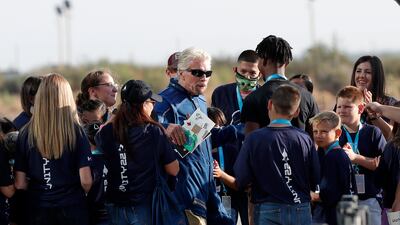
Virgin Galactic founder Richard Branson is greeted by schoolchildren before boarding the rocket plane at Spaceport America, New Mexico. -
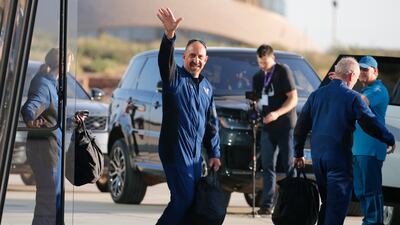
Pilot Michael Masucci makes his way to Virgin Galactic's passenger rocket plane 'VSS Unity'. -
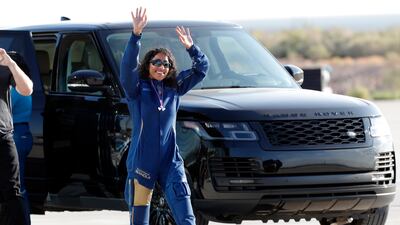
Sirisha Bandla, Virgin Galactic's vice president of government affairs and research operations, was among the passengers on the flight. -
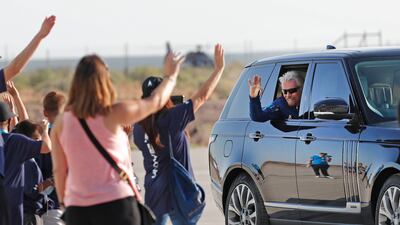
Mr Branson is driven to the rocket plane at Spaceport America, near the city of Truth or Consequences, New Mexico. -
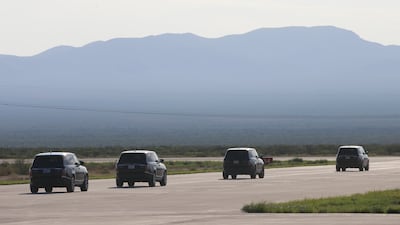
Mr Branson, his fellow passengers and the crew are driven to the rocket plane. -
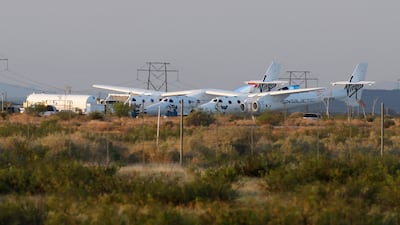
Virgin Galactic's passenger rocket plane 'VSS Unity', borne by a twin-fuselage carrier jet called 'VMS Eve', before its launch in New Mexico. -

Virgin Galactic's chief astronaut instructor Beth Mose embraces Mr Branson and other crew members before boarding the 'VSS Unity'. -
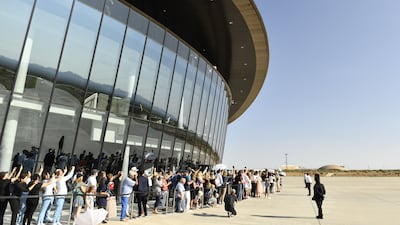
People gather to watch the 'VSS Unity' take off from Spaceport America. -
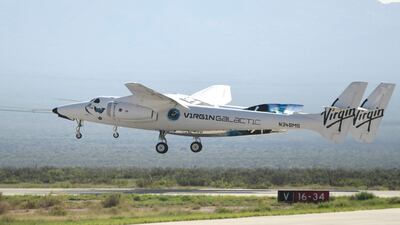
The jet takes off on its way to space. -
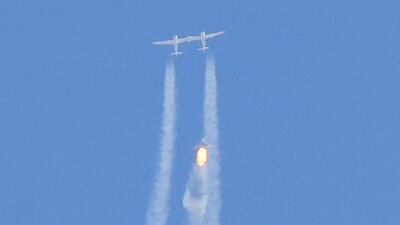
The 'VSS Unity' and its mothership separate above Spaceport America. -
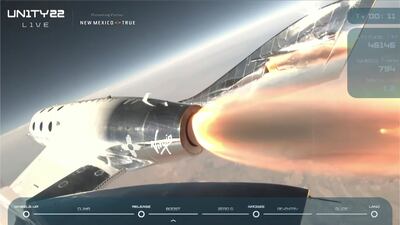
The jet starts its engines as it travels to the edge of space. -
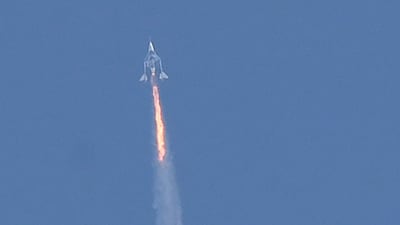
Mr Branson was one of six people on board the 'VSS Unity'. -
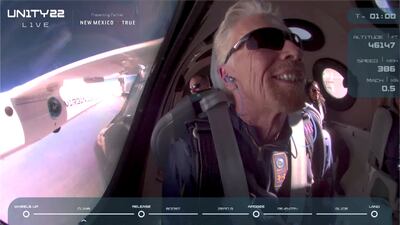
Mr Branson enjoys the journey as the billionaire is flown to space. -

The rocket plane starts its untethered ascent to the edge of space. -

Mr Branson, his fellow passengers and crew on board the 'VSS Unity'. -
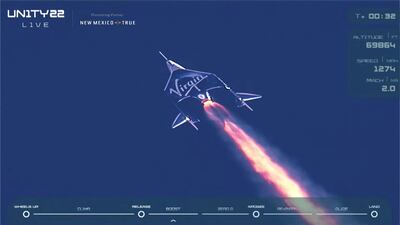
Virgin Galactic's rocket plane begins its ascent to the edge of space. -
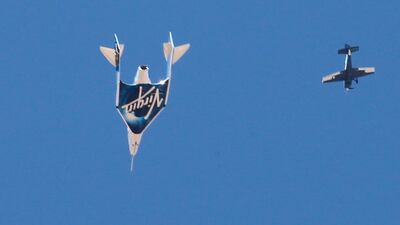
It was the 22nd test launch to space on the 'VSS Unity'. -
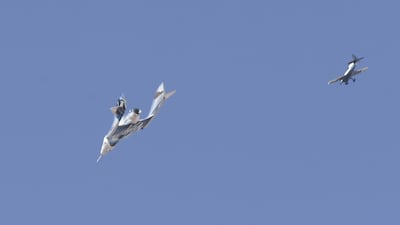
Mr Branson has travelled to space about 17 years after founding Virgin Galactic. -

Spectators watch as the 'VSS Unity' separates from its mothership. -
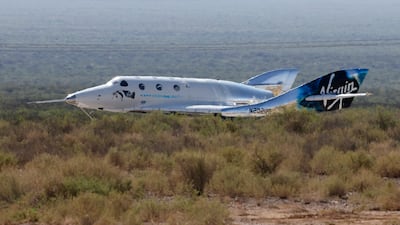
The 'VSS Unity' lands after taking passengers including Mr Branson to the edge of space.


These data were then incorporated into a 3D atmospheric chemistry model to explore the impact on climate and the ozone layer.
The team show that warming due to soot is 3.9 mW m-2 from a decade of contemporary rockets, dominated by emissions from kerosene-fuelled rockets.
However, this more than doubles after only three years of additional emissions from space tourism launches, due to the use of kerosene by SpaceX and hybrid synthetic rubber fuels by Virgin Galactic.
The researchers say this is of particular concern as, when the soot particles are directly injected into the upper atmosphere, they have a much greater effect on climate than other soot sources — with the particles 500 times more efficient at retaining heat.
The team found that, under a scenario of daily or weekly space tourism rocket launches, the impact on the stratospheric ozone layer threatens to undermine the recovery initiated by the implementation of the Montreal Protocol.
Adopted in 1987, the protocol banned substances that deplete the ozone layer and is considered one of the most successful international environmental policy interventions.

“The only part of the atmosphere showing strong ozone recovery post-Montreal Protocol is the upper stratosphere and that is exactly where the impact of rocket emissions will hit hardest,” said study lead author Robert Ryan of UCL.
He said researchers had not been expecting to see ozone changes of that magnitude.
“There is still a lot we need to find out about the influence of rocket launch and re-entry emissions on the atmosphere — in particular, the future size of the industry and the types and by-products of new fuels like liquid methane and bio-derived fuels,” he added.
“This study allows us to enter the new era of space tourism with our eyes wide open to the potential impacts. The conversation about regulating the environmental impact of the space launch industry needs to start now so we can minimise harm to the stratospheric ozone layer and climate.”

