


Live updates: follow the latest news on Russia-Ukraine
Russian President Vladimir Putin is likely to be using nuclear-capable hypersonic missiles against Ukrainian targets to detract from his army’s lack of progress almost a month into the war, Britain has said.
Moscow this week claimed its first use of the hypersonic Kinzhal, or Dagger, a domestically made weapon which it says has a range of more than 2,000 kilometres. The weapons – which are launched from the air, most likely by a MiG-31 warplane – were used to destroy a large underground arms depot in western Ukraine.
Britain’s Ministry of Defence said Mr Putin had resorted to unprecedented tactics in a desperate bid to draw attention from his dismal operation.
On Tuesday, day 27 of the invasion, Russian troops were continuing their battle to capture Kyiv. Gen Lord Richard Dannatt, former head of the British armed forces, said invading troops fighting to take the capital were “hunkering down” and on the defensive while coming up against heavy resistance from Ukrainian soldiers and volunteers.
In an intelligence update on Monday evening, the MoD said Russia’s claims of using hypersonic missiles were "highly likely intended to detract from a lack of progress in Russia’s ground campaign”.
“Deployment of Kinzhal is highly unlikely to materially affect the outcome of Russia’s campaign in Ukraine,” the report said.
In a further update issued on Tuesday morning, the MoD said Russian forces had endured “yet another day of limited progress with most forces largely stalled in place”.
The latest figures from the United Nations show at least 10 million Ukrainians have been internally displaced as a result of the war, while 3.48 million have fled the country.
Gen Lord Dannatt said the Russians’ push from Belarus towards Kyiv has “very much stalled” and cited reports about invading troops “hunkering down” for what is expected to be a long battle for the capital. Given the fierce opposition from Ukrainian forces and volunteers, he forecast the war would drag on for “quite some time”.
As the battle rages for the southern port city of Mariupol, Gen Lord Dannatt said a Russian capture would open up a vital land border connecting Crimea to the Donbas and Russian territory.
“That’s absolutely critical because if that land link is established and Ukrainian forces have to finally give up Mariupol, it means the Russians will be able to redeploy quite a number of forces, possibly perhaps to threaten Odesa,” he told Sky News.
-

A firefighter works at a residential district that was damaged by shelling, as Russia's invasion of Ukraine continues, in Kyiv, Ukraine. Reuters -

A woman removes pieces of broken glass from a shop window after a bombing in Kyiv, Ukraine. AP -
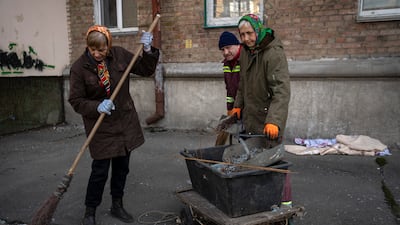
Residents clean the street outside apartments damaged by shelling, in Kyiv, Ukraine. AP -
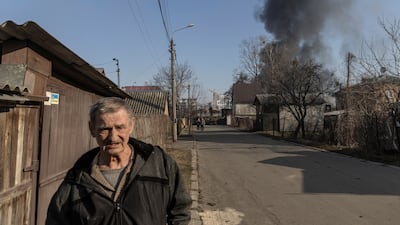
A man walks at a residential district that was damaged by shelling, as Russia's invasion of Ukraine continues, in Kyiv, Ukraine. Reuters -

Rescuers work at the site of buildings damaged by shelling, as Russia's invasion of Ukraine continues, in Mykolaiv, Ukraine. Reuters -
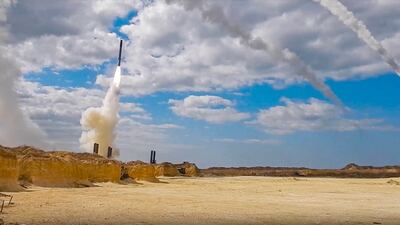
Launch of missiles by the coastal missile system 'Bastion' on infrastructure facilities of the Armed Forces of Ukraine from an undisclosed position in Crimea. As a result of a strike with long-range precision weapons, an arsenal with weapons and military equipment of Ukrainian troops in the village of Orzhev, 14 kilometres north-west of the city of Rivne, two Tochka-U launchers near Kiev, and eight anti-aircraft missile systems were destroyed. EPA -

Pictures lie amidst the rubble of former teacher Natalia's house which was was hit in a military strike, amid Russia's invasion of Ukraine, in Kyiv, Ukraine. Reuters -
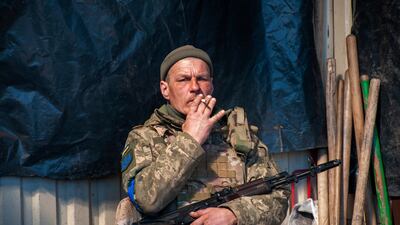
A Ukrainian serviceman rests at his position in Kharkiv, Ukraine. AP -
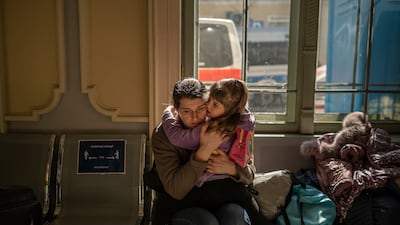
A hug for a child at the railway station in Przemysl, near the Polish-Ukrainian border, as Ukrainian refugees make their way out of the war zone. AFP -
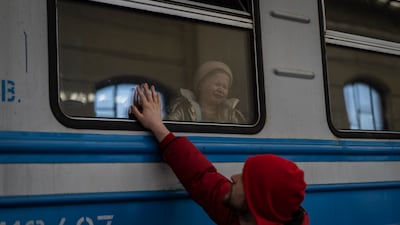
Displaced Ukrainians on a Poland-bound train bid farewell at Lviv, western Ukraine. AP -
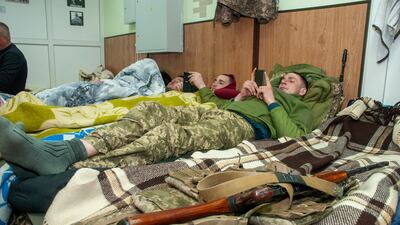
Ukrainian servicemen rest in Kharkiv. AP -
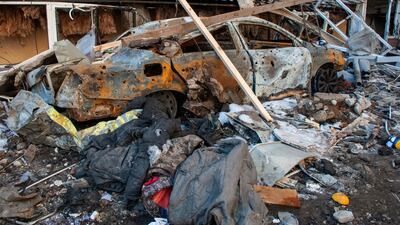
A car wrecked and burnt by shelling in a street in Kharkiv, Ukraine. AP -
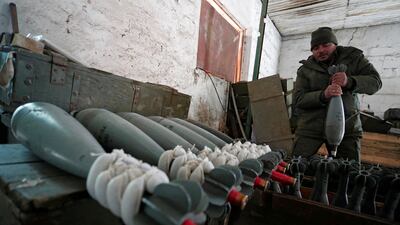
A member of pro-Russian unit in uniform without insignia handles a mortar round at a weapons depot near Marinka, in the Donetsk region of Ukraine. Reuters -
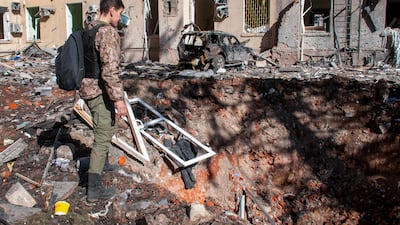
The aftermath of shelling in the eastern Ukrainian city of Kharkiv. EPA -
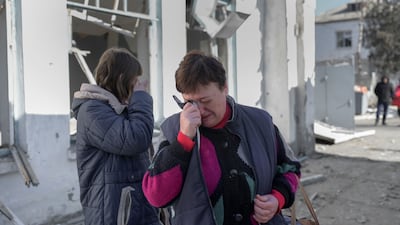
Nurses in tears after Russian shelling of a psychiatric hospital in Mykolaiv, southern Ukraine. AFP -
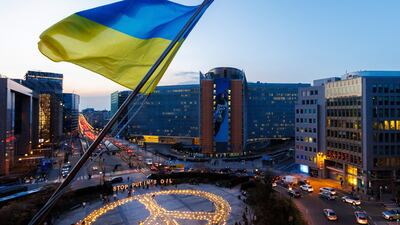
Candles and lights form a giant peace sign during the Avaaz vigil in front of the European Council and Commission buildings in Brussels, Belgium. AP -
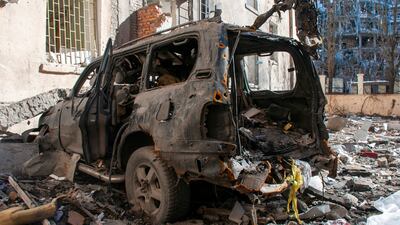
A wrecked car in a ruined street in Kharkiv, Ukraine. AP -

Rescue workers at an industrial building damaged by an air strike in Kyiv, Ukraine. Reuters -
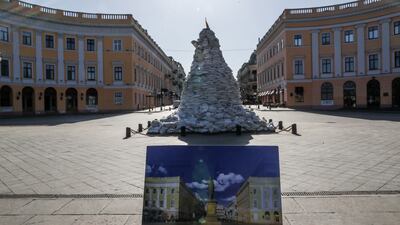
The monument to the Duke of Richelieu, one of the founders of the city of Odesa, is covered by sand bags. Near by, a placard shows the building before the Russian invasion. EPA -
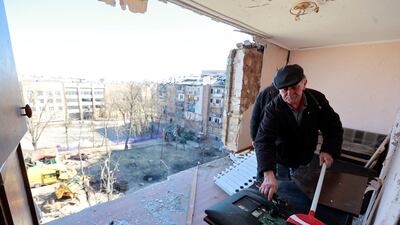
People clean up a room in an apartment building in Kyiv destroyed in an air raid, as Russia presses on with its invasion of Ukraine. Reuters -
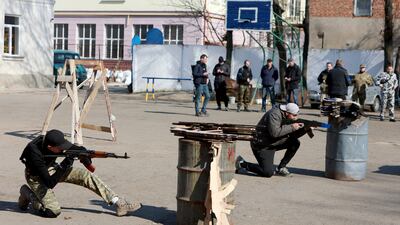
An instructor shows citizens how to fire the weapon during a shooting training session in Ivano-Frankivsk, Ukraine. Reuters -
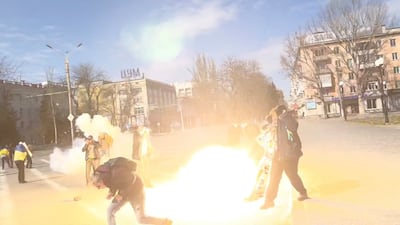
Russian troops hurl stun grenades at demonstrators protesting against the invasion, in Kherson, Ukraine. Reuters -
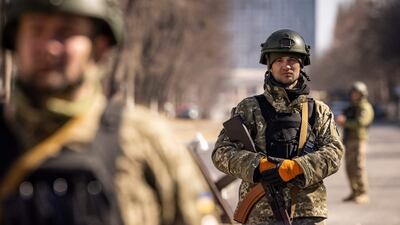
Ukrainian servicemen stand guard at a military checkpoint in Kyiv. AFP -
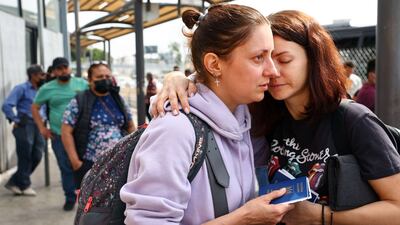
Ukrainian refugees Sasha Alexandra and Olena embrace shortly before being allowed to cross into the United States to seek asylum in Tijuana, Mexico. They fled their city of Dnipro this month and travelled to Germany before flying to Mexico. AFP -
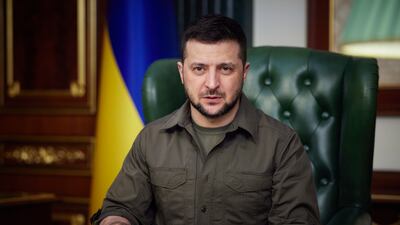
Ukrainian President Volodymyr Zelenskyy in a broadcast speech in Kyiv, calling on citizens to 'drive the occupiers out'. EPA -
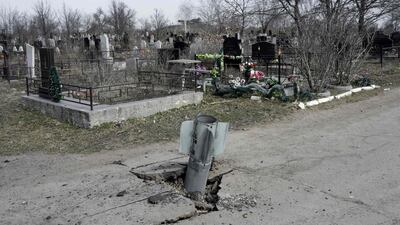
An unexploded rocket in a cemetery in Mykolaiv, southern Ukraine. AFP -
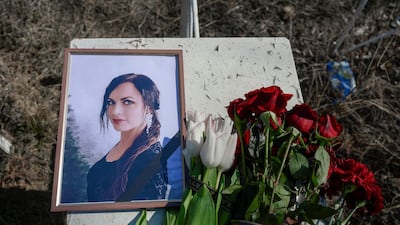
A portrait of a young woman who died during a Russian attack, next to her fresh grave in the Mykolaiv cemetery. AFP -
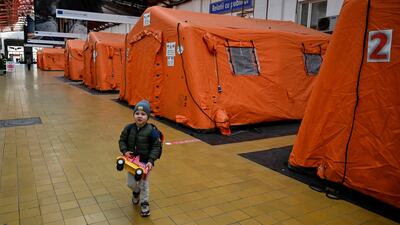
Tents set up for Ukrainian refugees inside a train station in Bucharest, Romania. AFP -
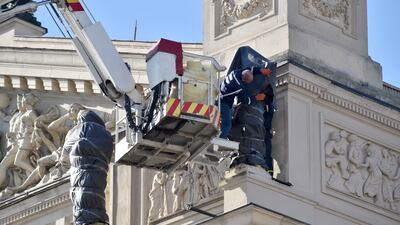
Workers cover a sculpture outside the home of Lviv National Opera to protect it from damage amid fighting in Ukraine. Reuters -

Olena, the mother of Denys Snihur, a 25-year-old soldier killed by Russian shelling in the northern town of Ovruch, mourns him at his funeral in Lviv. Reuters -
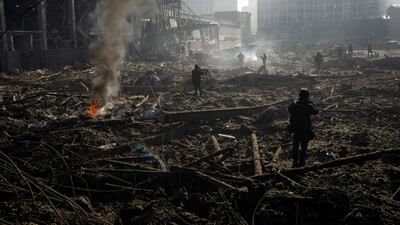
All that is left of a shopping centre after shelling in Kyiv. AP -
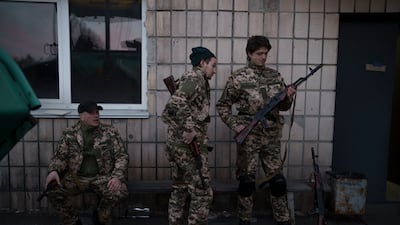
Civilian volunteers attend a Ukrainian Territorial Defence Forces training camp in Brovary, north-east of Kyiv. AP -
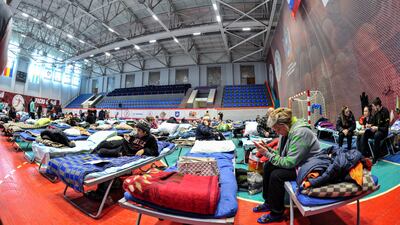
Refugees at a temporary accommodation centre in a school gymnasium in Taganrog, Russia. EPA -

Oil storage tanks burn in Chernihiv, Ukraine, in a satellite image from Maxar Technologies. EPA -

President Joe Biden discusses the US response to Russia's invasion of Ukraine at the Business Roundtable CEO Quarterly Meeting. EPA -
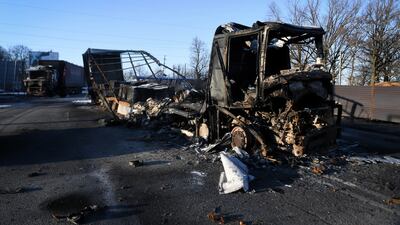
The wreck of a Russian military vehicle near Kharkiv. EPA -
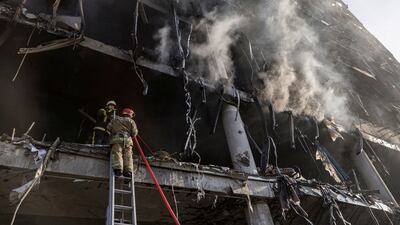
Firefighters work at the site of a shopping centre bombing in Kyiv. Reuters -

Seven-year-old Amellia Anisovych, a refugee from Ukraine, sings the Ukraine national anthem at the start of a fund-raising concert in Lodz, Poland. Amellia became known for singing a song from the film 'Frozen' in a bomb shelter in Kyiv. AP -
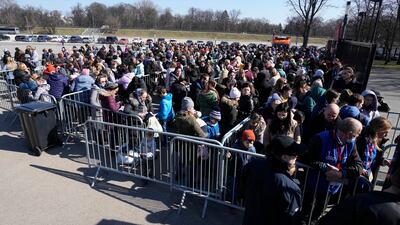
People queue at the National Stadium in Warsaw to apply for ID numbers that will entitle them to work and receive free health care and education in Poland. AP -
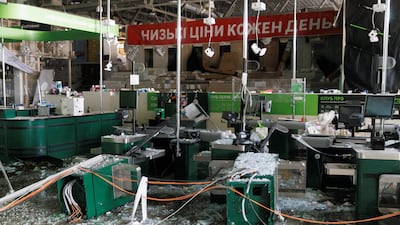
Checkout tills are damaged at a supermarket in a shopping centre that was damaged in a bombing in Kyiv. Reuters -
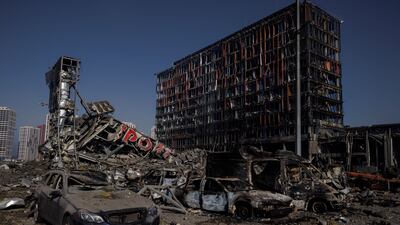
Cars are damaged at the site of a bombing at a shopping center in Kyiv. Reuters -
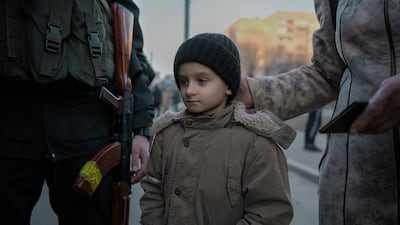
A woman comforts a boy while refugees wait for Ukrainian police to check their papers and belongings in Brovary, Ukraine. AP -
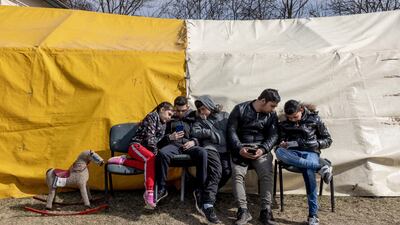
A refugee family sit in front of a tent at a temporary shelter offered by the Free Christian Church in Uszka, Hungary. Getty Images -
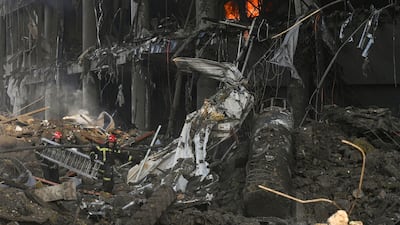
Firefighters carry a ladder across the debris following Russian shellings that destroyed the Retroville shopping mall in Kyiv. AFP -
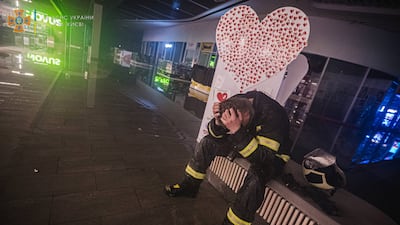
A rescuer inside a shopping mall damaged by an airstrike in Kyiv. Reuters


“Bear in mind that Russia has quite a large amphibious force at sea threatening Odesa, so we could see an attack being made on that last port that gives Ukraine its last opportunity to get its exports out into the world shipping lanes.
“So what’s happening in the south is really, really important in the present moment.”
He warned of another genocide in Europe and said “Mariupol looks increasing like Srebrenica”, referring to the killing of more than 8,000 Bosnian Muslim men and boys in 1995 during the Balkans war.
The former military leader said Mr Putin had attacked his neighbouring nation with the intention of morphing Ukraine into Russia but questioned why Moscow would want to control a country it is now destroying.
“They’re just taking over a complete bomb site and destroyed cities,” he said.
US President Joe Biden on Monday said President Putin may be preparing to use chemical or biological weapons in Ukraine.
“Putin’s back is against the wall. He wasn’t anticipating the extent or the strength of our unity. And the more his back is against the wall, the greater the severity of the tactics he may employ,” Mr Biden told American business leaders in Washington DC.
“We’ve seen it before. He’s run a lot of false-flag operations. Whenever he starts talking about something he thinks Nato, Ukraine or the United States is about to do, it means he’s getting ready to do it.
“Now, he’s talking about new false flags he’s setting up ... he’s asserting that we, in America, have biological as well as chemical weapons in Europe – simply not true.
“They’re also suggesting that Ukraine has biological and chemical weapons in Ukraine. That’s a clear sign he is considering using both of those. He’s already used chemical weapons in the past and we should be careful of what’s about to come. He knows there’ll be severe consequences because of the united Nato front, but the point is – it’s real."

