


Coronavirus antibody therapies from AstraZeneca and GlaxoSmithKline provide some protection in mice against the Omicron variant and its latest mutation, known as BA.2, research suggests.
The treatments lost potency but they reduced the viral burden and limited lung inflammation caused by the virus, scientists from the Washington University School of Medicine reported on the bioRxiv server. The findings were not peer-reviewed.
AstraZeneca said its Evusheld treatment retains neutralising activity against the “emerging and highly transmissible” Omicron BA.2 sub-variant.
The preclinical data from the Washington University School of Medicine showed that Evusheld retained activity against Omicron BA.1 and BA.1.1.
Evusheld won regulatory clearance in the UK last week to be used as a medicine to prevent Covid-19 in patients with poor immune defences.
The medicine was found in a clinical trial to reduce the risk of developing symptomatic Covid by 77 per cent, with protection continuing for at least six months after one dose.
-
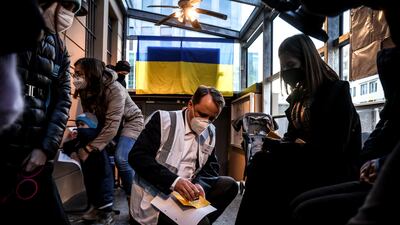
Ukrainians are registered by health workers while waiting to be vaccinated against the coronavirus at their country's embassy in German capital Berlin. EPA -
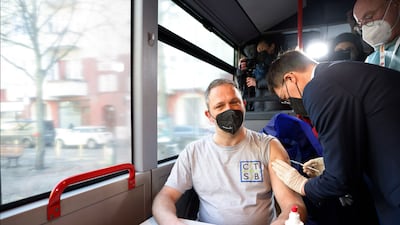
German Health Minister Karl Lauterbach, who studied medicine, vaccinates a man in the Vaccination Helps tour bus, at the project's launch in Berlin. EPA -
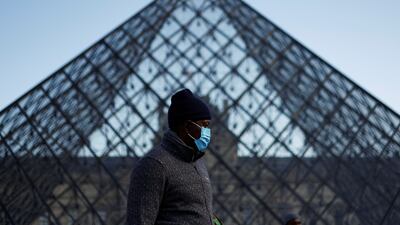
A man wearing a face mask walks past the Louvre Pyramid, at the Louvre museum, in French capital Paris. Reuters -
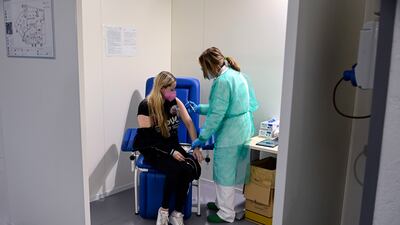
A Ukrainian refugee gets a Covid-19 vaccine at the Acea Hub in Italy's capital Rome. EPA -
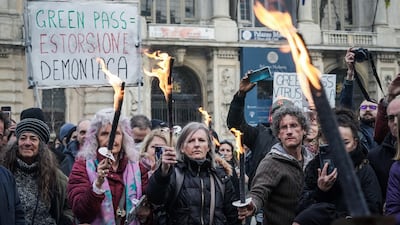
Protesters hold torches to burn Covid-19 vaccination passes, during a demonstration at Castello Square, in Turin, Italy. EPA -
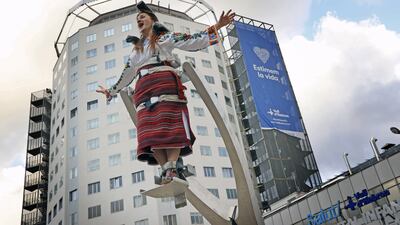
Ukrainian mezzosoprano Maria Melnychyn performs with the La Fura dels Baus theatre company at Vall d'Hebron hospital, in Barcelona, Spain, to mark the second anniversary of the beginning of the pandemic. EPA -
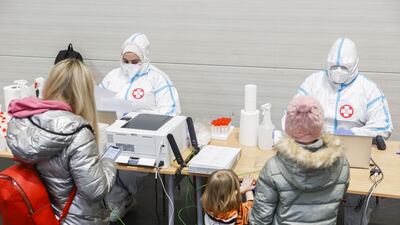
Ukrainian refugees are tested for coronavirus in a reception centre in Vienna, Austria. AFP


“We know that some people may not respond adequately to these vaccines and for a small number of individuals Covid-19 vaccines may not be recommended,” said June Raine, chief executive of the Medicines and Healthcare Products Regulatory Agency.
The Oxford Vaccine Group, which helped to develop the coronavirus drugs, said the next step in the beating the pandemic was developing a “global wall of immunity”.
So far, about 3 billion people have not received a first dose. To tackle the shortfall, about 2.6 billion AstraZeneca doses have been distributed to 183 countries.
“Protecting people elsewhere is also important for our own defence,” said Andrew Pollard, director of Oxford Vaccine Group.
In the UK, a campaign began on Monday to encourage older and vulnerable people to take a fourth vaccine as a booster.
Health Secretary Sajid Javid urged those aged 75 and over and the vulnerable to accept invitations for the spring inoculation. People are eligible if they had their last vaccine six months or more ago.
The NHS in England said people should use the national booking service when it is their turn. Booster campaigns have started in Wales and Scotland.
The NHS in England has been told to prepare for a 15-week autumn campaign from September to December.

