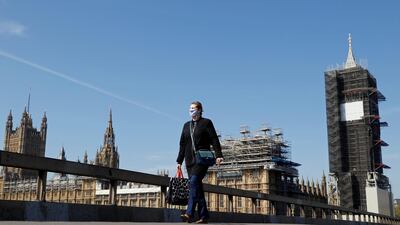

The UK government has made an "unprecedented request" to Muslims during Ramadan urging them to stay at home to save lives.
Public Health England has issued official guidance for Ramadan for the first time as places of worship remain closed during the coronavirus lockdown.
"Whilst staying at home throughout the holy month will be challenging, it is necessary to protect the NHS and save lives," it said.
"Staying at home during Ramadan will play an important part in the nation’s effort to slow the spread of coronavirus.
"The government recognises that this is an unprecedented request but following these rules will help control the spread of coronavirus and protect family, friends, the wider community, and the most vulnerable.
"Keeping yourself and loved ones well during Ramadan this year will mean adapting usual religious and cultural practices.
-
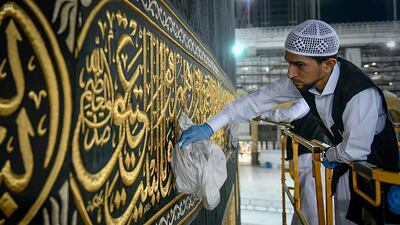
A worker cleans and sterilises the Kaaba in Makkah, Saudi Arabia. Reuters -
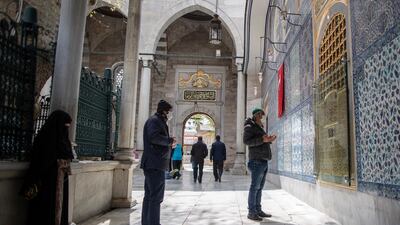
People wearing protective face masks pray at the courtyard of the Eyup Sultan Mosque for the upcoming Ramadan, in Istanbul, Turkey. EPA -

A Palestinian craftsman fashions a traditional "fanous" lantern, a decoration used to celebrate the start of Ramadan in a workshop in Khan Yunis in the southern Gaza Strip. AFP -

Workers clean and sterilise the roof of Kaaba at Makkah, Saudi Arabia. Reuters -
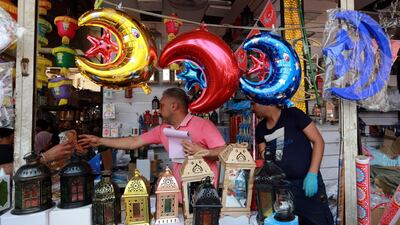
Iraqis shop for food ahead of the first day of Ramadan at the Shorjah market in central Baghdad, Iraq. EPA -
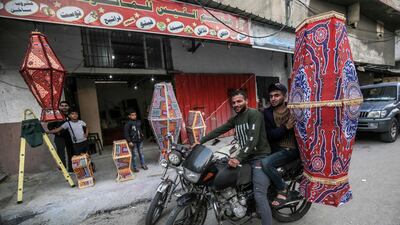
Palestinian men ride a motorcycle while carrying a newly made traditional "fanous" lantern, a decoration used to celebrate the start of the Muslim holy month of Ramadan, in Khan Yunis in the southern Gaza Strip. AFP -

A Sunni Muslim cleric wearing a face mask uses a telescope to gaze while searching for the crescent moon, which if sighted would mark the beginning of the Muslim holy month of Ramadan, at the Abu Al Hanifa Al Numan mosque in the Adhamiya district of Iraq's capital Baghdad. AFP -
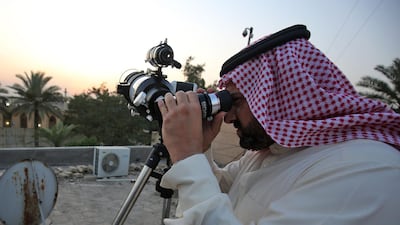
A Sunni Muslim cleric uses a telescope to gaze while searching for the crescent moon, which if sighted would mark the beginning of the Muslim holy month of Ramadan, at the Abu Al Hanifa Al Numan mosque in the Adhamiya district of of Iraq's capital Baghdad. AFP -
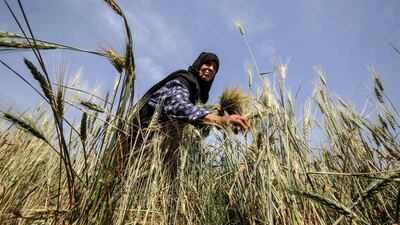
A Palestinian woman harvests wheat stalks in a field in Khan Yunis in the southern Gaza Strip, before being prepared to be used in a soup during Ramadan. AFP -

People shop in preparation for Ramadan, in Baghdad, Iraq. AP Photo -
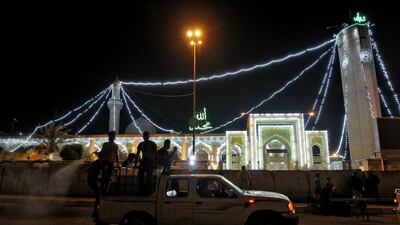
Men in the back of a pickup truck disinfect the street outside the Abu Al Hanifa Al Numan mosque in the Adhamiya district of Iraq's capital Baghdad. AFP -

A Palestinian boy seller showcases Chinese-made "fanous" lanterns in Khan Yunis in the southern Gaza Strip. AFP -
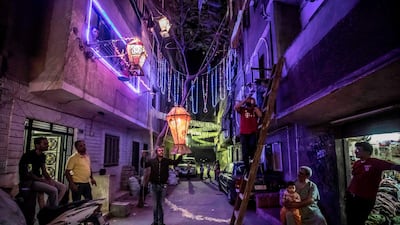
Egyptian youths decorate their residential street in preparation for Ramadan in Cairo's Hadayek El Maadi district. AFP -
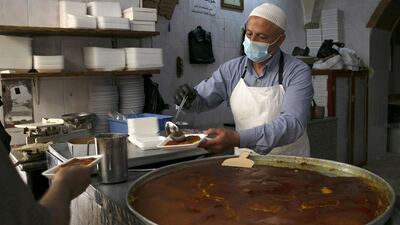
A Palestinian wearing a protective face mask sells knefeh (traditional Middle Eastern dessert) in the oldest knefeh store in the occupied West Bank city of Nablus. AFP -
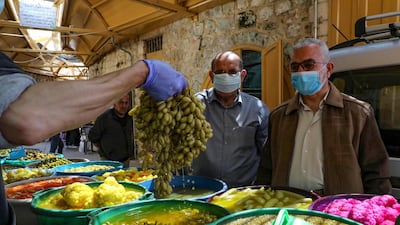
A Palestinian vendor shows pickled grapes to customers in the occupied West Bank city of Hebron. AFP -
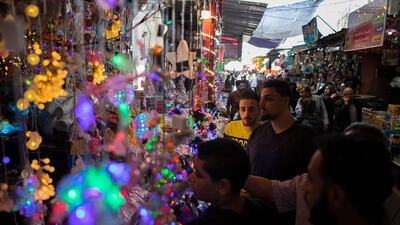
Palestinians shop in the Zawiya market ahead of Ramadan, in Gaza City. AP Photo -
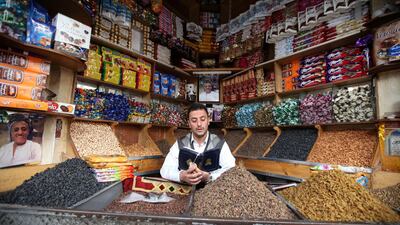
A spices vendor recites the Quran as he waits for customers in Sanaa, Yemen. Reuters -
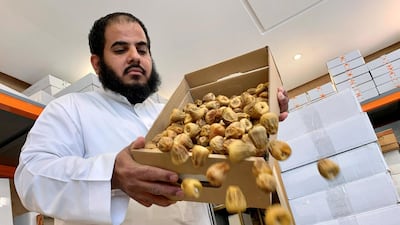
A Saudi seller pours dates into a box at his shop in Riyadh, Saudi Arabia. Reuters -
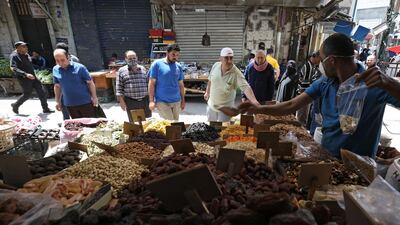
A vendor wearing a protective face mask serves customers at his shop in Amman, Jordan. Reuters


"This is particularly important for protecting vulnerable people who are shielding because of underlying health conditions as well as family, friends and carers of those who are most vulnerable."
It has issued a list of only four reasons why people should leave their homes during the holy month.
These include shopping for basic necessities, exercising once a day, for a medical need or travelling for work purposes.
It is urging people to use technology to stay connected.
"Video and social media could connect you to worship services and ceremonies," it said.
"Individual pastoral and care visits could be received by phone. Despite being physically apart, religious practices could be observed at the same time of day as the rest of your faith community. Your faith leaders will be able to advise you on the many ways for you to stay connected."
UK charity the Ramadan Tent Project has launched the world's largest open iftar using Zoom.
People from across the world will be able to join together and unite online to celebrate through it.
The government is urging those with severe coronavirus symptoms not to fast and to seek medical advice.
The British Islamic Medical Association had sought advice from scholars who agreed there could be an exemption for medics working in vital roles.
Osman Dar, Consultant in Global Health at Public Health England, said the measures are necessary to protect the vulnerable.
"Ramadan is a time for prayer, contemplation, self-sacrifice and charity – all of these qualities are key to supporting our collective effort in tackling this pandemic," he said.
"This Ramadan, let’s think about how we can best protect the most vulnerable in our families, amongst our neighbours and in all our diverse communities. By working together we can minimise the transmission of coronavirus and reduce the chances of overwhelming our health and care services.
"Let us not forget the deeply spiritual reminders this pandemic brings; unite, pull together and leave nobody behind insha’Allah."

