• The Wildlife Centre, just outside Mussaffah in Abu Dhabi, the UAE, is a refuge for endangered species that have been smuggled into the country and domesticated. Lee Hoagland / The National
    The Wildlife Centre, just outside Mussaffah in Abu Dhabi, the UAE, is a refuge for endangered species that have been smuggled into the country and domesticated. Lee Hoagland / The National
  • Al Ain Zoo became the new home for cheetah cubs that were smuggled into Dubai in 2010. Ten of the 15 died. Sammy Dallal / The National
    Al Ain Zoo became the new home for cheetah cubs that were smuggled into Dubai in 2010. Ten of the 15 died. Sammy Dallal / The National
  • This bird was greeted each day by its care giver with the phrase 'Asalam Alaikum'. It now repeats the Muslim greeting. Lee Hoagland / The National
    This bird was greeted each day by its care giver with the phrase 'Asalam Alaikum'. It now repeats the Muslim greeting. Lee Hoagland / The National
  • Ball Python eggs are popular with animal traffickers and smugglers. EPA
    Ball Python eggs are popular with animal traffickers and smugglers. EPA
  • A surprising number of snakes are smuggled in and out of countries each year. EPA
    A surprising number of snakes are smuggled in and out of countries each year. EPA
  • In Thailand, animal lovers are able to meet exotic beasts such as lions, frogs, birds and snakes at a yearly event. EPA
    In Thailand, animal lovers are able to meet exotic beasts such as lions, frogs, birds and snakes at a yearly event. EPA
  • A member of the Cheetah Conservation Fund feeds a baby cheetah. AFP
    A member of the Cheetah Conservation Fund feeds a baby cheetah. AFP
  • Every year an estimated 300 cheetah cubs are trafficked through Somaliland to wealthy buyers seeking exotic pets. AFP
    Every year an estimated 300 cheetah cubs are trafficked through Somaliland to wealthy buyers seeking exotic pets. AFP
  • Cheetah cubs that survive being snatched from their mothers, and shipped out of Africa to wartorn Yemen and onwards to the Gulf can fetch up to $15,000 on the black market. AFP
    Cheetah cubs that survive being snatched from their mothers, and shipped out of Africa to wartorn Yemen and onwards to the Gulf can fetch up to $15,000 on the black market. AFP
  • India has reported a surge in the smuggling of exotic birds including cockatoos and macaws, as well as other rare species such as tortoises, civets and snakes from South-East Asian countries. All remaining photos: Indian Police
    India has reported a surge in the smuggling of exotic birds including cockatoos and macaws, as well as other rare species such as tortoises, civets and snakes from South-East Asian countries. All remaining photos: Indian Police
  • Wildlife experts say the reason for the sharp increase in smuggling is the high demand for rare animals as pets.
    Wildlife experts say the reason for the sharp increase in smuggling is the high demand for rare animals as pets.
  • Combined with major legal loopholes, this has driven up the illegal trade in India.
    Combined with major legal loopholes, this has driven up the illegal trade in India.
  • Smugglers usually use land routes along India's north-eastern region that borders Nepal, Bhutan, Myanmar and Bangladesh, but many fly the animals into country, with airport authorities thwarting many attempts.
    Smugglers usually use land routes along India's north-eastern region that borders Nepal, Bhutan, Myanmar and Bangladesh, but many fly the animals into country, with airport authorities thwarting many attempts.
  • There is no legislation in the country's Wildlife Act that covers their arrest or prosecution for possessing and smuggling exotic animals and birds.
    There is no legislation in the country's Wildlife Act that covers their arrest or prosecution for possessing and smuggling exotic animals and birds.
  • Most of the arrests are made under India’s criminal law.
    Most of the arrests are made under India’s criminal law.

Panama confronts illegal trafficking of animals


  • English
  • Arabic

Panamanian authorities iare trying to raise awareness about the dangers to humans and wildlife of keeping wild animals in their homes.

This month, Panama hosted the World Wildlife Conference, where participants voted to tighten restrictions on the international trade in animals and plants.

Black-handed spider monkeys are listed in the most endangered category of international species, and Panama's Ministry of Environment says they are in “critical danger".

Trade in the monkeys is permitted only in exceptional circumstances.

“People don’t understand they can’t buy a wild animal from someone who doesn’t have authorisation to sell it,” said Felipe Cruz, the ministry’s adviser on environmental crimes.

“The environment can’t take any more. We’re at a critical point.”

An ocelot is given medical care as he is prepared to be released back into the wild, at a Ministry of the Environment rehabilitation center in Panama City. AP

In the first nine months of the year, Panama’s Attorney General’s Office recorded 19 cases of wild species trafficking and 14 cases of extraction of species that were protected or in danger of extinction.

Shirley Binder, an adviser to the Environment Ministry, said the real extent of the problem could be greater.

“The country is big. There could be cases that we don’t have,” Ms Binder said.

“We have formed strategic alliances with security sectors that now are conscious of the environmental issue, … but we also need the support of citizens generally so that when they see these cases they report them.”

The government introduced a catalogue with photographs and technical details to assist in identifying the most commonly trafficked species.

Panamanian law strictly limits the possession of wildlife.

The Environment Ministry issues permits to zoos, breeding centres or for the raising and consumption of some sources of protein such as deer and iguana, but not for endangered species.

Spider monkeys are among the most popular wild pets, said Erick Nunez, the Environment Ministry’s chief of national biodiversity.

Primates can adapt relatively well to living in with humans, making their rehabilitation especially challenging, Mr Nunez said.

The new government rehabilitation centre, which was built on land adjacent to former US military bases, began receiving animals during the Covid-19 pandemic.

Animals come and go, but it holds up to 50 and there are plans to expand.

Primates such as spider monkeys are among the most frequent arrivals, but the centre also receives cat species such as ocelots and jaguarundi, and birds including toucans and owls.

They will only be reintroduced to the wild after thorough evaluation by the centre’s biologists and specialists from non-government organisations.

The monkeys will need to show that they can find their food and recognise other members of their species.

Mr Nunez said people still see monkeys as making good pets, an attitude he said was “unjust and inappropriate".

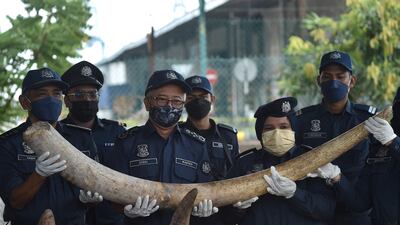
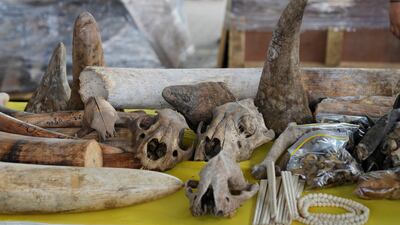
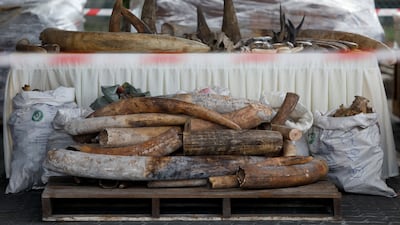
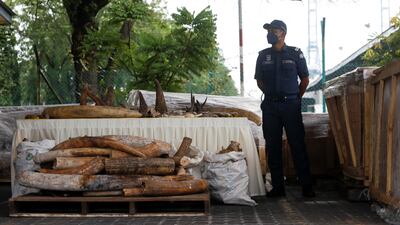
  • Malaysian Customs officers display some of the 6,000 kilograms of seized elephant tusks, at Port Klang in Selangor, west of Kuala Lumpur. AFP
    Malaysian Customs officers display some of the 6,000 kilograms of seized elephant tusks, at Port Klang in Selangor, west of Kuala Lumpur. AFP
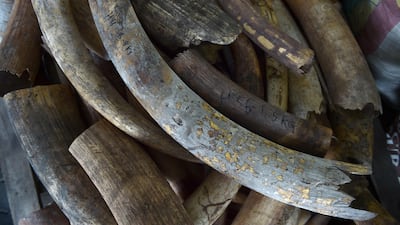
  • The ivory and other animal body parts were seized by Malaysian Customs officers from a ship. AFP
    The ivory and other animal body parts were seized by Malaysian Customs officers from a ship. AFP
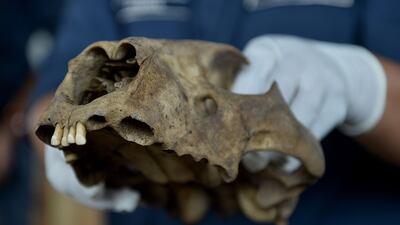
  • An animal skull found in the Customs operation. AFP
    An animal skull found in the Customs operation. AFP
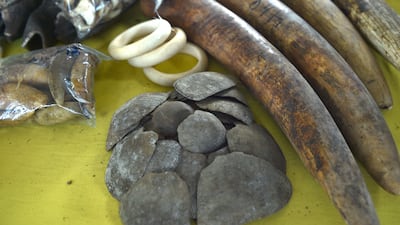
  • Pangolin scales also formed part of the haul. These are used in traditional Chinese medicine. AFP
    Pangolin scales also formed part of the haul. These are used in traditional Chinese medicine. AFP
  • Big cat skulls and rhino horns were also found in the shipping container seized by Malaysia's Customs. AP
    Big cat skulls and rhino horns were also found in the shipping container seized by Malaysia's Customs. AP
  • Ivory and rhino horns laid out by Customs officials. Reuters
    Ivory and rhino horns laid out by Customs officials. Reuters
  • Customs officers said the haul had an estimated value of 80 million Malaysian ringgit ($18m). Reuters
    Customs officers said the haul had an estimated value of 80 million Malaysian ringgit ($18m). Reuters
'Saand Ki Aankh'

Produced by: Reliance Entertainment with Chalk and Cheese Films
Director: Tushar Hiranandani
Cast: Taapsee Pannu, Bhumi Pednekar, Prakash Jha, Vineet Singh
Rating: 3.5/5 stars

Tips for newlyweds to better manage finances

All couples are unique and have to create a financial blueprint that is most suitable for their relationship, says Vijay Valecha, chief investment officer at Century Financial. He offers his top five tips for couples to better manage their finances.

Discuss your assets and debts: When married, it’s important to understand each other’s personal financial situation. It’s necessary to know upfront what each party brings to the table, as debts and assets affect spending habits and joint loan qualifications. Discussing all aspects of their finances as a couple prevents anyone from being blindsided later.

Decide on the financial/saving goals: Spouses should independently list their top goals and share their lists with one another to shape a joint plan. Writing down clear goals will help them determine how much to save each month, how much to put aside for short-term goals, and how they will reach their long-term financial goals.

Set a budget: A budget can keep the couple be mindful of their income and expenses. With a monthly budget, couples will know exactly how much they can spend in a category each month, how much they have to work with and what spending areas need to be evaluated.

Decide who manages what: When it comes to handling finances, it’s a good idea to decide who manages what. For example, one person might take on the day-to-day bills, while the other tackles long-term investments and retirement plans.

Money date nights: Talking about money should be a healthy, ongoing conversation and couples should not wait for something to go wrong. They should set time aside every month to talk about future financial decisions and see the progress they’ve made together towards accomplishing their goals.

2019 ASIA CUP POTS

Pot 1
UAE, Iran, Australia, Japan, South Korea, Saudi Arabia

Pot 2
China, Syria, Uzbekistan, Iraq, Qatar, Thailand

Pot 3
Kyrgyzstan, Lebanon, Palestine, Oman, India, Vietnam

Pot 4
North Korea, Philippines, Bahrain, Jordan, Yemen, Turkmenistan

Updated: November 30, 2022, 12:55 AM