
The Yemeni government on Sunday called for the Iran-backed Houthi rebels to follow through with their long-delayed prisoner exchange deal.
The deal was part of an agreement made in December 2018 in Sweden to avert a government offensive on the Red Sea port city of Hodeidah.
It would lead to hundreds of political prisoners and captured government fighters being released by the rebels in exchange for hundreds of captured Houthis.
But the deal has not been implemented after haggling over the finalised lists put forward by both sides at meetings in Amman, Jordan over the last 12 months.
Majed Fadhel, Yemen’s deputy minister of human rights and a member of the team negotiating the prisoner swap, said the government was ready to implement the latest deal, which was signed in Jordan in February 2020.
"But the Houthi rebels have been responding to that with more complications and much obstinacy," Mr Fadhel told The National.
“We have been positively responding to all the suggestions of the UN special envoy Martin Griffiths to turn the deal into reality but the rebels have been making more obstacles that undermine the implementation of the deal."
Coronavirus in the Middle East
-
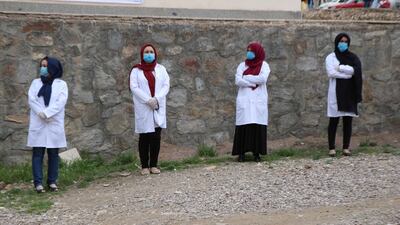
Health officials wait outside, during the disinfection of a hospital for coronavirus patients and suspects, in Herat Afghanistan. EPA -

A man takes a picture of a sheep at a beach, during a lockdown to prevent the spread of coronavirus in Algiers, Algeria. Reuters -

A cat passes at a deserted amusement park, during a lockdown that imposed by the government to help stem the spread of the coronavirus, in Beirut, Lebanon. AP Photo -

A man stands on his surf on Beirut's Mediterranean Sea an hour before the starting of the nighttime curfew that imposed by the government to help stem the spread of coronavirus, Lebanon. AP Photo -
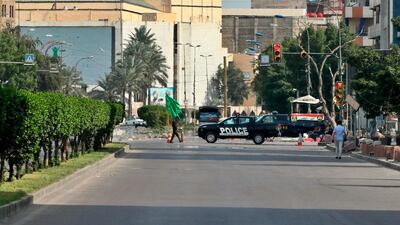
Iraq security forces are deployed to enforce a curfew to help fight the spread of the coronavirus, in Baghdad, Iraq. AP Photo -
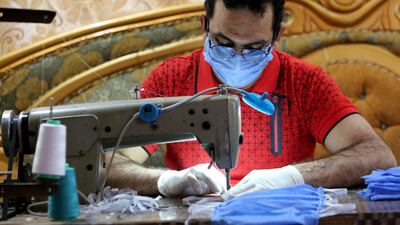
Mohammed al-Saadi works at the family's residence in Baghdad after transforming a room in the house into a workshop for manufacturing protective masks and medical decontamination suits. AFP -
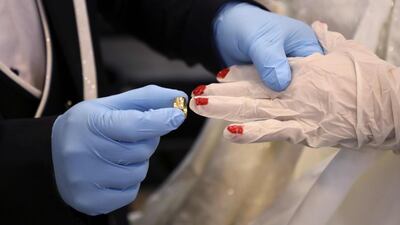
Palestinian Baraa and Ammar exchange rings while wearing gloves in the West Bank village of Dora near Hebron as authorities imposed restrictions on large gatherings in a bid to stem the spread of coronavirus. AFP -
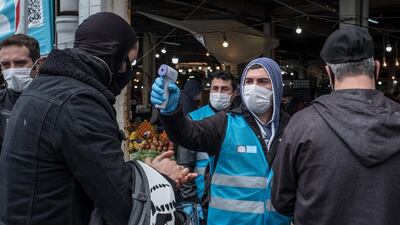
Besiktas municipality police and employees distribute masks, check ID's and take the temperature of people arriving at the entrance of the Besiktas market in Istanbul, Turkey. Getty Images -

A view shows an empty bus station during a lockdown to prevent the spread of coronavirus in Damascus, Syria. Reuters -
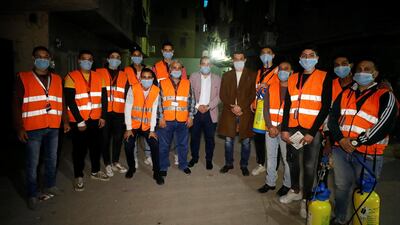
A medical team of volunteers prepare to spray disinfectant as a precaution to contain the spread of coronavirus at Shubra El Kheima in Al Qalyubia, Egypt. Reuters -
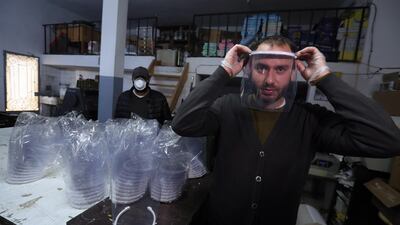
Tunisian Mohamed Amine Ben Gharbia owner of a 3D printer tries a mask at his workshop in Bizerte, 60kms north of Tunis. EPA -
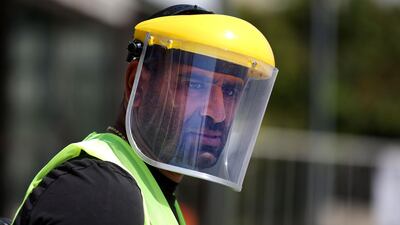
A municipality employee stands at a checkpoint in Lebanon's northern coastal city of Batroun. AFP


He said the rebels made new requests, including to add names of people of whom the government has no knowledge, "to undermine the deal in such hard circumstances surrounding the massive outbreak of coronavirus”.
Information Minister Muammar Al Eryani said the government was ready to implement the deal.
“We call on the UN and the special envoy to Yemen, Martin Griffiths, to immediately move to pressure the Houthi militia to make progress on the prisoner-exchange by releasing all prisoners and abductees,” Mr Al Eryani said.
He said that 1,100 of the initial 1,420 names put forward by the two sides had been approved and a final meeting could be held to accept the remaining people on the lists.
“The government is ready to immediately put the recent understandings from Jordan about prisoner-exchange into effect,” Mr Al Eryani said.
He said the UN has been asked to act quickly, noting the global coronavirus pandemic had led many countries to release prisoners to ease overcrowding.
Mr Al Eryani said that Yemeni President Abdrabu Mansur Hadi and the Cabinet were keen to finalise the issue.
But he said they were worried because the rebels had continued to abduct civilians and disrupt agreements made under the supervision of the UN.
Meanwhile, the Association of Abductees' Mothers in Yemen last week sent an appeal to the UN and the international community to put pressure on the Houthi rebels to free their sons.
The group says their sons are being held in overcrowded Houthi prisons that lack even basic hygiene.
“More than 173 prisoners with chronic diseases are still detained in very poor conditions in Sanaa, Hodeidah, Hajja province and the provinces of Ibb and Taez," association member Umm Ibrahim said.
"Those abductees are the most vulnerable to resist the pandemic in case it emerges in the country."
Yemen’s government last week released hundreds of prisoners charged with non-violent crimes amid fears that the coronavirus could spread through the country’s jails.
"More than 470 prisoners were freed from detention facilities in provinces under the legitimate government's control," a judiciary source told The National.

