
Yemen's government has ordered the suspension of international flights and the closure of educational institutions to prevent the spread of the new coronavirus to the country.
The measures are similar to those being taken by countries around the world to contain the Covid-19 pandemic, although Yemen has not yet detected any cases.
A statement from Prime Minister Maeen Abdulmalik's office said humanitarian flights were exempted from the ban, which begins on March 18.
The state-run Saba news agency said all border crossings would be closed except for commercial and humanitarian shipments.
The government also suspended classes in all educational institutions including schools, universities and vocational training schools, Saba reported.
The Houthi rebels, who control much of northern Yemen including the capital Sanaa, also announced a ban on passenger flights on Saturday, although city's airport receives only occasional humanitarian flights.
Yemen's health infrastructure has been severely affected by nearly five years of civil war between the Iran-backed rebels and government forces supported by a Saudi-led military coalition.
“Fortunately, no coronavirus cases have been reported in Aden and Yemen so far, but we have proactively started preparing for any emergent cases," said Dr Jamal Khadabakhish of the public health authority in Aden, where the government is based.
-
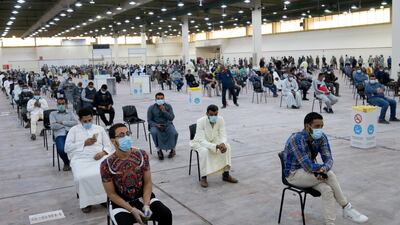
Expatriates wait for mandatory coronavirus testing in a makeshift testing centre in Mishref, Kuwait. REUTERS -
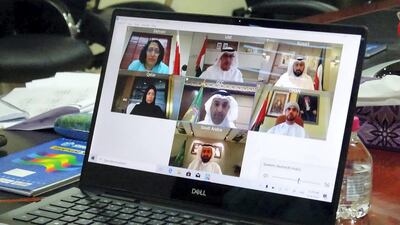
The Minister of Health of Bahrain participates in an emergency meeting held by the Health Ministers of the GCC. Courtesy Bahrain News Agency -

Rafha health sector is intensifying its precautionary efforts around the clock. Courtey SPA -
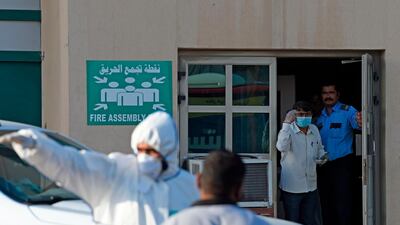
Bahraini policemen seal off a building housing foreign workers in the Salmabad industrial area as a precautionary measure after a resident tested positive for coronavirus (COVID-19), on the outskirts of the capital Manama. AFP -
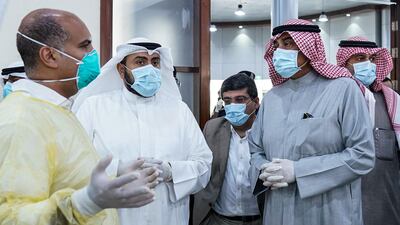
Kuwait's Prime Minister Sheikh Sabah al-Khaled al-Sabah (2nd-R), Health Minister Sheikh Basel al-Sabah (2nd-L), and Interior Minister Anas al-Saleh (R) as they listen to a physician while visiting an area designated by Kuwait's Health Ministry for returning expatriates from Egypt, Syria, and Lebanon as they await to be tested for COVID-19 coronavirus disease, in Kuwait City. AFP -
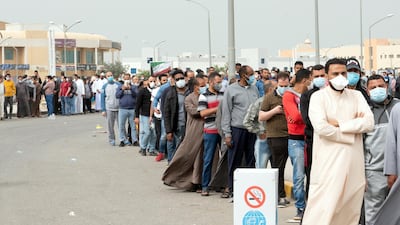
Expatriates wait in line to be tested at a makeshift centre, following the outbreak of coronavirus, in Mishref, Kuwait. REUTERS -
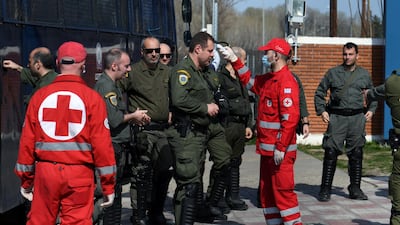
Members of the Hellenic Red Cross check the temperature of Greek riot police officers who wait to enter the Kastanies border crossing area with Turkey's Pazarkule, Greece. REUTERS -
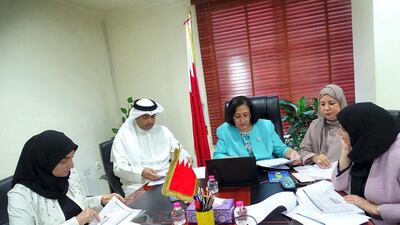
The Minister of Health of Bahrain participates in an emergency meeting held by the Health Ministers of the GCC. Courtesy Bahrain News Agency -
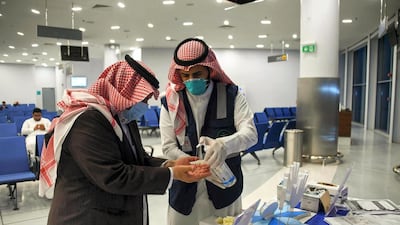
Preventative measures in travel hall of Arar Airport. Courtesy SPA -
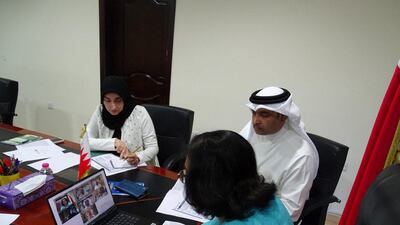
The Minister of Health of Bahrain participates in an emergency meeting held by the Health Ministers of the GCC. Courtesy Bahrain News Agency -
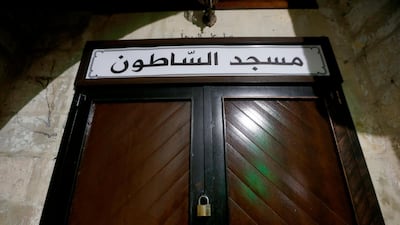
A closed door after the last prayer at Al-Satoun Mosque in the Old City of Nablus. The Palestinian Authority closed all mosques and churches in the West Bank and asked Palestinians to pray at home to prevent the spread of the coronavirus. EPA -
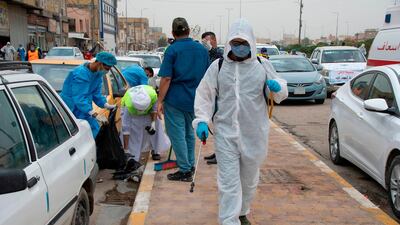
Iraqi municipality workers disinfect a street in the southern city of Nasiriyah in Dhi Qar province. AFP


Dr Khadabakhish said the local branch of the World Health Organisation was assisting with preparations to deal with a possible outbreak.
"We have co-ordinated with WHO Yemen which granted us some medical equipment and some testing materials but we are fighting to get a place to open a quarantine centre for suspected cases," he told The National.
“We previously selected two places but the residents living nearby rejected the plan fearing infection," he said, blaming rumours spread by the media.
An official at Aden's international airport welcomed the flight ban, saying most entry points lacked the equipment needed to detect suspected cases among arrivals.
“We have met many officials from the ministry of public health, WHO Yemen and other international organisation. Many of them promised to provide the airport with equipment needed to test passengers arriving at the airport but nothing has happened so far,” the official said.

