

The US administration’s latest round of sanctions against Syria has worried bankers and businessmen across the border in Lebanon, who say it could add to the small country’s worst economic and financial crisis.
Implemented on June 17, the Caesar Act sanctions people who knowingly provide significant support to the Syrian government in four sectors: the military, oil and gas, aviation and construction.
Because of the close historical ties between Lebanon and Syria, the law will make business between the two countries “more problematic and expensive” and “hurt Lebanon”, said Nasser Saidi, a former vice-governor of Lebanon’s central bank.
The Caesar Act provides for secondary sanctions, which significantly widens its scope, he said.
"In other words, they are imposing sanctions on Syrian entities and business people and also on the people who deal with them," Mr Saidi told The National.
But bankers in Lebanon are not sure exactly how the sanctions will be applied.
"The text introduces the notion of 'significant' support to the Syrian regime. That is not clear to me," Riad Obegi, chairman and general manager of Banque Bemo, told The National at his office in Beirut. "It creates uncertainty, and that's not good."
A sizeable amount of deposits in Lebanese banks belongs to Syrians. Mr Obegi estimated that Syrians have placed around $30 billion in the country out of a total of roughly $160bn in deposits.
Mr Saidi put the amount lower – between $14bn and $20bn. “We cannot know the exact amount because many Syrians have dual nationality with Lebanon,” he said.
Because of these close ties, the Caesar Act has caused a flurry of activity in Lebanese banks.
-
-
-
-
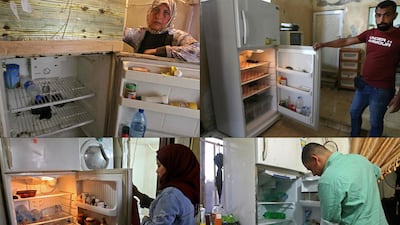
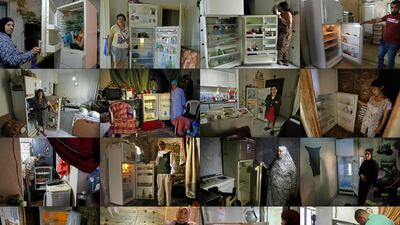
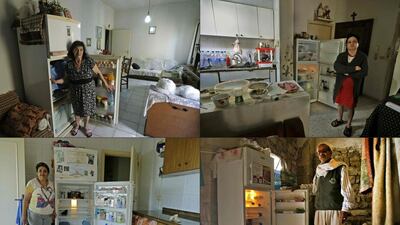
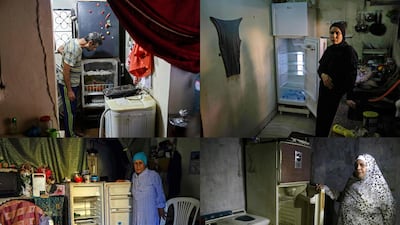
A combination image shows bare fridges across Lebanon as the economic crisis plunges households into poverty. AFP -
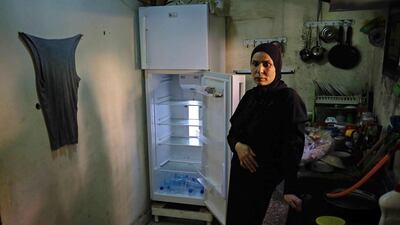
A Lebanese woman stands next to her empty refrigerator in her apartment in the port city of Tripoli. AFP -
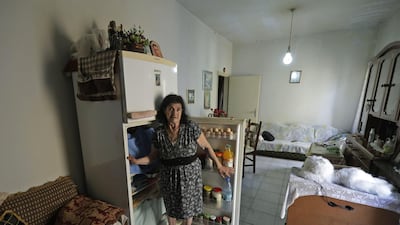
A Lebanese woman in Bouar north of Beirut displays the content of her refrigerator. AFP -

A Lebanese child stands next to an empty refrigerator in their apartment in the port city of Tripoli. AFP -
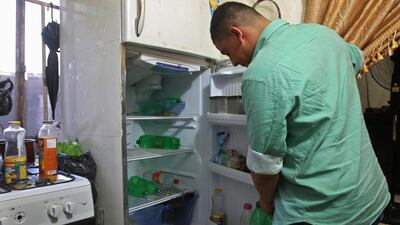
A Lebanese man displays the content of his refrigerator at his apartment in the southern city of Sidon. AFP -
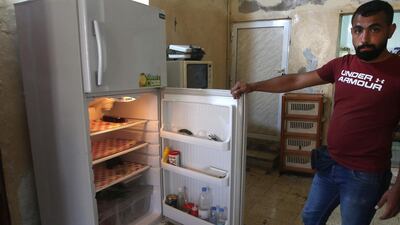
A Lebanese man displays the content of his refrigerator at his apartment in the southern city of Sidon. AFP -
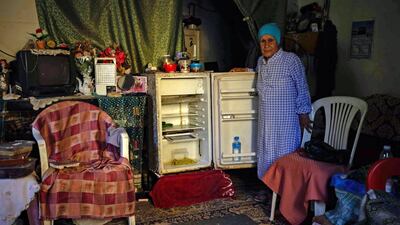
A Lebanese woman stands next to her empty refrigerator in her apartment in the port city of Tripoli. AFP -
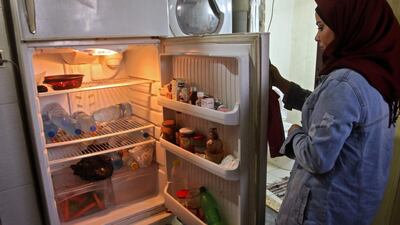
A Lebanese woman displays the content of her refrigerator at her apartment in the southern city of Sidon. AFP -
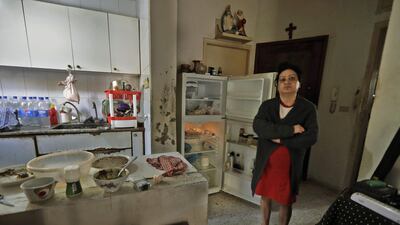
A Lebanese woman stands next to her empty refrigerator in her apartment in Zouk Mosbeh, north of Beirut. AFP -
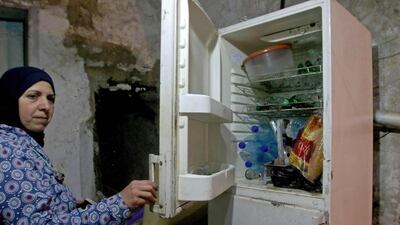
A Lebanese woman displays the content of her refrigerator at her apartment in the southern city of Sidon. AFP -
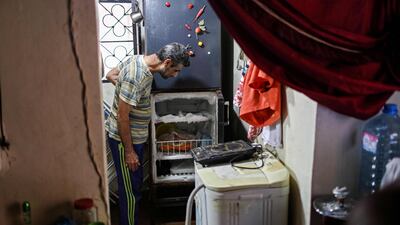
A Lebanese man looks at his empty refrigerator at his apartment in the capital. AFP -
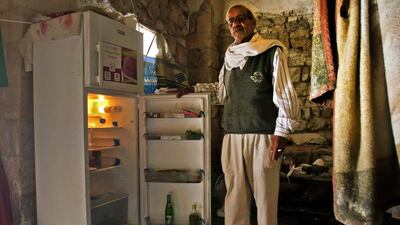
A Lebanese man displays the content of his refrigerator at his apartment in the southern city of Sidon. AFP -

A Lebanese woman displays the content of her refrigerator at her apartment in the southern city of Sidon. AFP -
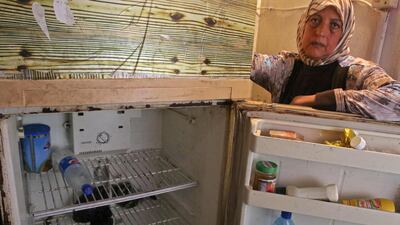
A Lebanese woman displays the content of her refrigerator at her apartment in the southern city of Sidon. AFP -
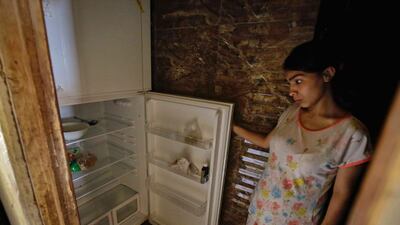
A Lebanese woman stands next to her empty refrigerator in her apartment in the port city of Tripoli. AFP -
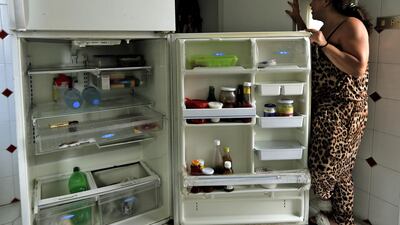
A Lebanese woman displays the content of her refrigerator at her apartment in Jounieh, north of Beirut. AFP -
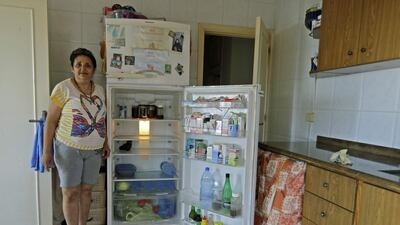
A Lebanese woman displays the content of her refrigerator at her apartment in Byblos. AFP


“Right now, compliance departments in all Lebanese banks are reviewing accounts of their Syrian clients,” said a banker, who asked to remain anonymous.
There have been rumours that banks are also arbitrarily closing Syrian bank accounts like they did after the US hardened its sanctions against Bashar al Assad in the wake of the civil war outbreak in 2011.
The banker could not confirm the rumours but called them "unsurprising".
The fact that the Caesar Act is open to interpretation is worrying, said a Lebanese economist who also declined to be named.
“The limit where collaboration with the regime starts is open to interpretation, and people are afraid," he said.
Lots of information needs to be factored before a businessman working in Syria can be sanctioned by the US, including which area of the country he is working in and how significant his projects are, said Mouaz Moustafa, executive director of the Syrian Emergency Task Force, a non-profit based in Washington that worked on the Caesar Act.
"The fact is, there is a panic in Lebanon," he told The National. "What should be made clear is that those who work with Assad, whether it's legitimising him, enriching him, aiding his military offensive against his people or rebuilding and developing land belonging to refugees, should be afraid."
Lebanese banks have little choice but to abide by US sanctions.
The punishment for non-compliance is severe. Past US accusations of ties with Lebanon’s strongest Syrian ally, political party-cum-militia Hezbollah, have forced two local banks to shut down: Jammal Trust Bank (JTB) in 2019 and the Lebanese Canadian Bank in 2011.
Many Lebanese banks have interests in Syria, including Banque Bemo, which owns a 22 per cent stake in Syrian Banque Bemo Saudi-Fransi (BBSF).
The Caesar Act prompted Banque Bemo to give power of attorney to three Syrian individuals whose identity has not been decided yet, said Mr Obegi.
These individuals will represent the Lebanese bank in BBSF’s general assemblies and “their mission is to take decisions in the best interest of BBSF without referring to Bemo”, he said.
BBSF was founded by Banque Bemo and Saudi bank Banque Saudi Fransi in 2004, shortly after Syrian president Bashar Al Assad’s decision to liberalise the country’s economy and allow private banks to operate.
Mr Obegi, who hails from a Syrian family and has dual citizenship, will also resign from his position of board chairman at BBSF. “Bemo does not control BBSF and will have no say in the decisions of BBSF,” he said.

Asked how BBSF will assess what “significant” support to the Syrian regime meant, he said: “It’s up to BBSF to assess that”.
Lebanese banks and businessmen can protect themselves with due diligence, said Mr Moustafa.
“I would advise them to be super transparent,” he said. “If they call us, or the US Treasury, and tell us that a client of theirs wants a loan to sell medicine in Syria, that’s no problem at all."
The Caesar Act excludes humanitarian organisations working with the Syrian government to distribute aid, as well as private businesses operating in Syria, including Lebanese ones that are expected to pay taxes to the Syrian government.
“The aim is to prioritise individuals that have a major impact on the Assad regime and its criminal activities while minimising any negative effects on civilians,” Mr Moustafa said.
Although there were no Lebanese nationals in the first list of names released when the Caesar Act went into effect on June 17, Mr Moustafa said that could happen in the future.
“I think one is to expect non-Syrians to be included in further announcements of Caesar sanctions and obviously Lebanon is a place where there are too many people that are close to the Assad regime,” he said.
Several political parties, including President Michel Aoun’s Free Patriotic Movement, have called for rekindling relations with Damascus in past years.
Complicating matters further, the Caesar Act, which was passed by the US Senate in December 2019, gave the US administration six months to determine whether the Syrian central bank was involved in money laundering.
This deadline has now passed but it is “plausible” that the bank will be sanctioned in the future, said Mr Moustafa.
This represents an additional worry for Lebanese banks operating in Syria, where they must, by definition, work with the central bank. Should the US decide to impose sanctions against the Syrian central bank, transactions inside the country “would be highly complicated”, said Mr Saidi.
Ultimately, the Caesar Act’s impact on Lebanon might be diluted by the country’s financial crisis, which has caused its currency to tumble and worsened Syria’s own economic crisis after a decade of war, said Mr Obegi.
“I don’t think the effects on Lebanon will be very serious because Lebanon is already in a bad situation,” he said.
But another consequence of the Caesar Act might be an increasing reliance on cash, which has already spiked in Lebanon with the financial crisis and the limitations imposed by banks on withdrawals in American dollars.
“The number of people with bank accounts is collapsing both in Lebanon and Syria,” said Mr Obegi.
“Lebanese businessmen are used to working during wars,” said a Lebanese businessman, referring to the country’s 15-year civil war that ended in 1990. “We’ll just go back to a war economy: that means cash.”

