• People wearing face masks protest against Israeli Prime Minister Benjamin Netanyahu's plan to annex parts of the Israeli-occupied West Bank, in Tel Aviv, Israel, on June 6, 2020. Reuters
    People wearing face masks protest against Israeli Prime Minister Benjamin Netanyahu's plan to annex parts of the Israeli-occupied West Bank, in Tel Aviv, Israel, on June 6, 2020. Reuters
  • People wearing face masks protest against Israeli Prime Minister Benjamin Netanyahu's plan to annex parts of the Israeli-occupied West Bank, in Tel Aviv, Israel, on June 6, 2020. Reuters
    People wearing face masks protest against Israeli Prime Minister Benjamin Netanyahu's plan to annex parts of the Israeli-occupied West Bank, in Tel Aviv, Israel, on June 6, 2020. Reuters
  • Protesters gather in Tel Aviv's Rabin Square on June 6, 2020, to denounce Israel's plan to annex parts of the occupied West Bank. AFP
    Protesters gather in Tel Aviv's Rabin Square on June 6, 2020, to denounce Israel's plan to annex parts of the occupied West Bank. AFP
  • A woman holds up a sign with the Palestinian flag, a Black Power fist and the slogan 'Resist Apartheid' as Jewish and Arab Israelis protest against US President Donald Trump's 'peace plan' for the Middle East as they march in Tel Aviv, Israel, in June 2020. EPA
    A woman holds up a sign with the Palestinian flag, a Black Power fist and the slogan 'Resist Apartheid' as Jewish and Arab Israelis protest against US President Donald Trump's 'peace plan' for the Middle East as they march in Tel Aviv, Israel, in June 2020. EPA
  • Protesters gather in Tel Aviv's Rabin Square on June 6, 2020, to denounce Israel's plan to annex parts of the occupied West Bank. Israeli Prime Minister Benjamin Netanyahu has vowed to forge ahead with annexing settlements and the Jordan Valley, in line with the peace proposals unveiled by US President Donald Trump. AFP
    Protesters gather in Tel Aviv's Rabin Square on June 6, 2020, to denounce Israel's plan to annex parts of the occupied West Bank. Israeli Prime Minister Benjamin Netanyahu has vowed to forge ahead with annexing settlements and the Jordan Valley, in line with the peace proposals unveiled by US President Donald Trump. AFP
  • Protesters gather in Tel Aviv's Rabin Square on June 6, 2020, to denounce Israel's move to annex parts of the occupied West Bank amid Prime Minister Benjamin Netanyahu's vow to forge ahead with US President Donald Trump's Middle East peace plan. AFP
    Protesters gather in Tel Aviv's Rabin Square on June 6, 2020, to denounce Israel's move to annex parts of the occupied West Bank amid Prime Minister Benjamin Netanyahu's vow to forge ahead with US President Donald Trump's Middle East peace plan. AFP
  • Protesters gather in Tel Aviv's Rabin Square on June 6, 2020, to denounce Israel's plan to annex parts of the occupied West Bank. Israeli Prime Minister Benjamin Netanyahu has vowed to forge ahead with President Donald Trump's Middle East peace plan. AFP
    Protesters gather in Tel Aviv's Rabin Square on June 6, 2020, to denounce Israel's plan to annex parts of the occupied West Bank. Israeli Prime Minister Benjamin Netanyahu has vowed to forge ahead with President Donald Trump's Middle East peace plan. AFP
  • Protesters gather in Tel Aviv's Rabin Square on June 6, 2020, to denounce Israel's plan to annex parts of the occupied West Bank. AFP
    Protesters gather in Tel Aviv's Rabin Square on June 6, 2020, to denounce Israel's plan to annex parts of the occupied West Bank. AFP
  • Protesters gather in Tel Aviv's Rabin Square on June 6, 2020, to denounce Israel's plan to annex parts of the occupied West Bank. AFP
    Protesters gather in Tel Aviv's Rabin Square on June 6, 2020, to denounce Israel's plan to annex parts of the occupied West Bank. AFP
  • Protesters gather in Tel Aviv's Rabin Square on June 6, 2020, to denounce Israel's plan to annex parts of the occupied West Bank amid Israeli Prime Minister Benjamin Netanyahu's pledge to forge ahead with the illegal move. AFP
    Protesters gather in Tel Aviv's Rabin Square on June 6, 2020, to denounce Israel's plan to annex parts of the occupied West Bank amid Israeli Prime Minister Benjamin Netanyahu's pledge to forge ahead with the illegal move. AFP
  • Jewish and Arab Israelis protest against US President Donald Trump's 'peace plan' for the Middle East conflict as they march in Tel Aviv, Israel, on June 6, 2020. EPA
    Jewish and Arab Israelis protest against US President Donald Trump's 'peace plan' for the Middle East conflict as they march in Tel Aviv, Israel, on June 6, 2020. EPA

Israelis protest against Benjamin Netanyahu's West Bank annexation plan


  • English
  • Arabic

Several thousand Israelis demonstrated on Saturday against Prime Minister Benjamin Netanyahu’s plan to extend sovereignty over parts of the occupied West Bank.

Wearing face masks and practising social distancing, the demonstrators gathered under the banner “No to annexation, no to occupation. Yes to peace and democracy”. Some waved Palestinian flags.

The protest was organised by left-wing groups and did not appear to be the start of a popular movement. About half of Israelis support annexation, according to a recent opinion poll.

The organisers screened a video address by US senator Bernie Sanders.

“It has never been more important to stand up for justice, and to fight for the future we all deserve,” Mr Sanders said. “It’s up to all of us to stand up to authoritarian leaders and to build a peaceful future for every Palestinian and every Israeli.”

One demonstrator called for more solidarity between Palestinians and Israelis.

“We have done so much damage to each other, the Palestinians and the Jewish” people, Anat Schrieber said.

“We are brothers – we belong here, both of us, we can do so much more together than separately.”

Another rally attendee, identifying herself as Eden, called for “justice to Palestinians and peace to both people, Israelis and Palestinians”.

“In an apartheid reality there cannot be peace for us or them, nor can there be justice,” she said.

An annexation of the territories would violate international law and likely inflame tension in the volatile region.

“I am afraid of the annexation plan,” Eden said. “I think it will lead to riots and even war.” The plan “will not achieve anything... [and] has no connection to peace”.

Palestinians want an independent state in the West Bank, East Jerusalem and the Gaza Strip, territories Israel captured in the 1967 Middle East war.

Mr Netanyahu set July 1 as the date to begin advancing his plan to annex Israel’s settlements in the Jordan Valley in the West Bank, hoping for approval from Washington.

US President Donald Trump has unveiled a peace plan that includes Israel keeping its settlements and the Palestinians establishing a state under stringent conditions.

Palestinians rejected the proposal and Israel’s proposed annexation.

Warning of possible violence and diplomatic repercussions, some European and Arab states, together with the United Nations, have urged Israel not to annex its settlements, regarded by many countries as illegal.

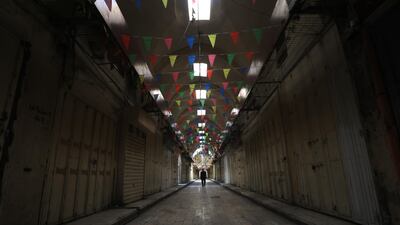
  • epa08360794 Palestinians walk in empty street inside al-Tujjar caravanserai in the West Bank city of Nablus, 13 April 2020. Nablus was closed due to the current novel coronavirus emergency after the Palestinian National Authority (PA) has imposed a new 14-day period of home confinement for all Palestinians living in the West Bank amid the ongoing pandemic of the COVID-19 disease caused by the SARS-CoV-2 coronavirus. EPA/ALAA BADARNEH
    epa08360794 Palestinians walk in empty street inside al-Tujjar caravanserai in the West Bank city of Nablus, 13 April 2020. Nablus was closed due to the current novel coronavirus emergency after the Palestinian National Authority (PA) has imposed a new 14-day period of home confinement for all Palestinians living in the West Bank amid the ongoing pandemic of the COVID-19 disease caused by the SARS-CoV-2 coronavirus. EPA/ALAA BADARNEH
  • epa08362541 Palestinians deliver food for patients and health workers at three quarantine centres in the West Bank city of Nablus, 14 April 2020. Nablus was closed due to the current novel coronavirus emergency after the Palestinian National Authority (PA) has imposed a new 14-day period of home confinement for all Palestinians living in the West Bank amid the ongoing pandemic of the COVID-19 disease caused by the SARS-CoV-2 coronavirus. EPA/ALAA BADARNEH
    epa08362541 Palestinians deliver food for patients and health workers at three quarantine centres in the West Bank city of Nablus, 14 April 2020. Nablus was closed due to the current novel coronavirus emergency after the Palestinian National Authority (PA) has imposed a new 14-day period of home confinement for all Palestinians living in the West Bank amid the ongoing pandemic of the COVID-19 disease caused by the SARS-CoV-2 coronavirus. EPA/ALAA BADARNEH
  • A member of Palestinian Civil Defence wears a face shield as he takes part in a drill for dealing with coronavirus cases, amid concerns about the spread of the disease (COVID-19), in Ramallah in the Israeli-occupied West Bank April 23, 2020. REUTERS/Mohamad Torokman
    A member of Palestinian Civil Defence wears a face shield as he takes part in a drill for dealing with coronavirus cases, amid concerns about the spread of the disease (COVID-19), in Ramallah in the Israeli-occupied West Bank April 23, 2020. REUTERS/Mohamad Torokman
  • epa08362952 Palestinians fly a kite from their home roof over a neighborhood of the West Bank City of Nablus, 14 April 2020. Nablus was closed due to the current novel coronavirus emergency after the Palestinian National Authority (PA) has imposed a new 14-day period of home confinement for all Palestinians living in the West Bank amid the ongoing pandemic of the COVID-19 disease caused by the SARS-CoV-2 coronavirus. EPA/ALAA BADARNEH
    epa08362952 Palestinians fly a kite from their home roof over a neighborhood of the West Bank City of Nablus, 14 April 2020. Nablus was closed due to the current novel coronavirus emergency after the Palestinian National Authority (PA) has imposed a new 14-day period of home confinement for all Palestinians living in the West Bank amid the ongoing pandemic of the COVID-19 disease caused by the SARS-CoV-2 coronavirus. EPA/ALAA BADARNEH
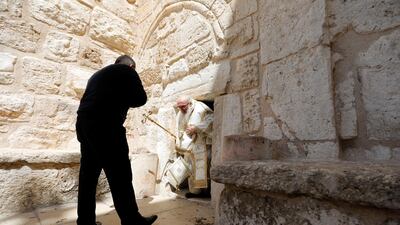
  • The head of the Greek Orthodox Church in Bethlehem Bishop Theofilactos leaves the Church of the Nativity to receive the Holy Fire as the ceremony is celebrated without a crowd due to the coronavirus disease restrictions in Bethlehem in the Israeli-occupied West Bank April 18, 2020. REUTERS/Mussa Qawasma
    The head of the Greek Orthodox Church in Bethlehem Bishop Theofilactos leaves the Church of the Nativity to receive the Holy Fire as the ceremony is celebrated without a crowd due to the coronavirus disease restrictions in Bethlehem in the Israeli-occupied West Bank April 18, 2020. REUTERS/Mussa Qawasma
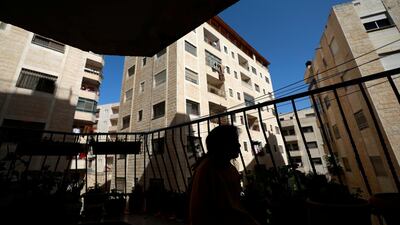
  • A Palestinian girl looks out of her family apartment during a home-confinement order imposed to prevent the spread of the coronavirus disease (COVID-19), in Ramallah in the Israeli-occupied West Bank April 19, 2020. REUTERS/Mohamad Torokman
    A Palestinian girl looks out of her family apartment during a home-confinement order imposed to prevent the spread of the coronavirus disease (COVID-19), in Ramallah in the Israeli-occupied West Bank April 19, 2020. REUTERS/Mohamad Torokman
  • A Palestinian groom, Rafeh Qassim, wears a mask as he sits in a car with his bride on their wedding day amid concerns about the spread of the coronavirus disease (COVID-19), in Ramallah in the Israeli-occupied West Bank April 18, 2020. REUTERS/Mohamad Torokman TPX IMAGES OF THE DAY
    A Palestinian groom, Rafeh Qassim, wears a mask as he sits in a car with his bride on their wedding day amid concerns about the spread of the coronavirus disease (COVID-19), in Ramallah in the Israeli-occupied West Bank April 18, 2020. REUTERS/Mohamad Torokman TPX IMAGES OF THE DAY
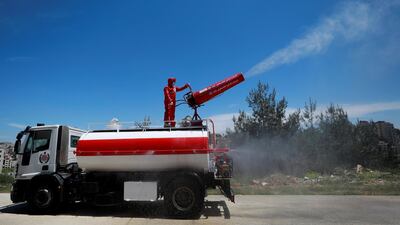
  • A member of Palestinian Civil Defence on a truck sprays disinfectants during a drill for dealing with coronavirus cases, amid concerns about the spread of the disease (COVID-19), in Ramallah in the Israeli-occupied West Bank April 23, 2020. REUTERS/Mohamad Torokman
    A member of Palestinian Civil Defence on a truck sprays disinfectants during a drill for dealing with coronavirus cases, amid concerns about the spread of the disease (COVID-19), in Ramallah in the Israeli-occupied West Bank April 23, 2020. REUTERS/Mohamad Torokman
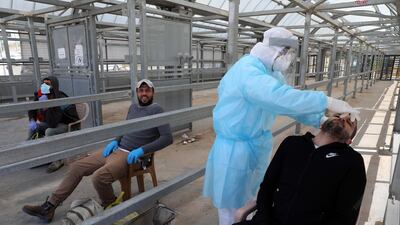
  • epa08380077 Medical staff of the Palestinian health ministry checks the temperature of workers crossing the checkpoint of Mitar, near the West Bank town of Hebron, 23 April 2020. The instructions of the National Authority Ministry of Health forbid gatherings and movement between cities to prevent the spread of the SARS-CoV-2 coronavirus which causes the COVID-19 disease. EPA/ABED AL HASHLAMOUN
    epa08380077 Medical staff of the Palestinian health ministry checks the temperature of workers crossing the checkpoint of Mitar, near the West Bank town of Hebron, 23 April 2020. The instructions of the National Authority Ministry of Health forbid gatherings and movement between cities to prevent the spread of the SARS-CoV-2 coronavirus which causes the COVID-19 disease. EPA/ABED AL HASHLAMOUN
  • epa08380080 Medical staff of the Palestinian health ministry takes a swab sample from a worker crossing the checkpoint of Mitar, near the West Bank town of Hebron, 23 April 2020. The instructions of the National Authority Ministry of Health forbid gatherings and movement between cities to prevent the spread of the SARS-CoV-2 coronavirus which causes the COVID-19 disease. EPA/ABED AL HASHLAMOUN
    epa08380080 Medical staff of the Palestinian health ministry takes a swab sample from a worker crossing the checkpoint of Mitar, near the West Bank town of Hebron, 23 April 2020. The instructions of the National Authority Ministry of Health forbid gatherings and movement between cities to prevent the spread of the SARS-CoV-2 coronavirus which causes the COVID-19 disease. EPA/ABED AL HASHLAMOUN
  • Dr Hani Abdin, dean of the Faculty of Medicine at the Palestinian Al-Quds University, speaks during an interview at the campus in Abu Dis in the West Bank on April 23, 2020, as he showcases a respirator device built on campus and certified by Palestinian health authorities. Al-Quds University announced on April 23 that the Palestinian Ministry of Health had approved the computerised artificial respiration apparatus built by the university in the fight against the COVID-19 coronavirus pandemic. The university will launch its first devices for hospital use in the following week while working to register a patent. / AFP / ABBAS MOMANI
    Dr Hani Abdin, dean of the Faculty of Medicine at the Palestinian Al-Quds University, speaks during an interview at the campus in Abu Dis in the West Bank on April 23, 2020, as he showcases a respirator device built on campus and certified by Palestinian health authorities. Al-Quds University announced on April 23 that the Palestinian Ministry of Health had approved the computerised artificial respiration apparatus built by the university in the fight against the COVID-19 coronavirus pandemic. The university will launch its first devices for hospital use in the following week while working to register a patent. / AFP / ABBAS MOMANI
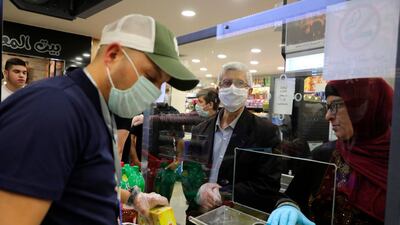
  • Palestinians, wearing protective masks due to the COVID-19 coronavirus pandemic, pay for their shopping at the checkout counter of a supermarket on the last day before the start of the Muslim holy month of Ramadan, beginning later in the night, at a supermarket in the city of Hebron in the occupied West Bank on April 23, 2020. / AFP / HAZEM BADER
    Palestinians, wearing protective masks due to the COVID-19 coronavirus pandemic, pay for their shopping at the checkout counter of a supermarket on the last day before the start of the Muslim holy month of Ramadan, beginning later in the night, at a supermarket in the city of Hebron in the occupied West Bank on April 23, 2020. / AFP / HAZEM BADER
  • Palestinian security officers look at an ostrich in a cage at the Qalqilya Zoo in the occupied West Bank, after the animal park was completely closed to visitors due to the novel coronavirus pandemic, on April 21, 2020. The zoo manager said the animals had started mating more due to the calm atmosphere, with the lack of visitors also improving their behaviour. The zoo is funded by the local municipality but faces a potential financial crisis with budget cuts. / AFP / JAAFAR ASHTIYEH
    Palestinian security officers look at an ostrich in a cage at the Qalqilya Zoo in the occupied West Bank, after the animal park was completely closed to visitors due to the novel coronavirus pandemic, on April 21, 2020. The zoo manager said the animals had started mating more due to the calm atmosphere, with the lack of visitors also improving their behaviour. The zoo is funded by the local municipality but faces a potential financial crisis with budget cuts. / AFP / JAAFAR ASHTIYEH
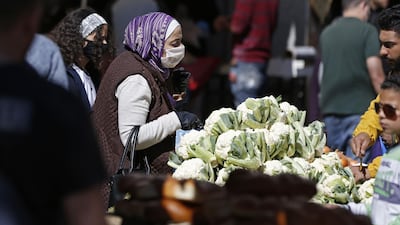
  • Palestinians, some wearing protective masks, shop at a fruit and vegetables market during the Muslim holy month of Ramadan amid the COVID-19 pandemic, in the occupied West Bank city of Ramallah on April 26, 2020. / AFP / ABBAS MOMANI
    Palestinians, some wearing protective masks, shop at a fruit and vegetables market during the Muslim holy month of Ramadan amid the COVID-19 pandemic, in the occupied West Bank city of Ramallah on April 26, 2020. / AFP / ABBAS MOMANI
  • Palestinian Reem Abu Ayyash shows a spoon filled with rice during a video call with her husband Rami, a nurse who treats the coronavirus disease (COVID-19) patients and has avoided his family during Ramadan out of fear of contagion, as she prepares to have her Iftar (breaking fast) meal with her daughter at their home near Hebron in the Israeli-occupied West Bank April 28, 2020. Picture taken April 28, 2020. REUTERS/Mussa Qawasma TPX IMAGES OF THE DAY
    Palestinian Reem Abu Ayyash shows a spoon filled with rice during a video call with her husband Rami, a nurse who treats the coronavirus disease (COVID-19) patients and has avoided his family during Ramadan out of fear of contagion, as she prepares to have her Iftar (breaking fast) meal with her daughter at their home near Hebron in the Israeli-occupied West Bank April 28, 2020. Picture taken April 28, 2020. REUTERS/Mussa Qawasma TPX IMAGES OF THE DAY
  • A Palestinian preacher speaks before a camera while recording a sermon and broadcasting the audio onto loudspeakers inside an empty mosque, due to the COVID-19 coronavirus pandemic, in the village of Salem east of Nablus in the occupied West Bank on the first Friday of the Muslim holy month of Ramadan on April 24, 2020. / AFP / JAAFAR ASHTIYEH
    A Palestinian preacher speaks before a camera while recording a sermon and broadcasting the audio onto loudspeakers inside an empty mosque, due to the COVID-19 coronavirus pandemic, in the village of Salem east of Nablus in the occupied West Bank on the first Friday of the Muslim holy month of Ramadan on April 24, 2020. / AFP / JAAFAR ASHTIYEH