

Iraq's prime minister designate Adnan Al Zurfi has positioned himself as the man to bring about economic salvation for the country and address the financial woes that have been exacerbated by the coronavirus outbreak.
Mr Al Zurfi submitted his manifesto to the legislature on the weekend, warning that the government may no longer be able to pay its seven million employees. "Iraq is going through a catastrophy," Mr Al Zurfi warned.
His manifesto focuses on improving the economy and the health system to counter the impact of the coronavirus.
“The economy will be the next government’s main cause of action. Anyone with a desire to invest will be given preferential treatment,” he told reporters in Baghdad.
-
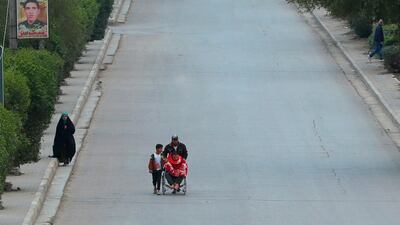
Iraqis walk in an empty street in Baghdad on March 22, 2020 amid a curfew to help fight the spread of Covid-19. AP Photo -

A nearly empty street in central Baghdad. AP Photo -
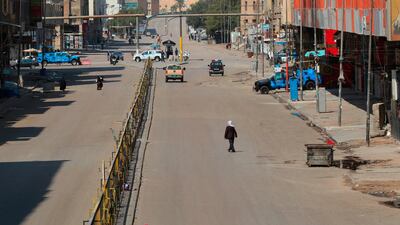
The Iraqi government extended the curfew by another six days on March 22, 2020. AP Photo -
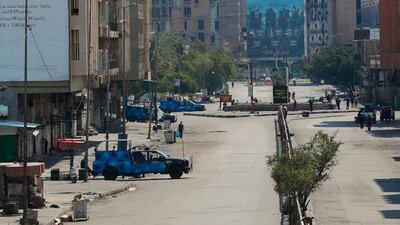
Security forces are deployed to impose the curfew in central Baghdad. AP Photo -
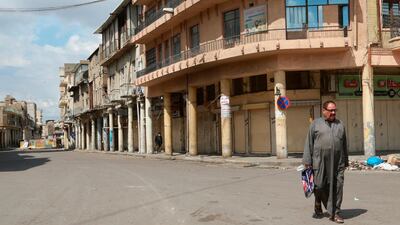
A man walks past closed shops in Baghdad on March 22, 2020. AP Photo -

Iraqi children play indoors at their home in Baghdad. AFP -

Health workers disinfect houses in the Iraqi city of Najaf on March 22, 2020. Reuters -
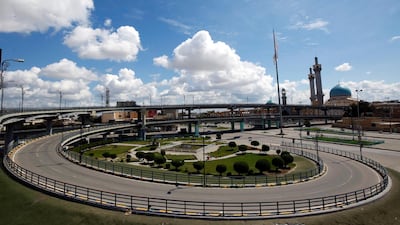
Empty streets in Najaf, Iraq. Reuters


The former Najaf governor has struggled to unite Iraq's divided parliament behind him since President Barham Saleh asked him to form a cabinet on March 16. He has support from Sunni and Kurdish blocs but needs consensus from a dominant Shiite bloc largely allied to Iran.
Mr Al Zurfi said he will submit the names of his proposed cabinet two days before the deadline for a parliamentary vote of confidence on April 15.
Iraq is one of the oil-exporting economies that's expected to be hard hit by the fall in oil prices this year.
Louay Al Yasiri, the current Najaf governor, said last week that he expects the city's economy to collapse in the next fortnight as a result of declining religious tourism and the plunge in oil prices.
Iraq's $135 billion budget for this year was calculated based on a projected oil price of $56 per barrel. In the past month, oil prices have dropped by more than half, hitting an 18-year low last week before recouping some of the losses.
Haitham Al Juburi, a member of parliament's finance committee, said the 2020 budget deficit, forecast at $40 billion, could more than double to $85 billion.
Administrative officials across Iraq have been criticising the central government's response to the pandemic, which they partly blamed on political gridlock.
Demonstrations demanding a new political system forced the resignation of caretaker prime minister Adel Abdul Mahdi in November. His allies in parliament then blocked the appointment of Mohammed Allawi, another prime minister designate, in February.
In an attempt to placate Iran's supporters in Iraq, Mr Al Zurfi last week called for the lifting of US sanctions on the Tehran government.
He said on the weekend that his "Iraq first" foreign policy would be balanced and geared toward attracting capital flows, adding that dealing with neighbouring countries would be "economy centric".
"The prestige of the state will be restored when we have a strong economy. Other than that, this prestige is non-existent," he said.
A member of a centrist parliamentary bloc, Mr Al Zurfi is an ally of former Iraqi prime minister Haidar Al Abadi. He fled Iraq for Saudi Arabia after Saddam Hussein crushed a Shiite uprising in 1991.
Mr Al Zurfi then moved to the US and was one of the exiles Washington brought back to Iraq to run the country after the 2003 US-led invasion that toppled Saddam Hussein. Becoming governor of Najaf, he gained a reputation as a tough administrator and security operative.
Recent weeks have brought signs of a shift in US military strategy in Iraq after tensions mounted following the assassination of Iranian General Qassem Suleimani in January by a US drone attack.
Last week, US troops left a base in eastern Iraq - the fourth complex they have vacated this year in the country.
The American military said the "pre-planned" transfer of Al Taqaddum base to the Iraqi army was unrelated to increased attacks on US and allied troops in Iraq. Washington blames the attacks on pro-Iranian militias.

