

Most of the recent coronavirus infections detected in Karbala came from Syria, the governor of the central Iraqi province said.
Nasif Al Khatabi said in a televised statement that the authorities in Baghdad should have ignored the Syrian government's claims that the virus was being contained there.
His announcement undermines the Bashar Al Assad regime's narrative that there was no significant virus outbreak in Syria.
Mr Al Khatabi said most of the 11 cases recorded in Karbala in the past two days came from Syria, on top of another two cases confirmed to have been brought from there last week.
"To be frank the overwhelming majority were visitors from Syria," Mr Al Khatabi said.
Karbala has reported a total of 41 coronavirus causes.
The provincial governor said medical facilities in Karbala had been alerted to screen arrivals from Syria and place them under quarantine.
Karbala is home to the shrine of Al Hussein, a grandson of the Prophet who was killed in 680 AD, becoming a major figure in Shiite Islam.
Besides pilgrims, traffic between Karbala and Syria is significant because the province is a transit hub for Shiite militiamen backed by Iran who fight on the side of the Syrian regime.
Mr Al Khatabi criticised the central authorities in Baghdad for not declaring Syria among the countries "where the pandemic had spread".
"Every one coming from there should have been put under quarantine," he said, adding that official Iraqi data "have been showing Syria as one of the countries without contagion".
"I am sorry to say this has not been accurate," he said.
Mr Al Khatabi said the Syrian government's failure to reveal "the severity" of its coronavirus outbreak caused "casualties among those coming from Syria".
-

A soldier wears a protective face mask as he stands guard on a street during a curfew imposed to prevent the spread of coronavirus disease (COVID-19) in Baghdad, Iraq. Reuters -
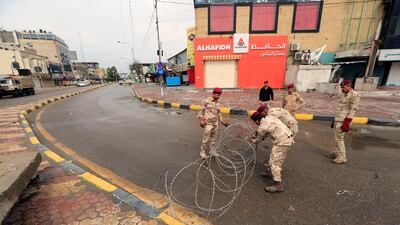
Soldiers place barbed wire on a street during a curfew in Baghdad. Reuters -
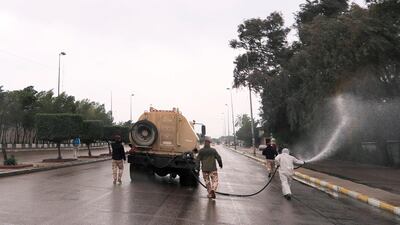
A soldier wearing a protective suit sprays disinfectants on a street. Reuters -
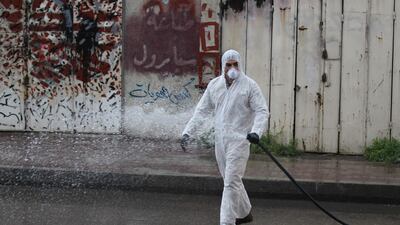
A soldier disinfects an area in the capital Baghdad. AFP -
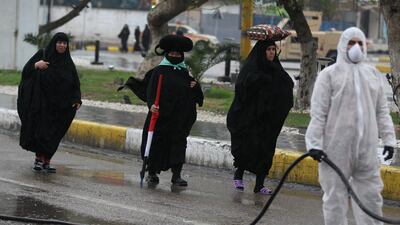
Soldiers disinfect an area in the capital Baghdad amidst efforts against the spread of COVID-19. AFP -
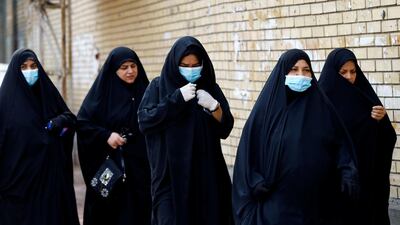
Shi'ite pilgrims make their way to Kadhimiya during a curfew imposed to prevent the spread of coronavirus. Reuters -
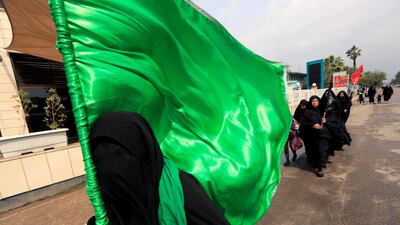
Shi'ite pilgrims make their way to Kadhimiya during a curfew. Reuters -
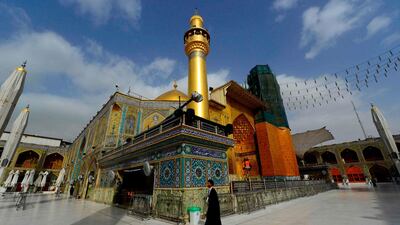
The usually busy Imam Ali Shrine in the central Iraqi holy city of Najaf is pictured empty. AFP -
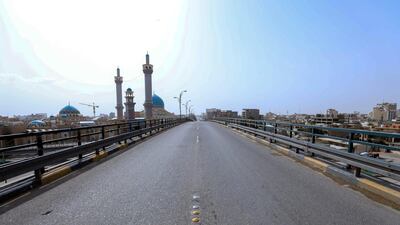
A general view of an empty street during precautionary measures against the novel coronavirus outbreak in the holy Shite city of Najaf. EPA -
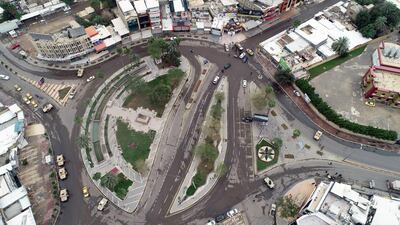
An aerial picture shows empty streets during precautionary measures against the novel coronavirus outbreak in central Baghdad. EPA -
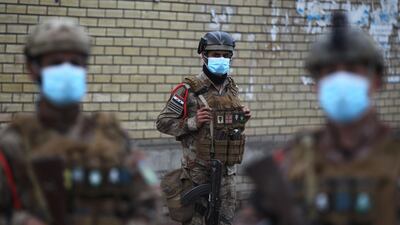
Soldiers deploy in the streets of Baghdad after the capital and some areas of the country imposed a week's curfew. AFP


The Syrian authorities said they have recorded only ten coronavirus cases in the country, including one death from the virus.
But opposition sources and at least one doctor in Damascus said there are strong indications that the outbreak is out of control.
With the regime maintaining a tight grip in most of the main urban centres in the country, there has been little dispute of the official line on the coronavirus.
But Syrians in regime areas said they do not believe the figures. A businesswomen in Damascus said official declarations of the casualties were "not credible".
"This week is expected to be disastrous," she told The National.
Syrian authorities announced the first coronavirus case last Sunday. On the same day the regime issued an amnesty for prisoners. But human rights lawyers said the decree left thousands of political detainees at risk from the virus inside packed jails.
Rawan Kabalan, a Syrian engineer, pointed to a London School of Economics study that put Syria's ventilator capacity at just 335.
"Commit to quarantine so as to avoid a real catastrophe no less than the war," she said on Facebook.

