Egyptian President Abdel Fattah El Sisi approved amendments to the country's emergency laws on May 9, 2020. AP Photo

Coronavirus: Egypt’s President Abdel Fattah El Sisi gets expanded powers to deal with outbreak


  • English
  • Arabic

Egypt’s President Abdel Fattah El Sisi on Saturday approved amendments to the country's state of emergency that grant him and security agencies additional powers, which the government says are needed to combat the coronavirus outbreak.

The new amendments allow the president to take measures to contain the virus, such as suspending classes at schools and universities and quarantining those returning from abroad. They also include expanded powers to ban public and private meetings, protests, celebrations and other forms of assembly.

The amended law would also allow the president to postpone taxes and utility payments as well as provide economic support for affected sectors.

Egypt, with a population of 100 million, has reported at least 504 deaths out of about 8,500 confirmed cases.

_______________

Coronavirus in the Middle East

  • Health workers check passengers and crew who arrived on an Emirates flight from London at Dubai International Airport. AFP
    Health workers check passengers and crew who arrived on an Emirates flight from London at Dubai International Airport. AFP
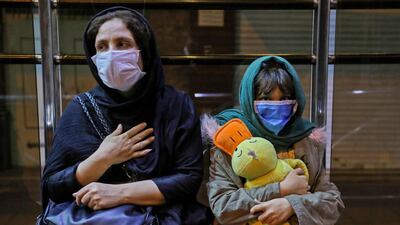
  • Iranians wearing masks gather outside their buildings after a 5.1-magnitude earthquake was felt in the capital Tehran. AFP / ISNA
    Iranians wearing masks gather outside their buildings after a 5.1-magnitude earthquake was felt in the capital Tehran. AFP / ISNA
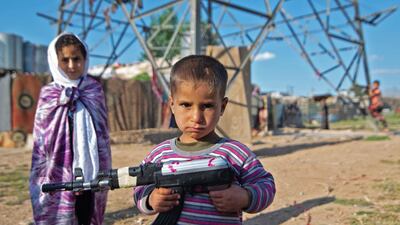
  • Iraqi children play with a toy gun in the northern city of Mosul, as Iraq eases restrictions put in place for the pandemic. AFP
    Iraqi children play with a toy gun in the northern city of Mosul, as Iraq eases restrictions put in place for the pandemic. AFP
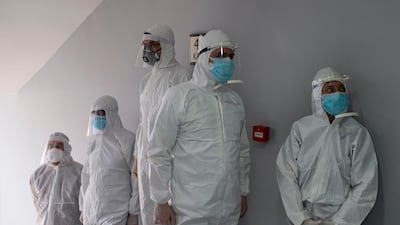
  • Health officers speak as they prepare to collect swab samples from confined people who are believed to have been in contact with coronavirus patients, in Istanbul. AFP
    Health officers speak as they prepare to collect swab samples from confined people who are believed to have been in contact with coronavirus patients, in Istanbul. AFP
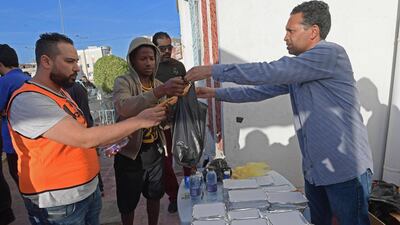
  • Tunisian volunteers distribute free Iftar meals at the Ariana near Tunis during Ramadan. AFP
    Tunisian volunteers distribute free Iftar meals at the Ariana near Tunis during Ramadan. AFP
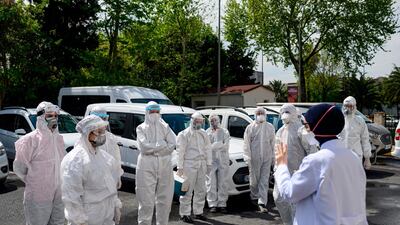
  • Head of Fatih District Health Department Melek Nr Aslan briefs her staff before they leave to collect swab samples from confined people who are believed to have been in contact with coronavirus patients, in Istanbul. AFP
    Head of Fatih District Health Department Melek Nr Aslan briefs her staff before they leave to collect swab samples from confined people who are believed to have been in contact with coronavirus patients, in Istanbul. AFP
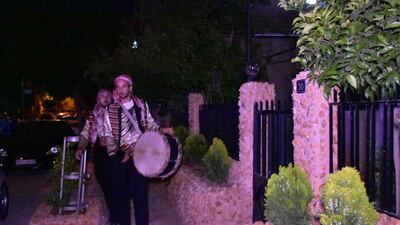
  • The Mosaharati calls on Muslims to wake up to eat Suhoor, the last meal before a sunrise to sunset fast during Ramadan, in Damascus, Syria. EPA
    The Mosaharati calls on Muslims to wake up to eat Suhoor, the last meal before a sunrise to sunset fast during Ramadan, in Damascus, Syria. EPA
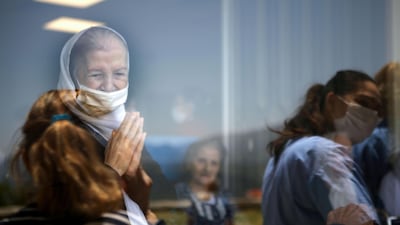
  • An elderly Lebanese woman shows appreciation to entertainers at a retirement home at Ain Wazein, in the Chouf mountains south-east of the capital Beirut. AFP
    An elderly Lebanese woman shows appreciation to entertainers at a retirement home at Ain Wazein, in the Chouf mountains south-east of the capital Beirut. AFP
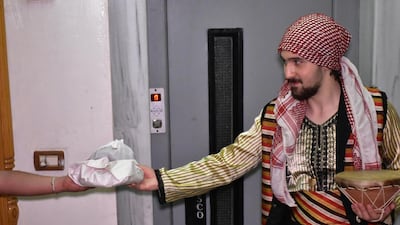
  • A Syrian man gives food to the Mosaharati in Damascus. Syria has alleviated the curfew imposed on the country to prevent the spread of the coronavirus and reopened religious places for the first time during Ramadan. EPA
    A Syrian man gives food to the Mosaharati in Damascus. Syria has alleviated the curfew imposed on the country to prevent the spread of the coronavirus and reopened religious places for the first time during Ramadan. EPA
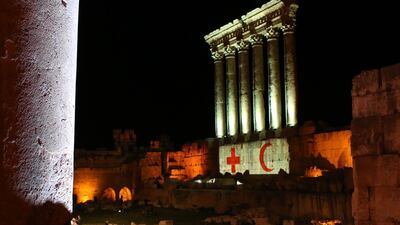
  • The columns of the Roman Temple of Jupiter in the Lebanese city of Baalbeck in the eastern Bekaa valley are lit with the symbols of the Red Cross and Crescent. AFP
    The columns of the Roman Temple of Jupiter in the Lebanese city of Baalbeck in the eastern Bekaa valley are lit with the symbols of the Red Cross and Crescent. AFP
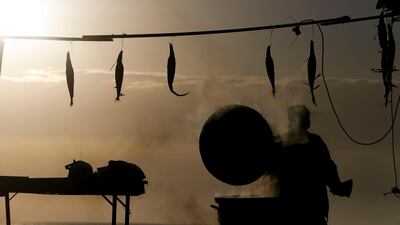
  • A Palestinian street vendor prepares corn before breaking the fast at sunset during Ramadan, in Gaza City. AFP
    A Palestinian street vendor prepares corn before breaking the fast at sunset during Ramadan, in Gaza City. AFP
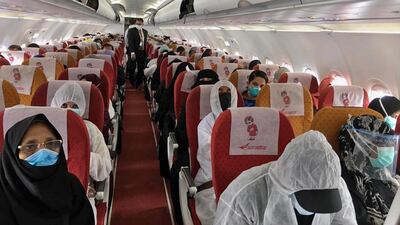
  • A picture provided by the Embassy of India in Riyadh shows Indian expats inside a plane upon their departure at King Fahad International Airport heading to Kozhikode. Some 150 Indian passengers, mainly consisting of pregnant women and stranded workers, left Riyadh on a special flight amid the Covid-19 pandemic. AFP / Embassy of India in Riyadh
    A picture provided by the Embassy of India in Riyadh shows Indian expats inside a plane upon their departure at King Fahad International Airport heading to Kozhikode. Some 150 Indian passengers, mainly consisting of pregnant women and stranded workers, left Riyadh on a special flight amid the Covid-19 pandemic. AFP / Embassy of India in Riyadh
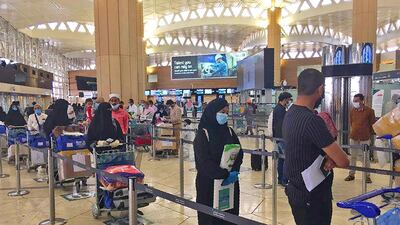
  • A picture provided by the embassy of India in Riyadh shows Indian expats queuing at departure section in King Fahad International Airport heading to Kozhikode. AFP / Embassy of India in Riyadh
    A picture provided by the embassy of India in Riyadh shows Indian expats queuing at departure section in King Fahad International Airport heading to Kozhikode. AFP / Embassy of India in Riyadh
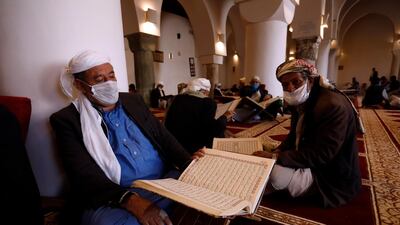
  • People wearing protective face masks read verses from the holy Quran at a mosque during Ramadan in Sana'a, Yemen. EPA
    People wearing protective face masks read verses from the holy Quran at a mosque during Ramadan in Sana'a, Yemen. EPA
  • A Yemeni child in Sana'a, Yemen, where the World Health Organisation (WHO) has warned coronavirus is spreading fast. EPA
    A Yemeni child in Sana'a, Yemen, where the World Health Organisation (WHO) has warned coronavirus is spreading fast. EPA
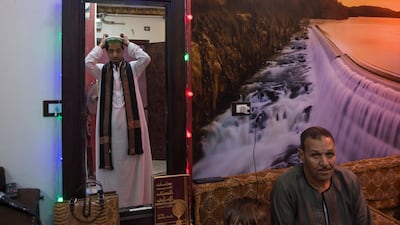
  • A Muslim singer wears his sufi clothing before singing Islamic songs (Anasheed) at his home in Cairo, Egypt. EPA
    A Muslim singer wears his sufi clothing before singing Islamic songs (Anasheed) at his home in Cairo, Egypt. EPA
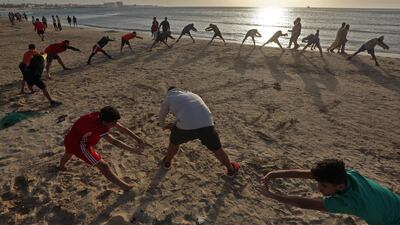
  • Libyans exercise at the beach before iftar, or breaking the fast, during Ramadan in the capital Tripoli. AFP
    Libyans exercise at the beach before iftar, or breaking the fast, during Ramadan in the capital Tripoli. AFP

_______________

The amendments also allow military prosecutors to investigate incidents when army officers are tasked with law enforcement or when the president orders it. The country's chief civilian prosecutor would have the final decision on whether to bring matters to trial.

Parliament approved the amendments last month.

Egypt has been under a state of emergency since April 2017, and the government extended it late last month for another three months. The law was originally passed to give the president broader powers to combat terrorism and drug trafficking.

The government said the amendments were needed to address a legal “vacuum” revealed by the coronavirus outbreak.

In response the pandemic, Egypt has halted international air travel and shut down schools, universities, mosques, churches and archaeological sites, including the famed Giza pyramids. A curfew is in place from 9pm to 6am. The partial lockdown is to continue for another two weeks, until the end of Ramadan.


Ten tax points to be aware of in 2026

1. Domestic VAT refund amendments: request your refund within five years

If a business does not apply for the refund on time, they lose their credit.

2. E-invoicing in the UAE

Businesses should continue preparing for the implementation of e-invoicing in the UAE, with 2026 a preparation and transition period ahead of phased mandatory adoption. 

3. More tax audits

Tax authorities are increasingly using data already available across multiple filings to identify audit risks. 

4. More beneficial VAT and excise tax penalty regime

Tax disputes are expected to become more frequent and more structured, with clearer administrative objection and appeal processes. The UAE has adopted a new penalty regime for VAT and excise disputes, which now mirrors the penalty regime for corporate tax.

5. Greater emphasis on statutory audit

There is a greater need for the accuracy of financial statements. The International Financial Reporting Standards standards need to be strictly adhered to and, as a result, the quality of the audits will need to increase.

6. Further transfer pricing enforcement

Transfer pricing enforcement, which refers to the practice of establishing prices for internal transactions between related entities, is expected to broaden in scope. The UAE will shortly open the possibility to negotiate advance pricing agreements, or essentially rulings for transfer pricing purposes. 

7. Limited time periods for audits

Recent amendments also introduce a default five-year limitation period for tax audits and assessments, subject to specific statutory exceptions. While the standard audit and assessment period is five years, this may be extended to up to 15 years in cases involving fraud or tax evasion. 

8. Pillar 2 implementation 

Many multinational groups will begin to feel the practical effect of the Domestic Minimum Top-Up Tax (DMTT), the UAE's implementation of the OECD’s global minimum tax under Pillar 2. While the rules apply for financial years starting on or after January 1, 2025, it is 2026 that marks the transition to an operational phase.

9. Reduced compliance obligations for imported goods and services

Businesses that apply the reverse-charge mechanism for VAT purposes in the UAE may benefit from reduced compliance obligations. 

10. Substance and CbC reporting focus

Tax authorities are expected to continue strengthening the enforcement of economic substance and Country-by-Country (CbC) reporting frameworks. In the UAE, these regimes are increasingly being used as risk-assessment tools, providing tax authorities with a comprehensive view of multinational groups’ global footprints and enabling them to assess whether profits are aligned with real economic activity. 

Contributed by Thomas Vanhee and Hend Rashwan, Aurifer