

Former Nissan boss and international fugitive Carlos Ghosn appeared combative and self-assured on his first, tightly controlled news conference in Beirut yesterday, where he received a warm welcome from the Lebanese press while Japanese media stars were made to wait outside in the rain.
Mr Ghosn's appearance was organised by one of France's most important PR agencies, Image 7, which has several former heads of states among its clients. It allowed about 150 journalists from all over the world to attend the businessman's first public appearance since his flight from Japan on December 30.
Lebanese and French media were highly represented in the most hotly anticipated speech of the car-making world in years, while the Japanese seemed to be less so.
Mr Ghosn blasted Japanese media who had relayed the "prosecutor's propaganda", saying it was "no advantage for [him]" to invite them and lauded those who had been invited as objective and factual.
He said he was not running away from Japanese media. “When I finish, I will see them and say hello,” he said.
-
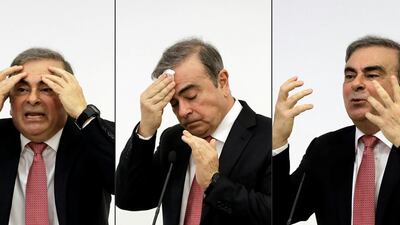
Renault-Nissan boss Carlos Ghosn addresses a large crowd of journalists in 2021 on his reasons for dodging trial in Japan, where he is accused of financial misconduct, at the Lebanese Press Syndicate in Beirut. AFP -
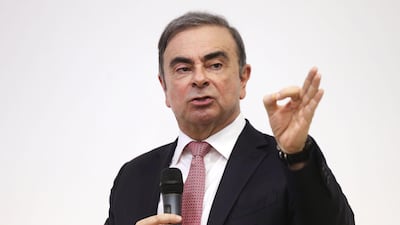
Carlos Ghosn said he was ready to serve Lebanon, albeit not as a politician but as an adviser. Bloomberg -
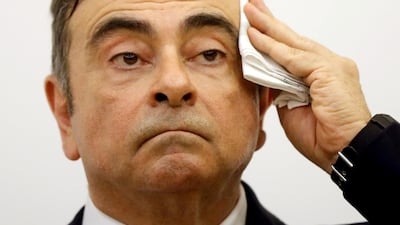
Former Nissan chairman wipes his brow during the marathon press conference. Reuters -
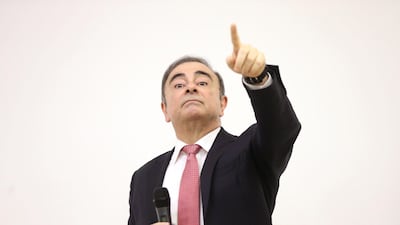
Carlos Ghosn, chooses a journalist to ask a question. Japanese media were left in the cold, Hasan Shaaban/Bloomberg -
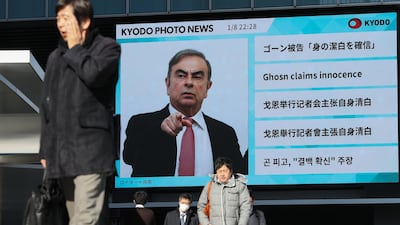
Pedestrians walk past a big screen showing images of former Nissan boss Carlos Ghosn in a news program on January 09. Getty Images -
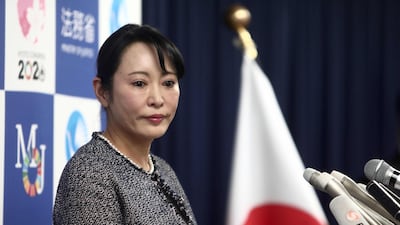
Japan’s Justice Minister Masako Mori attends a press conference in Tokyo. AFP -

Carole Ghosn, centre, the wife of former Nissan chairman Carlos Ghosn attends a press conference at the Lebanese press syndicate in Beirut, Lebanon. EPA -

Hitoshi Kawaguchi, former vice president of Nissan, speaks to members of the media in Tokyo, Japan. Kawaguchi, the senior Nissan manager accused by Carlos Ghosn of helping to orchestrate his arrest, said he wasn’t surprised that the former chairman and chief executive officer singled him out at his news conference yesterday. Bloomberg -
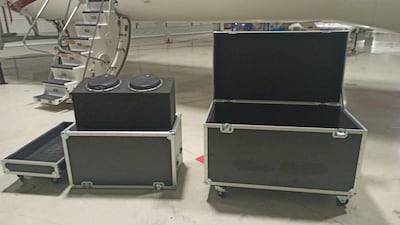
The metal instrument cases, allegedly to be used for escaping of ousted Nissan boss Carlos Ghosn seen at Ataturk International Airport, in Istanbul. EPA -
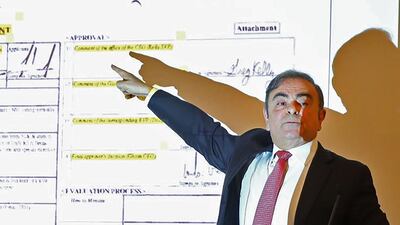
Carlos Ghosn points to documents. Bloomberg -

Journalists chase a car that left a house said to belong to former Nissan chief Carlos Ghosn in Beirut. AFP


Relaxed enough to crack jokes, Mr Ghosn teased journalists who asked for details of his mysterious escape, saying he would not give any details about it although he understood they were curious.
Mr Ghosn, who is of Lebanese descent, was particularly friendly towards local media and the Lebanese government, thanking it for its hospitality, while hinting that he disapproved of France's lack of support.
In response to a question from a Lebanese journalist, he said he was ready to serve his country, albeit not as a politician but as an adviser.
The small Mediterranean country is going through its worst economic crisis since the end of the civil war in 1990 and many Lebanese have openly speculated that Mr Ghosn could step in to save the country from a financial crisis like he saved Nissan from bankruptcy two decades ago.
But Mr Ghosn's mood shifted notably when he was asked by a New York Times reporter whether he believed that he could clear his name in Lebanon, considering the country's judiciary is widely perceived as corrupt and not independent.
"I'm sorry, who is saying that?" he asked. "I think there are very competent people in Lebanon, but frankly when it comes to corrupt systems my first idea is not about Lebanon," he said, hinting at Japan.
Lebanon is ranked 138th out of 180 countries in Transparency International’s latest corruption perception index. Japan is ranked 18th.

