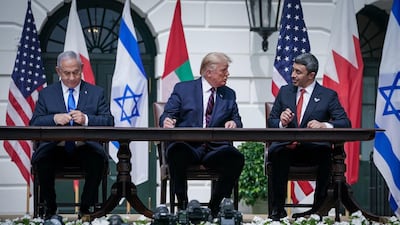
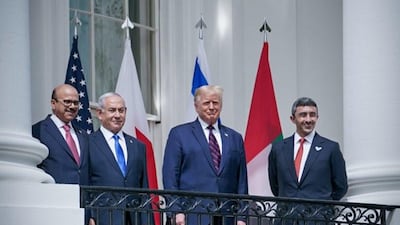
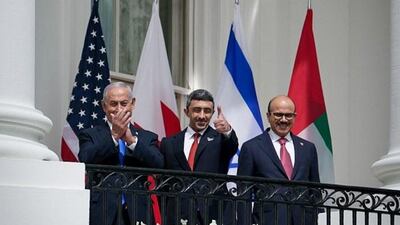
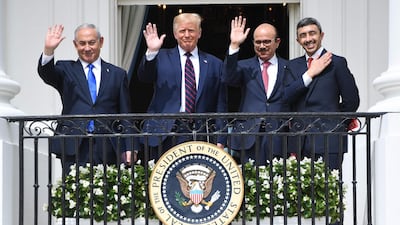
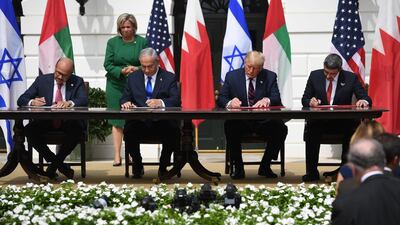
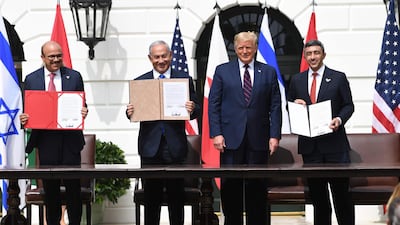
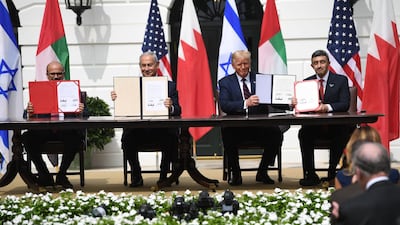
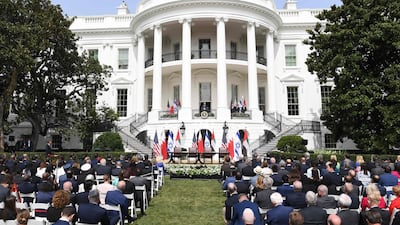
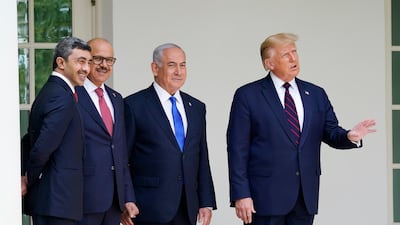
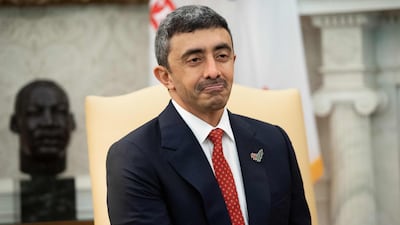
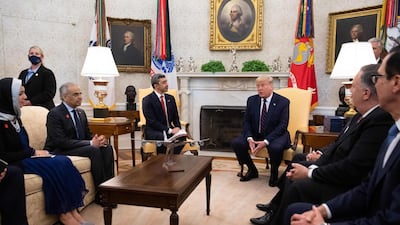
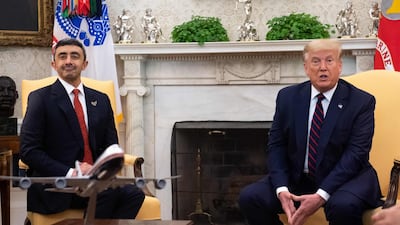
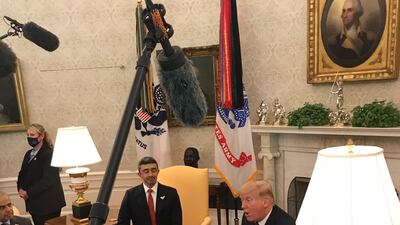
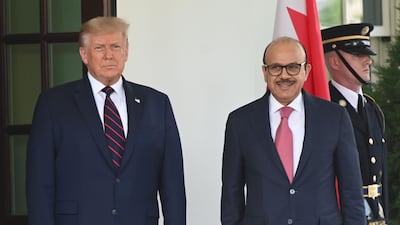
Sheikh Abdullah bin Zayed, UAE Minister of Foreign Affairs and International Co-operation, with Bahraini Foreign Minister Abdullatif Al Zayani, left, Israeli Prime Minister Benjamin Netanyahu, second left, and US President Donald Trump at the signing of the Abraham Accords at the White House on September 15, 2020. AFP
Sheikh Abdullah bin Zayed, UAE Minister of Foreign Affairs and International Co-operation, with Bahraini Foreign Minister Abdullatif Al Zayani, left, Israeli Prime Minister Benjamin Netanyahu, second

Anwar Sadat’s nephew: 'this is the time' for broader US peace initiative after breakthrough of Abraham Accord


  • English
  • Arabic

In the wake of the Abraham Accord, a "positive initiative” from the US and Israel towards a comprehensive settlement with the Palestinians would encourage all countries in the Middle East to seriously consider the benefits of peace and normalisation, the nephew of former Egyptian president Anwar Sadat said.

The UAE and Bahrain normalised ties with Israel with the signing of the Abraham Accord at a ceremony hosted by US President Donald Trump on Tuesday, becoming the first Arab countries to do so since Egypt in 1978 and Jordan in 1994.

"From my point of view, I think we are very much welcoming this move. Hopefully, we will see others join. But of course saying this, we shouldn't ignore the fact that we would like, again to see a real comprehensive settlement for the main goals, which is the Palestinian [Israeli] conflict," Mohamed Anwar Sadat said in an interview with The National.

The UAE's decision to normalise ties was announced last month after a call between Sheikh Mohamed bin Zayed, Crown Prince of Abu Dhabi and Deputy Supreme Commander of the Armed Forces, Mr Trump and Israeli Prime Minister Benjamin Netanyahu. As part of the deal, Israel agreed to halt the planned annexation of Palestinian territories in return for establishing relations with the UAE.

Presenting fresh proposals for a two-state solution, or even a single state with equal rights for Palestinians, would create momentum for peace and prosperity across the Middle East, Mr Sadat, 65, told The National from Cairo where he lives and is leading his political party in the Egyptian parliamentary elections.

“This is the only way whereby we will, let’s say, pull down the fences between all the people of our region,” he said.

“I would love to see all of us in this part of the world, living side by side in peace whereby we could make use of all the capabilities which Israel has [such as] technology, a lot of things which we all need [like] agriculture, irrigation, a lot of things we can really co-ordinate [over].”

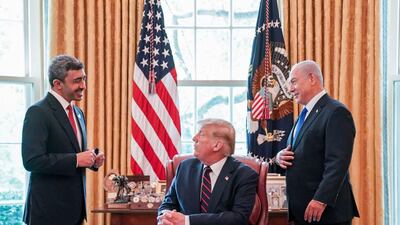
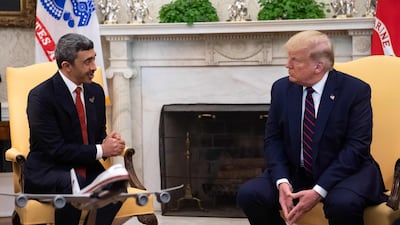
  • Sheikh Abdullah bin Zayed, UAE Minister of Foreign Affairs and International Co-operation, speaks to Donald Trump, US president at the time, and Israeli Prime Minister Benjamin Netanyahu in the Oval Office in September 2020. Ministry of Foreign Affairs and International Co-operation
    Sheikh Abdullah bin Zayed, UAE Minister of Foreign Affairs and International Co-operation, speaks to Donald Trump, US president at the time, and Israeli Prime Minister Benjamin Netanyahu in the Oval Office in September 2020. Ministry of Foreign Affairs and International Co-operation
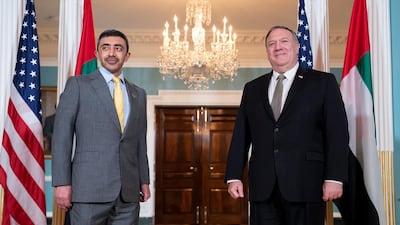
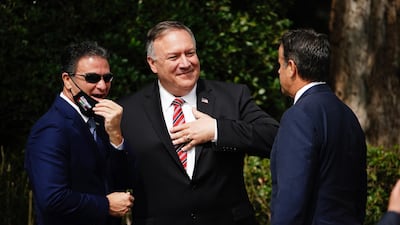
  • Sheikh Abdullah bin Zayed, UAE Minister of Foreign Affairs and International Co-operation, meets Mike Pompeo, US secretary of state at the time. Wam
    Sheikh Abdullah bin Zayed, UAE Minister of Foreign Affairs and International Co-operation, meets Mike Pompeo, US secretary of state at the time. Wam
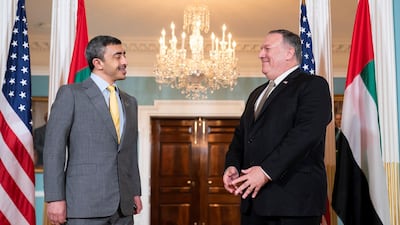
  • Sheikh Abdullah and Mr Pompeo in Washington. Wam
    Sheikh Abdullah and Mr Pompeo in Washington. Wam
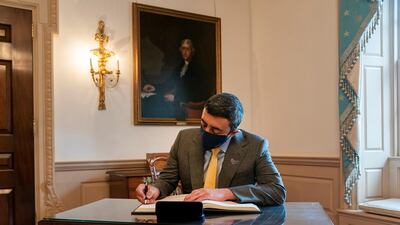
  • Sheikh Abdullah visits Washington in September last year. Wam
    Sheikh Abdullah visits Washington in September last year. Wam
  • Sheikh Abdullah, UAE Minister of Foreign Affairs and International Co-operation, US President Donald Trump, centre, and Israeli Prime Minister Benjamin Netanyahu sign the Abraham Accord at the White House South Lawn. MOFAIC
    Sheikh Abdullah, UAE Minister of Foreign Affairs and International Co-operation, US President Donald Trump, centre, and Israeli Prime Minister Benjamin Netanyahu sign the Abraham Accord at the White House South Lawn. MOFAIC
  • Sheikh Abdullah and, from left, Bahrain's Foreign Minister Abdullatif Al Zayani, Israeli Prime Minister Benjamin Netanyahu and US President Donald Trump at the White House. MOFAIC
    Sheikh Abdullah and, from left, Bahrain's Foreign Minister Abdullatif Al Zayani, Israeli Prime Minister Benjamin Netanyahu and US President Donald Trump at the White House. MOFAIC
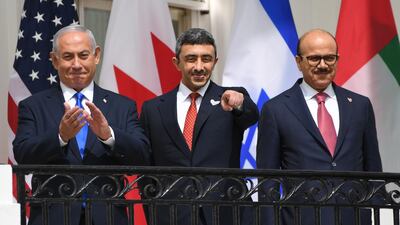
  • Sheikh Abdullah, Mr Al Zayani and Mr Netanyahu at the White House during the Abraham Accord signing ceremony. MOFAIC
    Sheikh Abdullah, Mr Al Zayani and Mr Netanyahu at the White House during the Abraham Accord signing ceremony. MOFAIC
  • Sheikh Abdullah and, from left, Mr Netanyahu, Mr Trump and Mr Al Zayani wave from the Truman Balcony at the White House. AFP
    Sheikh Abdullah and, from left, Mr Netanyahu, Mr Trump and Mr Al Zayani wave from the Truman Balcony at the White House. AFP
  • Sheikh Abdullah and, from left, Mr Al Zayani, Mr Netanyahu and Mr Trump sign the Abraham Accord. AFP
    Sheikh Abdullah and, from left, Mr Al Zayani, Mr Netanyahu and Mr Trump sign the Abraham Accord. AFP
  • Sheikh Abdullah and, from left, Mr Al Zayani, Mr Netanyahu and Mr Trump after the signing ceremony. AFP
    Sheikh Abdullah and, from left, Mr Al Zayani, Mr Netanyahu and Mr Trump after the signing ceremony. AFP
  • Sheikh Abdullah and, from left, Mr Al Zayani, Mr Netanyahu and Mr Trump after the signing ceremony. AFP
    Sheikh Abdullah and, from left, Mr Al Zayani, Mr Netanyahu and Mr Trump after the signing ceremony. AFP
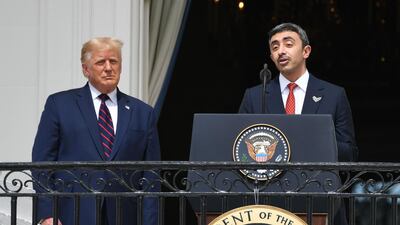
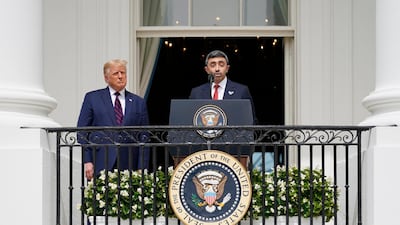
  • Sheikh Abdullah speaks from the Truman Balcony at the White House during the signing ceremony of the Abraham Accord. AFP
    Sheikh Abdullah speaks from the Truman Balcony at the White House during the signing ceremony of the Abraham Accord. AFP
  • Sheikh Abdullah speaks as Mr Trump looks on before the signing of Abraham Accord on the South Lawn of the White House. AP
    Sheikh Abdullah speaks as Mr Trump looks on before the signing of Abraham Accord on the South Lawn of the White House. AP
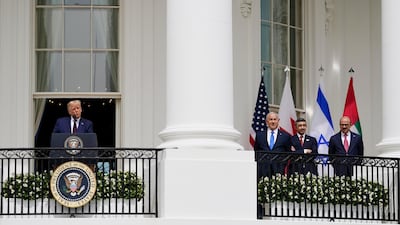
  • Sheikh Abdullah looks on from the White House as Mr Trump speaks at the Abraham Accord signing ceremony, also attended by Mr Al Zayani and Mr Netanyahu. AP
    Sheikh Abdullah looks on from the White House as Mr Trump speaks at the Abraham Accord signing ceremony, also attended by Mr Al Zayani and Mr Netanyahu. AP
  • Sheikh Abdullah bin Zayed, UAE Minister of Foreign Affairs and International Co-operation, Israeli Prime Minister Benjamin Netanyahu, left, and Bahraini Foreign Minister Abdullatif Al Zayani stand on the Blue Room Balcony during the signing ceremony. AP
    Sheikh Abdullah bin Zayed, UAE Minister of Foreign Affairs and International Co-operation, Israeli Prime Minister Benjamin Netanyahu, left, and Bahraini Foreign Minister Abdullatif Al Zayani stand on the Blue Room Balcony during the signing ceremony. AP
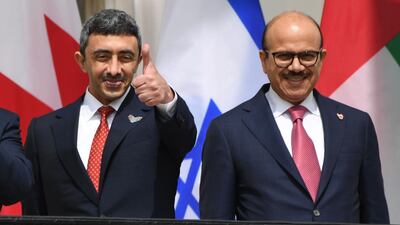
  • Sheikh Abdullah and Mr Al Zayani shortly before participating in the signing of the Abraham Accord. AFP
    Sheikh Abdullah and Mr Al Zayani shortly before participating in the signing of the Abraham Accord. AFP
  • Sheikh Abdullah, with Mr Netanyahu, left, and Mr Al Zayani at the signing of the Abraham Accord on the South Lawn of the White House. AFP
    Sheikh Abdullah, with Mr Netanyahu, left, and Mr Al Zayani at the signing of the Abraham Accord on the South Lawn of the White House. AFP
  • US President Donald Trump speaks from the Truman Balcony at the White House during the signing ceremony of the Abraham Accord. AFP
    US President Donald Trump speaks from the Truman Balcony at the White House during the signing ceremony of the Abraham Accord. AFP
  • President Donald Trump walks to the Abraham Accord signing ceremony at the White House with Sheikh Abdullah bin Zayed, UAE Minister of Foreign Affairs and International Co-operation, Israeli Prime Minister Benjamin Netanyahu, and Bahrain's Foreign Minister Abdullatif Al Zayani. AP
    President Donald Trump walks to the Abraham Accord signing ceremony at the White House with Sheikh Abdullah bin Zayed, UAE Minister of Foreign Affairs and International Co-operation, Israeli Prime Minister Benjamin Netanyahu, and Bahrain's Foreign Minister Abdullatif Al Zayani. AP
  • US Secretary of State Mike Pompeo arrives at the White House to attend the Abraham Accord signing ceremony hosted by President Donald Trump. EPA
    US Secretary of State Mike Pompeo arrives at the White House to attend the Abraham Accord signing ceremony hosted by President Donald Trump. EPA
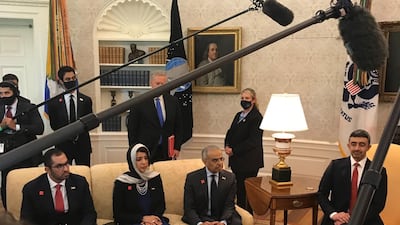
  • Sheikh Abdullah bin Zayed, UAE Minister of Foreign Affairs and International Co-operation, meets US President Donald Trump in the Oval Office of the White House before the signing of Abraham Accord. AFP
    Sheikh Abdullah bin Zayed, UAE Minister of Foreign Affairs and International Co-operation, meets US President Donald Trump in the Oval Office of the White House before the signing of Abraham Accord. AFP
  • Sheikh Abdullah bin Zayed, UAE Minister of Foreign Affairs and International Co-operation, in the Oval Office. AFP
    Sheikh Abdullah bin Zayed, UAE Minister of Foreign Affairs and International Co-operation, in the Oval Office. AFP
  • Sheikh Abdullah bin Zayed, UAE Minister of Foreign Affairs and International Co-operation, meets US President Donald Trump in the Oval Office of the White House. AFP
    Sheikh Abdullah bin Zayed, UAE Minister of Foreign Affairs and International Co-operation, meets US President Donald Trump in the Oval Office of the White House. AFP
  • Sheikh Abdullah with Mr Trump in the Oval Office. AFP
    Sheikh Abdullah with Mr Trump in the Oval Office. AFP
  • Sheikh Abdullah bin Zayed, UAE Minister of Foreign Affairs and International Co-operation, with by President Donald Trump at the White House. Mustafa Alrawi / The National
    Sheikh Abdullah bin Zayed, UAE Minister of Foreign Affairs and International Co-operation, with by President Donald Trump at the White House. Mustafa Alrawi / The National
  • The UAE delegation led by Sheikh Abdullah bin Zayed, Minister of Foreign Affairs and International Co-operation, with US President Donald Trump at the White House. Mustafa Alrawi / The National
    The UAE delegation led by Sheikh Abdullah bin Zayed, Minister of Foreign Affairs and International Co-operation, with US President Donald Trump at the White House. Mustafa Alrawi / The National
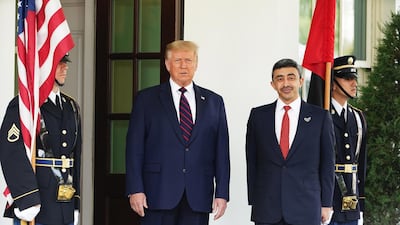
  • Sheikh Abdullah bin Zayed, UAE Minister of Foreign Affairs and International Co-operation, is welcomed to the White House by US President Donald Trump. EPA
    Sheikh Abdullah bin Zayed, UAE Minister of Foreign Affairs and International Co-operation, is welcomed to the White House by US President Donald Trump. EPA
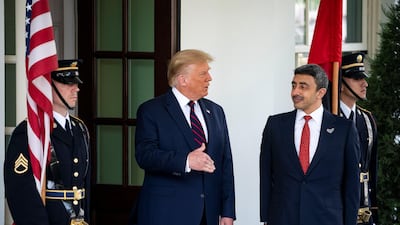
  • Sheikh Abdullah and Mr Trump outside the White House. AFP
    Sheikh Abdullah and Mr Trump outside the White House. AFP
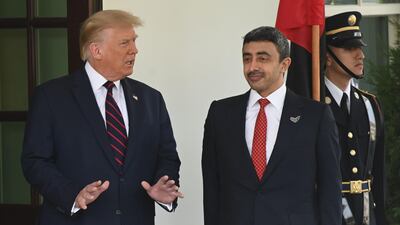
  • Sheikh Abdullah bin Zayed speaks to Mr Trump after arriving at the White House. Reuters
    Sheikh Abdullah bin Zayed speaks to Mr Trump after arriving at the White House. Reuters
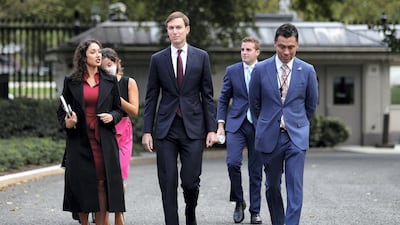
  • White House Senior Adviser Jared Kushner walks away following a television interview on the North Lawn at the White House in Washington. Reuters
    White House Senior Adviser Jared Kushner walks away following a television interview on the North Lawn at the White House in Washington. Reuters
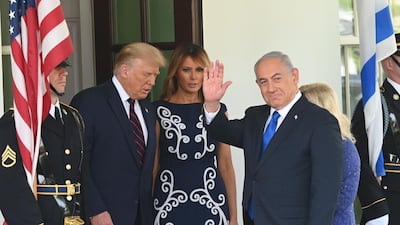
  • US President Donald Trump and First Lady Melania Trump welcome the arrival of Prime Minister of Israel Benjamin Netanyahu and his wife Sara on the North Lawn of the White House in Washington DC. AFP
    US President Donald Trump and First Lady Melania Trump welcome the arrival of Prime Minister of Israel Benjamin Netanyahu and his wife Sara on the North Lawn of the White House in Washington DC. AFP
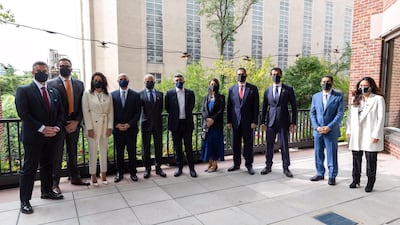
  • A delegation of senior UAE officials led by Sheikh Abdullah bin Zayed, UAE Minister of Foreign Affairs and International Co-operation, prepares to depart for the White House to sign the Abraham Accord. MOFAIC
    A delegation of senior UAE officials led by Sheikh Abdullah bin Zayed, UAE Minister of Foreign Affairs and International Co-operation, prepares to depart for the White House to sign the Abraham Accord. MOFAIC
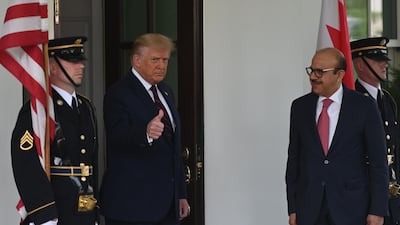
  • US President Donald Trump welcomes Bahraini Foreign Minister Abdullatif Al Zayani. AFP
    US President Donald Trump welcomes Bahraini Foreign Minister Abdullatif Al Zayani. AFP
  • Bahraini Foreign Minister Abdullatif Al Zayani arrives at the White House in Washington DC. AFP
    Bahraini Foreign Minister Abdullatif Al Zayani arrives at the White House in Washington DC. AFP
  • US President Donald Trump welcomes Bahraini Foreign Minister Abdullatif Al Zayani on the North Lawn of the White House in Washington, DC. AFP
    US President Donald Trump welcomes Bahraini Foreign Minister Abdullatif Al Zayani on the North Lawn of the White House in Washington, DC. AFP
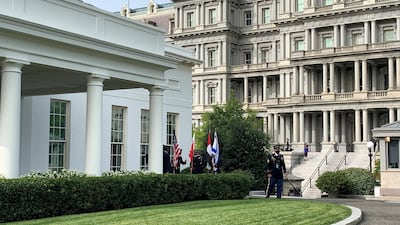
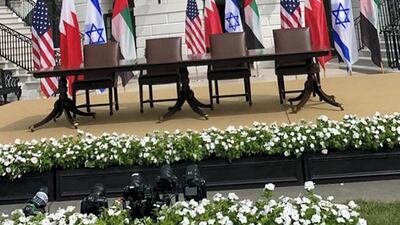
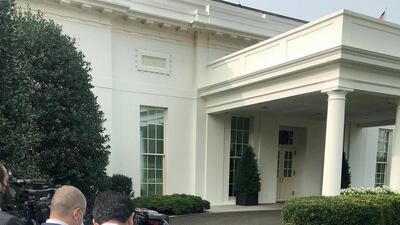
  • Preparations at the White House for the signing of the Abraham Accord.
    Preparations at the White House for the signing of the Abraham Accord.
  • Preparations under way at the White House for the signing of the Abraham Accord.
    Preparations under way at the White House for the signing of the Abraham Accord.
  • Preparations under way at the White House for the signing of the Abraham Accord.
    Preparations under way at the White House for the signing of the Abraham Accord.
  • Preparation at the White House for the signing of the Abraham Accord. The National
    Preparation at the White House for the signing of the Abraham Accord. The National

Egypt’s peace deal with Israel, signed by Anwar Sadat at Camp David in 1978, has led to a "cold peace" only between governments but not “people to people” peace, he said.

“So we are actually losing chances, opportunities. And we never learned from history. So this is the time I think we would love to see whether the Americans or the Israelis try to come up with something solid, whereby we all in the other countries say to the Palestinians: this is what is available, this is the best we can have. Let's sit and come to a final comprehensive settlement and we live all in peace.”

Anwar Sadat made history by travelling to Jerusalem and speaking to the Israeli parliament in 1977 and signing the Camp David Accords in 1978. He was awarded the Nobel Peace Prize that year, but in 1981 he was assassinated by an Egyptian Islamist extremist for making peace with Israel.

His nephew fears that the same forces will foment instability if no comprehensive peace is reached now. Iran and extremist groups “are not happy” about the accords, but could be neutralised if the US and Israel move quickly to bring the Palestinians to the table, Mr Sadat said.

“We would like to see Israel also to come up with something … tell us how we can reach a solution … where at least we could somehow corner the Palestinians, we could make pressure on the Palestinians to tell them take it.”

Resolving the Palestinian-Israeli conflict would create the conditions for a “warm peace” between neighbours which is even more critical during the current pandemic.

“We need each other nowadays, you know. You'll have seen what happened with this Covid-19 and how much the whole world was really in need of coming together, helping, trying to find a way to have a vaccine trying to support each other. We need this. And we know that Israel is part of this world, and we need to find ways and means, but they also have to understand that they should give up a little bit, they should show some flexibility.”

Asked if the US brokering of the agreements signed this week would boost its political clout in the Middle East, Mr Sadat was sceptical. He said the geopolitical field involving new powers such as Russia and China would continue to hold, given the relations they have built in the region.

Ten tax points to be aware of in 2026

1. Domestic VAT refund amendments: request your refund within five years

If a business does not apply for the refund on time, they lose their credit.

2. E-invoicing in the UAE

Businesses should continue preparing for the implementation of e-invoicing in the UAE, with 2026 a preparation and transition period ahead of phased mandatory adoption. 

3. More tax audits

Tax authorities are increasingly using data already available across multiple filings to identify audit risks. 

4. More beneficial VAT and excise tax penalty regime

Tax disputes are expected to become more frequent and more structured, with clearer administrative objection and appeal processes. The UAE has adopted a new penalty regime for VAT and excise disputes, which now mirrors the penalty regime for corporate tax.

5. Greater emphasis on statutory audit

There is a greater need for the accuracy of financial statements. The International Financial Reporting Standards standards need to be strictly adhered to and, as a result, the quality of the audits will need to increase.

6. Further transfer pricing enforcement

Transfer pricing enforcement, which refers to the practice of establishing prices for internal transactions between related entities, is expected to broaden in scope. The UAE will shortly open the possibility to negotiate advance pricing agreements, or essentially rulings for transfer pricing purposes. 

7. Limited time periods for audits

Recent amendments also introduce a default five-year limitation period for tax audits and assessments, subject to specific statutory exceptions. While the standard audit and assessment period is five years, this may be extended to up to 15 years in cases involving fraud or tax evasion. 

8. Pillar 2 implementation 

Many multinational groups will begin to feel the practical effect of the Domestic Minimum Top-Up Tax (DMTT), the UAE's implementation of the OECD’s global minimum tax under Pillar 2. While the rules apply for financial years starting on or after January 1, 2025, it is 2026 that marks the transition to an operational phase.

9. Reduced compliance obligations for imported goods and services

Businesses that apply the reverse-charge mechanism for VAT purposes in the UAE may benefit from reduced compliance obligations. 

10. Substance and CbC reporting focus

Tax authorities are expected to continue strengthening the enforcement of economic substance and Country-by-Country (CbC) reporting frameworks. In the UAE, these regimes are increasingly being used as risk-assessment tools, providing tax authorities with a comprehensive view of multinational groups’ global footprints and enabling them to assess whether profits are aligned with real economic activity. 

Contributed by Thomas Vanhee and Hend Rashwan, Aurifer

Who's who in Yemen conflict

Houthis: Iran-backed rebels who occupy Sanaa and run unrecognised government

Yemeni government: Exiled government in Aden led by eight-member Presidential Leadership Council

Southern Transitional Council: Faction in Yemeni government that seeks autonomy for the south

Habrish 'rebels': Tribal-backed forces feuding with STC over control of oil in government territory