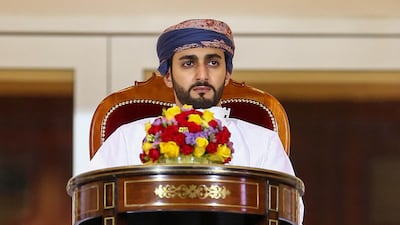
Sultan Haitham bin Tarik set a new Basic Law earlier this week. Reuters

Oman’s Sultan Haitham guarantees freedom of expression


  • English
  • Arabic

Oman's Sultan Haitham changed the State Basic Law to grant citizens and residents living in Oman freedom of expression and opinion.

"Freedom of opinion and expression be in writing or speech and all forms of expression are guaranteed by the Basic Law of the State in accordance with the law and without detriment to the sanctity of private life," state-run Oman News Agency reported on Thursday.

ONA also reported that the Sultan ordered “the freedom to practice religious rites according to recognised customs, is protected, provided it does not violate the public order or contradict morals”.

Sultan Haitham also removed a law that previously allowed the state to monitor private phone conversations, social media or postal correspondence.

“In this regard, the Basic Law of the State states that the freedom of correspondence by post, telegraph, telephone conversations and other means of communication is protected and its confidentiality is guaranteed,” the ONA said.

Sultan Haitham, who took the throne in January last year after the death of Sultan Qaboos, introduced a series of measures to revamp the government and its laws. The new Basic Law, the closest Oman has to a codified constitution, effectively replaces the first, set in 1996.

Sultan Qaboos, who ruled the country for 50 years, is regarded as the founder of modern Oman but Sultan Haitham has already embarked on reforms to reshape the destiny of his people.

  • Sayyid Dhi Yazan bin Haitham attends the Sultan Qaboos Cup final between Dhofar and Al Orouba at the Rustaq Sports Complex, west of the Omani capital Muscat in November. AFP
    Sayyid Dhi Yazan bin Haitham attends the Sultan Qaboos Cup final between Dhofar and Al Orouba at the Rustaq Sports Complex, west of the Omani capital Muscat in November. AFP
  • Omani Minister of Culture, Sports and Youth Dhi Yazan bin Haitham and President of Olympic Council of Asia Sheikh Ahmed Al Fahad Al Jaber attend the 39th Olympic Council of Asia General Assembly Meeting. AFP
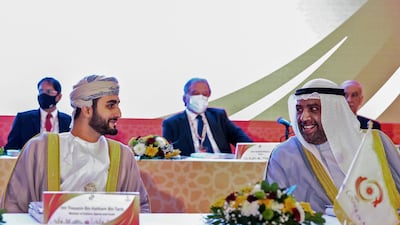
    Omani Minister of Culture, Sports and Youth Dhi Yazan bin Haitham and President of Olympic Council of Asia Sheikh Ahmed Al Fahad Al Jaber attend the 39th Olympic Council of Asia General Assembly Meeting. AFP
  • Dhi Yazan bin Haitham presents the trophy to Dhofar players after winning the Sultan Qaboos Cup final. AFP
    Dhi Yazan bin Haitham presents the trophy to Dhofar players after winning the Sultan Qaboos Cup final. AFP
  • Omani Minister of Culture, Sports and Youth Sayyid Dhi Yazan bin Haitham attends the 39th Olympic Council of Asia (OCA) General Assembly Meeting. AFP
    Omani Minister of Culture, Sports and Youth Sayyid Dhi Yazan bin Haitham attends the 39th Olympic Council of Asia (OCA) General Assembly Meeting. AFP
  • Oman's ruler Sultan Haitham bin Tariq prepares for a meeting at Al Alam palace in the capital Muscat, Oman. AP
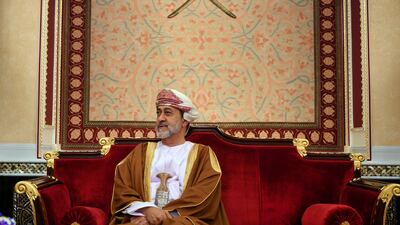
    Oman's ruler Sultan Haitham bin Tariq prepares for a meeting at Al Alam palace in the capital Muscat, Oman. AP
  • Dhi Yazan bin Haitham presents the Order of Royal Commendation, 3rd Class, to media personnel, granted by Sultan Haitham Bin Tarik. Oman News Agency
    Dhi Yazan bin Haitham presents the Order of Royal Commendation, 3rd Class, to media personnel, granted by Sultan Haitham Bin Tarik. Oman News Agency
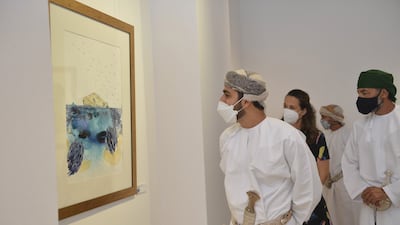
  • Dhi Yazan bin Haitham tours the exhibition titled “The Coast, Society and Protection," by Juana Mullet, at Bait al Baranda in Muttrah. Oman News Agency
    Dhi Yazan bin Haitham tours the exhibition titled “The Coast, Society and Protection," by Juana Mullet, at Bait al Baranda in Muttrah. Oman News Agency
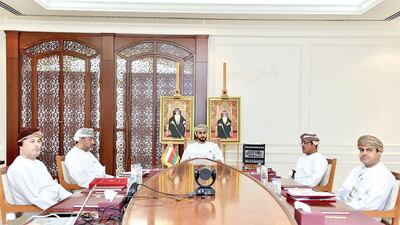
  • Dhi Yazan bin Haitham, Minister of Culture, Sports and Youth, takes part via video-conferencing in the 24th session of GCC Ministers of Culture's Council. Oman News Agency
    Dhi Yazan bin Haitham, Minister of Culture, Sports and Youth, takes part via video-conferencing in the 24th session of GCC Ministers of Culture's Council. Oman News Agency
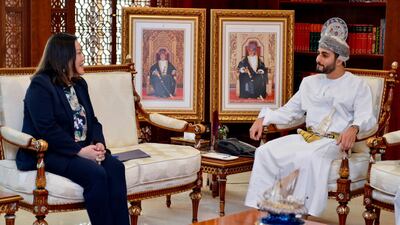
  • Dhi Yazan bin Haitham receives in his office today Leslie M. Tsou, US ambassador to Oman. Oman News Agency
    Dhi Yazan bin Haitham receives in his office today Leslie M. Tsou, US ambassador to Oman. Oman News Agency
  • Dhi Yazan bin Haitham opens the training centre of Outward Bound Oman in Al Khoudh. Oman News Agency
    Dhi Yazan bin Haitham opens the training centre of Outward Bound Oman in Al Khoudh. Oman News Agency
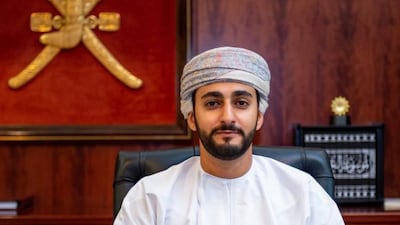
  • Dhi Yazan bin Haitham, Minister of Culture, Sports and Youth. Oman News Agency
    Dhi Yazan bin Haitham, Minister of Culture, Sports and Youth. Oman News Agency

Omanis think the latest changes will win investor confidence at a time when Oman needs to revive its ailing economy.

"Without any doubt, freedom of expression will be seen by many foreign investment companies as a way forward. It will place Oman on a higher pedestal of transparency and as a result, investors will now know that the country respects everybody's opinions," said Khalifa Al Maraei, 32, a property investment company owner.

Expatriates working in Oman also expressed their delight.

“The part which I like is the right to practise your religion rites. Oman has a significant expatriate population, including Christian and Hindu faiths,” said Ravi Shankatram, 37, an Indian IT engineer living in Muscat.

“Expatriates now will feel more confident to practise their religions without fearing prejudice. I am not saying we are facing that but now we will be more confident when we go to churches or temples to practise our faiths.”

This week, the Sultan tweaked another state basic law by setting up the role of the crown prince for the first time in the history of Oman. He made his eldest son, Dhi Yazan bin Haitham, heir apparent to his crown.

Dhi Yazan bin Haitham, 30, is currently the minister of culture, sports and youth.

Sultan Haitham last year retired several senior officials, including Cabinet ministers, introduced value added tax, income tax and removal of some state subsidies, in an attempt to cut state spending and boost revenues

KINGDOM%20OF%20THE%20PLANET%20OF%20THE%20APES
%3Cp%3E%3Cstrong%3EDirector%3A%3C%2Fstrong%3E%20Wes%20Ball%3C%2Fp%3E%0A%3Cp%3E%3Cstrong%3EStarring%3A%3C%2Fstrong%3E%20Owen%20Teague%2C%20Freya%20Allen%2C%20Kevin%20Durand%3C%2Fp%3E%0A%3Cp%3E%3Cstrong%3ERating%3A%20%3C%2Fstrong%3E3.5%2F5%3C%2Fp%3E%0A
Ten tax points to be aware of in 2026

1. Domestic VAT refund amendments: request your refund within five years

If a business does not apply for the refund on time, they lose their credit.

2. E-invoicing in the UAE

Businesses should continue preparing for the implementation of e-invoicing in the UAE, with 2026 a preparation and transition period ahead of phased mandatory adoption. 

3. More tax audits

Tax authorities are increasingly using data already available across multiple filings to identify audit risks. 

4. More beneficial VAT and excise tax penalty regime

Tax disputes are expected to become more frequent and more structured, with clearer administrative objection and appeal processes. The UAE has adopted a new penalty regime for VAT and excise disputes, which now mirrors the penalty regime for corporate tax.

5. Greater emphasis on statutory audit

There is a greater need for the accuracy of financial statements. The International Financial Reporting Standards standards need to be strictly adhered to and, as a result, the quality of the audits will need to increase.

6. Further transfer pricing enforcement

Transfer pricing enforcement, which refers to the practice of establishing prices for internal transactions between related entities, is expected to broaden in scope. The UAE will shortly open the possibility to negotiate advance pricing agreements, or essentially rulings for transfer pricing purposes. 

7. Limited time periods for audits

Recent amendments also introduce a default five-year limitation period for tax audits and assessments, subject to specific statutory exceptions. While the standard audit and assessment period is five years, this may be extended to up to 15 years in cases involving fraud or tax evasion. 

8. Pillar 2 implementation 

Many multinational groups will begin to feel the practical effect of the Domestic Minimum Top-Up Tax (DMTT), the UAE's implementation of the OECD’s global minimum tax under Pillar 2. While the rules apply for financial years starting on or after January 1, 2025, it is 2026 that marks the transition to an operational phase.

9. Reduced compliance obligations for imported goods and services

Businesses that apply the reverse-charge mechanism for VAT purposes in the UAE may benefit from reduced compliance obligations. 

10. Substance and CbC reporting focus

Tax authorities are expected to continue strengthening the enforcement of economic substance and Country-by-Country (CbC) reporting frameworks. In the UAE, these regimes are increasingly being used as risk-assessment tools, providing tax authorities with a comprehensive view of multinational groups’ global footprints and enabling them to assess whether profits are aligned with real economic activity. 

Contributed by Thomas Vanhee and Hend Rashwan, Aurifer

The Buckingham Murders

Starring: Kareena Kapoor Khan, Ash Tandon, Prabhleen Sandhu

Director: Hansal Mehta

Rating: 4 / 5

The UN General Assembly President in quotes:

YEMEN: “The developments we have seen are promising. We really hope that the parties are going to respect the agreed ceasefire. I think that the sense of really having the political will to have a peace process is vital. There is a little bit of hope and the role that the UN has played is very important.”

PALESTINE: “There is no easy fix. We need to find the political will and comply with the resolutions that we have agreed upon.”

OMAN: “It is a very important country in our system. They have a very important role to play in terms of the balance and peace process of that particular part of the world, in that their position is neutral. That is why it is very important to have a dialogue with the Omani authorities.”

REFORM OF THE SECURITY COUNCIL: “This is complicated and it requires time. It is dependent on the effort that members want to put into the process. It is a process that has been going on for 25 years. That process is slow but the issue is huge. I really hope we will see some progress during my tenure.”

British Grand Prix free practice times in the third and final session at Silverstone on Saturday (top five):

1. Lewis Hamilton (GBR/Mercedes) 1:28.063 (18 laps)

2. Sebastian Vettel (GER/Ferrari) 1:28.095 (14)

3. Valtteri Bottas (FIN/Mercedes) 1:28.137 (20)

4. Kimi Raikkonen (FIN/Ferrari) 1:28.732 (15)

5. Nico Hulkenberg (GER/Renault)  1:29.480 (14)

The biog

Name: Abeer Al Bah

Born: 1972

Husband: Emirati lawyer Salem Bin Sahoo, since 1992

Children: Soud, born 1993, lawyer; Obaid, born 1994, deceased; four other boys and one girl, three months old

Education: BA in Elementary Education, worked for five years in a Dubai school


The%20specs
%3Cp%3E%3Cstrong%3EEngine%3A%3C%2Fstrong%3E%206.4-litre%20V8%0D%3Cbr%3E%3Cstrong%3ETransmission%3A%20%3C%2Fstrong%3E8-speed%20auto%0D%3Cbr%3E%3Cstrong%3EPower%3A%20%3C%2Fstrong%3E470bhp%0D%3Cbr%3E%3Cstrong%3ETorque%3A%20%3C%2Fstrong%3E637Nm%0D%3Cbr%3E%3Cstrong%3EPrice%3A%20%3C%2Fstrong%3EDh375%2C900%20(estimate)%0D%3Cbr%3E%3Cstrong%3EOn%20sale%3A%3C%2Fstrong%3E%20now%3C%2Fp%3E%0A
The%20specs
%3Cp%3E%3Cstrong%3EEngine%3A%3C%2Fstrong%3E%20Twin-turbocharged%204-litre%20V8%0D%3Cbr%3E%3Cstrong%3EPower%3A%20%3C%2Fstrong%3E542bhp%0D%3Cbr%3E%3Cstrong%3ETorque%3A%20%3C%2Fstrong%3E770Nm%0D%3Cbr%3E%3Cstrong%3ETransmission%3A%20%3C%2Fstrong%3EEight-speed%20automatic%0D%3Cbr%3E%3Cstrong%3EPrice%3A%20%3C%2Fstrong%3EFrom%20Dh1%2C450%2C000%3Cbr%3E%3Cstrong%3EOn%20sale%3A%20%3C%2Fstrong%3ENow%3C%2Fp%3E%0A
Moon Music

Artist: Coldplay

Label: Parlophone/Atlantic

Number of tracks: 10

Rating: 3/5

Islamophobia definition

A widely accepted definition was made by the All Party Parliamentary Group on British Muslims in 2019: “Islamophobia is rooted in racism and is a type of racism that targets expressions of Muslimness or perceived Muslimness.” It further defines it as “inciting hatred or violence against Muslims”.

VEZEETA PROFILE

Date started: 2012

Founder: Amir Barsoum

Based: Dubai, UAE

Sector: HealthTech / MedTech

Size: 300 employees

Funding: $22.6 million (as of September 2018)

Investors: Technology Development Fund, Silicon Badia, Beco Capital, Vostok New Ventures, Endeavour Catalyst, Crescent Enterprises’ CE-Ventures, Saudi Technology Ventures and IFC

COMPANY PROFILE

Name: Lamsa

Founder: Badr Ward

Launched: 2014

Employees: 60

Based: Abu Dhabi

Sector: EdTech

Funding to date: $15 million

Company profile

Date started: December 24, 2018

Founders: Omer Gurel, chief executive and co-founder and Edebali Sener, co-founder and chief technology officer

Based: Dubai Media City

Number of employees: 42 (34 in Dubai and a tech team of eight in Ankara, Turkey)

Sector: ConsumerTech and FinTech

Cashflow: Almost $1 million a year

Funding: Series A funding of $2.5m with Series B plans for May 2020