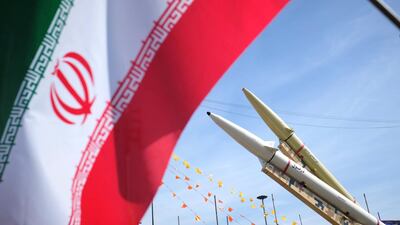

Iran is using “conspiratorial methods” to cover up illegal activity in Europe aimed at expanding its weapons programme, a German intelligence report said.
It is the latest in a series of warnings by German, Dutch and Swedish security services that Iran is looking to Europe to source technology for weapons of mass destruction.
The report by the Office for the Protection of the Constitution in Schleswig-Holstein, a German state, described a number of tactics it said were used by Iran and others to “disguise their illegal procurement activities” in Europe.
They included creating sham companies in order to conceal from German business partners that they were trading with state-controlled enterprises.
Middlemen were also involved in “illegal procurement networks” set up by Iran as it tried to secretly acquire critical goods from Germany.
German institutions that possess sensitive technology and expertise, including businesses and universities, are subject to strict export controls.
But the report said Iran and other countries, such as Syria, North Korea and Pakistan, deliberately sought to exploit suppliers who were inexperienced in exporting goods.
Goods exported from Germany were then diverted via third countries in order to disguise the fact that they were heading for Iran or one of the countries under suspicion.
In addition, illegal procurement efforts would be “divided into individual shipments that were not suspicious in themselves”, in order to avoid exposing the whole scheme.
Countries such as Iran “try to circumvent security arrangements and export regulations, and conceal their illegal procurement activities,” the report said.
“To achieve this, they mostly use conspiratorial means and methods. The task for German security authorities is to spot these practices and methods in good time and to prevent them.
“However, security authorities depend on companies in Schleswig-Holstein alerting and co-operating with them when they come across questionable dealings and dubious business practices.”
Iran under scrutiny amid Vienna nuclear talks
-

Iranian President Hassan Rouhani, right, and the head of Atomic Energy Organization of Iran Ali Akbar Salehi inspect the nuclear technology on the occasion of Iran National Nuclear Technology Day in Tehran in 2019. EPA -
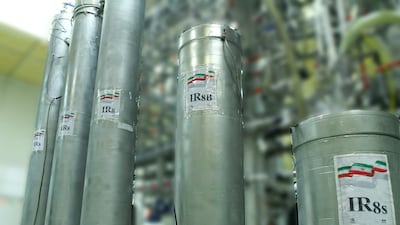
IR-8 centrifuges at Natanz nuclear power plant, some 300 kilometres south of capital Tehran. AFP -
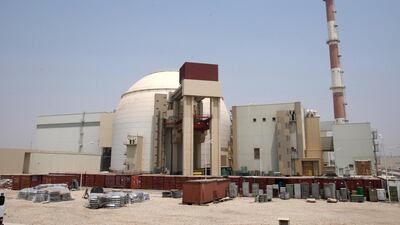
The Iranian nuclear power plant in Bushehr in 2010. EPA -

Salehi speaks with media while visiting Natanz enrichment facility, in central Iran in 2019. Atomic Energy Organization of Iran via AP -
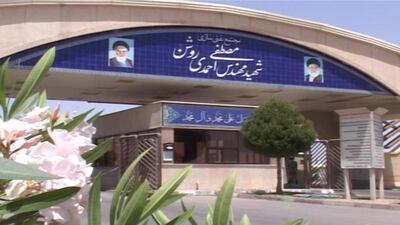
The gate of Natanz nuclear power plant in Natanz , Isfahan province, in 2019. EPA -
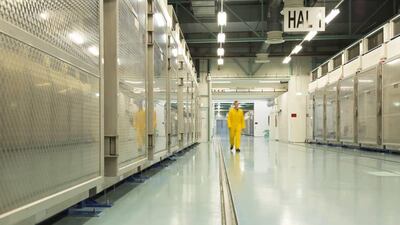
Inside of the Iran's Fordow nuclear facility, in Fordow, Qom province in 2019. EPA -
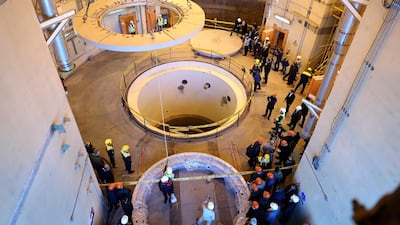
Technicians work at the Arak heavy water reactor's secondary circuit, as officials and media visit the site, near Arak, Iran in 2019. Atomic Energy Organization of Iran via AP -
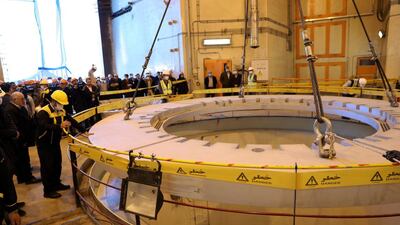
Members of the media and officials tour the water nuclear reactor at Arak in 2019. WANA via Reuters -
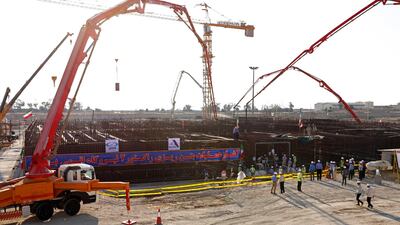
Concrete is poured for the base of the second nuclear power reactor at Bushehr plant in 2019. Atomic Energy Organization of Iran via AP


Iran denies seeking weapons of mass destruction and is involved in talks with world powers aimed at restoring limits on its nuclear activity.
But the latest report follows findings by Dutch intelligence services that Iran’s efforts to acquire weapons technology continued during 2020.
In the past year, Dutch intelligence efforts succeeded in “frustrating and stopping numerous acquisition attempts”, the General Intelligence and Security Service of the Netherlands said.
In Sweden, an annual security report published in March accused Iran of industrial espionage.
This was “mainly targeted at high-tech Swedish industry and Swedish products which could be used in nuclear weapons programmes”, the report said.
Intelligence services in the German state of Bavaria similarly accused Iran in April of trying to get its hands on technology needed to make weapons of mass destruction.
Iran last month increased its nuclear enrichment to 60 per cent, a move described by the Arab League as a clear step towards developing nuclear weapons.
The enrichment went far beyond the limit of 3.67 per cent set out by the 2015 nuclear deal between Iran, the US, Britain, Germany, France, Russia and China.
The US pulled out of the deal under Donald Trump’s presidency in 2018 and restored sanctions on Tehran, but Joe Biden’s administration is seeking a return to the pact.
Iranian diplomats are demanding that all sanctions be lifted before it will resume respecting limits on its nuclear activity.
The talks in Vienna resumed on Friday, with Iran and the US negotiating indirectly via European diplomats.
Asked if he thought Iran was serious about the talks, Mr Biden said: "Yes, but how serious, and what they are prepared to do is a different story. But we're still talking."
Russia’s delegate in Vienna, Mikhail Ulyanov, said on Friday that “the participants agreed on the need to intensify the process”.
"The delegations seem to be ready to stay in Vienna as long as necessary to achieve the goal,” he said.
More on Iran
Iran 'using fake social media profiles to encourage Scottish independence'
UK denies Iranian report of deal to free Nazanin Zaghari-Ratcliffe
Antony Blinken: US negotiators do not know if Iran is prepared for a nuclear deal

