

Systemic changes are needed to the way economic success is measured to protect the natural world and enhance prosperity, a review commissioned by the UK’s Treasury said.
The report, led by Prof Sir Partha Dasgupta, said an urgent transformation of the way people think and act was required.
It recommended that economic success be measured in different ways, and said investment in natural assets should be taken into account.
A “critical step” would be introducing natural capital in national accounting systems, it said.
-
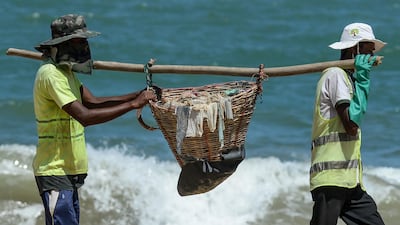
Municipal workers take part in a beach clean-up on the United Nations' World Environment Day at Mount Lavinia on the outskirts of Colombo. AFP -
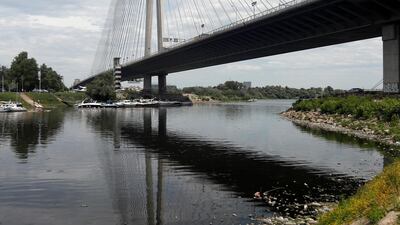
Dumped plastic bottles and barrels on the bank of the river Sava on World Environment Day, in Belgrade, Serbia. AP -

This handout photograph taken and released by the released shows workers pumping out pollutions of a large diesel spill in the Ambarnaya River outside Norilsk, Russia. AFP -
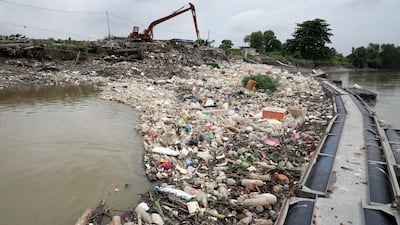
Waste collected by a log boom is seen on a river during World Environment Day, in Klang, Malaysia. REUTERS -

Gary Stokes, founder of the environmental group Oceans Asia, poses with discarded face masks he found on a beach in the residential area of Discovery Bay on the outlying Lantau island in Hong Kong. AFP -
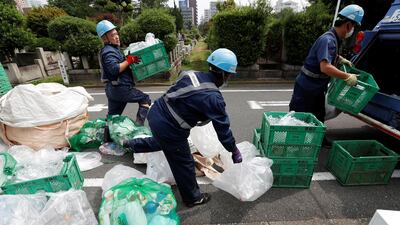
Workers collect recyclable garbage including cans, plastic trays and plastic or glass bottles on the street in Tokyo, Japan. REUTERS -

A volunteer collects garbage on the beach during an event to mark the World Environment Day in Colombo, Sri Lanka. REUTERS -
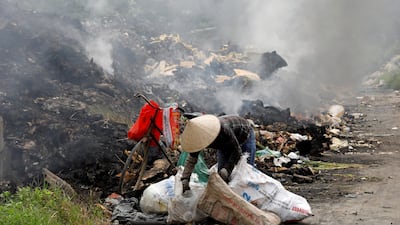
A woman collects recyclable items from electronic equipment at a garbage dump near a rice field in Vinh Phuc province, Vietnam. REUTERS -
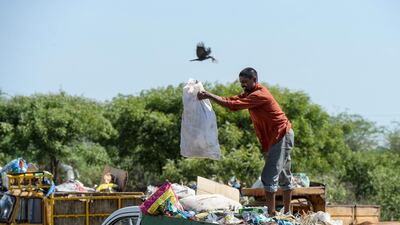
A man unloads waste materials at a garbage dump site on the outskirts of Hyderabad on the United Nations' World Environment Day. AFP


“Truly sustainable economic growth and development means recognising that our long-term prosperity relies on rebalancing our demand of nature’s goods and services with its capacity to supply them,” Prof Dasgupta said.
“It also means accounting fully for the impact of our interactions with nature across all levels of society. Covid-19 has shown us what can happen when we don’t do this.”
UK Prime Minister Boris Johnson underlined the urgency of making greener decisions.
“This year is critical in determining whether we can stop and reverse the concerning trend of fast-declining biodiversity,” he said.
The review said a decline in biodiversity had put economies, livelihoods and well-being at risk.
It found that humanity has mismanaged its “global portfolio of assets” in such a way that the demands on nature had far exceeded its capacity to supply the goods and services upon which the world relies.
It said the imbalance between supply and demand must be corrected, and that taking action now would be “significantly less costly” than delaying it.
“The survival of the natural world depends on maintaining its complexity, its biodiversity. Putting things right requires a universal understanding of how these complex systems work. That applies to economics too,” Sir David Attenborough, the broadcaster and naturalist, said.
“This comprehensive and immensely important report shows us how by bringing economics and ecology face to face, we can help to save the natural world and in doing so save ourselves.”

