
The weekend curfew imposed on major Turkish cities could lead to a jump in coronavirus cases after the lockdown’s short notice prompted crowds to gather at shops and bakeries, the head of the country’s medical association said.
Thousands of people, many without mandatory face masks, rushed out when the government declared a 48-hour lockdown in 31 cities just two hours before it was due to start on Friday night.
The mismanagement of the announcement led Interior Minister Suleyman Soylu to offer his resignation on Sunday evening. President Recep Tayyip Erdogan rejected his resignation and on Monday announced another lockdown in cities this coming weekend.
Sinan Adiyaman, chair of the Turkish Medical Association, said that given the large numbers of people who mixed on Friday in cities such as Istanbul and Ankara, and the virus’s two- to 14-day incubation period, there was “a big possibility to see an increase in positive cases” over the next two weeks..
"Eighty per cent of people don't know they are sick and those people, tens, hundreds of thousands of those people, went out the night before [the curfew]," he told The National.
“Particularly in cities, where the virus is widespread according to the data provided by the Ministry of Health, those people spread the virus to others on that night. Unfortunately, this is a scientific fact.”
Turkey, which recorded 56,956 cases, including 1,198 deaths, as of Sunday, has closed its borders, halted international flights, limited domestic travel and imposed curfews on those aged under 20 and over 65 in a bid to contain the virus. It has also shut bars, gyms and other facilities as well as made face masks compulsory in enclosed spaces.

“All the efforts that have been introduced up to now have been ruined in just one night,” Prof Adiyaman said. “As a result of this, we as scientists believe that in the next five to 14 days there will unfortunately be an increase in positive cases.”
Calling the planning for the lockdown “disastrous”, he added: “I wish this had been done correctly and announced two to three days before. People should have been informed so they wouldn’t act as they did the other night.”
_______________
Coronavirus around the world
-
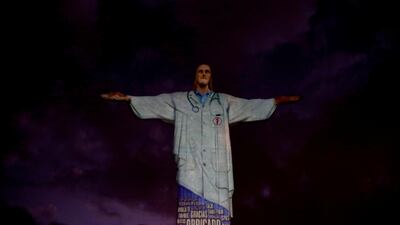
The statue of Christ the Redeemer is lit up with the image of a medical scrub and the word "thank you" in different languages during an Easter Sunday event in Rio de Janeiro, Brazil. Reuters -

People cross a makeshift barrier in Las Pinas, south of Manila, Philippines. EPA -
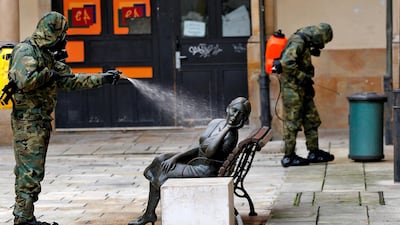
A soldier desinfects the sculpture 'La Bella Lola' in Oviedo, northern Spain. EPA -
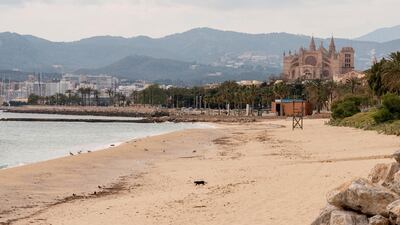
The Can Pere beach is empty in Palma de Mallorca, Balearic Islands, Spain. EPA -
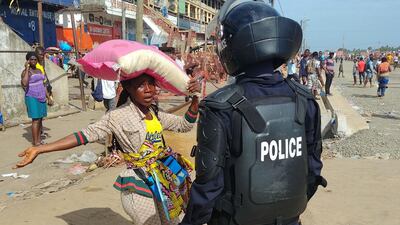
A police officer chases shoppers to clear the streets on the first day of lockdown in Monrovia, Liberia. Reuters -

Italian tenor and opera singer Andrea Bocelli sings during a rehearsal on a deserted Piazza del Duomo in central Milan. AFP -
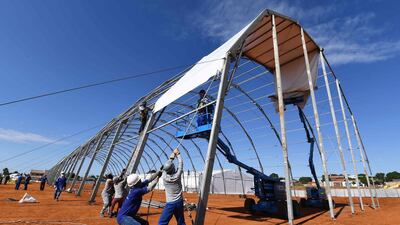
Labourers work at the construction site of a field hospital for people infected with the new coronavirus in Aguas Lindas, Goias State, Brazil. AFP -
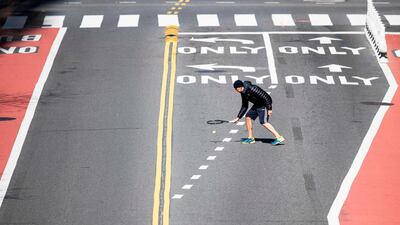
A man plays tennis on 42nd Street in New York City. AFP -
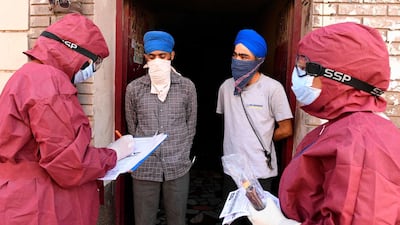
Medical staff wearing protective gears visit a residential area to screen residents in the wake of COVID-19 coronavirus outbreak, during a government-imposed nationwide lockdown as a preventive measure against the COVID-19 coronavirus in Amritsar. AFP -
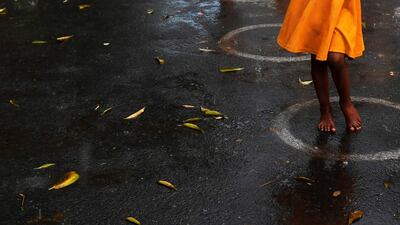
A young girl stands in queue to collect food in the rain in Kolkata. AFP -
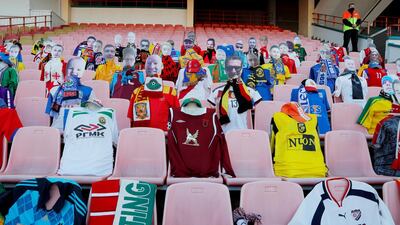
Dummies replace spectators during Dynamo Brest v Isloch Minsk in the Belarus football league. Reuters -
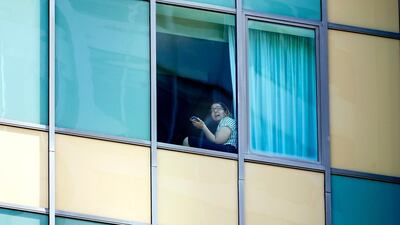
A quarantined traveller looks from a window at the Voco Hotel in Surfers Paradise, Queensland, Australia. EPA -
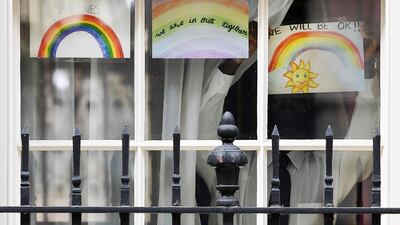
A child places a rainbow drawing in the window of No 10 Downing Street in London, Britain. EPA -
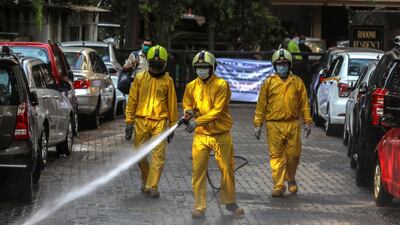
Members of a municipal fire brigade spray disinfectant in Mumbai, India. EPA


_______________
Mr Erdogan has resisted calls for a full lockdown, saying factories must continue uninterrupted to support exports, the country’s main source of foreign currency. Tourism, another significant external revenue stream, is unlikely to recover from the effects of the virus this year.
"If production stops it means Turkey's exports will also stop, which means foreign currency income will stop," said Taylan Buyuksahin, economics editor at the Sozcu newspaper.
“Two of Turkey’s most important incomes are tourism and the export of goods. If they announce a full shutdown these exports will also stop.” A total curfew would also see the government lose tax revenues.
Turkey’s budget deficit rose 70 per cent to 123.7 billion liras (Dh67 billion) last year and the economy is still struggling to recover from a 2018 currency crisis. Inflation stands at just under 12 per cent while unemployment hovers at around 14 per cent.
On Sunday, Mr Erdogan’s spokesman reiterated his refusal to accept financial support from the International Monetary Fund.
Istanbul, Turkey’s financial capital, is the epicentre of the outbreak, accounting for six out of 10 confirmed cases.
“To shut down Istanbul means stopping the tax income flowing to Ankara and losing foreign exchange,” Mr Buyuksahin said. “But if the positive cases increase, they will eventually be forced to decide on a shutdown.
“The government knows that the budget is empty and the virus is spreading. We don’t know how they will deal with this.”

