


Far-right Dutch election winner Geert Wilders announced on Monday that he is withdrawing legislation that he proposed in 2018 that calls for a ban on mosques and the Quran in a key concession to potential coalition partners.
The anti-Islam politician's move came a day before talks to form the next government were set to resume following the November election.
Mr Wilders is keen to co-opt into a coalition with three more mainstream parties along with his Party for Freedom [PVV] and the abandonment of the bill could be critical in gaining their trust and support.
One of those parties' leaders, Pieter Omtzigt of the reformist New Social Contract, has expressed fears that some of Mr Wilders’s policies breach the Dutch Constitution that enshrines liberties, including the freedom of religion.
During a parliamentary debate last year after the PVV won 37 seats in the 150-seat lower house of the Dutch parliament in the November 22 general election, Mr Wilders flagged a softening of his party's strident anti-Islam stance.
“Sometimes I will have to withdraw proposals and I will do that,” Mr Wilders said in the debate.
“I will show the Netherlands, the legislature, Mr Omtzigt's party – anybody who wants to hear it – that we will adapt our rules to the constitution and bring our proposals in line with it.”
Mr Wilders is due to resume coalition talks on Tuesday with Mr Omtzigt, and the leaders of two other parties – the centre-right People's Party for Freedom and Democracy of outgoing Prime Minister Mark Rutte and the Farmer Citizen Movement led by Caroline van der Plas.
Among three pieces of legislation axed by Wilders Party for Freedom was one dating back to 2018 that proposes banning “Islamic expressions”.
Dutch election results – in pictures
-

An election poster for Geert Wilders, leader of the Freedom party (PVV) is removed near the Dutch parliament buildings in The Hague, a day after the general elections. EPA -

Mr Wilders speaks in The Hague after exit polls and early results predicted his PVV party would win the election with 37 seats. Reuters -
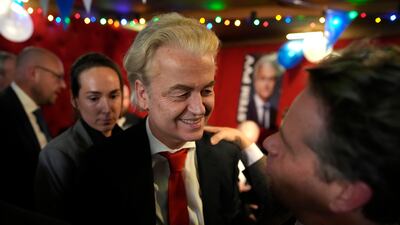
Mr Wilders talks to his supporters in The Hague. AP -
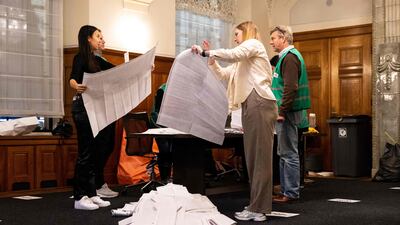
Election staff count the votes at a polling station in Rotterdam. AFP -
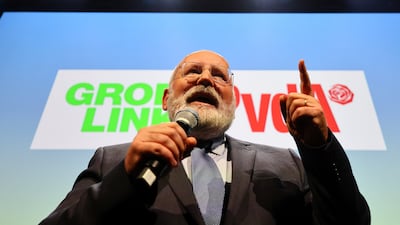
Frans Timmermans' GroenLinks-PvdA was nine seats behind Mr Wilders' party, according to the exit poll. Reuters -
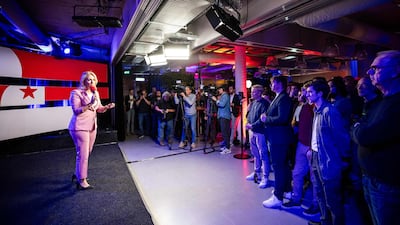
Socialist Party leader Lilian Marijnissen speaks in Amersfoort. AFP -

Prime Minister of Netherlands Mark Rutte addresses the media in The Hague. His People's Party for Freedom and Democracy, or VVD, was in third place at 23 seats, according to the exit poll. AP -

CDA leader Henri Bontenbal responds to the results in The Hague. EPA -
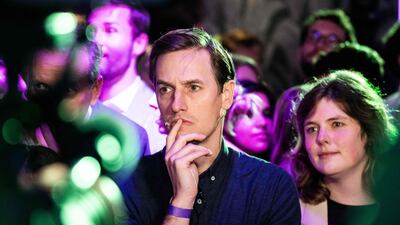
Volt party leader Laurens Dassen follows the announcement of the first exit polls in Utrecht. AFP


The text of the bill proposes bans on mosques, the Quran, Islamic schools and the wearing of burkas or hijabs.
Mr Wilders didn't immediately comment further on the decision to withdraw the legislation, which his party announced in a brief statement.
The three laws were proposed to parliament by Mr Wilders in 2017, 2018 and 2019, but never garnered a majority in the lower house.
In an assessment of the proposed ban on Islamic expressions, the Council of State, an independent watchdog that evaluates legislation, called on Mr Wilders to scrap it.
“The Advisory Division advises the initiators to abandon the bill,” the council said in advice published in 2019.
“It is not compatible with the core elements of the democratic constitutional state; elements that the initiators intend to protect.”

