


Poland will focus on its own defence and no longer arm Ukraine, Polish Prime Minister Mateusz Morawiecki said on Wednesday, a few hours after Warsaw summoned Kyiv's ambassador amid a row over grain exports.
"We are no longer transferring weapons to Ukraine, because we are now arming Poland with more modern weapons," Mr Morawiecki said, in response to a question on whether Warsaw would keep supporting Kyiv despite the dispute.
Poland is one of Ukraine's main weapons suppliers and has been one of its staunchest supporters since Russia invaded in February 2022.
It also hosts about one million Ukrainian refugees, who have benefited from state aid.
Tensions between Warsaw and Kyiv, sparked by Poland's ban on Ukrainian grain imports to protect the interests of its farmers, have intensified in recent days.
Russia's invasion of Ukraine has closed off Black Sea shipping lanes used before the war, resulting in the EU becoming a major transit route and export destination for Ukrainian grain.
In May, the EU agreed to restrict imports to Bulgaria, Hungary, Poland, Romania and Slovakia, seeking to protect farmers there who blamed the imports for a slump in prices on local markets.
Weapons seized in Ukraine displayed in Russia - in pictures
-
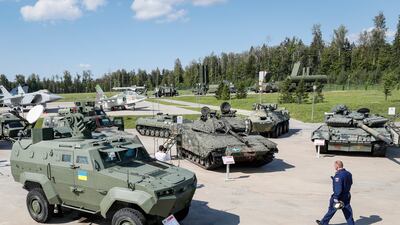
Armoured vehicles on display at an exhibition of captured weapons that were seized in Ukraine, at Patriot Park in Kubinka, outside Moscow. All photos: EPA -
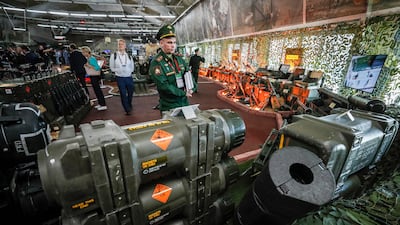
Visitors look at Ukrainian weapons -

A US-built howitzer M777 -
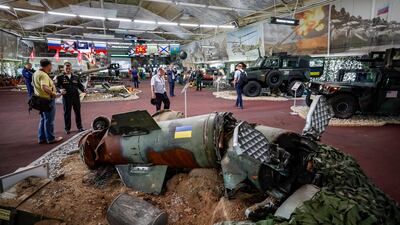
The remains of a Ukrainian Tochka-U -
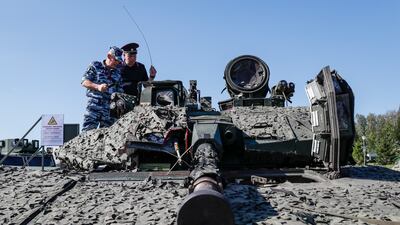
Russian servicemen assess a Swedish infantry fighting vehicle CV90-40 -

An armoured Husky vehicle


The measures allowed Ukraine to move products through the five countries, but stopped them being sold on the local market.
But on Friday, the European Commission said it was ending the import ban because "the market distortions in the five member states bordering Ukraine have disappeared".
Poland, Hungary and Slovakia immediately announced they would defy the move.
The issue is particularly sensitive in Poland, which has elections next month.
The current populist right-wing government of the Law and Justice party has strong support in farming regions.
"We were the first to do a lot for Ukraine and that's why we expect for them to understand our interests," Mr Morawiecki told Polsat News on Wednesday.
"Of course we respect all of their problems but for us, the interests of our farmers are the most important thing."
Kyiv responded to warnings by Poland, Hungary and Slovakia by announcing that it would lodge a complaint with the World Trade Organisation.
Mr Morawiecki warned earlier on Wednesday that he would extend the list of Ukrainian products banned from import if Kyiv were to escalate the grain dispute.
A Foreign Ministry statement said that "putting pressure on Poland in multilateral forums or sending complaints to international courts are not appropriate methods to resolve differences between our countries".
Kyiv responded by calling on Poland to "leave emotion aside" after it had summoned its ambassador, urging Warsaw to adopt a "constructive" approach in the dispute.

