


A teenage girl who lost both her legs and fought back to become a Paralympian after the 2016 Brussels suicide bombing was the first victim to testify at the trial of those accused of plotting or aiding the attacks.
Beatrice Lasnier de Lavalette, now 24, is a French-American equestrian who uses a wheelchair after surviving a coma, months in intensive care, 30 operations, and skin transplants on her legs, hands and shoulders.
At 17, she was preparing to board a flight to visit her family across the Atlantic on March 22, 2016, when a double suicide attack tore through the departures hall.
The blast killed 16 people, a toll that would double an hour later when another explosion hit the Brussels metro.
In total, more than 300 people were wounded in the attacks claimed by ISIS.
"I don't remember the explosion itself. I remember the darkness and being bumped off the ground," Ms Lasnier de Lavalette told the court, describing how her leg was twisted at a right angle.
"After seeing my leg I realised what had happened. I was 17 and my life was over."
Brussels on lockdown after explosions at airport and metro station - in pictures
-

-
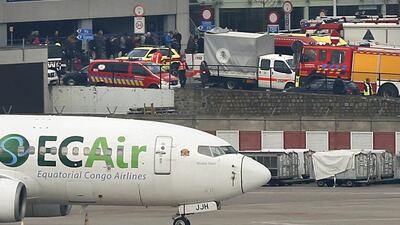
Emergency services at the scene of explosions at Zaventem airport near Brussels, Belgium, on Tuesday. Francois Lenoir / Reuters -

Smoke is seen at Brussels airport in Brussels, Belgium, after explosions were heard Tuesday. Daniela Schwarzer via AP -

People leave the scene of explosions at Zaventem airport near Brussels, Belgium. Francois Lenoir / Reuters -
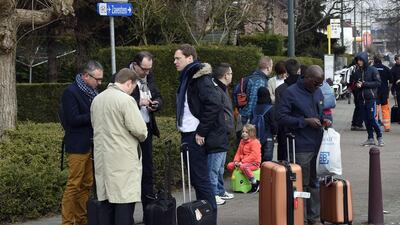
Passengers are gathered near Brussels airport, following its evacuation after at least 13 people were killed and 35 injured, according to local media, as twin blasts rocked the main terminal of Brussels airport. John Thys / AFP -
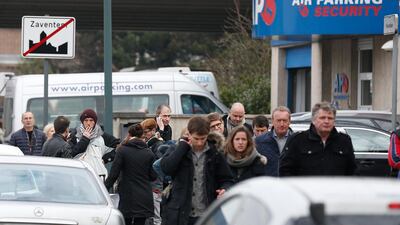
People leave the airport area after explosions at Brussels Airport in Zaventem, near Brussels, Belgium. Dozens of people have died or been injured in a double blast in the departure hall of Zaventem Airport in Brussels, Belgian media reported. Laurent Dubrule / EPA -

In this image made from video, emergency rescue workers attend to a victim of an explosion at a metro station in Brussels, Belgium, on March 22, 2016. Explosions rocked the Brussels airport and the subway system Tuesday, just days after the main suspect in the November Paris attacks was arrested in the city, police said. APTN via AP -

Two passengers wait, near Brussels airport in Zaventem following its evacuation after at least 13 people were killed and 35 injured as twin blasts rocked the main terminal of Brussels airport. John Thys / AFP -
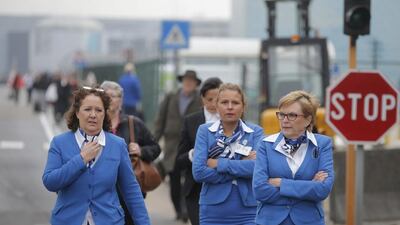
Passengers and airport staff are evacuated from the terminal building after explosions at Brussels Airport. Olivier Hoslet / EPA -
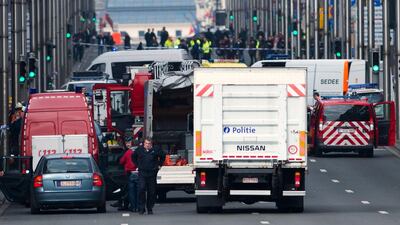
Belgian police and emergency staff arrive in the Wetstraat - Rue de la Loi, which has been evacuated after an explosion at the Maalbeek metro station in Brussels. Laurie Dieffembacq / AFP / Belga -
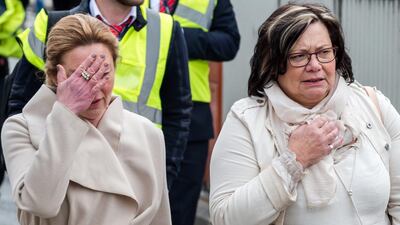
People react as they walk away from Brussels airport after explosions rocked the building in Brussels, Belgium. The Belgian capital is in lockdown after two explosions at Brussels airport and another at a metro station. Geert Vanden Wijngaert / AP -
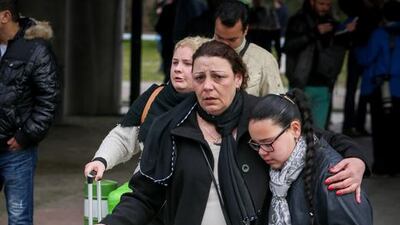
People are evacuated from Brussels Airport after at least 13 people were killed by two explosions in the departure hall of Brussels Airport. Virginie Lefour / AFP / Belga -
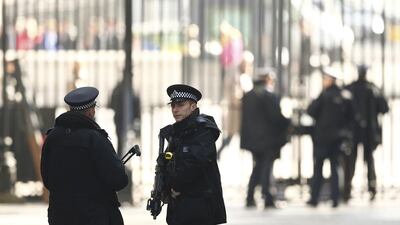
Armed police stand on guard at Downing Street in London, Britain March 22, 2016. Britain’s Prime Minister David Cameron said he would chair a crisis response meeting following explosions in Brussels on Tuesday. Eddie Keogh/Reuters -
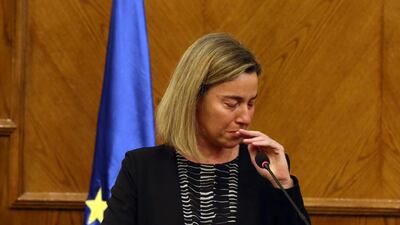
Federica Mogherini, the High Representative of the European Union for Foreign Affairs and Security Policy, cries during a joint press conference with Jordanian Foreign Minister Nasser Judeh in Amman, on hearing the news of the fatal terror attacks in Brussels. Jamal Nasrallah / EPA -
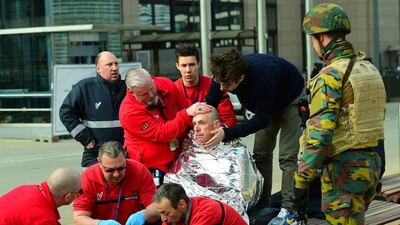
A victim receives first aid by rescuers, near Maalbeek metro station in Brussels, after a blast at this station near the EU institutions caused deaths and injuries. Emmanuel Dunand / AFP -

A picture provided by Twitter user @evanlamos shows passengers leaving a metro train between the Arts-Lois and Maelbeek metro stations after an explosion at Maelbeek station in Brussels, Belgium. EPA / EVAN LAMOS/EURACTIV -
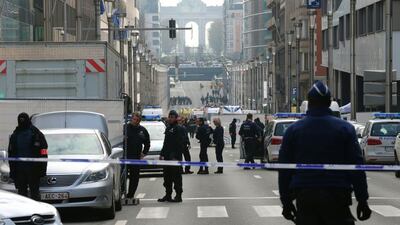
Policemen stand guard near a security perimeter set in the Rue de la Loi near the Maalbeek subway station, in Brussels, after an explosion killed around 10 people, according to spokesman of Brussels' fire brigade. Nicolas Maeterlinck / AFP / Belga -
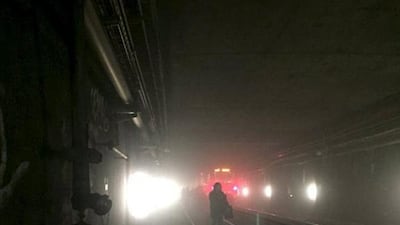
Passengers walk on underground metro tracks to be evacuated after an explosion at Maalbeek train station in Brussels, Belgium. Courtesy @OSOSXE via Twitter / Handout via Reuters -
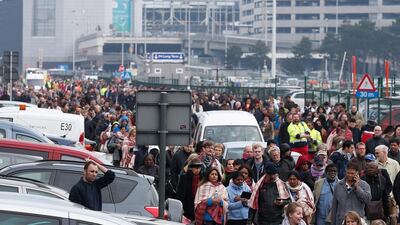
Passengers and airport staff are evacuated from the terminal building after explosions at Brussels Airport in Zaventem near Brussels, Belgium. Laurent Bubrule / EPA -

An injured man gestures outsude Brussels airport after explosions rocked the facility in Brussels, Belgium. Geert Vanden Wijngaert / AP -
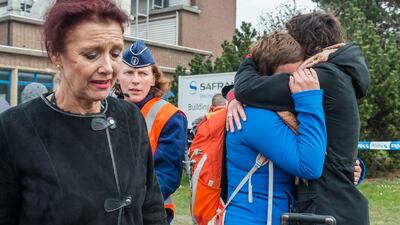
People react outside Brussels airport after explosions rocked the facility in Brussels, Belgium Tuesday. Geert Vanden Wijngaert / AP


The young athlete, seriously burnt all over her body, realised rescuers were focused on treating the other injured victims, who were considered more likely to survive.
"I was labelled red. They didn't think I'd survive," she sobbed.
Ms Lasnier de Lavalette was already unconscious by the time she was taken to hospital.
"I kept saying I just want to go to sleep. Somebody told me you cannot sleep," she said.
"After that it was just darkness and I lost consciousness. The next memory I have is waking up after a month-long coma at hospital."
At the time of the attacks, Ms Lasnier de Lavalette was completing her penultimate year of high school in Belgium.
Having ridden horses since childhood, she hoped for a future as a professional equestrian.
After the attack, Ms Lasnier de Lavalette fought back and continued to pursue her ambitions.
Brussels the day after deadly attacks on airport and metro - in pictures
-
-
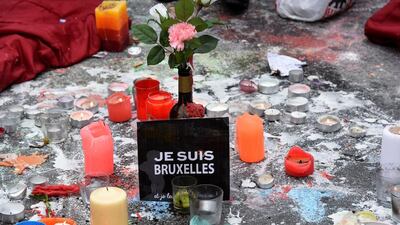
A sign reading ‘I am Brussels’ (Je suis Bruxelles) sits among candles and flowers at a makeshift memorial at Place de la Bourse (Beursplein) in Brussels on March 23, 2016. Patrik Stollarz / Agence France-Presse -

A Belgian flag and a sign reading ‘United Against Hatred’ hangs from the Bourse De Brussels bulding in the Place de la Bourse on March 23, 2016, a day after three terrorist attacks in Brussels, Belgium. The country is observing three days of national mourning after 31 people were killed in a twin suicide blast at Zaventem Airport and a bomb attack at Maalbeek metro station. Two brothers are thought to have carried out the airport attack and an international manhunt is under way for a third suspect. The attacks come just days after a key suspect in the Paris attacks, Salah Abdeslam, was captured in Brussels. Christopher Furlong / Getty Images -
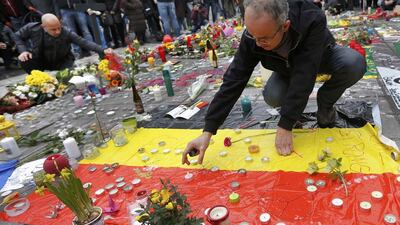
Men place candles an a street memorial on March 23, 2016 in Brussels, Belgium. Francois Lenoir / Reuters -
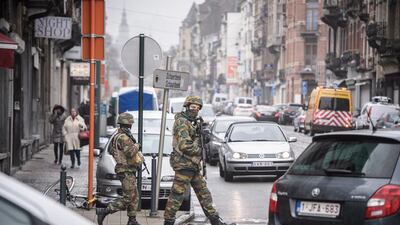
Belgian soldiers patrol in the Schaarbeek district of Brussels, Belgium, on March 23, 2016. Security services are on high alert following the previous day’s deadly explosions in the departure hall of Zaventem Airport and on the metro system in Brussels, Belgium. SIL has claimed responsibility for the attacks. Christophe Petit Tesson / EPA -
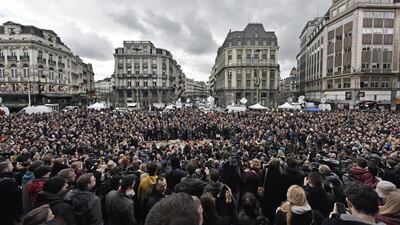
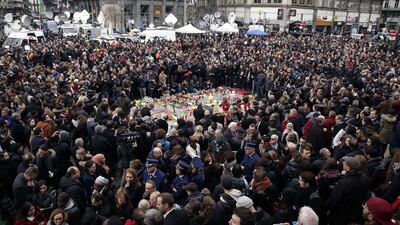
A minute of silence is observed at the Place de la Bourse in the centre of Brussels on March 23, 2016. Bombs exploded Tuesday at the city’s airport and one of its metro stations, killing and wounding scores of people, as a European capital was again locked down amid heightened security threats. Martin Meissner/ Associated Press -
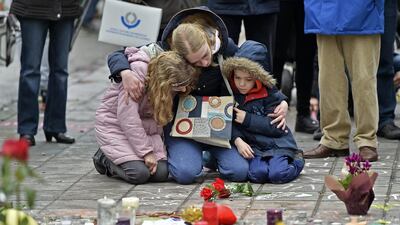
A woman and children mourn for the victims of the bombings at the Place de la Bourse in the centre of Brussels on March 23, 2016. Martin Meissner / Associated Press -
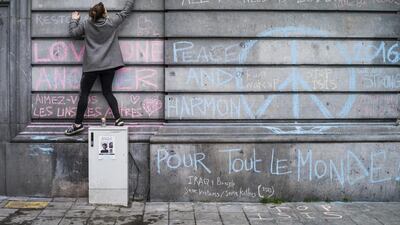
People write messages at the Place de la Bourse, in Brussels, Belgium, on March 23, 2016, in a tribute to the many people killed and injured in multiple terrorist attacks the day before. Security services are on high alert following explosions at the Zaventem Airport and Maalbeek metro station in Brussels. ISIL has claimed responsibility for the attacks. Yoan Valat / EPA -

From left, in the first row: France’s prime pinaster Manuel Valls, Belgium King Philippe, European Commission president Jean-Claude Juncker, Belgium Queen Mathilde and Belgian prime minister Charles Michel observe a minute of silence on March 23, 2016, at EU Commission headquarters in Brussels. Olivier Hoslet / EPA -

The mayor of Brussels, Yvan Mayeur (centre left) and mayor of Paris, Ann Hidalgo (centre right) pay tribute on March 23, 2016, at Place de la Bourse, Brussels, Belgium, to the victims of the terrorist attacks. Yoan Valat / EPA


In 2021, she achieved her goal and represented the US in the dressage event at the Tokyo Paralympic Games.
Nine defendants are facing justice at Belgium's biggest criminal trial in the disused former headquarters of the Nato alliance. A 10th suspect is believed to have been killed in Syria.
The prime suspect is Salah Abdeslam, who was convicted in a separate trial in France for his role in 2015 attacks in Paris that killed 130 people.
Hundreds of other survivors and relatives of those who died are expected to follow Ms Lasnier de Lavalette in giving their testimonies.
The trial is set to run until June.

