


Russian birth tourism has been a growing phenomenon in Argentina for the past year as pregnant mothers try to escape Vladimir Putin's war in Ukraine and gain an alternative passport for their new arrivals.
Argentina has gradually become the destination of choice for Russian expectant parents fleeing the threat of conscription and seeking new passports.
Pregnant Russian women and couples with a newborn baby have become increasingly visible in Buenos Aires over the past year, whether in cafes, parks, or buses, but especially in private clinics.
The case of six Russian women being detained at a Buenos Aires airport caused concern at the Directorate of Migrations, which was worried that something underhand was occurring.
The six heavily pregnant women, who travelled separately and were detained for only a few hours over two days, had tourist visas but no return tickets and were unable to give any details about what they planned to visit.
Authorities were worried criminal gangs were involved but it turned out that the Russians just wanted to give birth in the country.
Russia and Ukraine conflict latest - in pictures
-
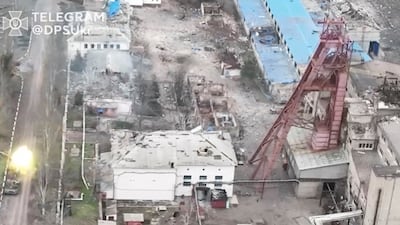
A tank, seen left, fires a round in Soledar, a town in the Donetsk region of eastern Ukraine. Reuters -
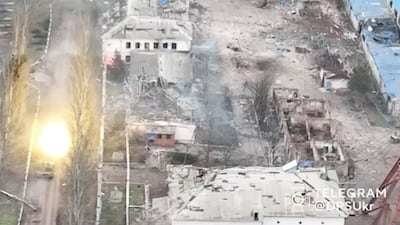
Tank fire in Soledar, Donetsk. Reuters -
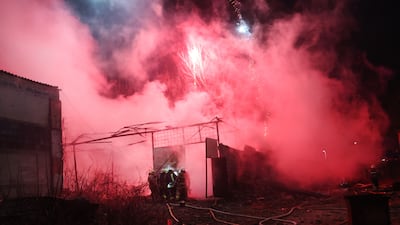
Firefighters work to put out a blaze at a Kharkiv fireworks storage site after it was struck by a Russian missile. Getty -
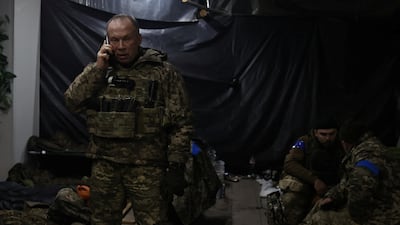
Col Gen Oleksandr Syrskyi, commander of Ukraine's ground forces, visits his troops on the frontline in Soledar, Donetsk. Reuters -
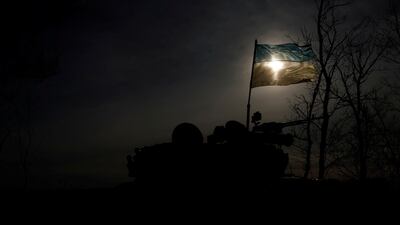
A Ukrainian flag attached to a tank flutters in the wind in Bakhmut. Reuters -
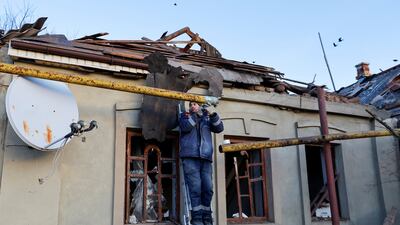
A specialist from an emergency crew works on a residential building in Donetsk that was damaged in recent shelling. Reuters -
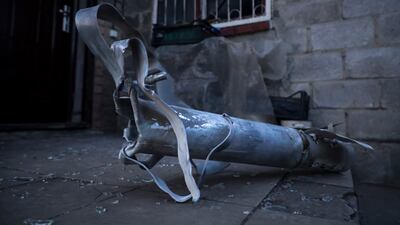
A missile fragment left by shelling in Russian-controlled Donetsk. AP -
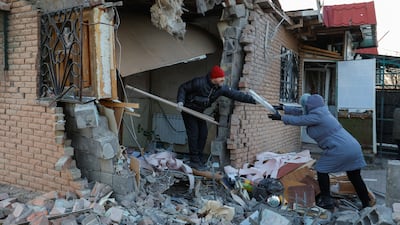
Residents remove debris and carry their belongings out of a building destroyed by recent shelling in Donetsk, Russian-controlled Ukraine. Reuters -
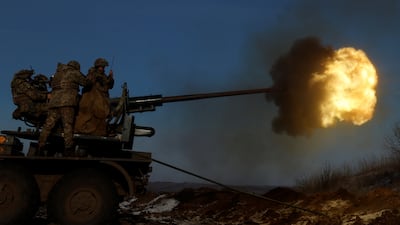
Ukrainian forces fire an anti-aircraft weapon as Russia's attack on the frontline city of Bakhmut continues. Reuters -
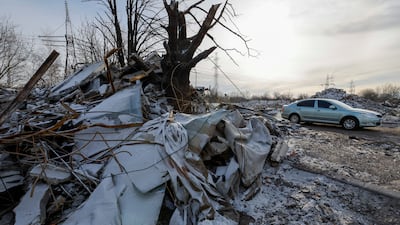
A car drives past a destroyed building purported to have been used as temporary accommodation for Russian soldiers, dozens of whom were killed in a Ukrainian missile strike in Makiivka, Russian-controlled Ukraine. Reuters -
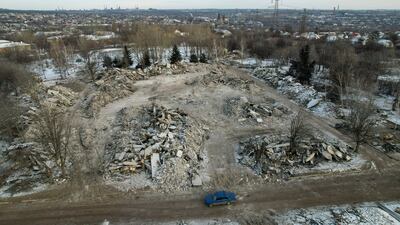
The site of a temporary barracks for Russian soldiers in Makiivka, which was destroyed in a Ukrainian missile attack. Reuters -
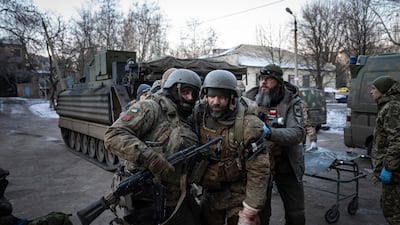
A Ukrainian serviceman carries his injured comrade from the battlefield to a hospital in the Donetsk region. AP -
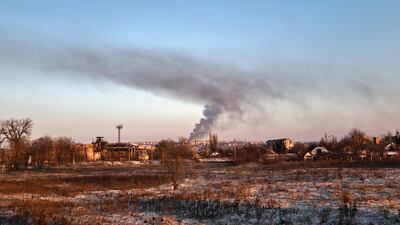
Smoke rises after shelling in Soledar, the site of heavy battles with Russian forces in the Donetsk region. AP


Argentina's quality medical centres and the ease with which nationality is obtained are part of the draw.
But many are driven by fear that one day their children could be conscripted into the army and sent to war, as Mr Putin is doing in Ukraine with the current generation.
"Some 90 per cent of the women who come are looking for a better future," interpreter Elena Shkitenkova, who has lived in Argentina for 20 years and helps expectant mothers with paperwork, told AFP.
"There have been cases of women who, when they have discovered they are expecting a boy, they decided to come to Argentina."
The South American country bestows nationality on anyone born in Argentina, meaning those Russian babies born there would be able to avoid any eventual conscription when they became men.
"They tell me: 'I want my son to live, I want peace for my son, I want a better future'," said Ms Shkitenkova.
The parents are also desperate to escape the war.
Henley & Partners most powerful passports - in pictures
-

Japan takes top spot in the index. All photos: Unsplash -
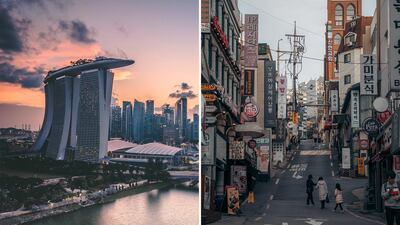
Second place: Singapore and South Korea -
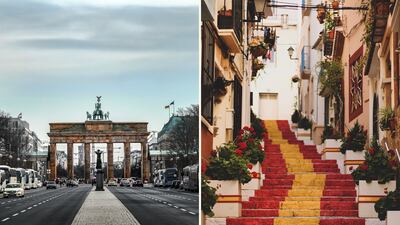
Third place: Germany and Spain -

Fourth place: Finland, Italy and Luxembourg -
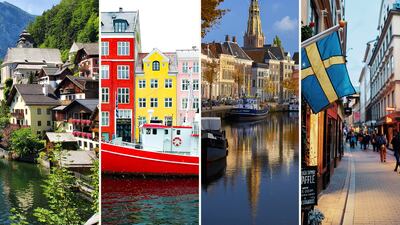
Fifth place: Austria, Denmark, the Netherlands and Sweden -
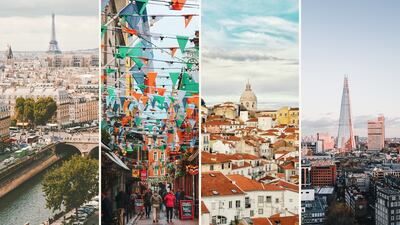
Sixth place: France, Ireland, Portugal and the UK -

Seventh place: Belgium, Czech Republic, New Zealand, Norway, Switzerland and the US -
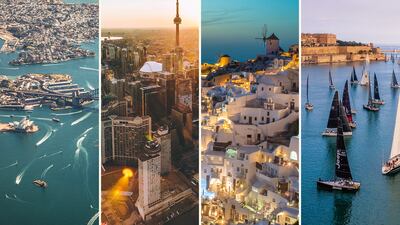
Eighth place: Australia, Canada, Greece and Malta -
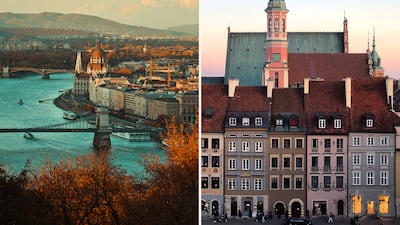
Ninth place: Hungary and Poland -
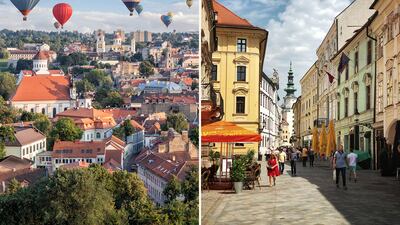
10th place: Lithuania and Slovakia -
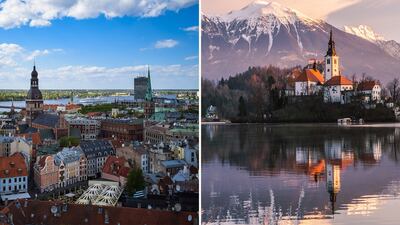
11th place: Latvia and Slovenia -
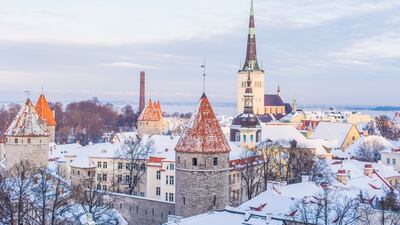
12th place: Estonia -

13th place: Iceland -

14th place: Malaysia -
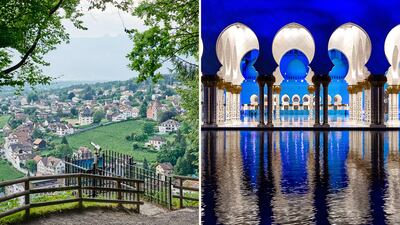
15th place: Liechtenstein and the UAE. Victor Besa / The National -

The report said the UAE was a 'great success story' after climbing 49 spots in 10 years. Photo: Federal Authority For Identity and Citizenship


"The war in Ukraine influenced our decision to come to Argentina, although that was not the only reason," said Elena, 32, a mother of three girls.
"It is certain that if we had stayed in Russia, my husband probably would have been conscripted," she added.
The parents of Argentinian babies are given residency rights and an accelerated process to apply for citizenship.
Elena's youngest daughter, Severina, was born in Buenos Aires in May.
"We want to stay here and assimilate. Our residency application is in progress," Elena said.
At the Sanatorio Finochietto clinic, there is a noticeable presence of pregnant Russian women and families.
Guillermo Capuya, who is in charge of the clinic's institutional relations, says the arrival of the Russians "began very slowly" about a year ago, around the start of Russia's invasion of Ukraine.
"We did not imagine it would become a phenomenon but in the last quarter it started to increase exponentially" to the point that in December, a quarter of the 200 births in the clinic were to Russian mothers.
Most of the Russians do not speak Spanish and almost none have ever visited Argentina before.
But what is happening now "is an avalanche", said Florencia Carignano, the migration agency director.
They mostly arrive on flights from Amsterdam, Istanbul and Addis Ababa.
Ms Carignano says there are 14 or 15 pregnant Russians on each of those flights.
More than 5,800 have arrived in the past three months.
Putin says world facing most dangerous decade since Second World War - video
There is nothing new about Russians seeking dual nationality for their children, a man who created an agency to help expectant parents in Argentina told AFP.
Before, the preferred destination was the US.
The "package" deal for giving birth in Argentina can cost up to $15,000, he said.
"If you have a bit of money and are able to have your child born outside Russia, you will do it. It's easy to acquire Argentine citizenship and you get treated a lot better than with the red Russian passport."
According to the federal police, some networks charge up to $35,000 for birth tourism.
Authorities are worried mafia organisations could be trying to gain access to Argentinian passports.
Police conducted a raid in Buenos Aires last week, seizing telephones, documents and several currencies, although no arrests were made.
The Argentinian passport allows you to travel to 175 countries without a visa, about 50 more than a Russian passport.

