


French President Emmanuel Macron's contentious pension age rise is entering a crunch week as it goes before MPs on Monday before its opponents launch another wave of strikes.
Allies of Mr Macron took to the airwaves to say pushing up France's retirement age from 62 to 64 was essential to fund the welfare state.
Mr Macron's predecessor, Francois Hollande, meanwhile weighed in to question the timing of the reforms amid public anxiety over the cost of living.
“It is a movement that begins with pensions, but encompasses other anger, other frustrations … it is quite dangerous territory,” said Mr Hollande, of the Socialist Party.

The bill is likely to face fireworks in the National Assembly, where left-wing parties have submitted thousands of amendments, when MPs debate it on Monday.
Mr Macron's centrist Renaissance party lacks a majority in the assembly and will need votes from the centre-right Republicans to pass his reform.
In a concession to the Republicans, Prime Minister Elisabeth Borne said people who started working at the age of 20 would be able to retire at 63.
“This is a necessary reform and a responsible reform,” said Jean-Rene Cazeneuve, a Macron ally who sits on a finance committee in parliament.
“We can say to our compatriots: your pension system will be saved, will be preserved in the coming years.”
The bill's opponents will take to the streets again on Thursday, after millions took part in two rounds of national strikes in January.
National strikes in France — in pictures
-

French riot police clash with protesters in Nantes, on a day of nationwide strikes and protests over proposed pension reforms. AFP -

Demonstrators from the Workers' Force union protest in Marseille. Bloomberg -

French police face protesters in Nantes. AFP -
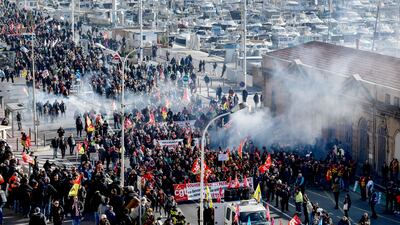
Protesters march through Marseille. AFP -
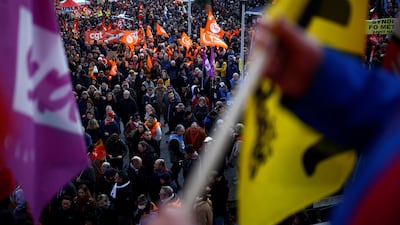
French workers on strike during a demonstration in Saint-Nazaire. Reuters -
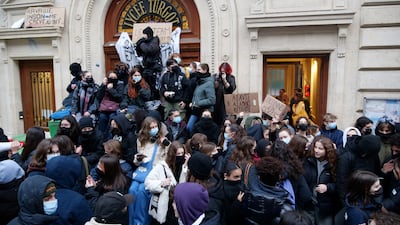
Pupils block access to the Lycee Turgot high school in Paris. Reuters -
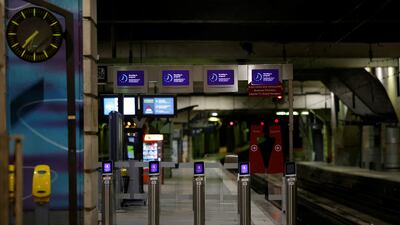
An empty platform at Gare Montparnasse train station in Paris. Reuters -
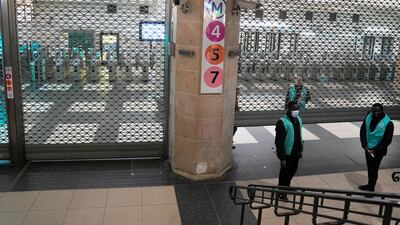
The subway entrance is closed under the Gare de l'Est train station in Paris. AP -

A placard which reads 'No to retirement in death' is displayed as workers at the French ski resort Avoriaz protest. Reuters -

French CGT labour union workers attend a demonstration in Nice. Reuters -

The shuttered entrance to the Republique metro station in Paris. AFP


Railways are expected to be heavily disrupted as unions pile pressure on Mr Macron. The strikes have also affected oil refineries, airports and schools in one of France's biggest protest movements in years.
“The great majority of French people are against the pension reform. The government has to listen and stop it coming into force,” said Alexis Corbiere, a senior MP in the left-wing France Unbowed party.
The proposed reform would mean France's pension age — currently one of the lowest in the industrialised world at 62 — would rise to 63 in 2027 and then to 64 in 2030.
Mr Macron has long argued that people need to work longer so that more is paid into social security funds, as France's population ages.
He won a second term last year after campaigning to raise the pension age, but lost his parliamentary majority at a separate ballot two months later.

