Live updates: follow the latest news on Russia-Ukraine
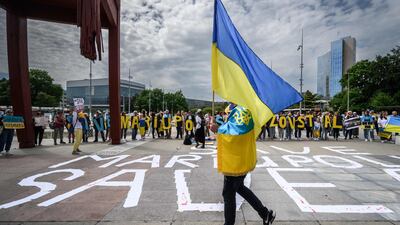
The G7 countries promised on Saturday to use their economic might to tackle global food shortages resulting from Russia’s invasion of Ukraine.
Foreign ministers from the club of rich democracies said Russia was blocking grain exports from Ukrainian ports, turning the war between two major agricultural producers into a potential global food crisis.
In a statement after three days of talks in Germany, they said their countries — Britain, France, Germany, Italy, the US, Canada and Japan — would “reinforce our contributions” to aid providers such as the World Food Programme.
They said the G7 would launch a dedicated global food security alliance at a meeting of the group’s development ministers this month, and work to unblock exports from Ukraine’s war-torn Black Sea ports.
Annalena Baerbock, the German Foreign Minister chairing the G7 talks, accused Russia of deliberately engineering a food crisis to undermine international solidarity over the war in Ukraine.
“We cannot be naive. This is not collateral damage. It is a consciously chosen instrument in a hybrid war,” said Ms Baerbock, who said exports of millions of tonnes of grain could begin tomorrow if Russia permitted it.
She told a post-summit press conference that humanitarian aid would quickly be made available to the most vulnerable countries and regions so that the food crisis could at least be eased.
“This is the Russian president’s war, but we have a global responsibility,” said Ms Baerbock, who accused Moscow of falsely claiming that western sanctions were to blame for food shortages.
The WFP recently said that 47 million people would be thrown into acute hunger if the fallout from the war in Ukraine is not addressed, with Sub-Saharan Africa at particular risk. It said Ukrainian exports typically feed about 400 million people.
Food shortages have also reached western supermarkets, with sunflower oil being rationed because of the supply shortfall from Ukraine.
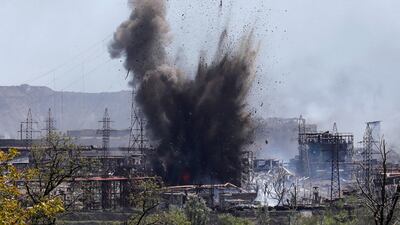
Ukrainian President Volodymyr Zelenskyy said last week that merchant traffic in the port of Odesa, recently hit by Russian missiles, had ground to a halt for the first time in decades.
The G7 ministers called for the establishment of “solidarity lanes” to allow grain to be exported by other routes, an idea floated this week by the European Union.
Exporting food over land is complicated because Ukrainian railway carriages are not compatible with most of the EU’s rail wagons, and thousands of wagons and lorries are waiting for clearance on the Ukrainian side.
The G7, which met in north Germany with the foreign ministers of Ukraine and Moldova as guests, said food insecurity was being worsened by rising food and fuel prices which have been exacerbated by the war in Ukraine.
“This is having devastating consequences for some of the most vulnerable people and rising costs also make it harder for humanitarian and development agencies to deliver assistance to those in greatest need,” their statement said.
“We are determined to contribute additional resources to and support all relevant efforts that aim to ensure availability and accessibility of food.”
In the longer term, they said they would try to avoid such crises arising in future by reducing food waste, increasing their own food production and pushing for more sustainable agriculture around the world.
A broader statement on the war said the G7 powers would “never recognise” any attempt by Russia to redraw international borders by force, and promised to “further increase economic and political pressure on Russia”.
The countries said they would speed up efforts to rid Russian energy from their power grids. The EU, which attends G7 meetings, is currently locked in a political struggle over a proposed ban on Russian oil.

Ferrari 12Cilindri specs
Engine: naturally aspirated 6.5-liter V12
Power: 819hp
Torque: 678Nm at 7,250rpm
Price: From Dh1,700,000
Available: Now
SPEC%20SHEET%3A%20NOTHING%20PHONE%20(2a)
%3Cp%3E%3Cstrong%3EDisplay%3A%3C%2Fstrong%3E%206.7%E2%80%9D%20flexible%20Amoled%2C%202412%20x%201080%2C%20394ppi%2C%20120Hz%2C%20Corning%20Gorilla%20Glass%205%3C%2Fp%3E%0A%3Cp%3E%3Cstrong%3EProcessor%3A%3C%2Fstrong%3E%20MediaTek%20Dimensity%207200%20Pro%2C%204nm%2C%20octa-core%3C%2Fp%3E%0A%3Cp%3E%3Cstrong%3EMemory%3A%3C%2Fstrong%3E%208%2F12GB%3C%2Fp%3E%0A%3Cp%3E%3Cstrong%3ECapacity%3A%3C%2Fstrong%3E%20128%2F256GB%3C%2Fp%3E%0A%3Cp%3E%3Cstrong%3EPlatform%3A%3C%2Fstrong%3E%20Android%2014%2C%20Nothing%20OS%202.5%3C%2Fp%3E%0A%3Cp%3E%3Cstrong%3EMain%20camera%3A%3C%2Fstrong%3E%20Dual%2050MP%20main%2C%20f%2F1.88%20%2B%2050MP%20ultra-wide%2C%20f%2F2.2%3B%20OIS%2C%20EIS%2C%20auto-focus%2C%20ultra%20XDR%2C%20night%20mode%3C%2Fp%3E%0A%3Cp%3E%3Cstrong%3EMain%20camera%20video%3A%3C%2Fstrong%3E%204K%20%40%2030fps%2C%20full-HD%20%40%2060fps%3B%20slo-mo%20full-HD%20at%20120fps%3C%2Fp%3E%0A%3Cp%3E%3Cstrong%3EFront%20camera%3A%3C%2Fstrong%3E%2032MP%20wide%2C%20f%2F2.2%3C%2Fp%3E%0A%3Cp%3E%3Cstrong%3EBattery%3A%3C%2Fstrong%3E%205000mAh%3B%2050%25%20in%2030%20mins%20w%2F%2045w%20charger%3C%2Fp%3E%0A%3Cp%3E%3Cstrong%3EConnectivity%3A%3C%2Fstrong%3E%20Wi-Fi%2C%20Bluetooth%205.3%2C%20NFC%20(Google%20Pay)%3C%2Fp%3E%0A%3Cp%3E%3Cstrong%3EBiometrics%3A%3C%2Fstrong%3E%20Fingerprint%2C%20face%20unlock%3C%2Fp%3E%0A%3Cp%3E%3Cstrong%3EI%2FO%3A%3C%2Fstrong%3E%20USB-C%3C%2Fp%3E%0A%3Cp%3E%3Cstrong%3EDurability%3A%3C%2Fstrong%3E%20IP54%2C%20limited%20protection%20from%20water%2Fdust%3C%2Fp%3E%0A%3Cp%3E%3Cstrong%3ECards%3A%3C%2Fstrong%3E%20Dual-nano%20SIM%3C%2Fp%3E%0A%3Cp%3E%3Cstrong%3EColours%3A%3C%2Fstrong%3E%20Black%2C%20milk%2C%20white%3C%2Fp%3E%0A%3Cp%3E%3Cstrong%3EIn%20the%20box%3A%3C%2Fstrong%3E%20Nothing%20Phone%20(2a)%2C%20USB-C-to-USB-C%20cable%2C%20pre-applied%20screen%20protector%2C%20SIM%20tray%20ejector%20tool%3C%2Fp%3E%0A%3Cp%3E%3Cstrong%3EPrice%20(UAE)%3A%3C%2Fstrong%3E%20Dh1%2C199%20(8GB%2F128GB)%20%2F%20Dh1%2C399%20(12GB%2F256GB)%3C%2Fp%3E%0A
COMPANY PROFILE
Name: Rain Management
Year started: 2017
Based: Bahrain
Employees: 100-120
Amount raised: $2.5m from BitMex Ventures and Blockwater. Another $6m raised from MEVP, Coinbase, Vision Ventures, CMT, Jimco and DIFC Fintech Fund
England squads for Test and T20 series against New Zealand
Test squad: Joe Root (capt), Jofra Archer, Stuart Broad, Rory Burns, Jos Buttler, Zak Crawley, Sam Curran, Joe Denly, Jack Leach, Saqib Mahmood, Matthew Parkinson, Ollie Pope, Dominic Sibley, Ben Stokes, Chris Woakes
T20 squad: Eoin Morgan (capt), Jonny Bairstow, Tom Banton, Sam Billings, Pat Brown, Sam Curran, Tom Curran, Joe Denly, Lewis Gregory, Chris Jordan, Saqib Mahmood, Dawid Malan, Matt Parkinson, Adil Rashid, James Vince
Ten tax points to be aware of in 2026
1. Domestic VAT refund amendments: request your refund within five years
If a business does not apply for the refund on time, they lose their credit.
2. E-invoicing in the UAE
Businesses should continue preparing for the implementation of e-invoicing in the UAE, with 2026 a preparation and transition period ahead of phased mandatory adoption.
3. More tax audits
Tax authorities are increasingly using data already available across multiple filings to identify audit risks.
4. More beneficial VAT and excise tax penalty regime
Tax disputes are expected to become more frequent and more structured, with clearer administrative objection and appeal processes. The UAE has adopted a new penalty regime for VAT and excise disputes, which now mirrors the penalty regime for corporate tax.
5. Greater emphasis on statutory audit
There is a greater need for the accuracy of financial statements. The International Financial Reporting Standards standards need to be strictly adhered to and, as a result, the quality of the audits will need to increase.
6. Further transfer pricing enforcement
Transfer pricing enforcement, which refers to the practice of establishing prices for internal transactions between related entities, is expected to broaden in scope. The UAE will shortly open the possibility to negotiate advance pricing agreements, or essentially rulings for transfer pricing purposes.
7. Limited time periods for audits
Recent amendments also introduce a default five-year limitation period for tax audits and assessments, subject to specific statutory exceptions. While the standard audit and assessment period is five years, this may be extended to up to 15 years in cases involving fraud or tax evasion.
8. Pillar 2 implementation
Many multinational groups will begin to feel the practical effect of the Domestic Minimum Top-Up Tax (DMTT), the UAE's implementation of the OECD’s global minimum tax under Pillar 2. While the rules apply for financial years starting on or after January 1, 2025, it is 2026 that marks the transition to an operational phase.
9. Reduced compliance obligations for imported goods and services
Businesses that apply the reverse-charge mechanism for VAT purposes in the UAE may benefit from reduced compliance obligations.
10. Substance and CbC reporting focus
Tax authorities are expected to continue strengthening the enforcement of economic substance and Country-by-Country (CbC) reporting frameworks. In the UAE, these regimes are increasingly being used as risk-assessment tools, providing tax authorities with a comprehensive view of multinational groups’ global footprints and enabling them to assess whether profits are aligned with real economic activity.
Contributed by Thomas Vanhee and Hend Rashwan, Aurifer
UEFA CHAMPIONS LEAGUE FIXTURES
All kick-off times 10.45pm UAE ( 4 GMT) unless stated
Tuesday
Sevilla v Maribor
Spartak Moscow v Liverpool
Manchester City v Shakhtar Donetsk
Napoli v Feyenoord
Besiktas v RB Leipzig
Monaco v Porto
Apoel Nicosia v Tottenham Hotspur
Borussia Dortmund v Real Madrid
Wednesday
Basel v Benfica
CSKA Moscow Manchester United
Paris Saint-Germain v Bayern Munich
Anderlecht v Celtic
Qarabag v Roma (8pm)
Atletico Madrid v Chelsea
Juventus v Olympiakos
Sporting Lisbon v Barcelona
Spider-Man%202
%3Cp%3E%3Cstrong%3EDeveloper%3A%3C%2Fstrong%3E%20Insomniac%20Games%0D%3Cbr%3E%3Cstrong%3EPublisher%3A%3C%2Fstrong%3E%20%20Sony%20Interactive%20Entertainment%0D%3Cbr%3E%3Cstrong%3EConsole%3A%20%3C%2Fstrong%3EPlayStation%205%0D%3Cbr%3E%3Cstrong%3ERating%3A%3C%2Fstrong%3E%205%2F5%3C%2Fp%3E%0A
'How To Build A Boat'
Jonathan Gornall, Simon & Schuster
Honeymoonish
%3Cp%3E%3Cstrong%3EDirector%3A%3C%2Fstrong%3E%20Elie%20El%20Samaan%3C%2Fp%3E%0A%3Cp%3E%3Cstrong%3EStarring%3A%20%3C%2Fstrong%3ENour%20Al%20Ghandour%2C%20Mahmoud%20Boushahri%3C%2Fp%3E%0A%3Cp%3E%3Cstrong%3ERating%3A%3C%2Fstrong%3E%203%2F5%3C%2Fp%3E%0A
What can victims do?
Always use only regulated platforms
Stop all transactions and communication on suspicion
Save all evidence (screenshots, chat logs, transaction IDs)
Report to local authorities
Warn others to prevent further harm
Courtesy: Crystal Intelligence
In numbers: China in Dubai
The number of Chinese people living in Dubai: An estimated 200,000
Number of Chinese people in International City: Almost 50,000
Daily visitors to Dragon Mart in 2018/19: 120,000
Daily visitors to Dragon Mart in 2010: 20,000
Percentage increase in visitors in eight years: 500 per cent
Killing of Qassem Suleimani
Company: Instabug
Founded: 2013
Based: Egypt, Cairo
Sector: IT
Employees: 100
Stage: Series A
Investors: Flat6Labs, Accel, Y Combinator and angel investors
Mercer, the investment consulting arm of US services company Marsh & McLennan, expects its wealth division to at least double its assets under management (AUM) in the Middle East as wealth in the region continues to grow despite economic headwinds, a company official said.
Mercer Wealth, which globally has $160 billion in AUM, plans to boost its AUM in the region to $2-$3bn in the next 2-3 years from the present $1bn, said Yasir AbuShaban, a Dubai-based principal with Mercer Wealth.
“Within the next two to three years, we are looking at reaching $2 to $3 billion as a conservative estimate and we do see an opportunity to do so,” said Mr AbuShaban.
Mercer does not directly make investments, but allocates clients’ money they have discretion to, to professional asset managers. They also provide advice to clients.
“We have buying power. We can negotiate on their (client’s) behalf with asset managers to provide them lower fees than they otherwise would have to get on their own,” he added.
Mercer Wealth’s clients include sovereign wealth funds, family offices, and insurance companies among others.
From its office in Dubai, Mercer also looks after Africa, India and Turkey, where they also see opportunity for growth.
Wealth creation in Middle East and Africa (MEA) grew 8.5 per cent to $8.1 trillion last year from $7.5tn in 2015, higher than last year’s global average of 6 per cent and the second-highest growth in a region after Asia-Pacific which grew 9.9 per cent, according to consultancy Boston Consulting Group (BCG). In the region, where wealth grew just 1.9 per cent in 2015 compared with 2014, a pickup in oil prices has helped in wealth generation.
BCG is forecasting MEA wealth will rise to $12tn by 2021, growing at an annual average of 8 per cent.
Drivers of wealth generation in the region will be split evenly between new wealth creation and growth of performance of existing assets, according to BCG.
Another general trend in the region is clients’ looking for a comprehensive approach to investing, according to Mr AbuShaban.
“Institutional investors or some of the families are seeing a slowdown in the available capital they have to invest and in that sense they are looking at optimizing the way they manage their portfolios and making sure they are not investing haphazardly and different parts of their investment are working together,” said Mr AbuShaban.
Some clients also have a higher appetite for risk, given the low interest-rate environment that does not provide enough yield for some institutional investors. These clients are keen to invest in illiquid assets, such as private equity and infrastructure.
“What we have seen is a desire for higher returns in what has been a low-return environment specifically in various fixed income or bonds,” he said.
“In this environment, we have seen a de facto increase in the risk that clients are taking in things like illiquid investments, private equity investments, infrastructure and private debt, those kind of investments were higher illiquidity results in incrementally higher returns.”
The Abu Dhabi Investment Authority, one of the largest sovereign wealth funds, said in its 2016 report that has gradually increased its exposure in direct private equity and private credit transactions, mainly in Asian markets and especially in China and India. The authority’s private equity department focused on structured equities owing to “their defensive characteristics.”