

Live updates: follow the latest news on Russia-Ukraine
About 4.8 million Ukrainian children have fled their homes in the six weeks since Russia's invasion and at least 142 have died, the UN children's agency has said.
But Russian President Vladimir Putin said the offensive would continue despite the worsening humanitarian crisis, with Ukrainian counterpart Volodymyr Zelenskyy raising the alarm about a potential chemical attack in the city of Mariupol.
"We will act rhythmically, calmly, according to the plan originally proposed by the general staff," said Mr Putin after talks with his Belarusian ally President Alexander Lukashenko.
Germany's head of state Frank-Walter Steinmeier, who was visiting the refugee hotspot of Poland, said no meaningful negotiations would be possible until Mr Putin calls off his forces.
More than 4.6m people had left Ukraine as of Tuesday afternoon to neighbouring countries including Poland, Romania and Hungary, while Ukraine's ambassador to the UN claimed that others had been spirited away by Russia.
Sergiy Kyslytsya said Russia had taken more than 121,000 children out of Ukraine, mainly from the city of Mariupol and drafted a bill to speed up adoption procedures for orphans.
Manuel Fontaine, Unicef's emergency operations chief, said having almost two thirds of Ukraine's children displaced by the war was "quite incredible" and something he had never seen happen so quickly in 31 years of humanitarian work.
“They have been forced to leave everything behind — their homes, their schools and, often, their family members,” Mr Fontaine told the UN Security Council after visiting Ukraine.
“I have heard stories of the desperate steps parents are taking to get their children to safety, and children saddened that they are unable to get back to school.”
-
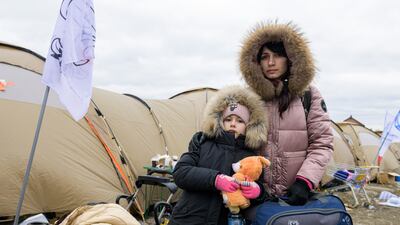
Mykhaila and her daughter from Loubny, central Ukraine, travelled by train to the Ukrainian city of Lviv then took a bus to Medyka on the Polish border, before walking across. Photo: DEC -
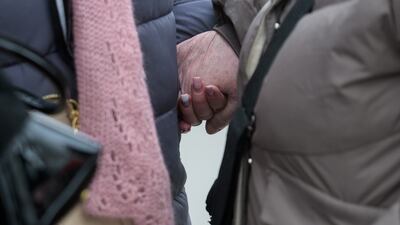
Women hold hands at the Medyka border crossing point, through which thousands of Ukrainian refugees have passed. Photo: DEC -
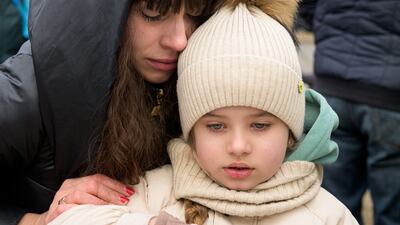
Angelika, 27, and her daughter Diana, 4, from Khmelnytskyi in Ukraine arrive at a reception centre on the outskirts of Przemysl, Poland. Photo: DEC -

Maria, 38, from Chernihiv, left Ukraine with a friend. They came to the Romanian border to wait for another friend before crossing. Photo: Panos Pictures -
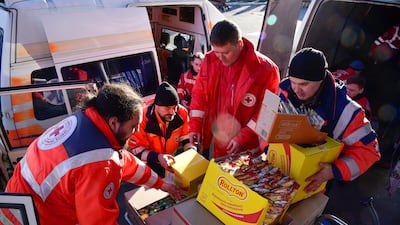
Ukrainian Red Cross staff and volunteers are providing food and other basic necessities to about 8,000 people sheltering in an underground station in Kyiv. Photo: Tebukhukhov Maksym -
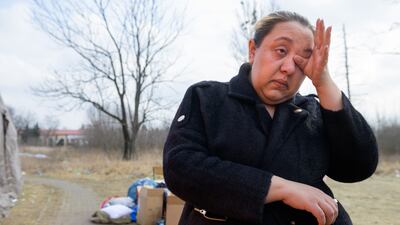
Kristina wipes away tears at Lwowska reception centre on the outskirts of Przemysl, Poland. Photo: DEC -
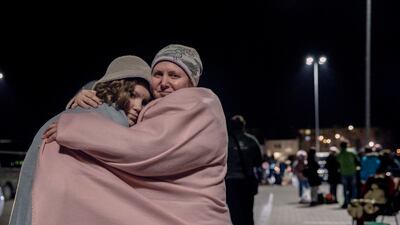
Ira, 45, and her daughter Olena, 12, outside a transit centre in Przemysl, Poland. Photo: Adrienne Surprenant -
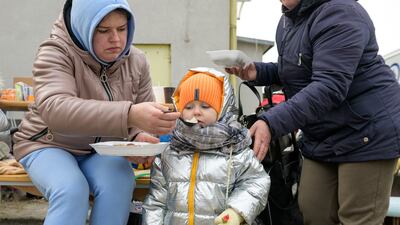
Veronika feeds her son Aleksander at the temporary refugee station in Medyka, eastern Poland. Photo: DEC


Mr Fontaine said Unicef had heard the reports of Russian abductions, but added that the organisation did not have the access it needed "to look and verify, and see if we can assist".
He said that 2.8 million of the displaced children were in Ukraine and another two million were in other countries. Of those still in Ukraine, nearly half are feared to be at risk of not having enough food.
School closures brought about by the war are affecting 5.7 million children and 1.5 million students in higher education, Mr Fontaine said, after classrooms were damaged by fighting, repurposed by military forces or used as shelters for civilians.
Mr Zelenskyy said the situation was worsened by mines left behind by Russian forces, in a speech in which he said Ukraine was taking seriously the possibility of chemical weapons being used.
He called on his European allies to make the next package of sanctions so tough that "even a word about weapons of mass destruction is no longer heard from the Russian side", for example by cutting off imports of oil.
The 27-member European Union has yet to reach consensus on that point, with Hungary saying on Tuesday that its domestic energy security was a "clear red line" in discussions on sanctions.

