


Live updates: follow the latest news on Russia-Ukraine
The UK is giving another £80 million ($106.5m) in aid to Ukraine as British Prime Minister Boris Johnson said the people in the nation had shown “their spirit will not be broken”.
The latest financial commitment brings the total UK humanitarian aid package for the country to £120m.
The money is being provided to save lives and protect vulnerable people in Ukraine and the wider region, and to tackle the growing humanitarian crisis, the Foreign, Commonwealth and Development Office said.
About £40m was announced last weekend to help aid agencies respond to the deteriorating situation in Ukraine, giving access to basic necessities and medical supplies.
A £100m economic package of official development assistance funding for Ukraine was announced this month to bolster the economy and reduce its reliance on Russian gas imports.
Mr Johnson and Foreign Secretary Liz Truss said there was a duty to help.
-
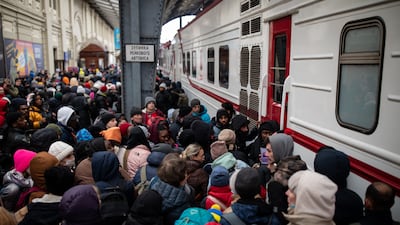
People desperate to leave Ukraine try to board a train at the railway station in Lviv. All photos: Oliver Marsden for The National -
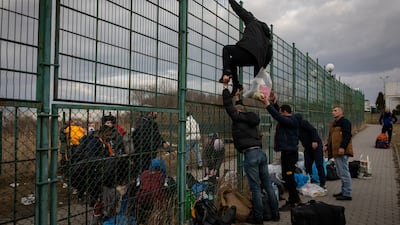
Ukrainian men returning from Poland to fight for their country help pass over donations of clothes at the border crossing from Poland into Ukraine. -
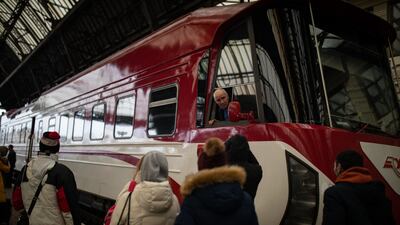
A train driver tells people on the platform that he cannot pick anyone up at the station in Lviv. -
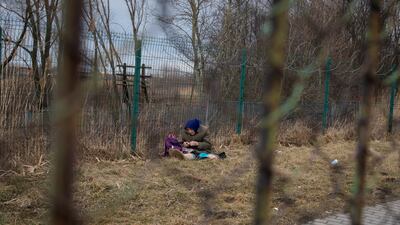
An elderly woman sits alone waiting to cross the border from Ukraine into Poland as fighting continues. -
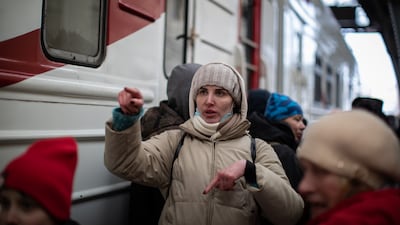
Days-long waits to cross borders have been reported. -
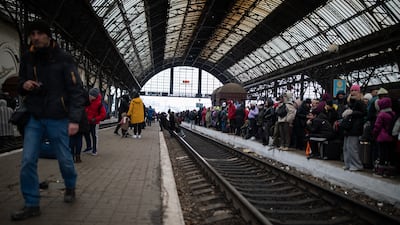
Ukrainian men aged between 18 and 60 have been stopped from leaving Ukraine amid a conscription drive to defend against Russia. -
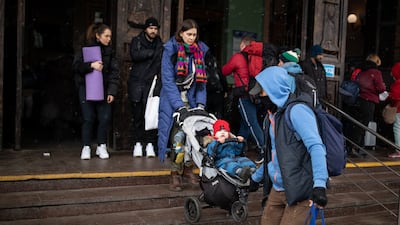
A couple carry their child out of the ticket hall at Lviv railway station. -
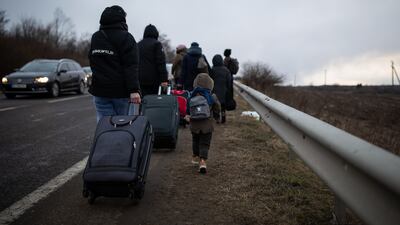
A family attempts to walk the last 25 kilometres of the journey to the Polish border. -
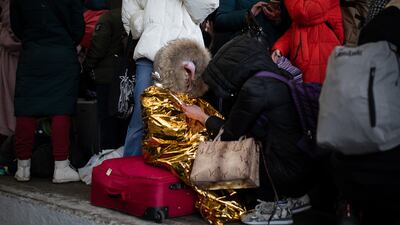
A mother tries to keep her daughter warm on the platform of Lviv railway station. -

Elise from Kiev sits waiting for a train to take her out of Ukraine after hearing that Poland has closed its borders.


“With every hour, the passionate desire of the people of Ukraine to defend their country has become more apparent and millions of people around the world have been stirred and moved by their courage," Mr Johnson said.
“The reality is that whatever happens in the coming days or weeks, the Ukrainian people have shown already that their spirit will not be broken and they will not be subdued.
“We as the international community have a responsibility to do everything we can to help the Ukrainians.”
Ms Truss said: “We have a moral duty to support Ukrainians affected by Putin’s unprovoked aggression.
"Britain is at the forefront of efforts to supply life-saving humanitarian aid, as well as political, economic and defensive support.
“Our message to the Ukrainian people is simple: we will help you and stand with you in the fight for the freedom and sovereignty of Ukraine.”
Mr Johnson, who on Tuesday was visiting Nato members Poland and Estonia to shore up support for the defence alliance, has ruled out British forces fighting in Ukraine.
He said Nato allies were not considering approval of Ukraine’s appeal to enforce a no-fly zone over the nation to prevent bombing by Russian planes.

