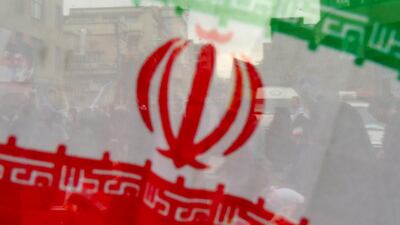
Western diplomats hoped that easing sanctions would eventually help modify Iran's behaviour in Syria, but history has shown the opposite to be true. Getty

Tehran's ‘blueprint' for exporting militants across region funded by nuclear deal


  • English
  • Arabic

The new US administration has made clear that it will re-engage with Iran’s leadership on its nuclear programme. This is understandable but, before it does so, it should frame the engagement very carefully.

While it is true that the 2015 nuclear agreement had a limiting impact on Iran’s nuclear programme, it suffered from two major problems: its narrow scope and the absence of the regional players. Since 2015, both of these issues have become more, not less, important.

Supporters of the 2015 Iran nuclear deal – or Joint Comprehensive Plan of Action (JCPOA) – claim it was never intended to address issues beyond Tehran’s nuclear programme.

The hope was that it would provide a platform for collaboration on other issues, building trust and ultimately normalising the Islamic Republic. Yet just 13 days after it was signed in July 2015, Iran's Supreme Leader Ayatollah Ali Khamenei ruled out follow-on negotiations, saying that neither the deal nor any material incentives would alter his country’s support for its regional militias or its ballistic missile programme.

While a piecemeal approach to resolving disputes with Iran sounds plausible, in practice the nuclear agreement could not and cannot be separated from its regional destabilisation or its ballistic missile programme.

The then US President Donald Trump, above at a Stop The Iran Nuclear Deal protest in front of the U.S. Capitol in Washington, pulled out of the 2015 Joint Comprehensive Plan of Action in May 2018. Linda Davidson/The Washington Post via Getty Images

Indeed, one of the unintended consequences of the nuclear deal was that billions of dollars in sanctions relief that Iran received as a result enabled it to strengthen these other activities.

The rationale for excluding regional nations from talks with Tehran was, and remains, less justifiable. They are the direct targets of Iran’s foreign policy, which is still based on three ideological pillars: exporting its so-called Islamic Revolution; supporting Islamist and anti-western movements; and eradicating Israel.

In pursuing these objectives, the Islamic Revolutionary Guard Corps (IRGC) – the clerical regime’s ideological army – has for more than four decades supported a range of armed militias across the region, from grassroots groups with shared or tactical interests, such as Hamas and the Taliban, to manufacturing its own ideologically compliant militias such as Hezbollah in Lebanon.

These paramilitary groups have continually destabilised the Middle East with regional nations paying the price of letting Tehran’s actions go unchecked.

As our recent report for The Tony Blair Institute for Global Change reveals, in recent years the activities of the IRGC and its network of militias in the Middle East have both expanded and become more dangerous. Crucially, these shifts occurred as international sanctions were being eased on Tehran as part of what would become the JCPOA.

The 2013-2015 period is often praised in the West as a successful period of diplomacy with Tehran. Yet, while western diplomats were sitting around the negotiating table with Iran’s Foreign Minister Mohammad Javad Zarif, the late IRGC general Qassem Suleimani was executing a ruthless plan to crush the Syrian people’s revolution and save the Assad regime from collapse.

We now know that western diplomats had hoped that easing sanctions on Iran would eventually moderate its behaviour in Syria and the wider region. But as history has shown, the opposite was true.

The IRGC and its network of militias are fighting for the ambition of Iran's Supreme Leader Ayatollah Khamenei, pictured above this week addressing commanders of the air force, to create a pan-Shia state and eradicate the State of Israel. AFP

Tehran’s operations in support of the Assad regime triggered the most significant shift in its cultivation of Shia militancy: the expansion of IRGC-manufactured militias. After its success in Syria, the creation of these "Gold Standard" groups provided Iran with a blueprint for exporting its militancy across the region.

But far from simply being a form of state deterrence, our report reveals the deep-rooted ideological nature of these militias.

As well as arming, training and financing these manufactured militias, the IRGC proactively recruited and radicalised their fighters, working with Iran’s soft-power organisations to indoctrinate them with the clerical regime’s extremist Shia Islamist ideology.

Like the IRGC, these fighters are taught to reject the concept of the nation-state and see themselves as "warriors without borders", fighting for Mr Khamenei’s ambition to create a pan-Shia state and eradicate the state of Israel.

Manufactured militias are now the fastest growing type of Iranian-backed groups in the region. Operating throughout the Middle East, they constitute the greatest threat to its stability and the normalisation of relations between the Arab states and Israel.

The Biden administration has made clear that it will re-engage Iran’s leadership on its nuclear programme, but the Tony Blair Institute paper warns that the scope of any new deal must be broadened and regional nations need to be included in talks. Reuters/Tom Brenner

The ideological ambitions of these IRGC-manufactured militias are a stark reminder that, rather than a conflict between Shia and Sunni, or a proxy war between Iran and Saudi Arabia, the real divide in the region is between modernisers and Islamist extremists. Shia Muslims who refuse to subscribe to Mr Khamenei’s Islamist ideology have been victims of the IRGC or its manufactured proxies.

While many point to the tragic events of 2019 - when we saw Iraqis and Iranians killed on the orders of the IRGC - as a testament to their brutality, the fact that tens of thousands were willing to risk their lives to resist the backward and oppressive politics that the Iranian regime wishes to sustain should not be ignored.

In addition to expanding its activities beyond Iran’s borders, the IRGC has also increased its power on an unprecedented scale within Iran itself. The IRGC is transitioning from being part of the "deep state" to controlling the state itself, making it even more likely that it will benefit from any future sanctions relief for Tehran.

Any engagement with Tehran that does not recognise the JCPOA’s flaws risks repeating them. Reaching a lasting deal will require encompassing broader issues – including Iran’s regional policy, missile programme and violation of human rights – and bringing regional stakeholders to the table.

Professor Saeid Golkar is a senior fellow at the Tony Blair Institute for Global Change and Kasra Aarabi is an analyst on Iran at the Tony Blair Institute for Global Change


Avatar: Fire and Ash

Director: James Cameron

Starring: Sam Worthington, Sigourney Weaver, Zoe Saldana

Rating: 4.5/5

The specs: 2018 Nissan 370Z Nismo

The specs: 2018 Nissan 370Z Nismo
Price, base / as tested: Dh182,178
Engine: 3.7-litre V6
Power: 350hp @ 7,400rpm
Torque: 374Nm @ 5,200rpm
Transmission: Seven-speed automatic
​​​​​​​Fuel consumption, combined: 10.5L / 100km

Day 5, Abu Dhabi Test: At a glance

Moment of the day When Dilruwan Perera dismissed Yasir Shah to end Pakistan’s limp resistance, the Sri Lankans charged around the field with the fevered delirium of a side not used to winning. Trouble was, they had not. The delivery was deemed a no ball. Sri Lanka had a nervy wait, but it was merely a stay of execution for the beleaguered hosts.

Stat of the day – 5 Pakistan have lost all 10 wickets on the fifth day of a Test five times since the start of 2016. It is an alarming departure for a side who had apparently erased regular collapses from their resume. “The only thing I can say, it’s not a mitigating excuse at all, but that’s a young batting line up, obviously trying to find their way,” said Mickey Arthur, Pakistan’s coach.

The verdict Test matches in the UAE are known for speeding up on the last two days, but this was extreme. The first two innings of this Test took 11 sessions to complete. The remaining two were done in less than four. The nature of Pakistan’s capitulation at the end showed just how difficult the transition is going to be in the post Misbah-ul-Haq era.

The%20specs
%3Cp%3E%3Cstrong%3EPowertrain%3A%20%3C%2Fstrong%3ESingle%20electric%20motor%0D%3Cbr%3E%3Cstrong%3EPower%3A%20%3C%2Fstrong%3E201hp%0D%3Cbr%3E%3Cstrong%3ETorque%3A%20%3C%2Fstrong%3E310Nm%0D%3Cbr%3E%3Cstrong%3ETransmission%3A%20%3C%2Fstrong%3ESingle-speed%20auto%0D%3Cbr%3E%3Cstrong%3EBattery%3A%20%3C%2Fstrong%3E53kWh%20lithium-ion%20battery%20pack%20(GS%20base%20model)%3B%2070kWh%20battery%20pack%20(GF)%0D%3Cbr%3E%3Cstrong%3ETouring%20range%3A%20%3C%2Fstrong%3E350km%20(GS)%3B%20480km%20(GF)%0D%3Cbr%3E%3Cstrong%3EPrice%3A%20%3C%2Fstrong%3EFrom%20Dh129%2C900%20(GS)%3B%20Dh149%2C000%20(GF)%0D%3Cbr%3E%3Cstrong%3EOn%20sale%3A%3C%2Fstrong%3E%20Now%3C%2Fp%3E%0A
The specs

Engine: 2.0-litre four-cylinder turbo

Power: 178hp at 5,500rpm

Torque: 280Nm at 1,350-4,200rpm

Transmission: seven-speed dual-clutch auto

Price: from Dh209,000 

On sale: now

Islamophobia definition

A widely accepted definition was made by the All Party Parliamentary Group on British Muslims in 2019: “Islamophobia is rooted in racism and is a type of racism that targets expressions of Muslimness or perceived Muslimness.” It further defines it as “inciting hatred or violence against Muslims”.

UPI facts

More than 2.2 million Indian tourists arrived in UAE in 2023
More than 3.5 million Indians reside in UAE
Indian tourists can make purchases in UAE using rupee accounts in India through QR-code-based UPI real-time payment systems
Indian residents in UAE can use their non-resident NRO and NRE accounts held in Indian banks linked to a UAE mobile number for UPI transactions

UAE v Gibraltar

What: International friendly

When: 7pm kick off

Where: Rugby Park, Dubai Sports City

Admission: Free

Online: The match will be broadcast live on Dubai Exiles’ Facebook page

UAE squad: Lucas Waddington (Dubai Exiles), Gio Fourie (Exiles), Craig Nutt (Abu Dhabi Harlequins), Phil Brady (Harlequins), Daniel Perry (Dubai Hurricanes), Esekaia Dranibota (Harlequins), Matt Mills (Exiles), Jaen Botes (Exiles), Kristian Stinson (Exiles), Murray Reason (Abu Dhabi Saracens), Dave Knight (Hurricanes), Ross Samson (Jebel Ali Dragons), DuRandt Gerber (Exiles), Saki Naisau (Dragons), Andrew Powell (Hurricanes), Emosi Vacanau (Harlequins), Niko Volavola (Dragons), Matt Richards (Dragons), Luke Stevenson (Harlequins), Josh Ives (Dubai Sports City Eagles), Sean Stevens (Saracens), Thinus Steyn (Exiles)

Company profile

Company: Rent Your Wardrobe 

Date started: May 2021 

Founder: Mamta Arora 

Based: Dubai 

Sector: Clothes rental subscription 

Stage: Bootstrapped, self-funded 

Fund-raising tips for start-ups

Develop an innovative business concept

Have the ability to differentiate yourself from competitors

Put in place a business continuity plan after Covid-19

Prepare for the worst-case scenario (further lockdowns, long wait for a vaccine, etc.) 

Have enough cash to stay afloat for the next 12 to 18 months

Be creative and innovative to reduce expenses

Be prepared to use Covid-19 as an opportunity for your business

* Tips from Jassim Al Marzooqi and Walid Hanna

The%20specs%20
%3Cp%3E%3Cstrong%3EEngine%3A%20%3C%2Fstrong%3E2.0-litre%204cyl%20turbo%0D%3Cbr%3E%3Cstrong%3EPower%3A%20%3C%2Fstrong%3E261hp%20at%205%2C500rpm%0D%3Cbr%3E%3Cstrong%3ETorque%3A%20%3C%2Fstrong%3E400Nm%20at%201%2C750-4%2C000rpm%0D%3Cbr%3E%3Cstrong%3ETransmission%3A%20%3C%2Fstrong%3E7-speed%20dual-clutch%20auto%0D%3Cbr%3E%3Cstrong%3EFuel%20consumption%3A%20%3C%2Fstrong%3E10.5L%2F100km%0D%3Cbr%3E%3Cstrong%3EOn%20sale%3A%20%3C%2Fstrong%3ENow%0D%3Cbr%3E%3Cstrong%3EPrice%3A%20%3C%2Fstrong%3EFrom%20Dh129%2C999%20(VX%20Luxury)%3B%20from%20Dh149%2C999%20(VX%20Black%20Gold)%3C%2Fp%3E%0A
How to increase your savings
  • Have a plan for your savings.
  • Decide on your emergency fund target and once that's achieved, assign your savings to another financial goal such as saving for a house or investing for retirement.
  • Decide on a financial goal that is important to you and put your savings to work for you.
  • It's important to have a purpose for your savings as it helps to keep you motivated to continue while also reducing the temptation to spend your savings. 

- Carol Glynn, founder of Conscious Finance Coaching