


Incumbent President Ashraf Ghani has been declared the winner of Afghanistan's September election after a five-month delay over disputed results.
Mr Ghani is now set to stay in his post for five more years, having won 50.6 per cent of the ballots cast.
His main opponent, Chief Executive of the unity government Dr Abdullah Abdullah, declared the results "illegal".
He took 39.5 per cent of the vote, according to results announced by Hawa Alam Nuristani, head of the election commission.
“We consider the final results baseless, illegal and we do not accept it," Dr Abdullah said after the results were announced.
The Taliban also rejected Mr Ghani's win, putting into question a US peace plan that calls for a reduction in violence, followed by a more permanent agreement expected to be signed on February 29 between Washington and the militants.
That agreement would pave the way for US troops to go home, ending America's longest war, and start negotiations between the Taliban and Kabul.
The delay in announcement was caused by a dispute over the 2.7 million votes that were cast, of which only 1.8 million were eventually found to be eligible.
Dr Abdullah disputed nearly 300,000 votes that his team claimed were invalid for being cast without biometric verification or after official voting hours.
The 1.82 million eligible ballots were out of a total of 9.6 million registered voters, making it the country's lowest election turnout.
Nearly 1 million of the initial 2.7 million votes were purged due to irregularities with biometric vote recording systems and ballots cast outside official hours.
The commission announced that Mr Ghani won 923,592 votes, compared to 720,841 for Dr Abdullah.
The results come after an audit of about 15 per cent of the total votes that delayed the final result.
Dr Abdullah’s team announced earlier on Tuesday that he was withdrawing his candidacy in protest.
"We are officially out of the election process and are boycotting the result, following the IEC's unlawful action," Fridoon Khwazoon, spokesman for Dr Abdullah's team, told The National.
“This process does not hold legitimacy to us any more and whatever result they announce is not accepted by us and the people of Afghanistan,” Mr Khwazoon said before the result announcement.
He said they planned to take action to “defend the rights of the Afghan people and their votes”.
-

Afghanistan president Ashraf Ghani (C) casts his vote at a polling station during the presidential elections, in Kabul, Afghanistan EPA -

Afghan presidential candidate Abdullah Abdullah casts his vote at a polling station in Kabul, Afghanistan. Reuters -

A ballot paper is seen on the table at a polling station at Amani high school, near the presidential palace in Kabul, Afghanistan. AP Photo -

Former chief of National Directorate of Security, Mohammed Masoom Stanekzai, right, poses for a picture, taken by an election official, before casting his vote during the presidential elections in Kabul, Afghanistan. AP Photo -

An Afghan man casts his ballot during the presidential elections, in Jalalabad, Afghanistan. EPA -

An Afghan disabled voter arrives at a polling station during the presidential elections, in Jalalabad, Afghanistan. EPA -

An Afghan man casts his ballot during the presidential elections, in Jalalabad, Afghanistan. EPA -

An Independent Election Commission (IEC) official helps a woman to cast her vote at a polling station in Herat. AFP -

Men queue to cast their vote at a polling station in Mazar-i-Sharif on September 28, 2019. AFP -

Afghan voters wait to cast their ballot during the presidential elections in Herat, Afghanistan. EPA -

An Afghan woman shows her inked finger after she cast her ballot during the presidential elections in Herat, Afghanistan. EPA -

Afghan presidential candidate Ashraf Ghani arrives to cast his vote in the presidential election in Kabul. Reuters


In December, Dr Abdullah agreed to allow a ballot recount in provinces where his supporters had stopped the process for almost a month.
The election commission tried to start a recount in November but he stopped the attempt, saying he would not let his observers take part.
Mr Ghani and Dr Abdullah lead a fragile national unity government that was put together under US pressure after both leaders claimed victory in Afghanistan’s last elections, in 2014.
Last week, three prominent Afghan leaders and allies of Dr Abdullah warned that if the IEC announced fraudulent results, they would form their own government and declare him president.
The three were former vice president Gen Abdul Rashid Dostum, Wahadat party chief Mohammad Mohaqiq and Jamiat party leader Ahmad Zia Massoud.
Experts say these groups hold significant influence and should be taken seriously.
“It is difficult to predict how it will play out," said Ali Adili, political researcher and deputy country director of the Afghan Analyst Network.
"However, given the low turnout and the small margin by which Ghani is declared the winner, it is difficult to ignore these major groups."
Members of Mr Ghani’s campaign team defended the results.
“Sure, there were issues with the process but then complaints were registered and votes were audited, which is why it took longer than expected,” said Idrees Stanikzai, a political activist and member of the re-election campaign.
“This accusation of fraud brought by the losing party is unfair. Let’s not forget all the commissioners in both election bodies were picked by all candidates, so the results are a product of collective work of their people too, which they are not accepting."
Mr Stanikzai dismissed Dr Abdullah’s threats.
“This has been his policy since 2009; he loses and then rejects the results," he said. "But eventually he does accept it.”
Mr Stanikzai was referring to the 2009 and 2014 elections where Dr Abdullah was runner up.
Who is Afghanistan’s president?
Mr Ghani, 70, is an anthropologist, academic and a former employee of the World Bank who left Afghanistan in 1977 and returned about two decades later.
He studied at Columbia University in New York and taught at several US universities during the Soviet occupation of Afghanistan in the 1980s.
In late 2001, after the Taliban were ousted by a US-led invasion, Mr Ghani moved back to Kabul as a senior UN special adviser, going on to become a key architect of the interim government.
He became a powerful finance minister under president Hamid Karzai from 2002 to 2004, campaigning against growing corruption.
Renowned for his intensity and energy, Mr Ghani introduced a new currency, set up a tax system, encouraged wealthy expatriate Afghans to return home, and courted donors as the country emerged from the austere Taliban era.
An ethnic Pashtun, he was a candidate for the 2014 presidential election, with Gen Dostum, an Uzbek accused of human rights abuses, as his first vice president and Sarwar Danish, a Hazara, as his second deputy.
-
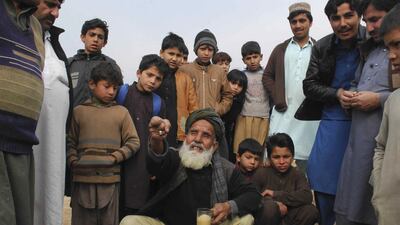
Afghan refugee Hukam Khan speaks about the situation in his country at the Kabobayan refugee camp in Peshawar, Pakistan. He has been in Pakistan for 40 years after fleeing war in Afghanistan. AP Photo -
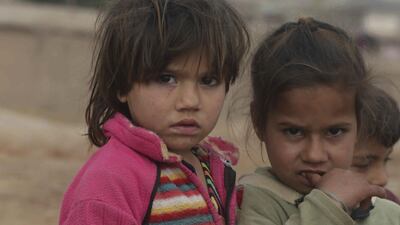
Afghan refugee children at the Kabobayan refugee camp in Peshawar, north-west Pakistan. AP Photo -
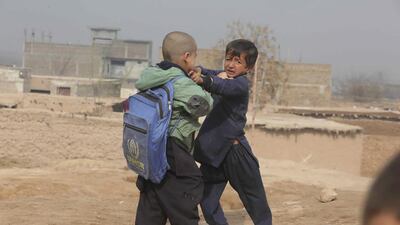
Afghan boys fight at the Kabobayan refugee camp. AP Photo -
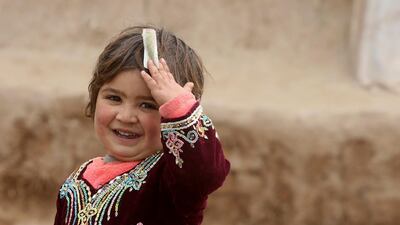
An Afghan refugee girl holds up a small banknote in the Kabobayan refugee camp. AP Photo -
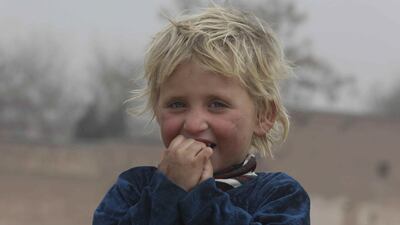
An Afghan refugee girl at the Kabobayan refugee camp. AP Photo -
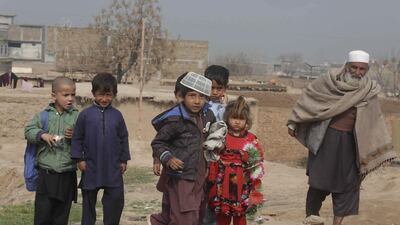
Afghan refugees at the Kabobayan refugee camp in Peshawar. AP Photo -
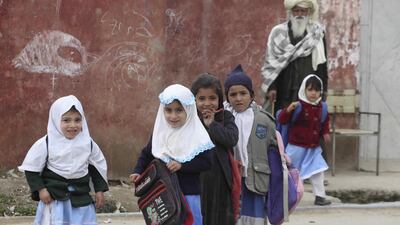
Afghan schoolgirls leave their school in the Kabobayan refugee camp in Peshawar, Pakistan. AP Photo -
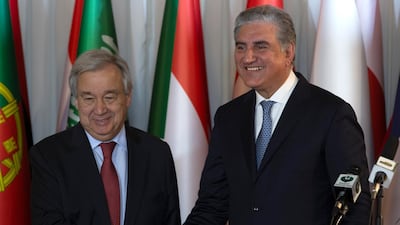
UN Secretary General Antonio Guterres, left, shakes hands with Pakistani Foreign Minister Shah Mahmood Qureshi after a joint press conference at the foreign ministry in Islamabad, Pakistan. AP Photo -
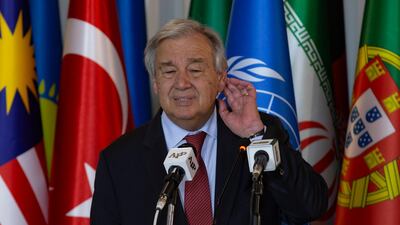
UN Secretary General Antonio Guterres listens to a reporter's question at the Pakistan Foreign Ministry in Islamabad. AP Photo


Mr Ghani lit up the campaign trail with fiery speeches and did better than many expected in the first round by taking 31.6 per cent of the vote, compared to the 45 per cent won by Dr Abdullah, forcing the election into a second round.
The run-off was engulfed in fraud claims, but Mr Ghani emerged as an easy victor with 55 per cent compared to Dr Abdullah's 45.
He eventually formed a national unity government with Dr Abdullah as Chief Executive, a role created after the US mediated an awkward power-sharing deal.
Preliminary results in the 2019 vote, released in December, showed he had won again but Dr Abdullah swiftly claimed vote-rigging, forcing a recount.
Mr Ghani has variously been described as visionary, short-tempered, academic and overly demanding.
In the five years since his election, he has made little progress against deep-rooted government corruption and has been dismissed by the Taliban as a US-controlled "puppet".
Mr Ghani and his administration have been sidelined from talks between the US and the Taliban, but he has insisted on taking part in any future negotiations with the insurgents.
If such talks fail, he has vowed to fight the militants "for generations" if necessary.
Mr Ghani is married to Rula, who he met while studying for his first degree at the American University in Lebanon, and has two children.

