
Philippine President Rodrigo Duterte's allies held the top spots as unofficial results of a mid-term Senate election trickled in on Monday, signalling broad public backing for the leader nearly three years into his term.
Early results suggested Duterte-backed candidates would take most of the 12 Senate seats available, with just one from the opposition slate on the fringes.
A Senate majority would lessen the chance of censure moves and lower house investigations against Mr Duterte's government and make it easier to pass controversial legislation, such as restoring capital punishment and changing the constitution to introduce federalism, and possibly extend term limits.
The ballot was billed as a referendum on the president, with the focus on his bid to boost his influence over an upper house that is vital to him for delivering on his reform agenda.
The Senate is just as crucial to his opponents, having traditionally been a check on state power and a bulwark against the kind of political dominance that Mr Duterte enjoys.
Overall, Monday's nationwide ballot will decide 18,000 posts, among them more than 200 mayors and governors, half of the 24-seat Senate, and 245 spots in a lower house expected to again be stacked with Duterte loyalists.
However, late into the night, hours after voting ended, only a small fraction of the tally was available due to problems transmitting results. Official results are expected in four to six days.
-
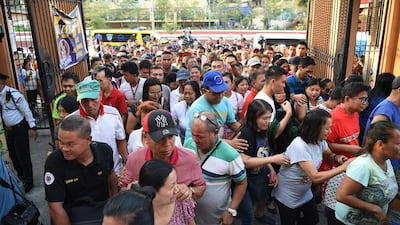
Voters rush inside as the gate opens at a polling station in Manila. AFP -

Manila residents wait in line to vote at a school. AP Photo -
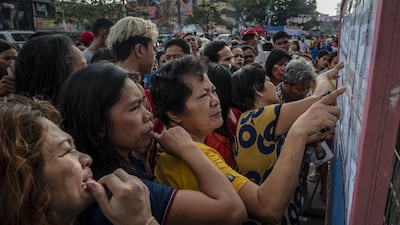
Filipinos search a voting directory to pick their candidate in the midterms. Getty Images -
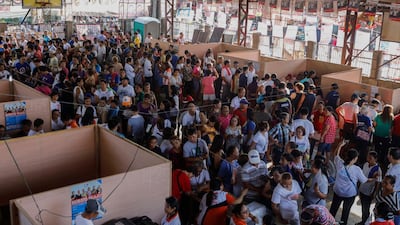
A basketball court is turned into a polling station in Quezon City. EPA -
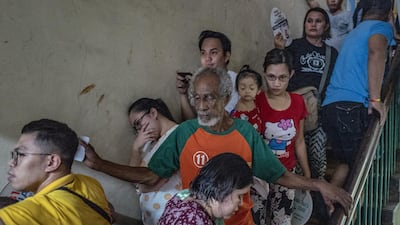
Filipinos wait to cast their votes in Manila. Getty Images -
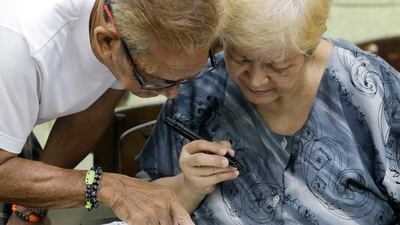
A man helps his wife fill out her ballot. AP Photo -
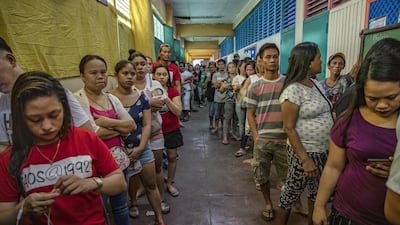
Filipinos fall in line to vote in Manila. Getty Images -
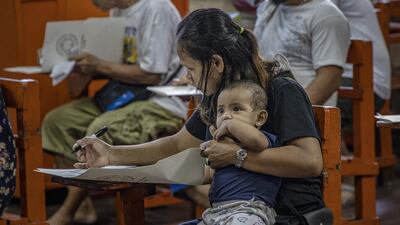
About 60 millions of Filipino voters will head to the polls on May 13. Getty Images -
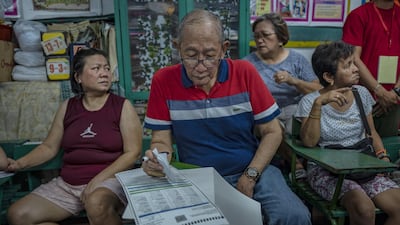
More than 18,000 positions are at stake, including half of the seats in the upper house Senate. Getty Images -
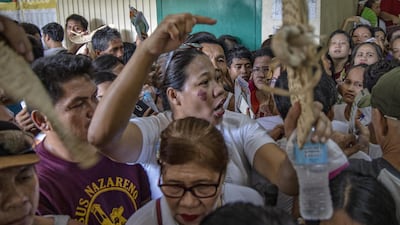
Filipinos crowd a polling station in Manila. Getty Images -
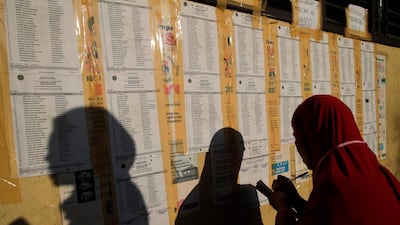
Filipinos look for their names and corresponding voting precincts on a board at a school in Manila, Philippines. EPA -
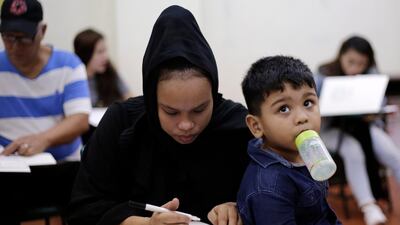
A Filipino Muslim mother fills out her ballot at an elementary school turned into a voting precinct in Manila, Philippines. EPA -
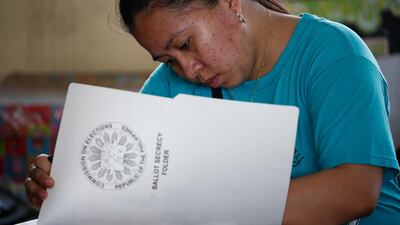
Filipinos fill out their ballots at an elementary school turned into a voting precinct in Quezon City, east of Manila, Philippines. EPA -
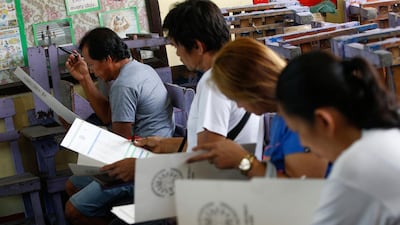
Filipinos fill out their ballots at an elementary school turned into a voting precinct in Quezon City, east of Manila, Philippines. EPA -
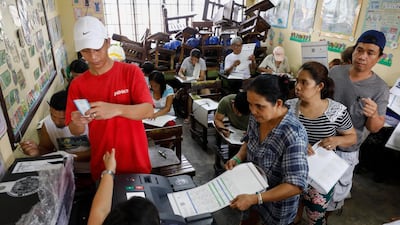
Filipinos cast their votes at an elementary school turned into a voting precinct in Quezon City, east of Manila, Philippines. . EPA -
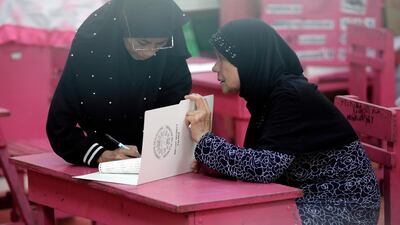
epa07566273 A Filipino Muslim elderly woman (R) is assisted by a relative to fill out her ballot at an elementary school turned into a voting precinct in Manila, Philippines, 13 May 2019. Over 61 million Filipinos are expected to cast their vote in the country's mid-term elections, wherein over 43,000 candidates are vying for some 18,000 electoral posts including seats in the Philippine Senate and House of Representatives. EPA/FRANCIS R. MALASIG -
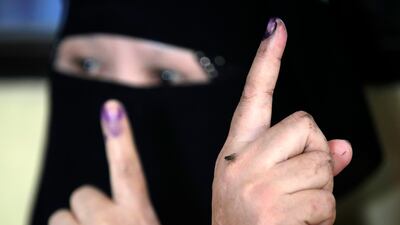
Filipino Muslim women display their fingers marked with indelible ink after voting at an elementary school turned into a voting precinct in Manila, Philippines. EPA -
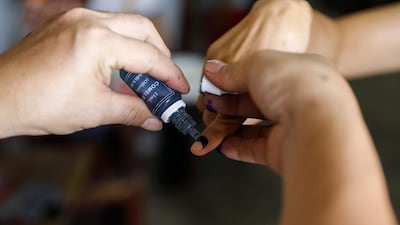
A Filipino receives an indelible ink mark on their finger after voting at an elementary school in Quezon City, east of Manila, Philippines. EPA


The midterms come at a time when Mr Duterte, a 74-year-old former mayor of Davao city, is seemingly untouchable. Last year's spiralling inflation is now under control and recent polls showed his Senate candidates scoring highly, and his own public approval rating at 81 per cent.
"It's not the right environment for the opposition. The opposition could have targeted other candidates instead of making the campaign against President Duterte," said political analyst Dindo Manhit.
"That's a hard battle. That would've been challenging."
Police reported several minor shootings and bombings in some areas on polling day, and said vote-buying was widespread, with more than 200 arrests.
Technology was a problem, with hundreds of instances of electronic voting machines malfunctioning and trouble with the election commission's internet servers.
Mr Duterte's popularity has helped to insulate him from criticism over his deadly war on drugs, his misogynistic jokes and insults of the Roman Catholic church followed by the majority of Filipinos, and his indifference towards China's rapid militarisation in the South China Sea.

