
Hundreds of thousands of children have been affected by Indonesia's devastating quake-tsunami, many of them "in shock and traumatised" after being separated from their families, aid workers said on Thursday as much-needed supplies trickled in to shattered communities.
A total of 1,424 people have been confirmed dead and more than 2,500 injured after the 7.5-magnitude earthquake sent destructive waves barrelling into Sulawesi island on Friday.
The disaster reduced buildings in the seaside city of Palu to rubble but, with transport links badly affected, aid has been slow to arrive and looting has broken out.
On Thursday armed police guarded petrol stations to ensure order in long, winding queues. Trucks carrying supplies have reportedly been ransacked en route to Palu.
Authorities initially turned a blind eye but have now taken a tougher stance, with police rounding up dozens of suspected looters and the military warning that soldiers will fire on anyone caught stealing.
Although rescuers continue to comb through destroyed buildings, hope is fading that anyone will be found alive under the rubble. Authorities say more than 100 people are still unaccounted for.
At least 600,000 children have been affected by the quake, Save the Children said, with many sleeping on the streets among ruins.
Attention has focused on the huge number of children left orphaned, or separated from their families in the chaos as buildings collapsed across Palu and people were swept away by huge waves.
Aid organisations are urgently working with the government to identify and reunite them with their relatives, the group said.
"It's hard to imagine a more frightening situation for a child," said Zubedy Koteng, the group's child protection adviser, who is in the city.
"Many children are in shock and traumatised, alone and afraid. Young children searching for surviving relatives will have witnessed and lived through horrific experiences which no child should ever have to see."
-

A seven-year-old boy, Taufikurahman, holds a plastic soccer ball on the rubble of a collapsed house in Donggala, Central Sulawesi, Indonesia. EPA -
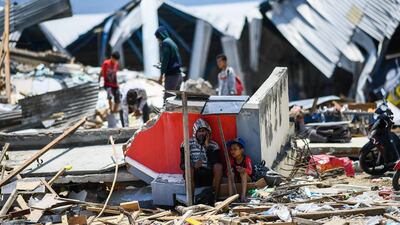
Survivors take a break as they salvage items from the debris of a factory complex in Palu. AFP -
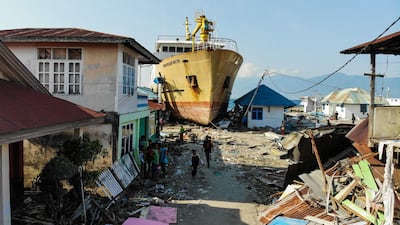
Survivors make their way past around a washed out passenger ferry in Wani. AFP -
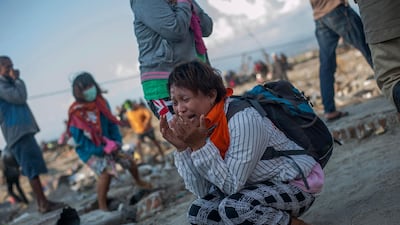
Residents react as rescuers recover the body of a tsunami victim in Palu. AP Photo -
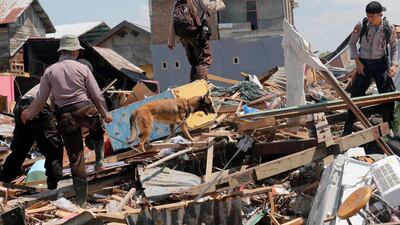
A police K9 unit continues to search for victims in the wreckage in Palu. AP Photo -
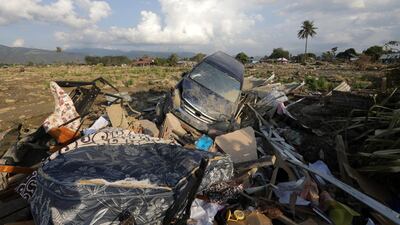
A car is stranded in the mud at Petobo village in Palu. EPA -

People sit together on board the Indonesian Navy warship KRI Makassar (590) as they prepare to be evacuated from Palu. AFP -
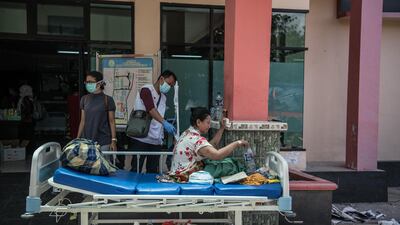
An injured woman sits on a stretcher outside a hospital in Palu. Getty Images -
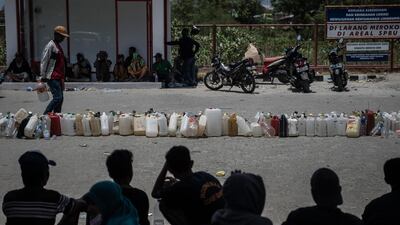
Makeshift jerry cans are lined up in order as people queue for fuel in Palu. Getty Images -

A man walks on the rubble in Donggala. EPA -
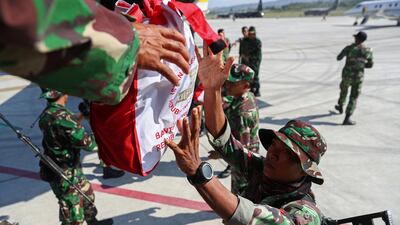
Soldiers unload relief supplies from a military aircraft in Palu. Reuters -
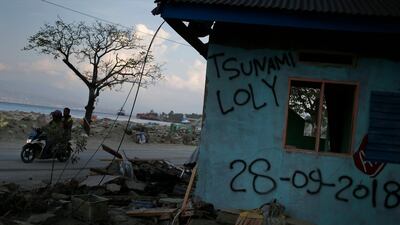
Motorists ride past a building damaged the tsunami in Loli Tasiburi village. AP Photo


The Indonesian government initially refused to accept international help, insisting its military could handle the response, but as the scale of the disaster became clear President Joko Widodo agreed to allow in foreign aid groups and governments.
Twenty-nine countries have pledged aid, according to Indonesia, but the delay in inviting help and severed transport links means little foreign help has arrived.
Palu airport - which was only accepting military flights in the early stages of the disaster - opened to commercial services on Thursday but only a limited number, with aid workers given priority.
An Indonesian navy ship docked in the city carrying water, rice and food, which was loaded by soldiers on to trucks.
"We have to get to places where people need aid really quickly," said First Admiral Dwi Sulakson.
Desperate survivors, some crying, waited to get a spot on the vessel which was set to return to the city of Makassar in southern Sulawesi, and brief scuffles broke out with soldiers.
The United Nations has pledged US$15 million (Dh55m) from its emergency response fund. The Red Cross is sending ships loaded with supplies including field kitchens, tents, body bags and mosquito nets.
In a country with a long-standing problem with "fake news", authorities vowed to clamp down after false reports related to the disaster circulated online, including one saying another quake had hit Sulawesi. The communications ministry said authorities had received several reports about suspected cases and were taking steps to combat them.
______________
Read more:
Volcano erupts on Indonesian island reeling from earthquake and tsunami
Indonesians in UAE pray for their families after deadly disaster
Devastation of Indonesia's earthquake and tsunami shown in satellite photos
______________
Rescuers seeking survivors are focusing on half a dozen key sites around Palu, including a shopping mall and the Balaroa area where the sheer force of the quake turned the earth temporarily to mush.
At the badly damaged Mercure hotel, a team used sniffer dogs to detect signs of life under mounds of rubble and twisted metal. French NGO International Emergency Firefighters provided equipment to help in the hunt, including scanners and sound detectors.
"There is always hope," said the group's president Philippe Besson. But he added that "the building is really extremely unstable ... since yesterday, there has been so much wind that the building was starting to move on its own."
Authorities have set a tentative deadline of Friday to find anyone still trapped under rubble, at which point the chances of finding anyone alive will dwindle to almost zero.
There have been small signs of things returning to normal. Power has returned to parts of Palu, phone networks are back up and even some markets are open for business.
Indonesia sits along the Pacific "Ring of Fire", the world's most tectonically active region, and its 260 million people are vulnerable to earthquakes, tsunamis and volcanic eruptions.

