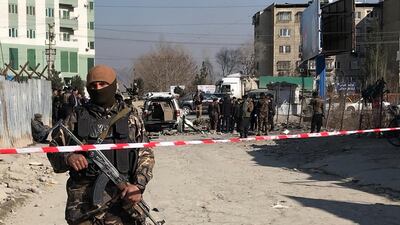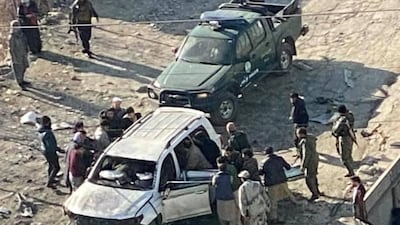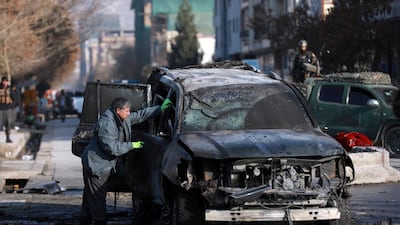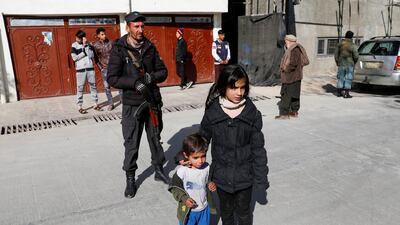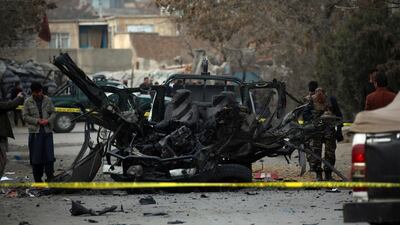
Afghan security personnel remove the wreck of a vehicle from the site of one of three recent bomb attacks in Kabul, Afghanistan. AP

Afghanistan: viral video reinforces horrors of ongoing conflict


  • English
  • Arabic

After forty years of instability, Afghanistan is no stranger to war. But a disturbing video showing child survivors of a terrorist attack crying over the lifeless body of their mother has shocked the public.

The now-viral clip, recorded at the site of a bombing in Kabul, shows bloodied and dust-covered children calling out to their mother and nudging her to wake up. It has come to epitomise the suffering of Afghans, who have seen a big increase in violence across the country.

According to local media agency, Tolo News, 340 people have been killed or wounded in security incidents in Afghanistan in February alone.

The violence has notably increased since the US signed an agreement with the Taliban. The deal not only promised the insurgent group a hasty withdrawal of foreign troops, but also pressured the Afghan government to release more than 5,000 Taliban prisoners as a gesture of goodwill.

However, talks between the Afghan government and the Taliban have moved very slowly, and violence has increased in the meantime.

Deborah Lyons, the UN secretary general’s special representative for Afghanistan, said that 2020 could have been the year of peace in Afghanistan.

"Instead, thousands of Afghan civilians perished due to the conflict,” Ms Lyons said, urging all parties to consider a ceasefire.

“Parties refusing to consider a ceasefire must recognise the devastating consequences of such a posture on the lives of Afghan civilians,” she said.

A large number of these attacks are in the form of targeted killings and assassinations, shifting away from the Taliban’s usual modus operandi of large-scale suicide attacks.

"There has been a big increase in violence, particularly against educated people, in the past year. We have seen the terror spread wide and touch our lives," said Wali Yasini, son of Qadria Yasini, one of the two female judges killed by gunmen in January.

Five other members of the judiciary were killed that month.

Ms Yasini was among 51 Afghans who were killed in targeted attacks in January in Kabul alone.

Meanwhile, in 2020 there were 2,250 civilian assassinations – an increase of 169 per cent on 2019, according to data collected by the Afghan Independent Human Rights Commission.

  • An Afghan security officer keeps watch at the site of a blast in Kabul, Afghanistan on December 15, 2020. REUTERS
    An Afghan security officer keeps watch at the site of a blast in Kabul, Afghanistan on December 15, 2020. REUTERS
  • Afghan police arrive at the site of a bomb attack in Kabul on December 15, 2020. AP
    Afghan police arrive at the site of a bomb attack in Kabul on December 15, 2020. AP
  • People stand around a car damaged in a bomb attack on the street in Kabul, Afghanistan December 15, Tamana Ashna via REUTERS
    People stand around a car damaged in a bomb attack on the street in Kabul, Afghanistan December 15, Tamana Ashna via REUTERS
  • Afghan municipality workers clean the remains of a vehicle after a bomb blast in Kabul, Afghanistan, Sunday, December 13, 2020. AP
    Afghan municipality workers clean the remains of a vehicle after a bomb blast in Kabul, Afghanistan, Sunday, December 13, 2020. AP
  • An Afghan security member inspects a damaged vehicle after a bomb blast in Kabul, Afghanistan, Sunday, December 13, 2020. AP
    An Afghan security member inspects a damaged vehicle after a bomb blast in Kabul, Afghanistan, Sunday, December 13, 2020. AP
  • An Afghan security member inspects a damaged vehicle after a bomb blast in Kabul, Afghanistan, Sunday, December 13, 2020. AP
    An Afghan security member inspects a damaged vehicle after a bomb blast in Kabul, Afghanistan, Sunday, December 13, 2020. AP
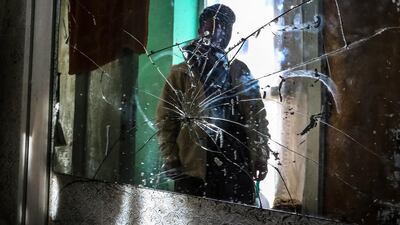
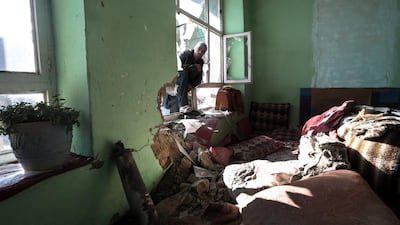
  • An Afghan boy look at the broken glass at the site of a rocket attack at a residential house in Kabul on December 12. EPA
    An Afghan boy look at the broken glass at the site of a rocket attack at a residential house in Kabul on December 12. EPA
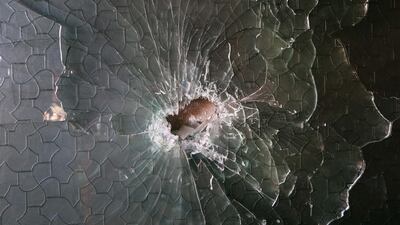
  • A shrapnel hole in a glass at the site of a rocket attack at a residential house in Kabul, Afghanistan December 12, 2020. EPA
    A shrapnel hole in a glass at the site of a rocket attack at a residential house in Kabul, Afghanistan December 12, 2020. EPA
  • Afghan children look at the broken glass at the site of a rocket attack at a residential house in Kabul, December 12, 2020. EPA
    Afghan children look at the broken glass at the site of a rocket attack at a residential house in Kabul, December 12, 2020. EPA
  • An Afghan man look at the site of a rocket attack at a residential house in Kabul on December 12, 2020. EPA
    An Afghan man look at the site of a rocket attack at a residential house in Kabul on December 12, 2020. EPA
  • Afghan men gather at the site of a rocket attack at a residential house in Kabul, Afghanistan December 12, 2020. EPA
    Afghan men gather at the site of a rocket attack at a residential house in Kabul, Afghanistan December 12, 2020. EPA

According to the UN, an estimated 3,000 civilians were killed in security incidents last year, making Afghanistan "among the deadliest places in the world to be a civilian".

Afghan security agencies have been criticised for being incapable of stopping the majority of these attacks, but the magnitude of violence has been overwhelming.

Vice President Amrullah Saleh, who has survived attempts on his life, blames Taliban insurgents for conducting the recent Kabul attack, with support from Pakistan.

He had claimed in December that nearly 20,000 tons of ammonium nitrate – a key component in the terrorists' bombs – had been smuggled from Pakistan.

Meanwhile, the ensuing chaos has prompted an exodus of the skilled Afghan population.

"I am a professor, a civil activist and also a former senior government official," said Mohammad, who did not wish to use his full name, following threats against him and his family.

"In each of these roles, I campaigned for accountability and transparency from all sides, which has now brought me and my family to the attention of terrorists.”

Mohammad says he has been labelled a “spy and a slave to the West” for speaking out against the Taliban and ISIS in Afghanistan.

Speaking to The National from an undisclosed location, Mohammad made the difficult decision to leave the country after many of his government official colleagues were killed by insurgents.

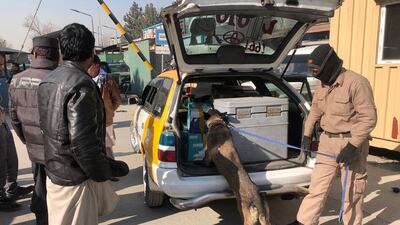
  • Afghan security officials check vehicles at a checkpoint in Kabul, Afghanistan. EPA
    Afghan security officials check vehicles at a checkpoint in Kabul, Afghanistan. EPA
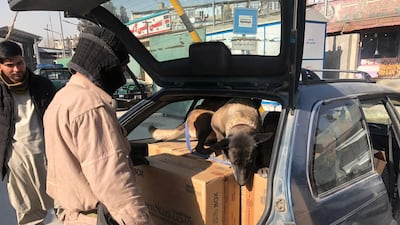
  • Afghan security officials check vehicles at a checkpoint in Kabul, Afghanistan. EPA
    Afghan security officials check vehicles at a checkpoint in Kabul, Afghanistan. EPA
  • Afghan security officials check vehicles at a checkpoint in Kabul, Afghanistan. EPA
    Afghan security officials check vehicles at a checkpoint in Kabul, Afghanistan. EPA
  • Afghan security officials check vehicles at a checkpoint in Kabul, Afghanistan. EPA
    Afghan security officials check vehicles at a checkpoint in Kabul, Afghanistan. EPA
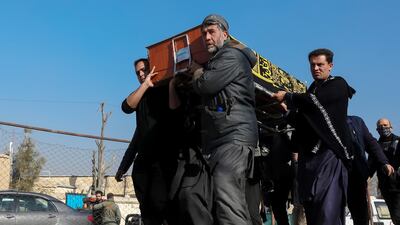
  • People carry the coffin of an Afghan female judge in Kabul, Afghanistan. EPA
    People carry the coffin of an Afghan female judge in Kabul, Afghanistan. EPA
  • People carry the coffin of an Afghan female judge in Kabul, Afghanistan. EPA
    People carry the coffin of an Afghan female judge in Kabul, Afghanistan. EPA
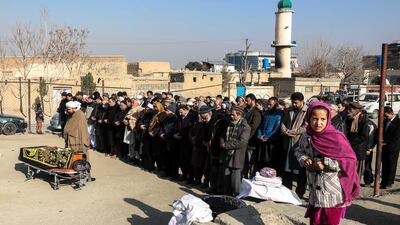
  • People attend the funeral ceremony of an Afghan female judge in Kabul, Afghanistan. EPA
    People attend the funeral ceremony of an Afghan female judge in Kabul, Afghanistan. EPA
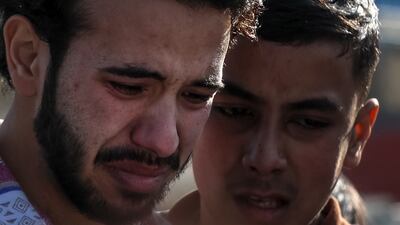
  • A relative of an Afghan female judge reacts as he attends the funeral in Kabul, Afghanistan. EPA
    A relative of an Afghan female judge reacts as he attends the funeral in Kabul, Afghanistan. EPA
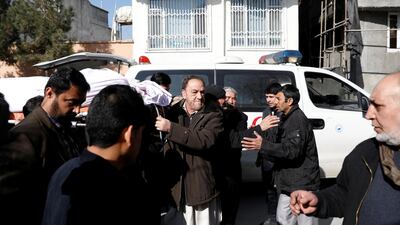
  • Relatives carry the body of one of the female judges shot dead by unknown gunmen in Kabul, Afghanistan. Reuters
    Relatives carry the body of one of the female judges shot dead by unknown gunmen in Kabul, Afghanistan. Reuters
  • Relatives carry the body of one of the female judges shot dead by unknown gunmen in Kabul, Afghanistan. Reuters
    Relatives carry the body of one of the female judges shot dead by unknown gunmen in Kabul, Afghanistan. Reuters
  • Children watch as the body of one of the female judges shot dead by unknown gunmen is carried by her relatives in Kabul, Afghanistan. Reuters
    Children watch as the body of one of the female judges shot dead by unknown gunmen is carried by her relatives in Kabul, Afghanistan. Reuters
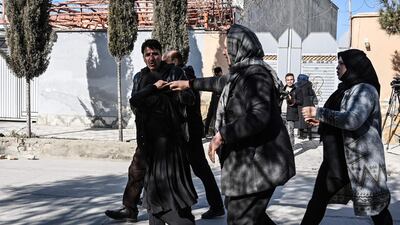
  • Relatives of the victims arrive at the site following gunmen shot dead two Afghan women judges working for the Supreme Court, in Kabul. AFP
    Relatives of the victims arrive at the site following gunmen shot dead two Afghan women judges working for the Supreme Court, in Kabul. AFP

"They were killed in explosions or shot. These were my colleagues and friends from university, from the ministry and the ICT sector where I worked.

"I have heard the footsteps of my would-be killers when they missed me by moments," he said, recalling memories of taking cover during an attack on his building.

“It has not been easy living in the shadow of my own death. And this is why I considered becoming an Afghan scholar in exile.”

Mohammad isn't alone in his decision. Many Afghans in academia, media, civil society and those working with the government have received threats and warnings of impending attacks.

Lists compiled by security sources have been distributed  among academic and civil society circles, listing prominent and vocal Afghans as potential targets, and urging them to take precautions.

Mr Yasini, however, says his mother, who had worked as a judge for decades and also as a doctor , had never received any threats.

“My mother always said that since she’s never hurt or harmed anyone, why would anyone want to harm her?

"She did not have fears and we never thought anything like this would happen to her. It was so unexpected and unbelievable," he said.

Mr Yasini speculates that his mother's strong personality may have made her a target of groups like the Taliban, which has a history of suppressing vocal women.

"She was a deeply profound person and very passionate about education. That was so unique for a woman in Afghanistan, and I believe that is why she was targeted, for being different," Mr Yasini said.

"My mother left a career in law to become a medical doctor and served in remote provinces for nearly 10 years, before coming back to Kabul to resume her position as a judge in the Supreme Court in 2010.

"In her free time, she would write books to help the masses understand the law of the land. Her books were so enjoyable.”

After one too many close calls, Mohammad decided that Afghanistan was no longer a safe place for a vocal academic calling for change.

“It is not easy for a well-established technocrat to leave everything behind and seek asylum.

“After two decades, once again, I am without an identity. I have lost everything. My family and I are homeless, seeking security,” he said.

"I very much hope that the situation in Afghanistan improves and we are allowed to live in peace, with our values and according to our own principles and without being threatened or mistreated," he said.

But he did not sound hopeful.

As well as the harrowing video of the distraught children, another picture from the same attack did the rounds on social media on Sunday.

It showed a fruit vendor close to the aftermath of the attack, watching the scene in front of him with his hands in his pockets, seemingly unaffected by the carnage.

For many Afghans, it was an embodiment of how normal the daily violence has become – where it fails to provoke a response from a tired public.

“We are exhausted from reacting to violence,” one comment on the photo read.

Maestro
%3Cp%3E%3Cstrong%3EDirector%3A%20%3C%2Fstrong%3EBradley%20Cooper%3C%2Fp%3E%0A%3Cp%3E%3Cstrong%3EStarring%3A%20%3C%2Fstrong%3EBradley%20Cooper%2C%20Carey%20Mulligan%2C%20Maya%20Hawke%3C%2Fp%3E%0A%3Cp%3E%3Cstrong%3ERating%3A%3C%2Fstrong%3E%203%2F5%3C%2Fp%3E%0A

Nancy 9 (Hassa Beek)

Nancy Ajram

(In2Musica)

THE LIGHT

Director: Tom Tykwer

Starring: Tala Al Deen, Nicolette Krebitz, Lars Eidinger

Rating: 3/5

Red flags
  • Promises of high, fixed or 'guaranteed' returns.
  • Unregulated structured products or complex investments often used to bypass traditional safeguards.
  • Lack of clear information, vague language, no access to audited financials.
  • Overseas companies targeting investors in other jurisdictions - this can make legal recovery difficult.
  • Hard-selling tactics - creating urgency, offering 'exclusive' deals.

Courtesy: Carol Glynn, founder of Conscious Finance Coaching

Women%E2%80%99s%20T20%20World%20Cup%20Qualifier
%3Cp%3E%3Cstrong%3EUAE%20fixtures%3C%2Fstrong%3E%3C%2Fp%3E%0A%3Cp%3E25%20April%20%E2%80%93%20Ireland%20v%20UAE*%3Cbr%3E27%20April%20%E2%80%93%20UAE%20v%20Zimbabwe**%3Cbr%3E29%20April%20%E2%80%93%20Netherlands%20v%20UAE*%3Cbr%3E3%20May%20%E2%80%93%20UAE%20v%20Vanuatu*%3Cbr%3E5%20May%20%E2%80%93%20Semi-finals%3Cbr%3E7%20May%20%E2%80%93%20Final%3Cbr%3E%3Cstrong%3EUAE%20squad%3A%20%3C%2Fstrong%3EEsha%20Oza%20(captain)%2C%20Al%20Maseera%20Jahangir%2C%20Avanee%20Patel%2C%20Heena%20Hotchandani%2C%20Indhuja%20Nandakumar%2C%20Kavisha%20Kumari%2C%20Khushi%20Sharma%2C%20Lavanya%20Keny%2C%20Mehak%20Thakur%2C%20Rinitha%20Rajith%2C%20Samaira%20Dharnidharka%2C%20Siya%20Gokhale%2C%20Suraksha%20Kotte%2C%20Theertha%20Satish%2C%20Vaishnave%20Mahesh.%3C%2Fp%3E%0A%3Cp%3E*Zayed%20Cricket%20Stadium%3C%2Fp%3E%0A%3Cp%3E**Tolerance%20Oval%3C%2Fp%3E%0A
RESULTS

2pm: Handicap (PA) Dh40,000 (Dirt) 1,000m
Winner: AF Mozhell, Saif Al Balushi (jockey), Khalifa Al Neyadi (trainer)

2.30pm: Maiden (PA) Dh40,000 (D) 2,000m
Winner: Majdi, Szczepan Mazur, Abdallah Al Hammadi.

3pm: Handicap (PA) Dh40,000 (D) 1,700m
Winner: AF Athabeh, Tadhg O’Shea, Ernst Oertel.

3.30pm: Handicap (PA) Dh40,000 (D) 1,700m
Winner: AF Eshaar, Bernardo Pinheiro, Khalifa Al Neyadi

4pm: Gulf Cup presented by Longines Prestige (PA) Dh150,000 (D) 1,700m
Winner: Al Roba’a Al Khali, Al Moatasem Al Balushi, Younis Al Kalbani

4.30pm: Handicap (TB) Dh40,000 (D) 1,200m
Winner: Apolo Kid, Antonio Fresu, Musabah Al Muahiri

Dhadak 2

Director: Shazia Iqbal

Starring: Siddhant Chaturvedi, Triptii Dimri 

Rating: 1/5

Company%20profile
%3Cp%3E%3Cstrong%3ECompany%20name%3A%20%3C%2Fstrong%3EXare%C2%A0%3C%2Fp%3E%0A%3Cp%3E%3Cstrong%3EStarted%3A%20%3C%2Fstrong%3EJanuary%2018%2C%202021%C2%A0%3C%2Fp%3E%0A%3Cp%3E%3Cstrong%3EFounders%3A%20%3C%2Fstrong%3EPadmini%20Gupta%2C%20Milind%20Singh%2C%20Mandeep%20Singh%C2%A0%3C%2Fp%3E%0A%3Cp%3E%3Cstrong%3EBased%3A%20%3C%2Fstrong%3EDubai%C2%A0%3C%2Fp%3E%0A%3Cp%3E%3Cstrong%3ESector%3A%20%3C%2Fstrong%3EFinTech%C2%A0%3C%2Fp%3E%0A%3Cp%3E%3Cstrong%3EFunds%20Raised%3A%20%3C%2Fstrong%3E%2410%20million%C2%A0%3C%2Fp%3E%0A%3Cp%3E%3Cstrong%3ECurrent%20number%20of%20staff%3A%20%3C%2Fstrong%3E28%C2%A0%3C%2Fp%3E%0A%3Cp%3E%3Cstrong%3EInvestment%20stage%3A%20%3C%2Fstrong%3Eundisclosed%3C%2Fp%3E%0A%3Cp%3E%3Cstrong%3EInvestors%3A%20%3C%2Fstrong%3EMS%26amp%3BAD%20Ventures%2C%20Middle%20East%20Venture%20Partners%2C%20Astra%20Amco%2C%20the%20Dubai%20International%20Financial%20Centre%2C%20Fintech%20Fund%2C%20500%20Startups%2C%20Khwarizmi%20Ventures%2C%20and%20Phoenician%20Funds%3C%2Fp%3E%0A
THE BIO

Born: Mukalla, Yemen, 1979

Education: UAE University, Al Ain

Family: Married with two daughters: Asayel, 7, and Sara, 6

Favourite piece of music: Horse Dance by Naseer Shamma

Favourite book: Science and geology

Favourite place to travel to: Washington DC

Best advice you’ve ever been given: If you have a dream, you have to believe it, then you will see it.

Ten tax points to be aware of in 2026

1. Domestic VAT refund amendments: request your refund within five years

If a business does not apply for the refund on time, they lose their credit.

2. E-invoicing in the UAE

Businesses should continue preparing for the implementation of e-invoicing in the UAE, with 2026 a preparation and transition period ahead of phased mandatory adoption. 

3. More tax audits

Tax authorities are increasingly using data already available across multiple filings to identify audit risks. 

4. More beneficial VAT and excise tax penalty regime

Tax disputes are expected to become more frequent and more structured, with clearer administrative objection and appeal processes. The UAE has adopted a new penalty regime for VAT and excise disputes, which now mirrors the penalty regime for corporate tax.

5. Greater emphasis on statutory audit

There is a greater need for the accuracy of financial statements. The International Financial Reporting Standards standards need to be strictly adhered to and, as a result, the quality of the audits will need to increase.

6. Further transfer pricing enforcement

Transfer pricing enforcement, which refers to the practice of establishing prices for internal transactions between related entities, is expected to broaden in scope. The UAE will shortly open the possibility to negotiate advance pricing agreements, or essentially rulings for transfer pricing purposes. 

7. Limited time periods for audits

Recent amendments also introduce a default five-year limitation period for tax audits and assessments, subject to specific statutory exceptions. While the standard audit and assessment period is five years, this may be extended to up to 15 years in cases involving fraud or tax evasion. 

8. Pillar 2 implementation 

Many multinational groups will begin to feel the practical effect of the Domestic Minimum Top-Up Tax (DMTT), the UAE's implementation of the OECD’s global minimum tax under Pillar 2. While the rules apply for financial years starting on or after January 1, 2025, it is 2026 that marks the transition to an operational phase.

9. Reduced compliance obligations for imported goods and services

Businesses that apply the reverse-charge mechanism for VAT purposes in the UAE may benefit from reduced compliance obligations. 

10. Substance and CbC reporting focus

Tax authorities are expected to continue strengthening the enforcement of economic substance and Country-by-Country (CbC) reporting frameworks. In the UAE, these regimes are increasingly being used as risk-assessment tools, providing tax authorities with a comprehensive view of multinational groups’ global footprints and enabling them to assess whether profits are aligned with real economic activity. 

Contributed by Thomas Vanhee and Hend Rashwan, Aurifer

The specs

Engine: 2.0-litre 4cyl turbo

Power: 261hp at 5,500rpm

Torque: 405Nm at 1,750-3,500rpm

Transmission: 9-speed auto

Fuel consumption: 6.9L/100km

On sale: Now

Price: From Dh117,059

Disposing of non-recycleable masks
    Use your ‘black bag’ bin at home Do not put them in a recycling bin Take them home with you if there is no litter bin
  • No need to bag the mask

Mercer, the investment consulting arm of US services company Marsh & McLennan, expects its wealth division to at least double its assets under management (AUM) in the Middle East as wealth in the region continues to grow despite economic headwinds, a company official said.

Mercer Wealth, which globally has $160 billion in AUM, plans to boost its AUM in the region to $2-$3bn in the next 2-3 years from the present $1bn, said Yasir AbuShaban, a Dubai-based principal with Mercer Wealth.

Within the next two to three years, we are looking at reaching $2 to $3 billion as a conservative estimate and we do see an opportunity to do so,” said Mr AbuShaban.

Mercer does not directly make investments, but allocates clients’ money they have discretion to, to professional asset managers. They also provide advice to clients.

“We have buying power. We can negotiate on their (client’s) behalf with asset managers to provide them lower fees than they otherwise would have to get on their own,” he added.

Mercer Wealth’s clients include sovereign wealth funds, family offices, and insurance companies among others.

From its office in Dubai, Mercer also looks after Africa, India and Turkey, where they also see opportunity for growth.

Wealth creation in Middle East and Africa (MEA) grew 8.5 per cent to $8.1 trillion last year from $7.5tn in 2015, higher than last year’s global average of 6 per cent and the second-highest growth in a region after Asia-Pacific which grew 9.9 per cent, according to consultancy Boston Consulting Group (BCG). In the region, where wealth grew just 1.9 per cent in 2015 compared with 2014, a pickup in oil prices has helped in wealth generation.

BCG is forecasting MEA wealth will rise to $12tn by 2021, growing at an annual average of 8 per cent.

Drivers of wealth generation in the region will be split evenly between new wealth creation and growth of performance of existing assets, according to BCG.

Another general trend in the region is clients’ looking for a comprehensive approach to investing, according to Mr AbuShaban.

“Institutional investors or some of the families are seeing a slowdown in the available capital they have to invest and in that sense they are looking at optimizing the way they manage their portfolios and making sure they are not investing haphazardly and different parts of their investment are working together,” said Mr AbuShaban.

Some clients also have a higher appetite for risk, given the low interest-rate environment that does not provide enough yield for some institutional investors. These clients are keen to invest in illiquid assets, such as private equity and infrastructure.

“What we have seen is a desire for higher returns in what has been a low-return environment specifically in various fixed income or bonds,” he said.

“In this environment, we have seen a de facto increase in the risk that clients are taking in things like illiquid investments, private equity investments, infrastructure and private debt, those kind of investments were higher illiquidity results in incrementally higher returns.”

The Abu Dhabi Investment Authority, one of the largest sovereign wealth funds, said in its 2016 report that has gradually increased its exposure in direct private equity and private credit transactions, mainly in Asian markets and especially in China and India. The authority’s private equity department focused on structured equities owing to “their defensive characteristics.”

RIVER%20SPIRIT
%3Cp%3E%3Cstrong%3EAuthor%3A%20%3C%2Fstrong%3ELeila%20Aboulela%C2%A0%3C%2Fp%3E%0A%3Cp%3E%3Cstrong%3EPublisher%3A%3C%2Fstrong%3E%20Saqi%20Books%3C%2Fp%3E%0A%3Cp%3E%3Cstrong%3EPages%3A%3C%2Fstrong%3E%20320%3C%2Fp%3E%0A%3Cp%3E%3Cstrong%3EAvailable%3A%3C%2Fstrong%3E%20Now%3C%2Fp%3E%0A
What are NFTs?

Are non-fungible tokens a currency, asset, or a licensing instrument? Arnab Das, global market strategist EMEA at Invesco, says they are mix of all of three.

You can buy, hold and use NFTs just like US dollars and Bitcoins. “They can appreciate in value and even produce cash flows.”

However, while money is fungible, NFTs are not. “One Bitcoin, dollar, euro or dirham is largely indistinguishable from the next. Nothing ties a dollar bill to a particular owner, for example. Nor does it tie you to to any goods, services or assets you bought with that currency. In contrast, NFTs confer specific ownership,” Mr Das says.

This makes NFTs closer to a piece of intellectual property such as a work of art or licence, as you can claim royalties or profit by exchanging it at a higher value later, Mr Das says. “They could provide a sustainable income stream.”

This income will depend on future demand and use, which makes NFTs difficult to value. “However, there is a credible use case for many forms of intellectual property, notably art, songs, videos,” Mr Das says.

Benefits of first-time home buyers' scheme
  • Priority access to new homes from participating developers
  • Discounts on sales price of off-plan units
  • Flexible payment plans from developers
  • Mortgages with better interest rates, faster approval times and reduced fees
  • DLD registration fee can be paid through banks or credit cards at zero interest rates
The biog

Name: Abeer Al Shahi

Emirate: Sharjah – Khor Fakkan

Education: Master’s degree in special education, preparing for a PhD in philosophy.

Favourite activities: Bungee jumping

Favourite quote: “My people and I will not settle for anything less than first place” – Sheikh Mohammed bin Rashid.

Kanguva
Director: Siva
Stars: Suriya, Bobby Deol, Disha Patani, Yogi Babu, Redin Kingsley
Rating: 2/5
 
Diriyah%20project%20at%20a%20glance
%3Cp%3E-%20Diriyah%E2%80%99s%201.9km%20King%20Salman%20Boulevard%2C%20a%20Parisian%20Champs-Elysees-inspired%20avenue%2C%20is%20scheduled%20for%20completion%20in%202028%0D%3Cbr%3E-%20The%20Royal%20Diriyah%20Opera%20House%20is%20expected%20to%20be%20completed%20in%20four%20years%0D%3Cbr%3E-%20Diriyah%E2%80%99s%20first%20of%2042%20hotels%2C%20the%20Bab%20Samhan%20hotel%2C%20will%20open%20in%20the%20first%20quarter%20of%202024%0D%3Cbr%3E-%20On%20completion%20in%202030%2C%20the%20Diriyah%20project%20is%20forecast%20to%20accommodate%20more%20than%20100%2C000%20people%0D%3Cbr%3E-%20The%20%2463.2%20billion%20Diriyah%20project%20will%20contribute%20%247.2%20billion%20to%20the%20kingdom%E2%80%99s%20GDP%0D%3Cbr%3E-%20It%20will%20create%20more%20than%20178%2C000%20jobs%20and%20aims%20to%20attract%20more%20than%2050%20million%20visits%20a%20year%0D%3Cbr%3E-%20About%202%2C000%20people%20work%20for%20the%20Diriyah%20Company%2C%20with%20more%20than%2086%20per%20cent%20being%20Saudi%20citizens%0D%3C%2Fp%3E%0A
The rules of the road keeping cyclists safe

Cyclists must wear a helmet, arm and knee pads

Have a white front-light and a back red-light on their bike

They must place a number plate with reflective light to the back of the bike to alert road-users

Avoid carrying weights that could cause the bike to lose balance

They must cycle on designated lanes and areas and ride safe on pavements to avoid bumping into pedestrians

The specs: 2019 Subaru Forester

Price, base: Dh105,900 (Premium); Dh115,900 (Sport)

Engine: 2.5-litre four-cylinder

Transmission: Continuously variable transmission

Power: 182hp @ 5,800rpm

Torque: 239Nm @ 4,400rpm

Fuel economy, combined: 8.1L / 100km (estimated)

The specs
Engine: 3.0-litre twin-turbo flat-six

Power: 480hp at 6,500rpm

Torque: 570Nm from 2,300-5,000rpm

Transmission: 8-speed dual-clutch auto

Fuel consumption: 10.4L/100km

Price: from Dh547,600

On sale: now