
As donor nations and allies gathered in Geneva to decide the future of aid to Afghanistan, the Afghan government finds itself under immense pressure to compromise in ongoing negotiations with the Taliban to ensure continued US support.
On Monday, Afghan President Ashraf Ghani appealed to the two-day Afghanistan Conference 2020, saying: "Any precipitous reduction in grant support will lead to major setbacks in public services, economic activity, and living standards", which could make peace "difficult to sustain", even after a deal with the Taliban.
The Afghan government is in a US-brokered and supported negotiation with the insurgent group in the hope of ending years of conflict. Sources in the Afghan government told The National that there is "strong pressure" from the US government to rush the negotiations with the Taliban before President Donald Trump leaves office in January.
"The US government doesn't want to leave before having some form of a deal that could reflect back on the Trump administration," said an Afghan official, who revealed that the pressure is nothing new and has been mounting for months, since the US signed a deal with the Taliban in February 2020.
“If you see the US-Taliban deal, it was also finalised under a lot of pressure, wanting to have something before the elections. The Taliban exploited this need for urgency and the Afghan government was pressured into releasing Taliban prisoners ... when the US threatened to cut aid to Afghanistan,” he said.
Meanwhile, with US troops withdrawing as part of their deal with the Taliban, there is a concern that other international stakeholders might follow suit, drastically cutting the aid needed to support the Afghan forces and the government.
-
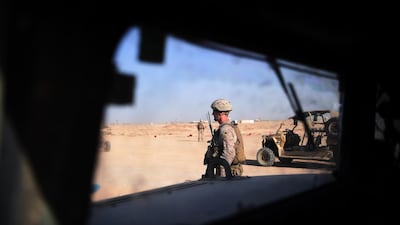
US Marines keep watch as unseen Afghan National Army soldiers participate in an IED (improvised explosive device) training exercise at the Shorab Military Camp in 2017. AFP -
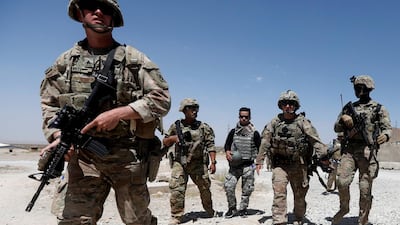
US troops patrol at an Afghan army Base in Logar province on August 7, 2018. Reuters -
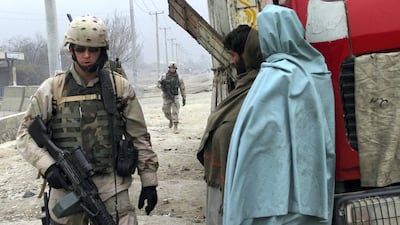
US soldiers patrol a street in central Kabul December 11, 2004. Reuters -
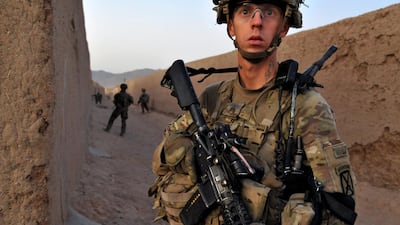
US troops under Afghanistan's International Security Assistance Force, and Afghan National Army soldiers conduct a joint security patrol in the centre of Kandalay village. AFP -
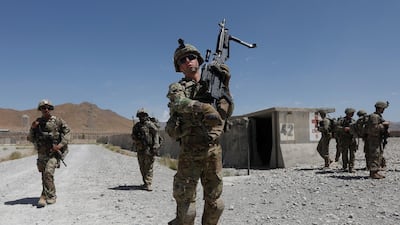
US troops patrol at an Afghan National Army (ANA) base in Logar province, Afghanistan in 2018. Reuters -
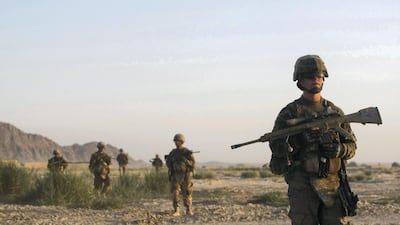
US Army soldiers patrol in the village of Chariagen in the Panjwai district of Kandahar province southern Afghanistan in 2011. Reuters -
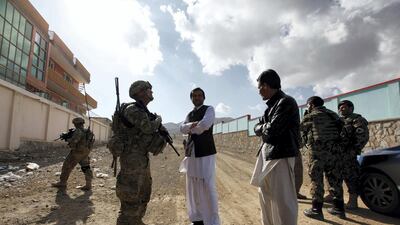
Afghan residents chat with US. Army Lieutenant Steven Gibbs as he patrols with his platoon in Pul-e Alam, a town in Logar province, eastern Afghanistan in 2011. Reuters -
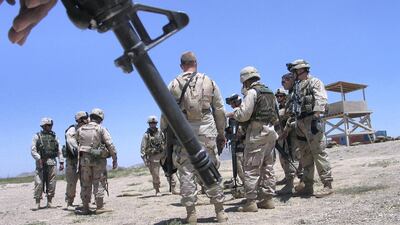
US soldiers gather during an exercise at the Kandahar airbase in Afghanistan in 2005. Reuters -
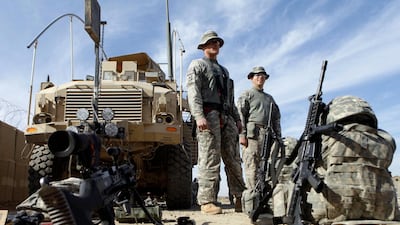
U.S. Army soldiers with 1st Brigade, 1st Cavalry Division stand near their armored vehicles before they start their journey home at Contingency Operating Site Kalsu, south of Baghdad, Iraq. AP -

A handout photo made available by the US Marine Corps shows US Marines inside the perimeter of Al Asad Air Base in Iraq. EPA -
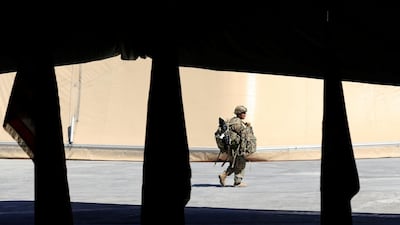
A US soldier is seen during a handover ceremony of Taji military base from US-led coalition troops to Iraqi security forces, in the base north of Baghdad, Iraq August 23, 2020. Reuters -

US soldiers have been in Iraq for nearly two decades. AFP -
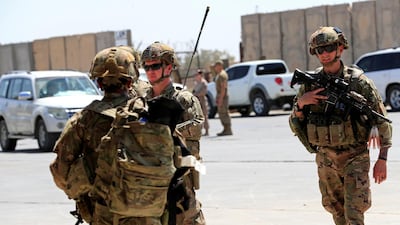
US soldiers are seen during a handover ceremony of Taji military base from US-led coalition troops to Iraqi security forces, in the base north of Baghdad, Iraq on August 23, 2020. Reuters


A document circulated in the Afghan media last week showed a list of conditions set by the international donors for continued aid to Afghanistan. These included measurable actions against systemic corruption, electoral policies, improving social indexes, and gender equality –- particularly in security forces, among others. According to local broadcaster ToloNews, these conditions were shared not only with the Afghan government but also the Taliban.
“International assistance has always been conditional, so any conditions set in Geneva will be to ensure peace negotiations move forward to a positive conclusion,” said Dr Mohammad Najeeb Aziz, former economist with the Afghan government.
In his view, the present US administration is in a rush and as a result they are increasing pressure on the Afghan government to do everything in their capacity to accommodate the demands of the Taliban.
However, Afghan politician Habiba Sarabi, who is also a member of the Afghan negotiating team, and participated in the Afghanistan Conference, dismissed these claims and said there was no outward pressure to make any deals or commitments.
"I don't think there is pressure, but there is definitely a need for more consultation," she told The National, listing important issues that need to be addressed, including "the future and structure of the republic" and the "identity of the republic", as well as where women fit in all this.
Any decisions will be made on behalf of the people they represent and not under pressure, she said. “The peace process cannot be very easy and needs a lot of consultation and representation from inside the country, which is a gradual process and cannot be rushed,” she said.
Dr Azizi believes that the Afghan government may not be the only one feeling the heat of the US’s urgency. “It is possible that the US is also pressuring the Taliban to accommodate the demands of the Afghan government, and the Taliban, too, would prefer to reach some agreement before the end of the Trump presidency, because they are uncertain whether Joe Biden will give them as much leverage as the current administration,” he said.
But the urgency to move the talks along and reach an agreement has already affected civilians in Afghanistan, the Afghan official said. “Already the Taliban are emboldened by the US approach and they are under the impression they won. The international partners have to take note of the increasing violence that is a direct result of this rush to finalise a deal. Afghans civilian are dying and paying the price for poor policies,” he said.

