


The European Union has pledged €1.2 billion ($1.42bn) in support to Afghanistan over the next four years, but its chief diplomat said that a return to the Taliban’s hardline rule would damage any future financial and political engagement.
An Afghan donor conference is under way in Geneva, but there are fears that aid pledges may be lower than when the last event was held four years ago – which raised $15.2 billion – as governments struggle financially during the Covid-19 pandemic.
Afghan President Ashraf Ghani has conceded that the money given may be less in 2020 but said funds were critical to future growth.
"Despite our suffering, I want to be very clear that our commitment to negotiations with the Taliban remains firm ... we must bring an end to the violence that is haunting our lives and robbing our children of the joys of childhood," he told the online conference.
-
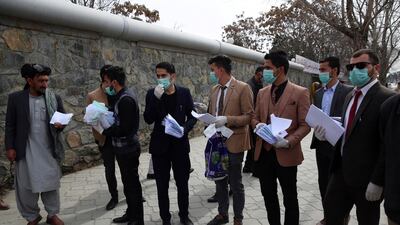
Civil society activists wearing face masks prepare for a campaign to raise awareness of the new coronavirus in Kabul, Afghanistan. AP Photo -

Afghans show their national IDs as they wait to cross into Afghanistan after Pakistani authorities closed the border at Chaman, Pakistan. EPA -
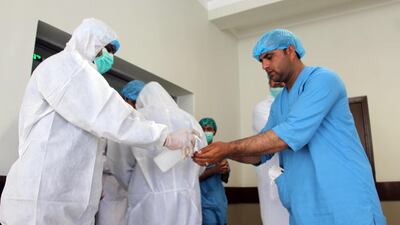
Hospital staff wear hazmet suits inside the coronavirus center in Kandahar, Afghanistan. EPA -
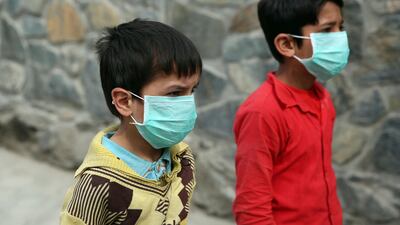
Afghan boys wearing face masks walk at a down town street in Kabul, Afghanistan. AP Photo -
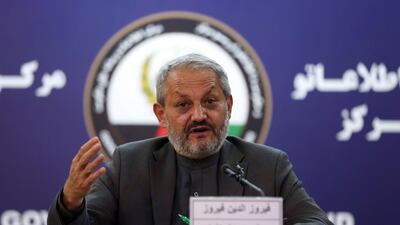
Afghanistan Health Minister Ferozuddin Feroz gives a news conference in Kabul, Afghanistan. AP Photo -

Men walk past Afghan's trucks parked along a road near the closed Pakistan-Afghanistan border amid concerns over the spread of the COVID-19 novel coronavirus, in Torkham some 54 kms from Peshahwar. AFP -
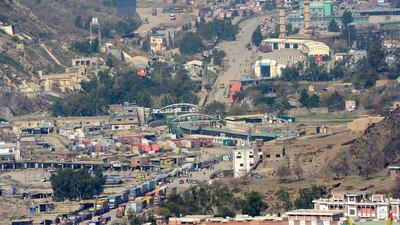
Afhan trucks line up as they wait to cross the Pakistan-Afghanistan closed amid concerns over the spread of the COVID-19 novel coronavirus, in Torkham some 54 kms fron Peshawar. AFPMAJEED -
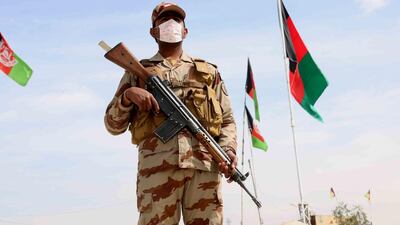
A Pakistani soldier stands guard at Pak-Afghan border after it was closed due to coronavirus, in Chaman, Pakistan. EPA -
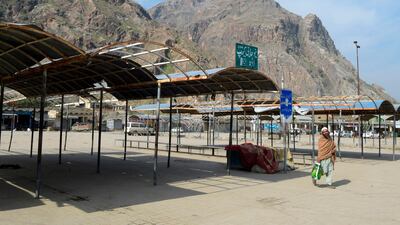
A man walks past at an empty bus terminal near the closed Pakistan-Afghanistan border amid concerns over the spread of the COVID-19 novel coronavirus, in Torkham some 54 kms from Peshahwar. AFP


Peace talks are ongoing with the Taliban militant group, which governed much of the country from 1996 to 2001 as the strict Islamic Emirate of Afghanistan. A US-led war that ousted them has destroyed the impoverished country.
Jutta Urpilainen, who leads international partnerships at the European Commission, said the financial commitment was “conditional on the continued commitment to democracy, the rule of law, human rights, and gender equality”.
"In 2016, the EU showed its strong commitment to Afghanistan by pledging €1.2bn over a four-year period," she said.
"It is my pleasure to announce today that we are ready to keep this level of support for the next four years."
In areas under its control, the Taliban carries out numerous human rights abuses and women are routinely oppressed and withdrawn from public life.
The EU’s chief diplomat, Josep Borrell, said the peace process required greater commitment from the Taliban as he called for the violence to stop “not tomorrow, but right now”.
“A genuine partner for peace should not only spare international citizens from attacks, but also stop attacking and killing its own compatriots,” he told the conference.
“The outcome of the peace process should be owned by the population at large. To achieve the necessary legitimacy, the process must be inclusive.
“The voices of women, youth, minorities and victims of war must be heard and their rightful demands addressed. Only a broad-based, national consensus on the foundations of the future Afghanistan will lead to lasting peace,” Mr Borrell said.
Afghan authorities and the Taliban have held talks in Qatar since September, but no progress has been made and violence persists despite an agreement over the withdrawal of US troops.
-
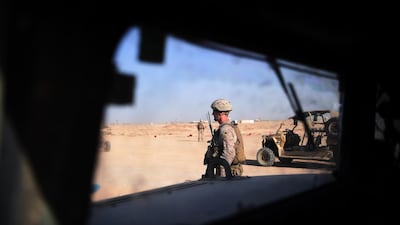
US Marines keep watch as unseen Afghan National Army soldiers participate in an IED (improvised explosive device) training exercise at the Shorab Military Camp in 2017. AFP -
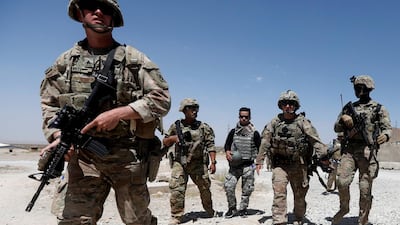
US troops patrol at an Afghan army Base in Logar province on August 7, 2018. Reuters -
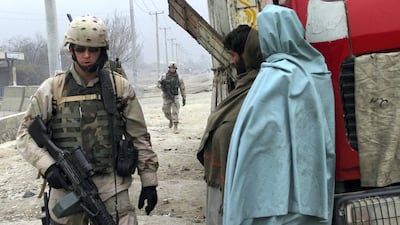
US soldiers patrol a street in central Kabul December 11, 2004. Reuters -
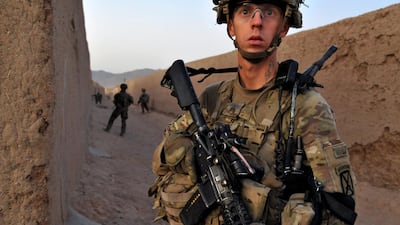
US troops under Afghanistan's International Security Assistance Force, and Afghan National Army soldiers conduct a joint security patrol in the centre of Kandalay village. AFP -
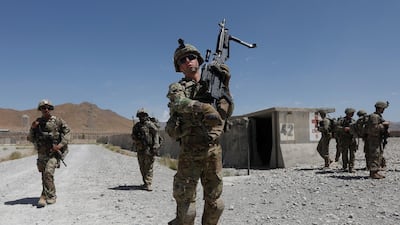
US troops patrol at an Afghan National Army (ANA) base in Logar province, Afghanistan in 2018. Reuters -
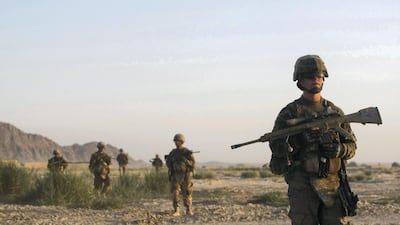
US Army soldiers patrol in the village of Chariagen in the Panjwai district of Kandahar province southern Afghanistan in 2011. Reuters -
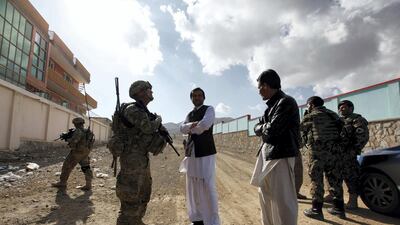
Afghan residents chat with US. Army Lieutenant Steven Gibbs as he patrols with his platoon in Pul-e Alam, a town in Logar province, eastern Afghanistan in 2011. Reuters -
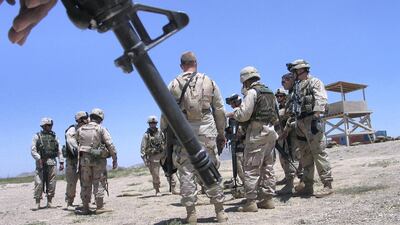
US soldiers gather during an exercise at the Kandahar airbase in Afghanistan in 2005. Reuters -
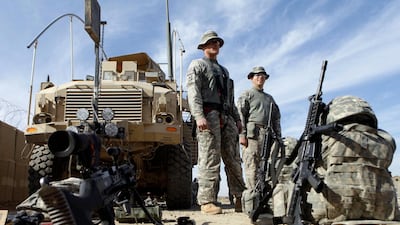
U.S. Army soldiers with 1st Brigade, 1st Cavalry Division stand near their armored vehicles before they start their journey home at Contingency Operating Site Kalsu, south of Baghdad, Iraq. AP -

A handout photo made available by the US Marine Corps shows US Marines inside the perimeter of Al Asad Air Base in Iraq. EPA -
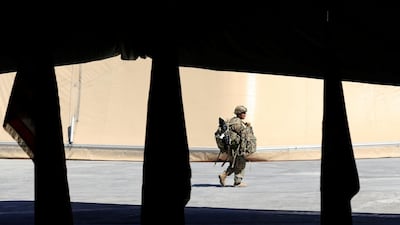
A US soldier is seen during a handover ceremony of Taji military base from US-led coalition troops to Iraqi security forces, in the base north of Baghdad, Iraq August 23, 2020. Reuters -

US soldiers have been in Iraq for nearly two decades. AFP -
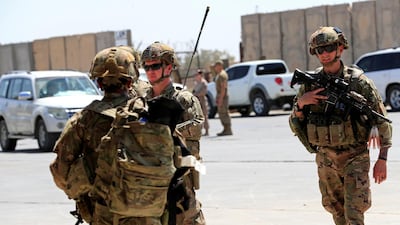
US soldiers are seen during a handover ceremony of Taji military base from US-led coalition troops to Iraqi security forces, in the base north of Baghdad, Iraq on August 23, 2020. Reuters


“I would like to reaffirm today the European Union’s commitment to continue to support the Afghan people, both politically and financially. We want to help to build a sovereign, unified and democratic Afghanistan on a path towards prosperity and self-reliance,” Mr Borrell said.
“Afghanistan’s future trajectory must preserve the democratic and human rights gains since 2001, most notably as regards women’s and children’s rights. As the United Nations Security Council said, any attempt to restore an Islamic Emirate would have an impact on our political and financial engagement,” he said.
Deborah Lyons, head of the UN's mission to Afghanistan, said Afghans needed ongoing political, financial and technical support from the international community.
“Now is not the time to walk away," she said.
The UK, which also sent troops to Afghanistan in 2001 and has given significant funds to the country, pledged £155m ($206.2m). It said continued funding would be closely linked to the peace process, progress on reducing poverty and protecting human rights.

