

Afghan students have spoken of their dismay after the Taliban prevented them from boarding a flight to the UAE to attend university.
Women who were offered full scholarships in Dubai said that their chance at education had once again been denied by the hardline regime.
Sixty-three Afghans were turned away from Kabul airport by Taliban officials on Wednesday.
“We went to the check-in counters where we were stopped by the officials. When they saw our visa they said they couldn’t let us get on the flight,” Sara, who was hoping to pursue her master’s programme in Dubai, told The National. She asked that her surname not be used.
Afghan student
“We were going to Dubai to continue our education, which is no longer possible in Afghanistan. But we were prevented from leaving by the authorities.”
Sara had just finished her bachelor's degree and was planning to start a master's when the Taliban banned women from attending university last year.
“This opportunity brought hope into my life,” she said.
“Many Afghan girls have been depressed since the ban.”
The group were due to study at University of Dubai in an arrangement sponsored by Emirati businessman Khalaf Al Habtoor.
Mr Al Habtoor, founder of the Al Habtoor Group conglomerate, pledged in December to help bring at least 100 female Afghan students to Dubai.
He described the situation as a “significant tragedy against humanity, against education, equality and justice”.
“I am unable to express the disappointment I feel now … the authorities in Afghanistan, without justification, prevented their departure, unjustly curtailing their freedom,” Mr Al Habtoor wrote on X, formerly Twitter.
The girls had been issued student visas by the UAE Ministry of Foreign Affairs, both Sara and Mr Al Habtoor confirmed.
_________________________________________
Afghan women in their own words: photo project
-
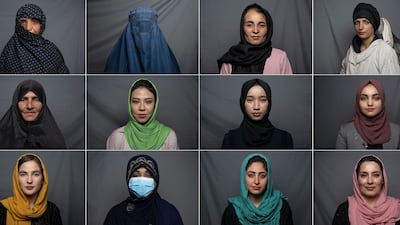
This combination of photos shows women posing for portraits in different cities in Afghanistan. Since their takeover two years ago, the Taliban have squeezed Afghan women out of public life, imposing suffocating restrictions on where they can work, how they can travel and what they can wear. All photos by AFP -
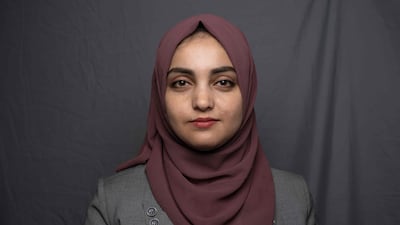
TOLOnews TV anchor Tahmina Usmani, 23, is one of a handful of female journalists who have been able to continue working in the sector. 'I was able to join TOLOnews and be the voice for women in Afghanistan, which makes me feel great,' she says. -
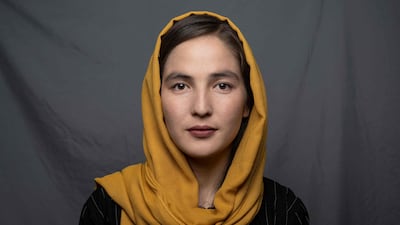
TV journalist and university student Farkhunda Muhibi, 21. Muhibi is one of a small number of female journalists who have been able to continue working under the Taliban regime. -
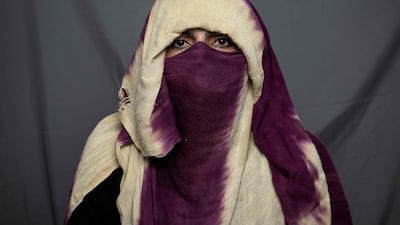
Baker Shapari, 40, poses for a portrait in Kandahar. 'During these hard times, it is my job that has made me happy,' she says. 'My husband is jobless, and staying at home. I am able to find food for my children.' -
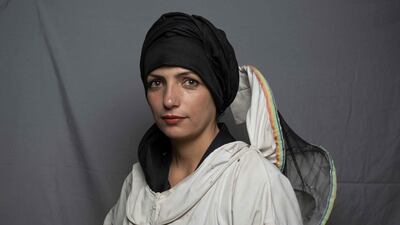
Businesswoman and beekeeper Ghuncha Gul Karimi, 35, poses for a portrait in Herat. Karimi expanded her beekeeping business to produce honey for sale after her husband left the country. 'I've taken up two extra jobs and bought a motorcycle to drive myself from the honey farm and back,' she says. 'I am determined to become the queen of honey bees.' -
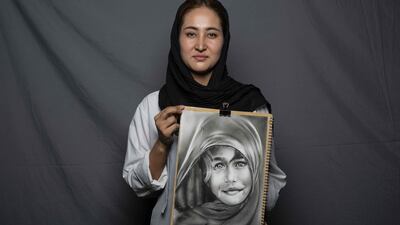
Artist and art teacher Manezha Sultani, 24, poses for a portrait in Herat. 'Before the Taliban took over, I had no fear - I used to attend exhibitions, go to events and see everything I desired. But when the takeover happened, I was afraid of how it would impact my job and my rights,' she says. 'I have not had any good experiences since the Taliban took over.' -
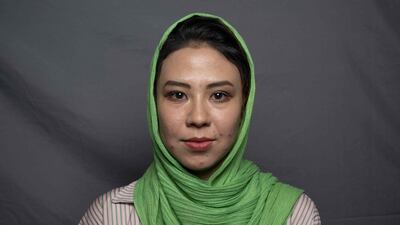
Mathematics and robotics teacher Sumaya Sultani, 27, poses for a portrait in Herat. 'Before the collapse, I participated in international technology events, and I used to work late nights on various projects and coach the Afghan girls’ robotics team. But after the Taliban takeover, everything we worked for and achieved turned to dust.' -
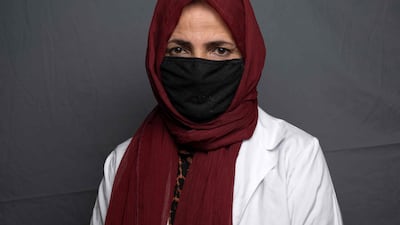
Doctor and mental health counsellor Mursal, 35, poses for a portrait at an undisclosed location in Afghanistan. Since their takeover a year ago, the Taliban have squeezed Afghan women out of public life, imposing suffocating restrictions on where they can work, how they can travel and what they can wear. -
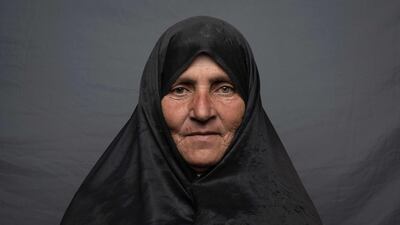
Silk weaver Maryam Osmani, 50, poses for a portrait in Herat. -
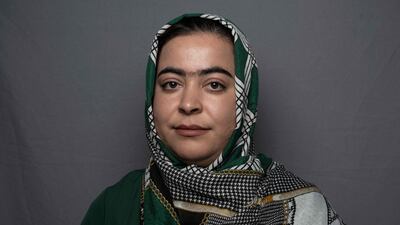
Afghanistan Women’s Chamber of Commerce and Industry director Nargis Hashimi, 27, poses for a portrait in Herat. -
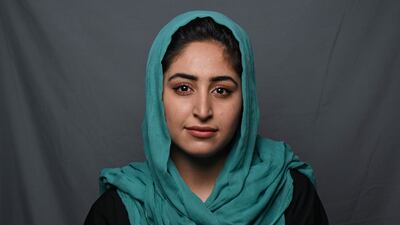
Radio journalist and artist Rozina Sherzad, 19, poses for a portrait in Kandahar. -
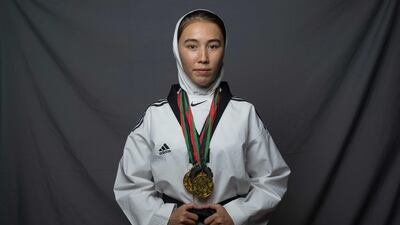
Taekwondo athlete Zarghunna Noori, 23, poses for a portrait in Herat. -
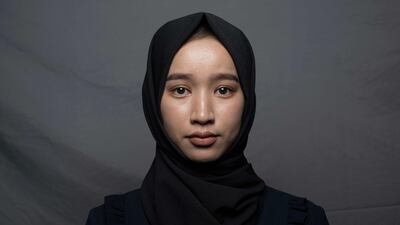
Student Mahtab Jamshidi, 17, poses for a portrait in Herat. -
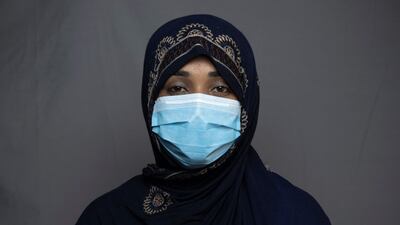
Seamstress Rozia Khpalwak, 23, poses for a portrait in Kandahar. -
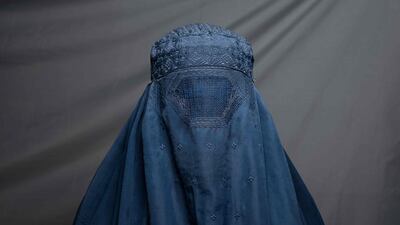
Shampoo factory worker Robina, 40, poses for a portrait in Kandahar. There is hardly a woman in the country who has not lost a male relative in successive wars, while many of their husbands, fathers, sons and brothers have also lost their jobs or seen their income shattered as a result of a deepening economic crisis. -
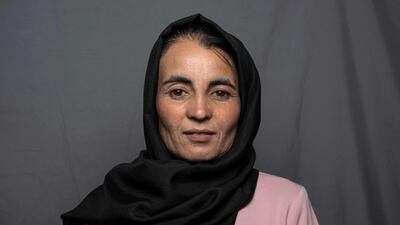
The deputy director of the women’s bazaar in Herat, Freshta Ishaqzai, 32. -
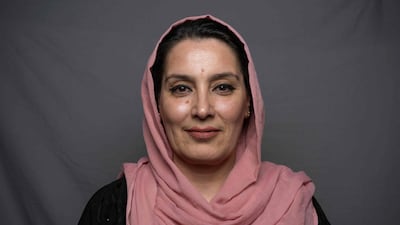
Shaima Wafa, 40, a cultural affairs reporter for an Iranian media outlet, poses for a portrait in Herat. -
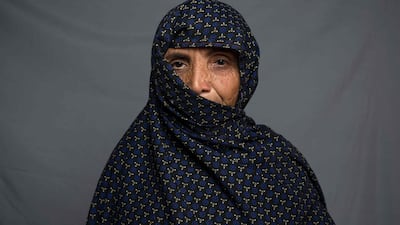
Knitter and garment maker Gul Guti, 55, poses for a portrait in Kandahar.


_________________________________________
“The Taliban government refused to allow the girls who were sponsored by me to come to study here. They refused to let them board the plane,” he said in a video attached to the post.
“We organised everything for them here, their accommodation, transportation, security, university.”
Since taking over Afghanistan in 2021, the Taliban has imposed restrictions on women’s education and employment, including closing high schools and universities for women.
Women are prevented from seeking employment across various sectors and their freedom of movement in public spaces has also been curtailed.
As a result of the mounting restrictions to their higher education, many are seeking opportunities abroad. Although limited, they allow many Afghan women to continue learning and skill development.
Sara was one student selected by the Habtoor Group to continue at the University of Dubai.
“I don’t come from a very strong economic background, so I cannot afford to enrol for education abroad, or get visas to other countries. But this opportunity brought hope into my life,” said Sara, who was hoping to pursue her master’s programme in Dubai.
“We were sad and scared at the same time,” she said. “We felt so hopeless that after everything we struggled for we can’t reach this opportunity to continue our education.”
Sara urged the authorities to allow women to study, in Afghanistan and abroad.
“This ban will have an awful impact on our society. We will not have women doctors, or any female professionals who are needed to run a nation,” she said. “Learning is not a sin,” she added.
A second student, in a voice note shared by Mr Al Habtoor, said: “They saw the student visa and the ticket, but they did not allow us.”
“I do not know what to do. Please help us. We are so concerned,” she added.
Mr Al Habtoor added: “They have the right to study, the right to do whatever the men can do, and there is no exception to that,” he said in his video, urging the Taliban and the international community to intervene to help the women study.
“This stands as a profound tragedy, a blow against the principles of humanity, education, equality and justice.”

