

The deadly Marburg virus has reached Tanzania and Equatorial Guinea, with a total of 17 cases confirmed in the countries.
Marburg virus — which causes internal bleeding and kidney failure ― can kill about nine in 10 of those infected, based on previous outbreaks.
This outbreak is being closely monitored by the World Health Organisation, which is helping authorities track the 161 suspected contacts of the eight patients in Tanzania, five of whom have died.
Nine people are confirmed to have contracted the virus in Equatorial Guinea, where the WHO has deployed assessment teams.
The US Centre for Disease Control describes the virus as “extremely rare”, but any detection of Marburg, first identified in Uganda in 1967, is of great concern because of the high mortality rate.
“Our pathogen genomics team will sequence samples from both places … and see if there is a relationship between the current two outbreaks,” Ahmed Ogwell Ouma, acting director of the African Union's Africa Centres for Disease Control and Prevention, said on Thursday.
Results should be known within a week, he said.
The WHO said the new cases in Equatorial Guinea were found in the provinces of Kie Ntem, Litoral and Centro Sur, with borders with Cameroon and Gabon.
“The areas reporting cases are about 150km apart, suggesting wider transmission of the virus,” the UN agency said.
-

A medic works in an isolation unit during an Ebola scare in Guinea, West Africa. AFP -

The virus spreads between humans when blood or other bodily fluids from an infected person come into contact with the broken skin or mucous membranes of another person. -

It takes between two days and three weeks for the disease to emerge after exposure to the virus. AFP -

A health worker in 2005 outside a hospital in Uige, Angola, where victims of the Marburg virus were treated. -
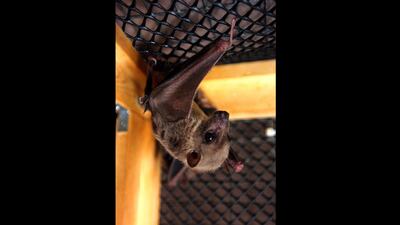
The Marburg virus originates in fruit bats. AP -

Symptoms include fever, headaches, muscle aches and pains, diarrhoea and vomiting. AFP -

The WHO is monitoring the emergence of the Marburg virus in Equatorial Guinea. Reuters


In an outbreak in Angola in 2005, 329 of the 374 cases proved fatal.
The virus belongs to the same family as the one that causes Ebola.
In July last year, Ghana announced its first outbreak.
A WHO risk assessment in September showed that Tanzania is at high to very high risk for infectious disease outbreaks because is shares borders with several countries, including the African Great Lakes region.
Tanzania has recently had to respond to other health emergencies — including cholera and dengue — and the systems put in place to handle these will help, said Matshidiso Moeti, WHO regional director for Africa.
While there are no vaccines or antiviral treatments approved to treat the virus, survival improves with supportive care such as rehydration with oral or intravenous fluids and treatment of specific symptoms.

