


The World Health Organisation said on Tuesday that Sir Jeremy Farrar would become its new chief scientist, as the agency prepares to cope with post-pandemic health challenges.
Sir Jeremy, who is currently head of the Wellcome Trust, courted controversy in recent years after publicly supporting the theory of a natural origin for Covid-19 while in private emails saying he believed a lab leak was also possible.
Though he publicly praised the professionalism of Chinese researchers, in private emails, Sir Jeremy said that research in Wuhan was like the “Wild West”.
He also signed a letter published in The Lancet that “strongly condemned conspiracy theories” surrounding Covid-19, and contributed to a Nature Medicine article that shut down the lab leak theory at the time.
More recently, Sir Jeremy said it is important to stay “open minded” about a lab leak although a natural origin is still the most likely scenario.
The WHO unveiled a new team in October 2021 that was given the task of investigating the origins of the pandemic after originally ruling a lab leak was “extremely unlikely”.
Covid protests in China — in pictures
-
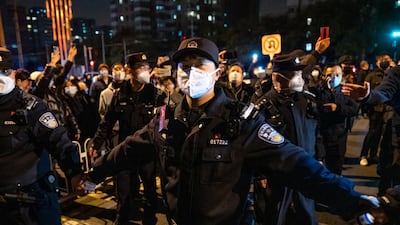
Police stand guard during a protest against Covid-19 restrictions, in China's capital Beijing. Bloomberg -
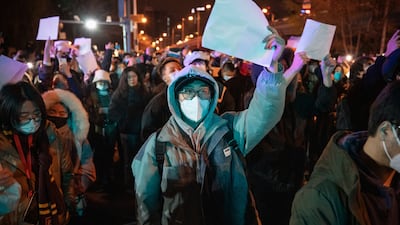
Demonstrators hold blank signs during a protest in Beijing, China. Bloomberg -
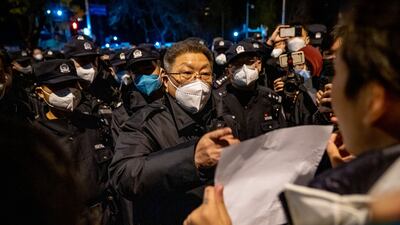
An official speaks with a demonstrator holding a blank sign, during a protest in Beijing. Bloomberg -
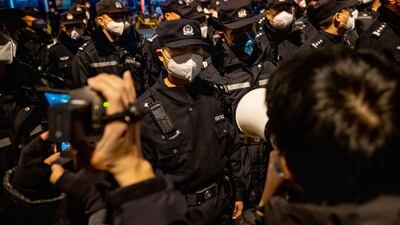
The death of at least 10 people in a fire in Urumqi, north-west China, which is under strict Covid restrictions, has led to protests nationwide. Bloomberg -
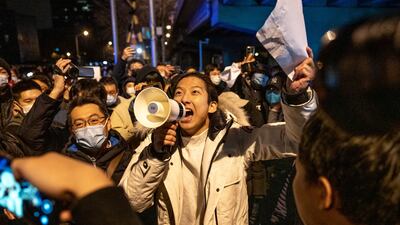
Demonstrators in Beijing. Protesters blame the deaths in Urumqi on strict Covid restrictions on leaving buildings. The authorities deny this. Bloomberg -
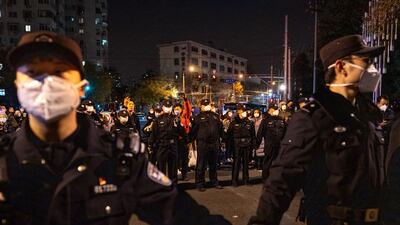
Police form a chain at Beijing protests. Demonstrations have also been reported in cities including, Shanghai, Nanjing, Chengdu, Lanzhou, Guangzhou and Wuhan – where Covid-19 was first reported. Bloomberg -
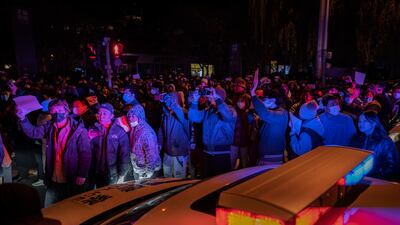
Protesters march past a police vehicle during a demonstration against China's strict zero-Covid measures, in Beijing. Getty -
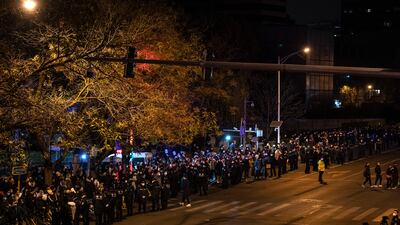
Protesters and police in Beijing. Chinese stocks fell over concerns about the impact of the demonstrations. Getty -

Demonstrators rally in Beijing. China reported more than 40,000 new cases of Covid-19 on Monday. AFP


The organisation later said it would not be looking further into the theory.
Sir Jeremy joined Wellcome in 2013 after spending 17 years as director of the clinical research unit at the Hospital for Tropical Diseases in Vietnam.
He was also a member of the UK Scientific Advisory Group for Emergencies during the pandemic.
World leaders who have had Covid-19 — in pictures
-
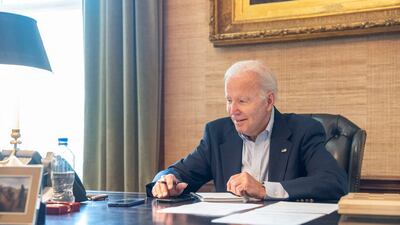
US President Joe Biden tested positive for Covid-19 in July 2022. Reuters -
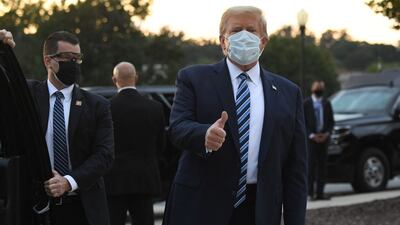
Former US president Donald Trump gives the thumbs-up after leaving the Walter Reed Medical Centre in Bethesda, Maryland, where he was treated for Covid-19 in October 2020. AFP -
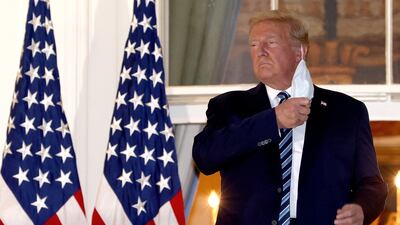
Mr Trump removes his mask after returning to the White House from hospital in October 2020. AFP -

Algerian President Abdelmadjid Tebboune spent a month in Germany in January 2021, where he had surgery after developing complications linked to Covid-19. AFP -

Britain's Queen Elizabeth II had Covid-19 in February 2022, months before her death. AFP -
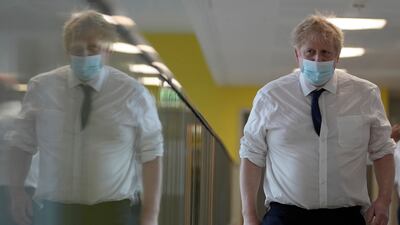
Britain's Prime Minister Boris Johnson caught Covid-19 in March 2020. AFP -
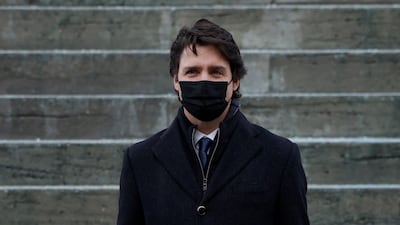
Canadian Prime Minister Justin Trudeau tested positive for Covid-19 a second time in July 2022, six months after he first contracted the virus. Reuters -
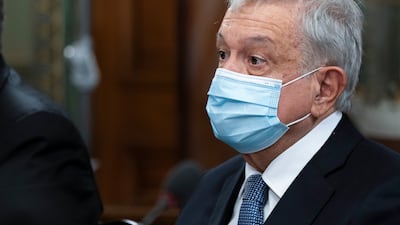
Mexican President Andres Manuel Lopez Obrador tested positive for Covid-19 in January 2022, after having first contracted the coronavirus in early 2021. AP -

Brazil's President Jair Bolsonaro tested positive for Covid-19 in July 2020. Reuters -

Departing Italian Prime Minister Mario Draghi contracted the virus that causes Covid-19 in April 2022. EPA


Sir Jeremy will join the WHO in the second quarter of 2023, replacing Soumya Swaminathan, who departed in November before a broader shake-up at the health agency.
He is the latest appointment of Director General Tedros Adhanom Ghebreyesus's second term as the leader of the 74-year-old UN health agency, the management of which some donors have described as too bloated.
“As chief scientist, Jeremy will accelerate our efforts to ensure WHO, its member states and our partners benefit from cutting-edge, life-saving science and innovations,” said Dr Tedros in a statement.
One year anniversary of UK's National Covid Memorial Wall — in pictures
-
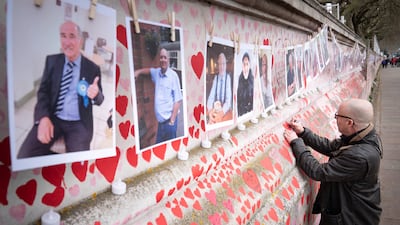
A family member pays their respects to those who lost their lives to Covid-19, as the one year anniversary of the National Covid Memorial Wall is marked in London. PA -
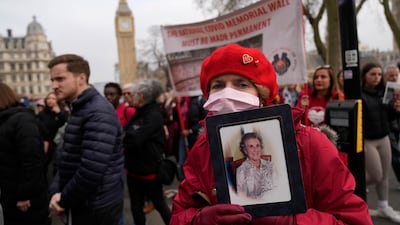
A woman holds a photograph of a family member who died as she takes part in a march from the National Covid Memorial wall to Downing Street in London. AP Photo -
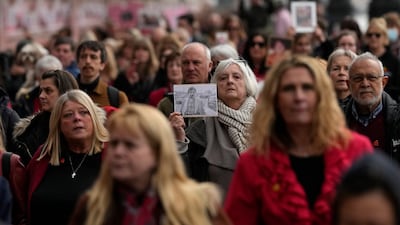
Bereaved families travelled to the wall from across the country to mark the day, with a petition to make the wall a permanent memorial. AP Photo -
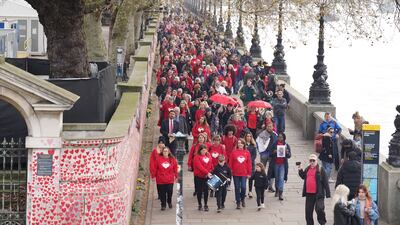
Bereaved families march alongside the wall. PA -
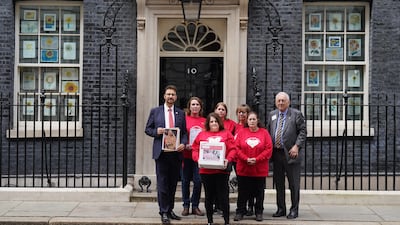
Families with MPs Sir Peter Bottomley, right, and Afzal Khan, left, deliver a petition to 10 Downing Street. PA -

Family members write a message to two sisters who died of Covid-19 on the National Covid Memorial wall. AP Photo -
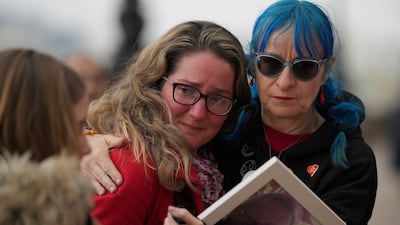
Becca Slater, centre, receives a hug as she remembers her father Anthony Elward, who died in 2020. AP Photo -

A woman writes a message in a red heart on the wall. AP Photo -
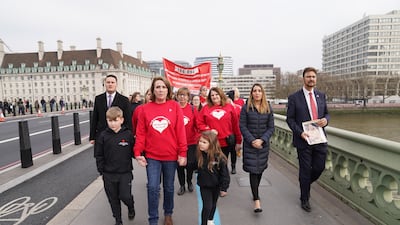
Families marching through central London. PA



