• This image taken by James Webb Space Telescope shows the rings of Neptune and a series of bright spots in the Southern Hemisphere of the planet that represent high-altitude methane-ice clouds. All photos: Nasa
    This image taken by James Webb Space Telescope shows the rings of Neptune and a series of bright spots in the Southern Hemisphere of the planet that represent high-altitude methane-ice clouds. All photos: Nasa
  • Neptune and seven of its 14 known satellites. Triton moon, the bright spot of light in the upper left, outshines the planet whose atmosphere is darkened by methane absorption wavelengths.
    Neptune and seven of its 14 known satellites. Triton moon, the bright spot of light in the upper left, outshines the planet whose atmosphere is darkened by methane absorption wavelengths.
  • James Webb telescope has captured seven of Neptune’s 14 known moons: Galatea, Naiad, Thalassa, Despina, Proteus, Larissa and Triton.
    James Webb telescope has captured seven of Neptune’s 14 known moons: Galatea, Naiad, Thalassa, Despina, Proteus, Larissa and Triton.

Neptune's rings shine bright in space telescope photos


Ramola Talwar Badam
  • English
  • Arabic

The glowing rings encircling Neptune and moons that orbit the distant planet have been captured by Nasa’s James Webb Space Telescope.

Scientists describe the stunning images as the clearest taken in 30 years of the rings around the solar system’s outermost planet.

Nasa released the images showing several bright, thin rings and Neptune’s faint dust bands never before taken by infrared camera.

These infrared waves can pass through dense gas and dust and reveal objects in the universe that cannot otherwise be seen in visible light, even by powerful telescopes.

The Webb telescope shows seven of Neptune's 14 known moons, with the large moon Triton expelling an almost-blinding radiance.

The dramatic photos shine a light on a dark region of the outer solar system.

Such a clear view has not been witnessed since Nasa’s Voyager 2, the first spacecraft to observe Neptune during a 1989 fly-past.

“It has been three decades since we last saw these faint, dusty rings and this is the first time we have seen them in infrared,” said Heidi Hammel, a planetary astronomer working with the Webb telescope.

The scientist, who has studied the solar system's outer planets, rings, and moons, tweeted that she was moved to tears when she first saw the images.

The dazzling beams of Triton overshadow the light of Neptune’s six other visible moons — Galatea, Naiad, Thalassa, Despina, Proteus and Larissa.

Discovered in 1846, Neptune is called the icy planet and is located 30 times farther from the Sun than Earth.

Both Uranus and Neptune are known as ice giants, as their interior is different in composition from the gas giants Jupiter and Saturn, which are richer in hydrogen and helium.

Neptune and Uranus are among the least explored and scientists will use the Webb to study the chemistry, weather and circulation patterns.

Scientists said a thin line of brightness circling the planet’s equator could be a visual representation of the global atmospheric circulation that powers Neptune’s winds and storms.

The atmosphere descends, warms at the equator and glows at infrared wavelengths more than the surrounding, cooler gases.

Triton outshines Neptune in the image, as it is covered in a frozen sheen of condensed nitrogen and reflects an average of 70 per cent of the sunlight that hits it.

The precision quality of the $10 billion Webb telescope draws out the detail and clarity of the rings.

The world’s most powerful telescope operates about 1.6 million kilometres from Earth.

Launched on Christmas Day last year, the telescope aims to explore the origins of the universe, probe faraway worlds around the stars, and search for life by studying the chemical composition of the atmosphere of the planets.

Nasa said the Webb was in “good health” but reported a technical issue with one of the instruments, causing the space agency to pause one of four observation modes.

A mechanism on the observatory’s infrared instrument experienced technical issues.

The space observatory programme is led by Nasa with the European Space Agency and the Canadian Space Agency as partners.

James Webb space telescopes shows glittering galaxies - in pictures

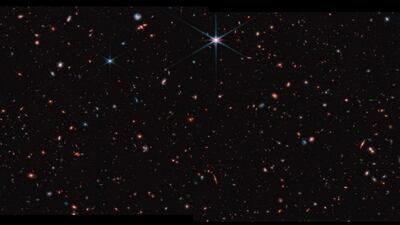
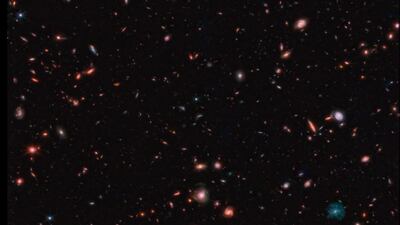
  • An enormous colour mosaic made up of images captured by the James Webb Space Telescope has been released. This image shows only a small part of the mosiac. All photos: Nasa
    An enormous colour mosaic made up of images captured by the James Webb Space Telescope has been released. This image shows only a small part of the mosiac. All photos: Nasa
  • The mosaic is made up 690 individual frames taken with the telescope’s near infrared camera – an instrument that captures radiant energy from objects invisible to the human eye.
    The mosaic is made up 690 individual frames taken with the telescope’s near infrared camera – an instrument that captures radiant energy from objects invisible to the human eye.
  • Collectively known as Epoch 1, the image is the largest one yet made using data from the world’s largest space observatory.
    Collectively known as Epoch 1, the image is the largest one yet made using data from the world’s largest space observatory.
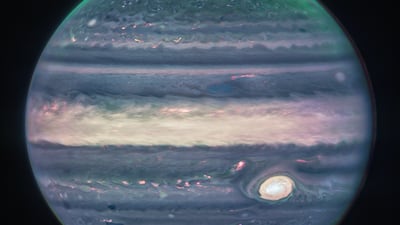
  • Jupiter as seen by the James Webb telescope.
    Jupiter as seen by the James Webb telescope.
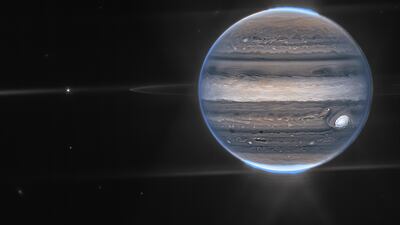
  • The James Webb telescope captures Jupiter.
    The James Webb telescope captures Jupiter.
SPEC%20SHEET%3A%20APPLE%20IPHONE%2015%20PRO%20MAX
%3Cp%3E%3Cstrong%3EDisplay%3A%3C%2Fstrong%3E%206.7%22%20Super%20Retina%20XDR%20OLED%2C%202796%20x%201290%2C%20460ppi%2C%20120Hz%2C%202000%20nits%20max%2C%20HDR%2C%20True%20Tone%2C%20P3%2C%20always-on%3C%2Fp%3E%0A%3Cp%3E%3Cstrong%3EProcessor%3A%3C%2Fstrong%3E%20A17%20Pro%2C%206-core%20CPU%2C%206-core%20GPU%2C%2016-core%20Neural%20Engine%3C%2Fp%3E%0A%3Cp%3E%3Cstrong%3EMemory%3A%3C%2Fstrong%3E%208GB%3C%2Fp%3E%0A%3Cp%3E%3Cstrong%3ECapacity%3A%3C%2Fstrong%3E%20256%2F512GB%20%2F%201TB%3C%2Fp%3E%0A%3Cp%3E%3Cstrong%3EPlatform%3A%3C%2Fstrong%3E%20iOS%2017%3C%2Fp%3E%0A%3Cp%3E%3Cstrong%3EMain%20camera%3A%3C%2Fstrong%3E%20Triple%3A%2048MP%20main%20(f%2F1.78)%20%2B%2012MP%20ultra-wide%20(f%2F2.2)%20%2B%2012MP%205x%20telephoto%20(f%2F2.8)%3B%205x%20optical%20zoom%20in%2C%202x%20optical%20zoom%20out%3B%2010x%20optical%20zoom%20range%2C%20digital%20zoom%20up%20to%2025x%3B%20Photonic%20Engine%2C%20Deep%20Fusion%2C%20Smart%20HDR%204%2C%20Portrait%20Lighting%3C%2Fp%3E%0A%3Cp%3E%3Cstrong%3EMain%20camera%20video%3A%3C%2Fstrong%3E%204K%20%40%2024%2F25%2F30%2F60fps%2C%20full-HD%20%40%2025%2F30%2F60fps%2C%20HD%20%40%2030fps%2C%20slo-mo%20%40%20120%2F240fps%2C%20ProRes%20(4K)%20%40%2060fps%3B%20night%2C%20time%20lapse%2C%20cinematic%2C%20action%20modes%3B%20Dolby%20Vision%2C%204K%20HDR%3C%2Fp%3E%0A%3Cp%3E%3Cstrong%3EFront%20camera%3A%3C%2Fstrong%3E%2012MP%20TrueDepth%20(f%2F1.9)%2C%20Photonic%20Engine%2C%20Deep%20Fusion%2C%20Smart%20HDR%204%2C%20Portrait%20Lighting%3B%20Animoji%2C%20Memoji%3C%2Fp%3E%0A%3Cp%3E%3Cstrong%3EFront%20camera%20video%3A%3C%2Fstrong%3E%204K%20%40%2024%2F25%2F30%2F60fps%2C%20full-HD%20%40%2025%2F30%2F60fps%2C%20slo-mo%20%40%20120%2F240fps%2C%20ProRes%20(4K)%20%40%2030fps%3B%20night%2C%20time%20lapse%2C%20cinematic%2C%20action%20modes%3B%20Dolby%20Vision%2C%204K%20HDR%3C%2Fp%3E%0A%3Cp%3E%3Cstrong%3EBattery%3A%3C%2Fstrong%3E%204441mAh%2C%20up%20to%2029h%20video%2C%2025h%20streaming%20video%2C%2095h%20audio%3B%20fast%20charge%20to%2050%25%20in%2030min%20(with%20at%20least%2020W%20adaptor)%3B%20MagSafe%2C%20Qi%20wireless%20charging%3C%2Fp%3E%0A%3Cp%3E%3Cstrong%3EConnectivity%3A%3C%2Fstrong%3E%20Wi-Fi%2C%20Bluetooth%205.3%2C%20NFC%20(Apple%20Pay)%2C%20second-generation%20Ultra%20Wideband%20chip%3C%2Fp%3E%0A%3Cp%3E%3Cstrong%3EBiometrics%3A%3C%2Fstrong%3E%20Face%20ID%3C%2Fp%3E%0A%3Cp%3E%3Cstrong%3EI%2FO%3A%3C%2Fstrong%3E%20USB-C%3C%2Fp%3E%0A%3Cp%3E%3Cstrong%3EDurability%3A%3C%2Fstrong%3E%20IP68%2C%20water-resistant%20up%20to%206m%20up%20to%2030min%3B%20dust%2Fsplash-resistant%3C%2Fp%3E%0A%3Cp%3E%3Cstrong%3ECards%3A%3C%2Fstrong%3E%20Dual%20eSIM%20%2F%20eSIM%20%2B%20eSIM%20(US%20models%20use%20eSIMs%20only)%3C%2Fp%3E%0A%3Cp%3E%3Cstrong%3EColours%3A%3C%2Fstrong%3E%20Black%20titanium%2C%20blue%20titanium%2C%20natural%20titanium%2C%20white%20titanium%3C%2Fp%3E%0A%3Cp%3E%3Cstrong%3EIn%20the%20box%3A%20%3C%2Fstrong%3EiPhone%2015%20Pro%20Max%2C%20USB-C-to-USB-C%20woven%20cable%2C%20one%20Apple%20sticker%3C%2Fp%3E%0A%3Cp%3E%3Cstrong%3EPrice%3A%3C%2Fstrong%3E%20Dh5%2C099%20%2F%20Dh5%2C949%20%2F%20Dh6%2C799%3C%2Fp%3E%0A
If you go

The flights
Emirates and Etihad fly direct to Nairobi, with fares starting from Dh1,695. The resort can be reached from Nairobi via a 35-minute flight from Wilson Airport or Jomo Kenyatta International Airport, or by road, which takes at least three hours.

The rooms
Rooms at Fairmont Mount Kenya range from Dh1,870 per night for a deluxe room to Dh11,000 per night for the William Holden Cottage.

Updated: September 22, 2022, 9:31 AM