

A tropical storm smashed into the northern Philippines on Tuesday, forcing schools to close only one day after they reopened following a two-year hiatus of face-to-face lessons.
Although Storm Ma-on's onslaught was felt mainly in the northern tip of the Luzon region, President Ferdinand Marcos Jr suspended classes in all public schools and government work in the densely populated capital region and in six outlying provinces as a precaution.
“The heavy rains pose possible risks to the general public,” press secretary Trixie Cruz-Angeles said on Tuesday.
The closures came a day after millions of primary and secondary pupils trooped back to schools across the Philippines for their first face-to-face classes after two years of coronavirus lockdown.
-
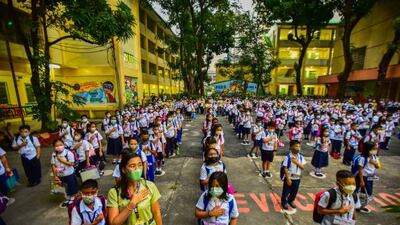
Pupils at Pedro Guevarra Elementary School in Manila attend a flag-raising ceremony on August 22, the first day of in-person classes, following two years of Covid-19 lockdowns in the Philippines. AFP -
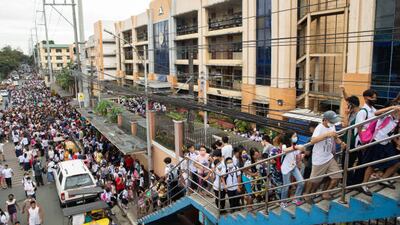
Pupils walk to school in Quezon city. Bloomberg -
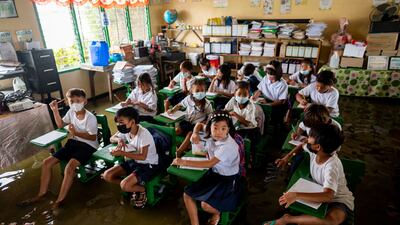
Pupils attend the first day of in-person classes at a flooded school due to high tide in Macabebe, Pampanga province. Reuters -
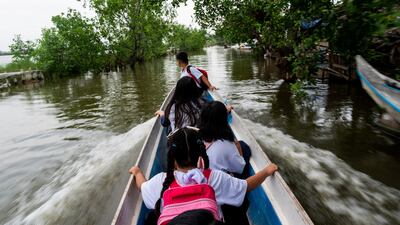
Pupils ride a boat to school in Macabebe. Reuters -
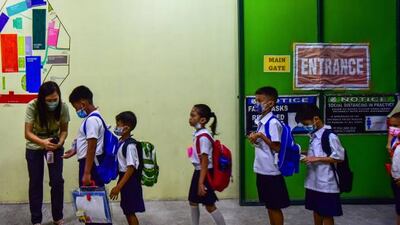
A teacher administers hand sanitizer to pupils. AFP -
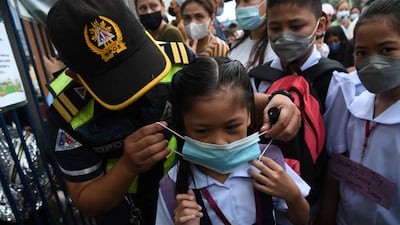
A city hall employee helps a pupil put on a face mask in Quezon city. AFP -
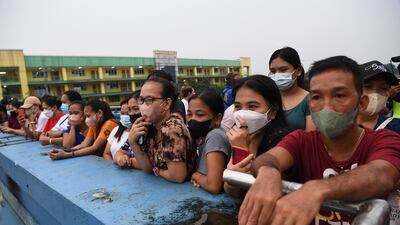
Parents watch from a pedestrian overpass as their children head into school. AFP -
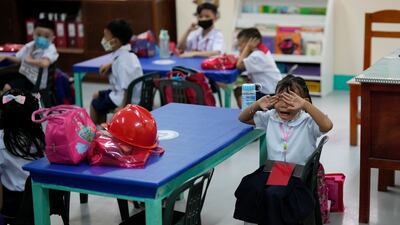
It's all too much for one girl, as the new term gets under way at San Juan Elementary School. AP Photo -
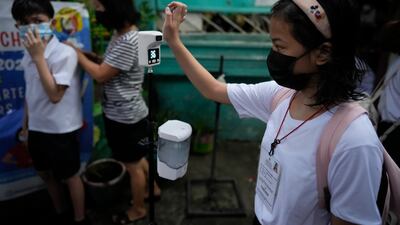
A pupil checks her temperature at San Juan Elementary School. AP Photo -

A girl receives her first Covid-19 Pfizer vaccination at San Juan Elementary School. AP Photo -

Students wash their hands to help keep Covid-19 at bay. Reuters -
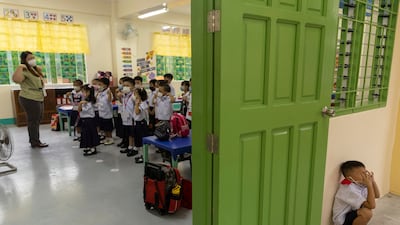
A boy cries outside his classroom on the first day of in-person classes at a public school in San Juan city. Reuters -
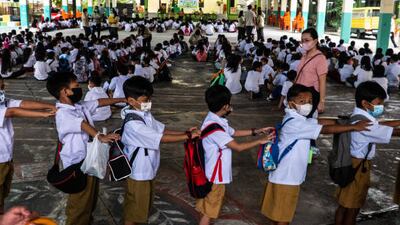
Pupils wait to enter their classrooms. Getty Images


Two people were injured by falling trees in the mountainous province of Cagayan, where intense rain caused the main river and its tributaries to swell overnight, provincial disaster official Ruelie Rasping said.
"We're currently being hit by strong winds and heavy rain," he told AFP. "The Cagayan river is rising."
The provincial capital Tuguegarao was drenched with 98 millimetres of "torrential rain" over a three-hour period after the tropical storm made landfall, an official at the state weather bureau told AFP.
Ma-on was expected to sweep across the country in a north-westerly direction and head out over the South China Sea late on Tuesday or early on Wednesday.
The tropical storm weakened slightly as it blew north-westward across mountainous northern provinces — with sustained winds of 100kph and gusts of up to 125kph — after slamming into Maconacon town in Isabela province on Tuesday morning, government forecasters said.
The Philippines, ranked among the most vulnerable nations to the effects of climate change, is hit by an average of 20 storms every year.
Ma-on was the first significant one since April when tropical storm Megi sparked landslides and flooding that killed more than 200 people, mostly on the central island of Leyte.

