



Live updates: follow the latest news on Russia-Ukraine
Ukrainian officials said civilians fleeing the besieged city of Mariupol came under Russian shelling on Tuesday despite the ceasefire agreement, while others in Izium were left stranded after being directed down an escape route covered in landmines, humanitarian agencies reported.
It comes after two attempts to open up routes for civilians failed at the weekend as fighting raged on.
Ukraine's Foreign Ministry spokesman Oleg Nikolenko on Twitter accused the Russian forces of “violating” the humanitarian ceasefire.
Kyiv claims the Russian offer of humanitarian corridors and ceasefires is a publicity stunt and has warned trapped civilians they are unlikely to be able to flee.
“Eight trucks plus 30 buses ready to deliver humanitarian aid to Mariupol and to [evacuate] civilians to Zaporizhzhia. Pressure on Russia MUST step up to make it uphold its commitments,” Mr Nikolenko said.
The UN said on Tuesday that two million people have now fled Ukraine to neighbouring states in Europe’s worst refugee crisis since the Second World War.
Russia on Tuesday again offered to create “humanitarian corridors” and Kyiv appealed to Moscow to allow the guns to fall silent to allow people to flee.
Despite reports of Russian shelling, Ukrainians began fleeing their homes as supplies rushed to the worst-hit areas.
Russia had said it would allow civilians to leave the Ukrainian capital and the cities of Chernihiv, Sumy, Kharkiv and Mariupol as Russian forces in Ukraine introduced a “silent regime” from 7am GMT, the country's defence ministry said.
In the north-eastern city of Sumy and the town of Irpin near the capital of Kyiv, people fled after fighting died down but it was unknown if Ukraine would agree to use other proposed humanitarian corridors that took fleeing people into Russia or Belarus.
But many are sceptical of the Russia-proposed evacuation routes headed towards Russia or allied Belarus, which has served as a launch pad for the invasion. Ukraine instead proposed eight routes allowing civilians to travel to western regions of the country where there is no shelling.
Addressing the Security Council, UN humanitarian chief Martin Griffiths called for safe passage for people to go “in the direction they choose”.

“We have already started the evacuation of civilians from Sumy to Poltava [in central Ukraine], including foreign students,” Ukraine's Foreign Ministry said in a tweet.
“We call on Russia to uphold its ceasefire commitment, to refrain from activities that endanger the lives of people and to allow the delivery of humanitarian aid.”
The evacuation plan drew scepticism from Ukrainian leaders after previous efforts to establish safe passage crumbled at the weekend.
Ukrainian President Volodymyr Zelenskyy's office said Moscow’s proposals can be believed only if a safe evacuation begins.
The steady bombardments, including in some of Ukraine’s most populated regions, have caused a humanitarian crisis, as food, water and medical supplies diminish. More than 400 civilians have been killed since the war began, the UN human rights agency, said although the true number is thought to be significantly higher.
Russian troops have made significant advances in southern Ukraine but have stalled and met resistance in other areas.
Mr Zelenskyy said Ukrainian forces were showing unprecedented courage.
“The problem is that for one soldier of Ukraine, we have 10 Russian soldiers, and for one Ukrainian tank, we have 50 Russian tanks,” Mr Zelenskyy told ABC News on Monday night.
But he noted the gap in strength was closing, and if Russian forces “come into all our cities”, they will be met with an insurgency.
Experts have suggested that Russia has a limited ability to maintain the war given the pace of losses so far.
Ukrainian soldiers and volunteers have fortified Kyiv with hundreds of checkpoints and barricades designed to thwart a takeover and to protect the city of about four million people, using sandbags, stacked tyres and spiked cables.
Some barricades look significant, with heavy concrete slabs and sandbags piled more than two storeys high, while others appear more haphazard, with hundreds of books used to weigh down stacks of tyres.
-
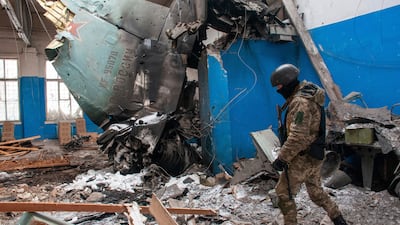
A Ukrainian serviceman walks past the vertical tail fin of a Russian Su-34 bomber lying in a damaged building in Kharkiv, Ukraine. AP Photo -
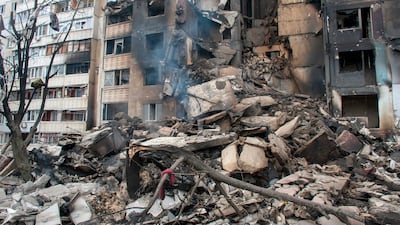
An apartment building damaged after shelling in Kharkiv, Ukraine. AP Photo -
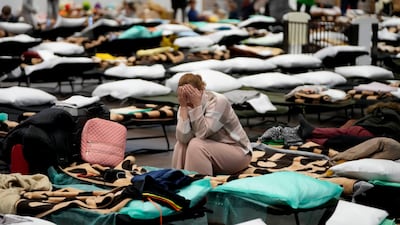
A woman puts her head in her hands as she sits on a cot in a shelter, set up for displaced persons fleeing Ukraine, inside a school gymnasium in Przemysl, Poland. AP Photo -
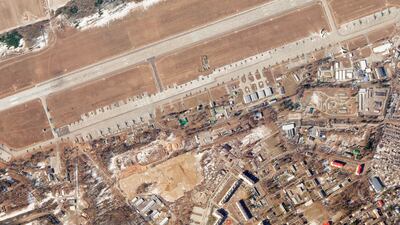
Belarussian and suspected Russian helicopters on the flight line at Machulishchy Air Base outside Minsk, Belarus. AP Photo -
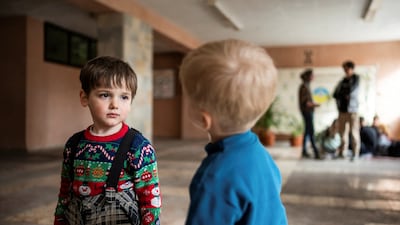
Children look on as people fleeing Russia's invasion of Ukraine shelter in a school, in Drohobych, Ukraine. Reuters -
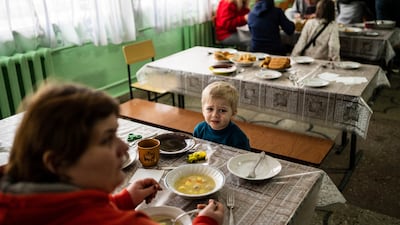
Families eat in the shelter. Reuters -
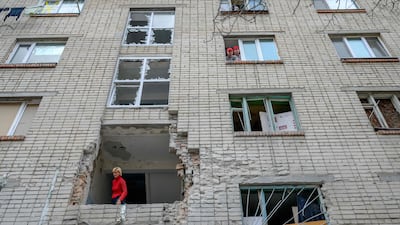
A woman looks out from a building damaged by Russian shelling in Mykolaiv, 100 kilometres away from Odesa, western Ukraine. AFP -
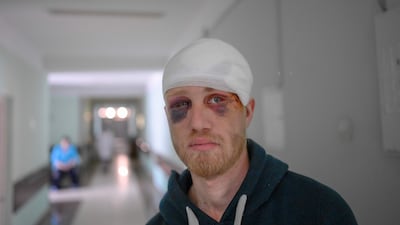
A wounded Ukrainian man waits in the corridor of the central hospital of Mykolaiv. AFP -
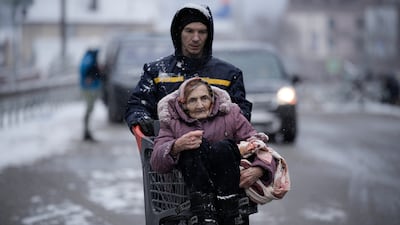
An elderly woman is carried in a shopping cart after being rescued from Irpin, on the outskirts of Kyiv, Ukraine. AP -
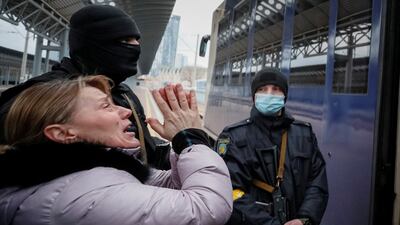
A woman reacts as a train carrying children from Kyiv's Central Children's Hospital leaves the Ukrainian capital on its way to Lviv. Reuters -
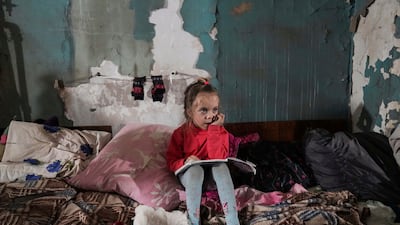
A girl sits in an improvised bomb shelter in Mariupol, Ukraine. AP -
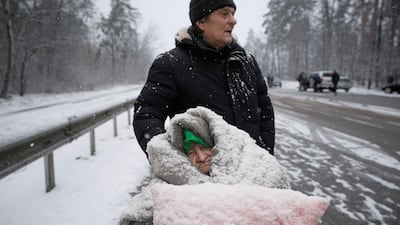
An elderly woman is coated in snow as she sits in a wheelchair after being rescued from Irpin. AP -
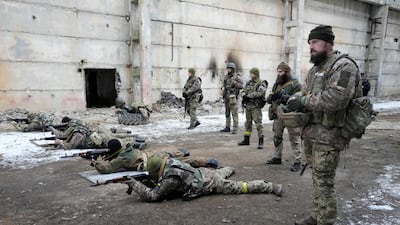
Belarusian volunteers take part in military exercises at the Belarusian Company base in Kyiv. AP -
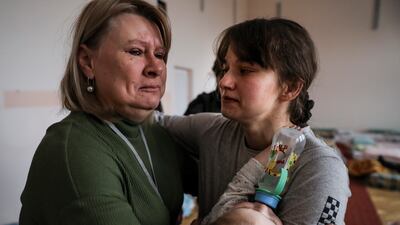
Lessa, left, director of a nursery school turned into a refugee shelter, cries as she hugs Olega, who arrived from Kyiv with her baby, near Lviv. EPA -
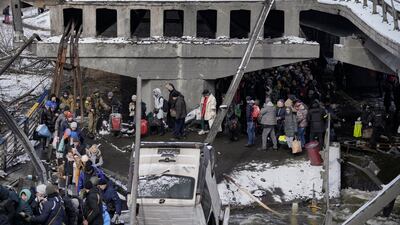
Ukrainians pass a damaged bridge as they flee from Irpin. AP -
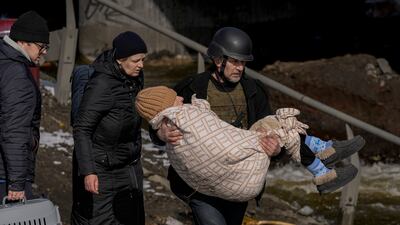
A man carries an elderly woman as people continue to leave Irpin. AP -
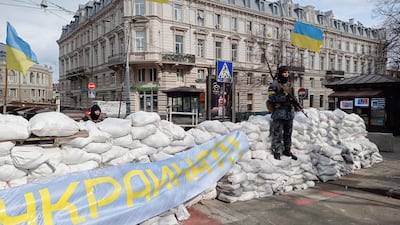
A soldier stands on a barricade made of sandbags in central Odesa, Ukraine. Reuters -
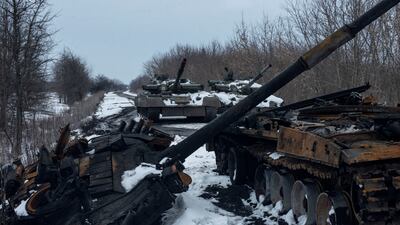
A charred Russian tank and captured tanks in the Sumy region. Reuters -
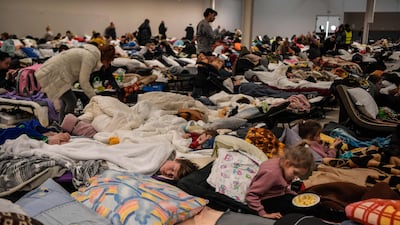
People rest at a temporary shelter for Ukrainian refugees in Przemysl, Poland. AFP -

Ukraine's ambassador to the Netherlands, Maksym Kononenko, third right, and his wife Tetiana Doroshenko, fourth left, attend a meeting of members of the Ukrainian community with Dutch King Willem-Alexander, third left, and Queen Maxima, second left, to discuss the situation in Ukraine, in The Hague. EPA -
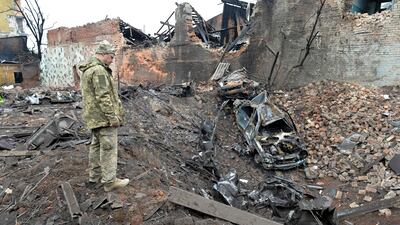
A Ukrainian soldier looks at the destruction after shelling in Ukraine's second-largest city of Kharkiv. AFP -
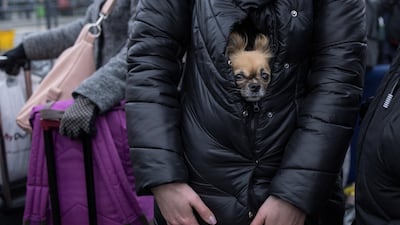
A refugee holds her dog as they wait for trains to Poland in Lviv, Ukraine. Reuters -
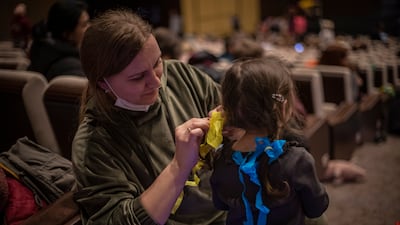
A woman ties ribbons in Ukrainian national flag colours in a girl's hair as people wait at a refugee assistance centre in Prague, Czech Republic. EPA -
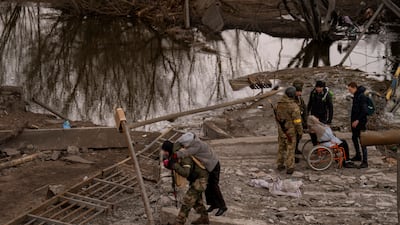
A Ukrainian soldier carries an elderly woman crossing the Irpin river on the outskirts of Kyiv. AP -
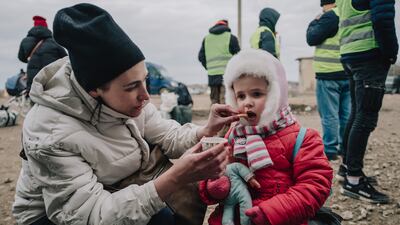
Lena, who had never left Ukraine before fleeing into Moldova, feeds Dasha, 3, soon after crossing the border. Erin Clare Brown for The National -
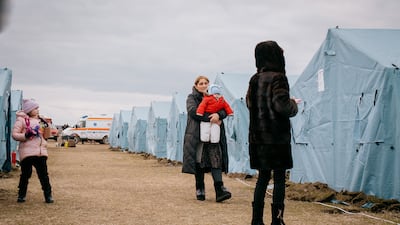
Refugees without immediate plans to move further inland can stay the night in tents set up on Moldova's side of the border. Erin Clare Brown for The National -
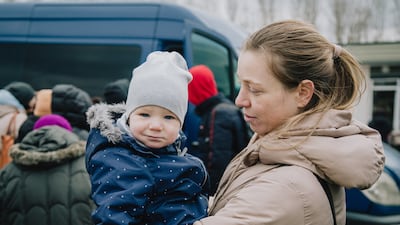
Tatiana and her son wait for a van that will carry them from the Moldovan border to Chisinau. Erin Clare Brown for The National -
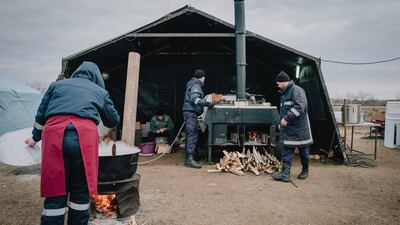
Each night, the Palanca refugee camp in Moldova feeds up to 300 people who arrive with no onward plans. Erin Clare Brown for The National -
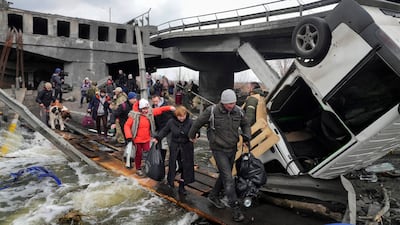
People pass a damaged bridge while fleeing the town of Irpin, close to the Ukrainian capital of Kyiv. AP -
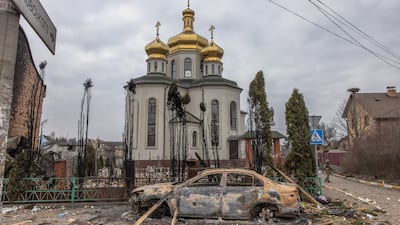
A Ukrainian soldier stands guard next to a church in Irpin. EPA -
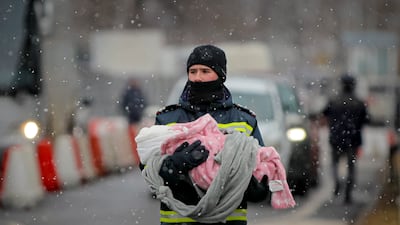
A firefighter holds the baby of a Ukrainian refugee at the border in Romania. AP -
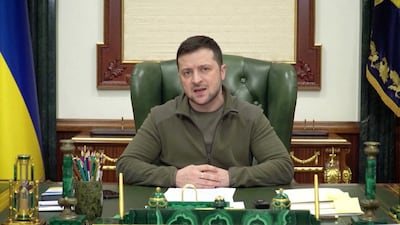
Ukrainian President Volodymyr Zelenskyy speaks in Kyiv. Reuters -
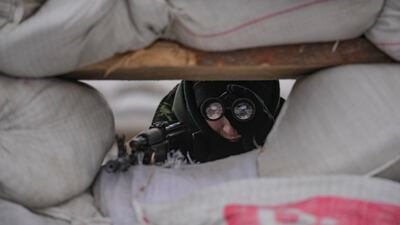
A Ukrainian soldier at a checkpoint in Kyiv. AP -
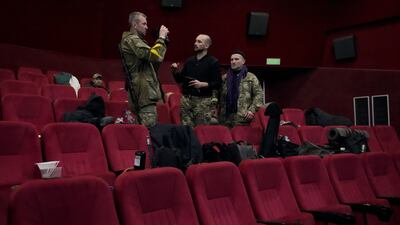
Ukrainian activist Ihor Mazur, left, a veteran of the war in the country's east, looks at a night-vision device in Kyiv. AP -
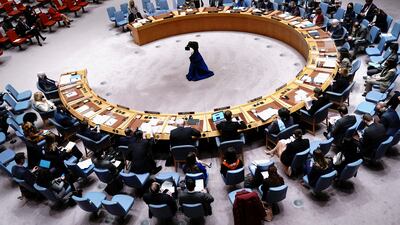
Ambassadors attend a UN Security Council meeting on threats to international security after Russia's invasion of Ukraine, in New York. Reuters -
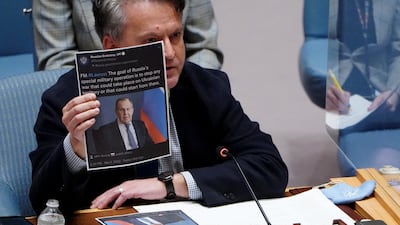
Ukraine's UN ambassador Sergey Kyslytsya holds a paper with an image of Russia's Foreign Minister Sergey Lavrov as he addresses the Security Council in New York. Reuters -
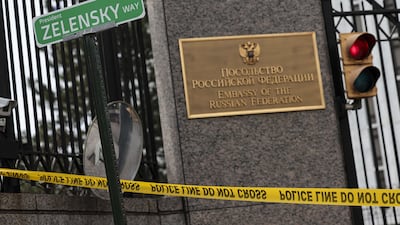
A road sign put up in support of Mr Zelenskyy outside Russia's embassy in Washington. AFP -
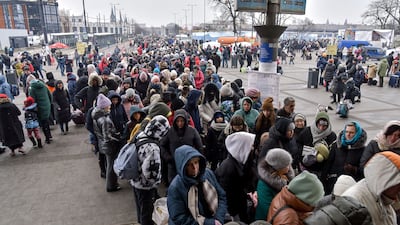
Ukrainian refugees at the train station in Lviv, western Ukraine. EPA -
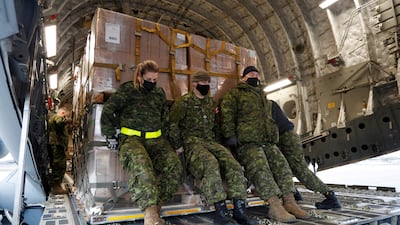
Lethal and non-lethal Ukrainian aid is loaded on to a plane bound for Poland by Canadian soldiers in Trenton, Ontario. Reuters -
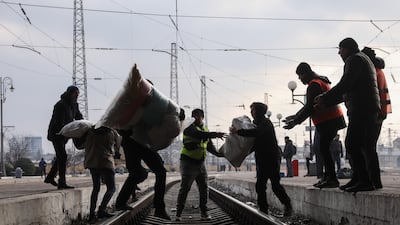
Volunteers carry medical aid and necessities at a train station in Lviv. EPA -
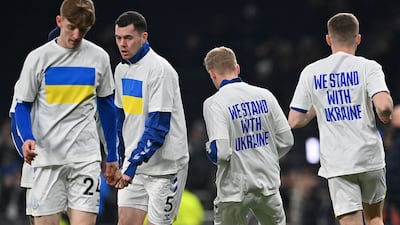
Everton players wear T-shirts in support of Ukraine as they warm up for an English Premier League football match against Tottenham Hotspur. AP -
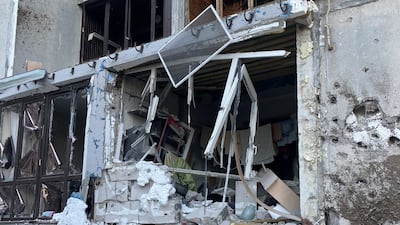
A residential building damaged by Russian shelling in Chernihiv, Ukraine. Reuters -
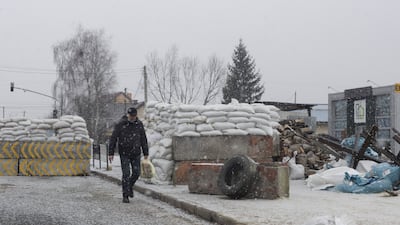
A man walks past a checkpoint in heavy snow in Lviv. Getty -
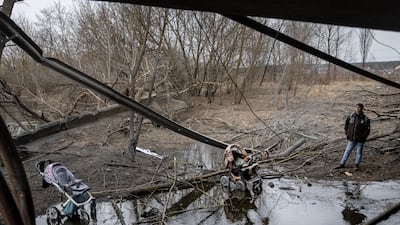
A man fleeing fighting in Irpin waits to cross a river after Russian forces entered the city. Getty -
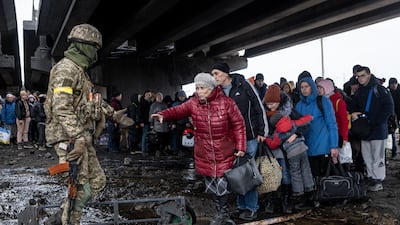
Soldiers assist Irpin residents underneath a damaged bridge as they flee. Getty -
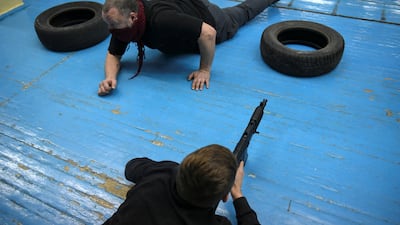
Ukrainian civilians who volunteered to join the Territorial Defence Forces take part in a training exercise in Odesa after Russia's invasion. Reuters -
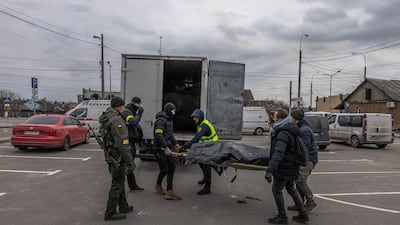
Men carry a body to a lorry as people flee from the frontline town of Irpin. EPA -
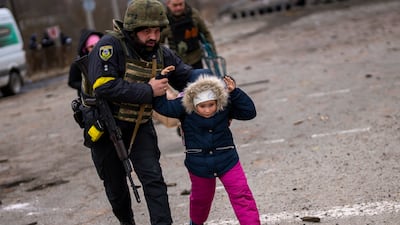
A Ukrainian police officer runs with a child as the sound of shelling echoes nearby in Irpin. AP -
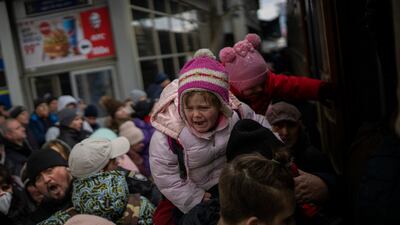
Parents and children struggle to board a train in Lviv. AP
Meanwhile, a steady rain of shells and rockets fell on other population centres, including the Kyiv suburb of Bucha, where its mayor reported heavy artillery fire.
“We can’t even gather up the bodies because the shelling from heavy weapons doesn’t stop day or night,” Mayor Anatol Fedoruk said.
“Dogs are pulling apart the bodies on the city streets. It is a nightmare.”
In one of the most desperate cities, the encircled southern port of Mariupol, about 200,000 people — nearly half the population of 430,000 — were hoping to flee and Red Cross officials waited to hear when a corridor would be established.
Mariupol is short of water, food and power, and mobile phone networks are down. Shops have been looted as residents search for essential goods.
In Kharkiv, with a population of 1.4 million people, heavy shelling slammed into apartment buildings.
“I think it struck the fourth floor under us,” said Dmitry Sedorenko, a Kharkiv resident wounded in the fighting. “Immediately, everything started burning and falling apart.”
As the floor collapsed beneath him, he managed to crawl out, past the bodies of some of his neighbours.
In the small town of Horenka, where shelling reduced one area to ashes and shards of glass, rescuers and residents picked through the ruins as chickens pecked around them.
“What are they doing?” rescue worker Vasyl Oksak asked of the Russian attackers. “There were two little children and two elderly people living here.”
-
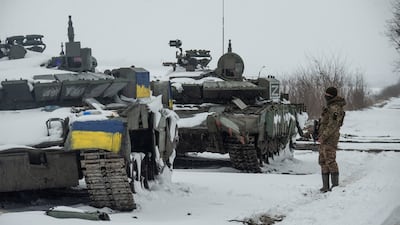
A Ukrainian serviceman stands near captured Russian tanks, one painted in the colours of the Ukrainian national flag and the other marked with the letter 'Z' in the north of the Kharkiv region, Ukraine. Reuters -
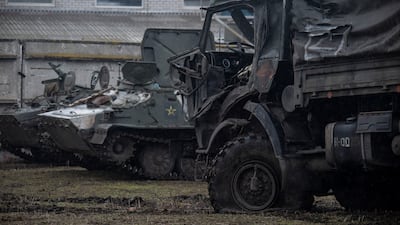
Russian military vehicles with the letter 'Z' painted on them. Reuters -
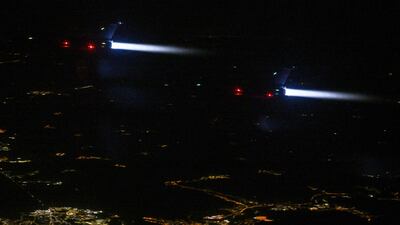
French Air Force jets patrol airspace over Poland. Nicolas Tucat / AFP -
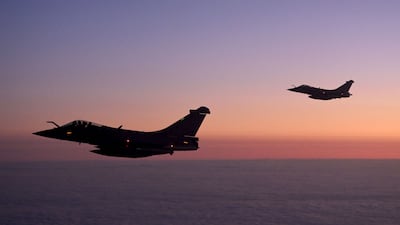
The patrol is part of Nato's surveillance system. Photo by Nicolas Tucat / AFP -
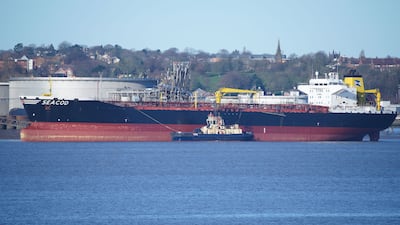
The German-flagged 'Seacod' oil tanker moored at Birkenhead Docks near the Stanlow Oil Refinery in the UK. -
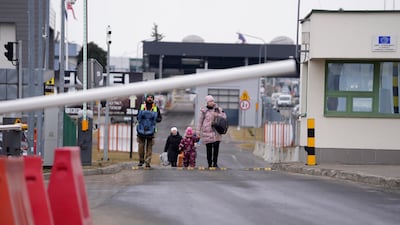
A woman holds the hand of a child as they flee Ukraine. AP Photo / Markus Schreiber -

A young woman clutches a doll as she crosses the border in Medyka, Poland. AP Photo / Markus Schreiber -
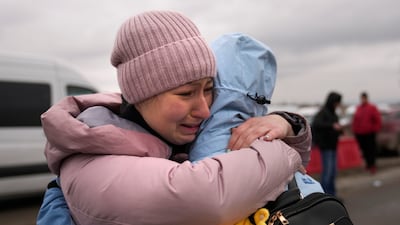
A woman weeps after finding a friend at the border crossing in Medyka. AP Photo / Markus Schreiber -
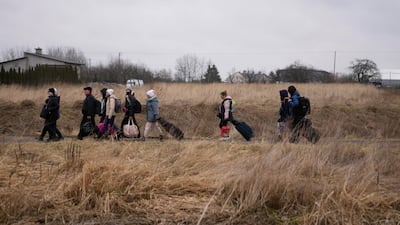
People walk with their belongings as they flee Ukraine. AP Photo / Markus Schreiber -

Ukrainian refugees arrive at Berlin central station, Germany, from Poland on March 4. EPA / Filip Singer -
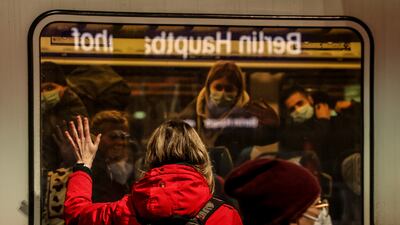
Russian troops entered Ukraine on February 24, prompting the country's president to declare martial law and triggering a series of announcements by western countries to impose severe economic sanctions on Russia. EPA / Filip Singer -

Military vessels docked at the military harbour of Constanta, Romania, on March 4. Daniel Mihailescu / AFP -
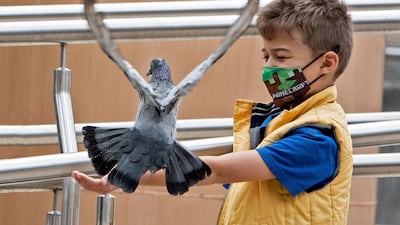
A child plays with a pigeon during a protest in San Jose, Costa Rica, against the Russian invasion in Ukraine. Ezequiel Becerra / AFP -
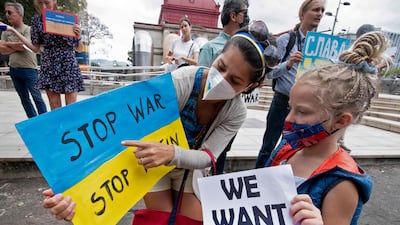
Ukrainian citizens in San Jose, Costa Rica, protest against the Russian invasion in Ukraine on March 4. Ezequiel Becerra / AFP -
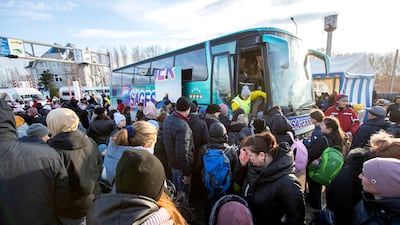
People fleeing Ukraine wait to board a bus in Palanca Village, Moldova. EPA / Dumitru Doru -
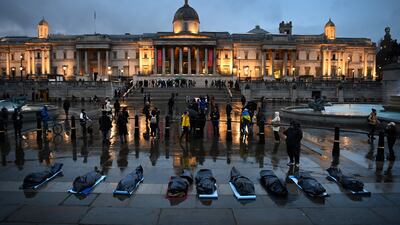
Ukrainians living in Britain join a protest at Trafalgar Square, London. EPA / Andy Rain -
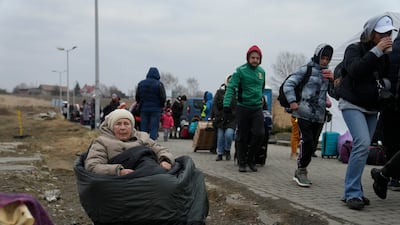
Ludmila Shkarupa, 73, from Ukraine, sits on a chair wrapping herself with a sleeping bag to avoid the cold at the border crossing in Medyka, Poland. AP -

A view shows a thermal power plant destroyed by shelling amid the Russian invasion of Ukraine in the town of Okhtyrka in the Sumy region. Reuters -
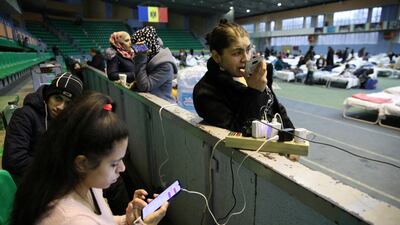
People fleeing Russia's invasion of Ukraine use mobile devices in a temporary refugee centre located at a local track-and-field athletics stadium in Chisinau, Moldova. Reuters -

A local resident walks past the remains of a house of culture following a night air raid in the village of Byshiv, 40 kilometres west of Kyiv, Ukraine. AP -

A member of the Ukrainian military guards an evacuation train of women and children who fled fighting in Bucha and Irpin. Getty Images -
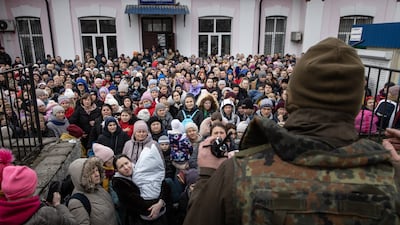
A member of the Ukrainian military gives instructions to women and children that fled fighting in Bucha and Irpin before boarding an evacuation train to Kyiv after heavy fighting overnight forced many to leave their homes. Getty Images -
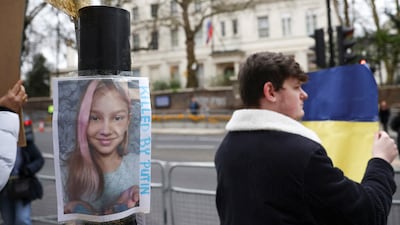
A person demonstrates outside the Russian embassy in London following Russia's invasion of Ukraine. Reuters -
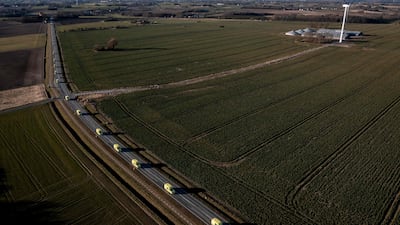
The Danish rescue group Falck A/S has donated 30 ambulances to Ukraine and neighbouring countries, where they will be used by local emergency services. AFP -
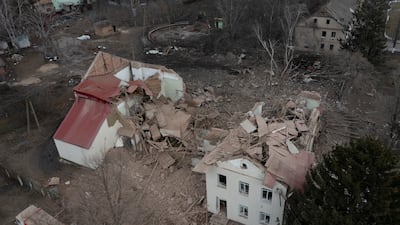
An aerial view of the remains of the local house of culture following a night air raid in the village of Byshiv, 40 kilometres west of Kyiv, Ukraine. AP -
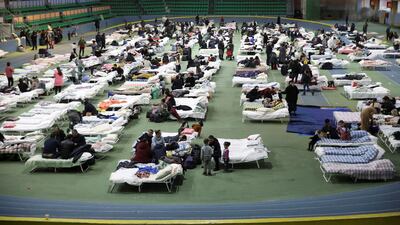
People fleeing Russia's invasion of Ukraine rest in a temporary refugee centre located at a local track-and-field athletics stadium in Chisinau, Moldova. Reuters -

Ukrainian Oleg, who decided to remain in Irpin, comforts his son, Maksim, and his wife, Yana, before the arrival of an evacuation train to the city of Kyiv. EPA -
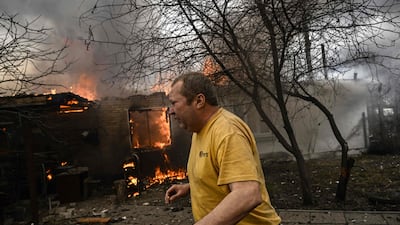
Yevghen Zbormyrsky, 49, runs in front of his burning house after being shelled in the city of Irpin, outside Kyiv. AFP -
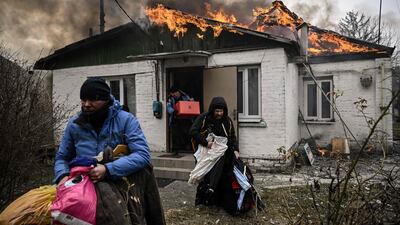
People remove personal belongings from a burning house after being shelled in Irpin. AFP -
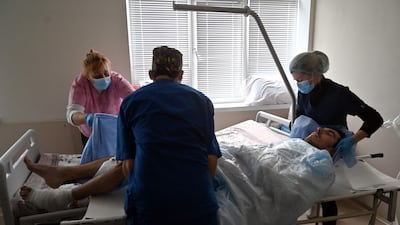
Medical workers tend to a Ukrainian serviceman wounded during the fighting with Russian troops near the Ukrainian capital, in a hospital in Kyiv. AFP -
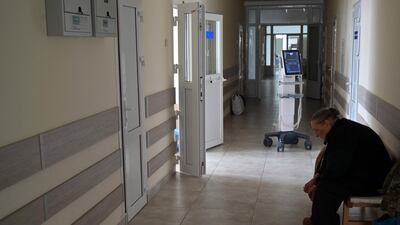
A mother of a wounded Ukrainian serviceman waits outside his ward in a hospital in Kyiv. AFP -
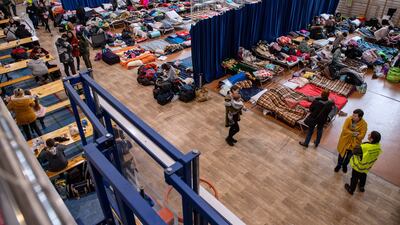
Refugees from Ukraine arrive at an assistance point organised in the sports hall of a primary school in Lubycza Krolewska in Poland. EPA -
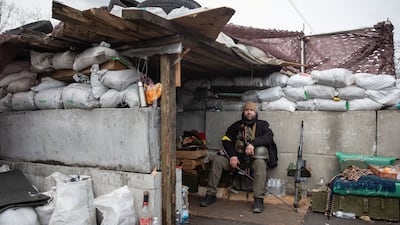
A member of Ukraine's Territorial Defence Forces at a checkpoint in Kyiv. Reuters -
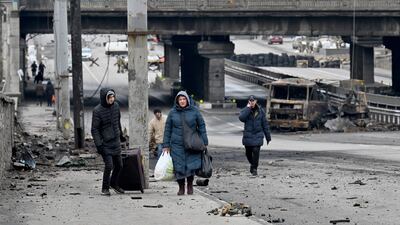
People carry their belongings past the debris of last week's combat in Kyiv. AFP -
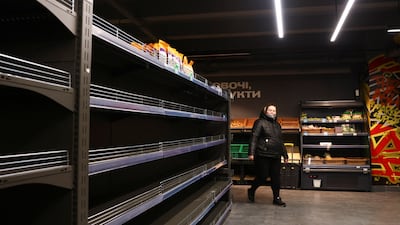
Shelves in a supermarket stand empty in Bila Tserkva, Ukraine. Reuters -
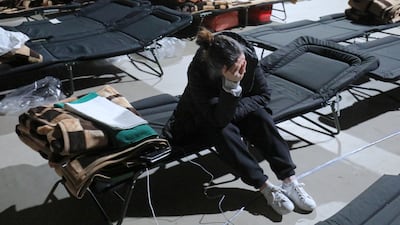
War refugees from Ukraine at the assistance point organised at the Torwar sports hall in Warsaw, Poland. EPA -
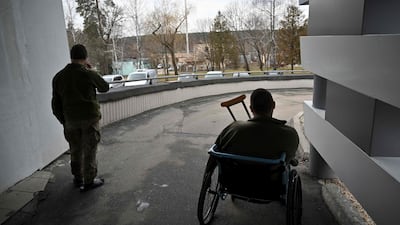
Ukrainian servicemen, wounded during the fighting with Russian troops near the Ukrainian capital, rest outside a hospital in Kyiv. AFP -
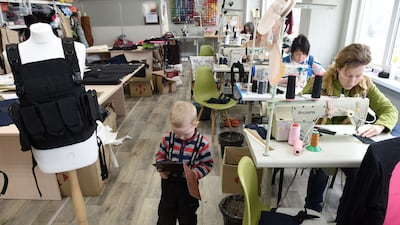
A 3-year-old boy watches cartoons on a tablet while his mother sews military vests for the Ukrainian army in the western city of Lviv. AFP -
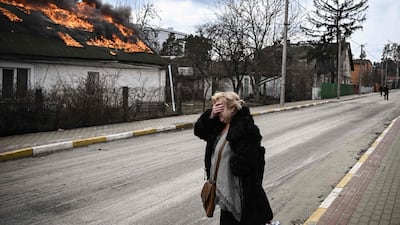
A woman's shock as she stands in front of a house burning after being shelled in Irpin, outside Kyiv. AFP -

People fleeing from Ukraine queue to board on a bus at the border crossing in Medyka, Poland. AP -
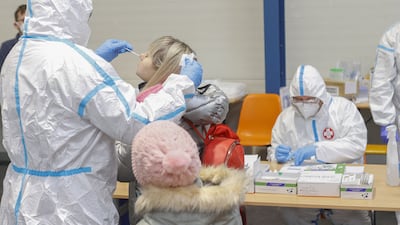
Ukrainian refugees are tested for Covid-19 in a reception centre in Vienna, Austria. AFP -

US Secretary of State Antony Blinken and Nato Secretary General Jens Stoltenberg pose with foreign ministers after a meeting at the alliance's headquarters in Brussels, Belgium. Reuters -
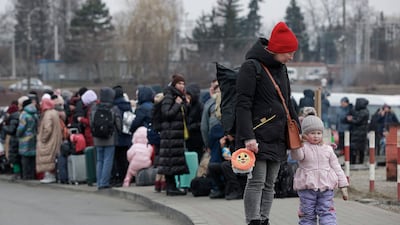
People who fled Ukraine wait for a bus to take them to the train station in Przemysl, at the border crossing in Medyka, Poland. AP Photo -
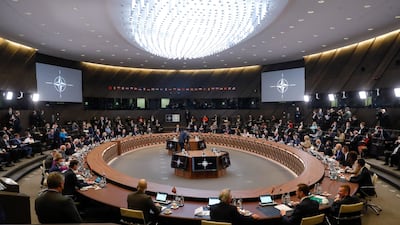
The extraordinary meeting of Nato ministers of foreign affairs about Russian aggression in Ukraine at Nato headquarters in Brussels, Belgium. EPA -
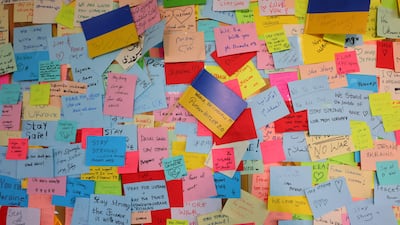
Messages in support of Ukraine on a board in the Ukrainian pavilion at Expo 2020 Dubai. AFP -
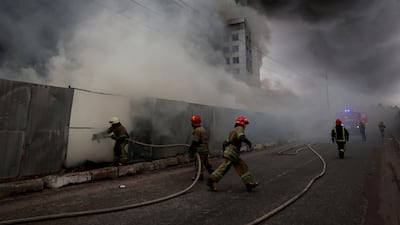
Firefighters at a warehouse that caught fire after shelling in the village of Chaiky in the Kyiv region. Reuters -
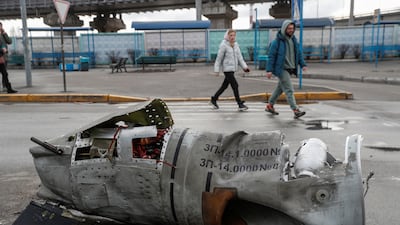
The wreckage of a missile at a bus terminal in Kyiv. Reuters -
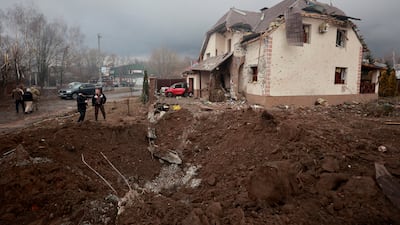
A crater in front of a house damaged by shelling in the village of Hatne. Reuters -

The damaged administrative building of the Zaporizhzhia nuclear power plant in Enerhodar, a city in the Zaporizhzhia region. Reuters -
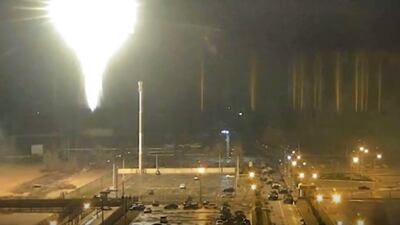
A bright object lands on the grounds of Zaporizhzhia nuclear power plant in Enerhodar, Ukraine, during heavy shelling by Russian forces. AP -
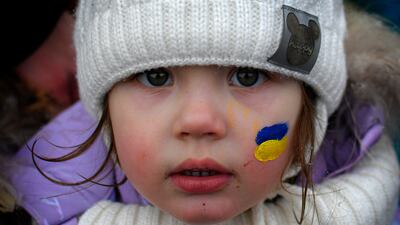
Zlata, 3, with her face painted in the colours of the Ukrainian flag, stands on the Romanian side of the border with Ukraine after fleeing the country. AP -
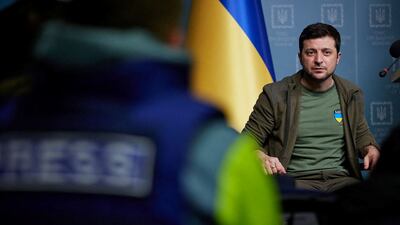
Ukrainian President Volodymyr Zelenskyy attends an interview with foreign media in Kyiv. Reuters -
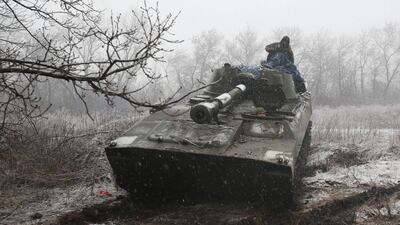
Ukrainian artillerymen maintain their position in the Luhansk region. AFP -
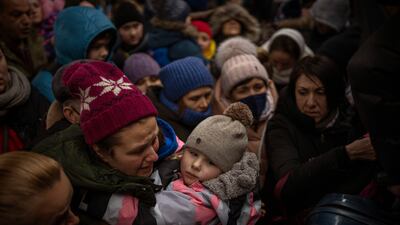
Women and children try to board a train bound for Lviv, at a station in Kyiv. AP -
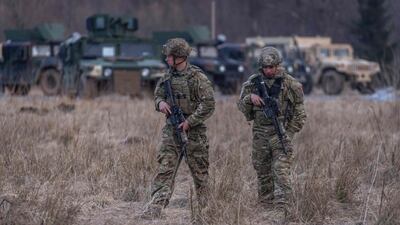
US soldiers on patrol near a military camp in Arlamow, Poland, near the border with Ukraine. AFP -

A woman and child look out the window of a train at a station in Kyiv. AP -
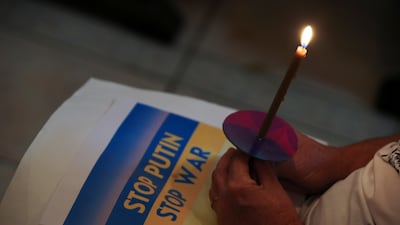
A descendant of Ukrainian immigrants attends Mass at a Ukrainian Orthodox church in Canoas, Brazil. Reuters -
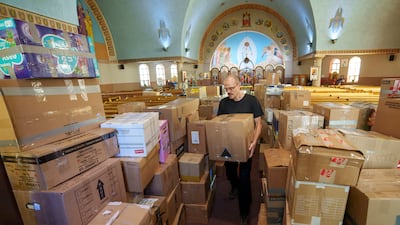
Boxes of donations destined for Ukraine at the St Michael's Ukrainian Catholic Church in Montreal, Canada. AP -
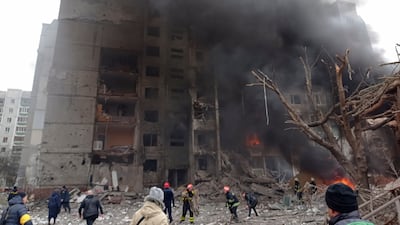
Firefighters battle a blaze at a damaged building in the Ukrainian city of Chernihiv after a Russian air raid. AP -
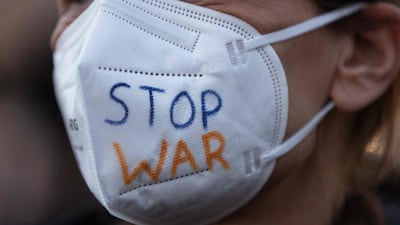
A woman in Frankfurt, Germany, attends a protest against Russia's military offensive in Ukraine. AFP


In the south, Russian forces also continued their offensive in Mykolaiv, opening fire on the Black Sea shipbuilding centre of half a million people, Ukraine’s military reported.
Rescuers said they were putting out fires caused by rocket attacks in residential areas.
The battle for Mariupol is crucial because its capture could allow Moscow to establish a land corridor to Crimea, which Russia seized from Ukraine in 2014.
On Monday, Moscow announced a series of demands to stop the invasion, including that Ukraine recognise Crimea as part of Russia and recognise the eastern regions controlled by Moscow-supported separatist fighters as independent.
It also insisted Ukraine change its constitution to guarantee it will not join international bodies such as Nato and the EU.
Ukraine has rejected those demands.
Mr Zelenskyy called for more punitive measures against Russia, including a global boycott of its oil exports, which are key to its economy.
“If [Russia] doesn’t want to abide by civilised rules, then they shouldn’t receive goods and services from civilisation,” he said.
The fighting has sent energy prices surging worldwide and stocks plummeting, while it threatens the food supply and livelihoods of people around the globe who rely on crops farmed in the fertile Black Sea region.
A top US intelligence chief said Russia is likely to face a “persistent and significant insurgency” after Mr Putin misjudged how the war would unfold.
Director of National Intelligence Avril Haines said despite this, the Russian leader won’t be deterred and may try to change how he defines victory.
“We judge it will be especially challenging for the Russians to hold and control Ukrainian territory and install a sustainable pro-Russian regime in Kyiv,” she told the House Intelligence Committee on Tuesday during an annual hearing on global threats.
US intelligence agencies assess that Moscow underestimated the strength of Ukraine’s resistance and the degree of military challenges, while Russian forces are operating “with reckless disregard” for the safety of civilians.
Regardless, Mr Putin remains determined to control and dominate Ukraine as he’s been “stewing in a combustible combination of grievance and ambition”, CIA Director William Burns said during the hearing.
Lt Gen Scott Berrier, head of the Defence Intelligence Agency, said he estimated with “low confidence” that Russia has lost 2,000 to 4,000 troops so far in the conflict.

