


Sirdhar Singh, a burly man in his 60s, fetches his briefcase and unwinds the string around it that locks the broken and dusty case, before, one by one, pulling out his colourful and neatly kept glove puppets.
His cousin Kedar Singh, 55, soon joins the lead puppeteer, strapping a traditional drum around his shoulders before a small crowd of jubilant villagers eager to watch the dying art from India’s eastern Odisha state.
The two artists sit on a muddy floor outside their home. Sirdhar Singh quickly puts his fingers in the gloves to make the puppets dance to the drumbeat, which is accompanied by both men singing a high-pitched folk song for the crowd.
“It feels wonderful when people clap for us. We want more people to watch our talent,” Mr Singh told The National.
The impromptu show lasts about 15 minutes and ends with a round of applause.
The Singhs were elated with the reception. It had been a while since they had displayed their talent, they said.
“I used to sing, and dance. People used to say good things about me. They’d ask us to perform for them, but not any more. It is painful,” he said.
The two men are from a nondescript village in India’s eastern state of Odisha. There are only seven artists still practising the state’s century-old puppetry form – sakhi kandhei – a dying art where three-piece wooden puppets are worn as a glove.
The dolls' faces are painted with natural dyes, in bright coloured blue, green, and yellow. Their eyes are big and expressive, and they are dressed in handmade elaborate headgear and long, flowing costumes.
“They are made of deciduous wood. Some specific carpenters make it and then artists paint it. Specific colours are used for specific characters. Ffor example, the yellow face is for Radha and blue is for Krishna,” Sirdhar Singh said.
They depict kings, queens, and other characters in folk tales and mythology and, according to the story, are transformed into the Hindu deity Krishna, and the Hindu goddess Radha, a symbol of love, across India.
-
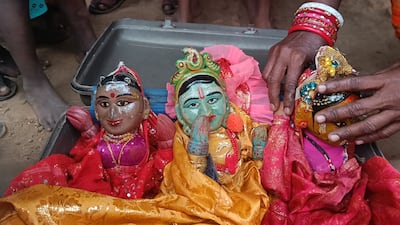
Sakhi Kandhei is a traditional puppet show popular in the eastern Indian state of Odisha. All photos: Taniya Dutta / The National -
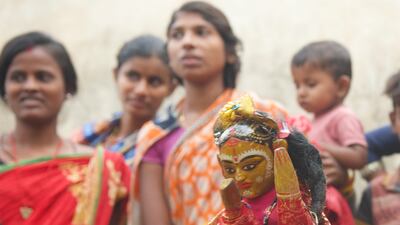
The handmade puppets are decorated with bright colours using natural dyes. -

The shows tell stories based on religious beliefs, rural cultures, mythology and history. -
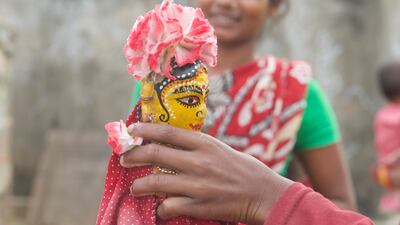
The wooden puppets were used to entertain children in rural communities. -
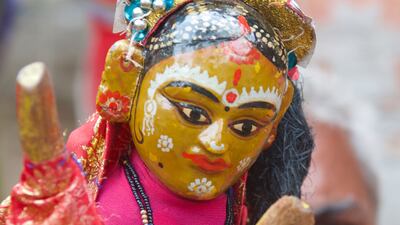
Characters include kings, queens and figures from mythology. -
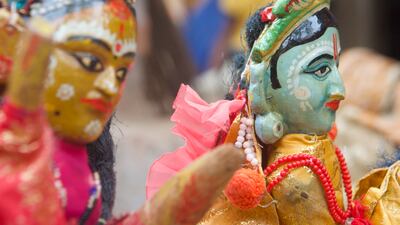
Glove puppets and marionettes are used in the performances. -
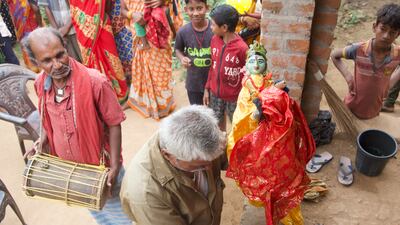
Puppeteers prepare for a show at their village, in Odisha's Kendrapara district. -

There are only a handful of puppeteers left in the state. -

The puppets are dressed in long, flowing costumes. -
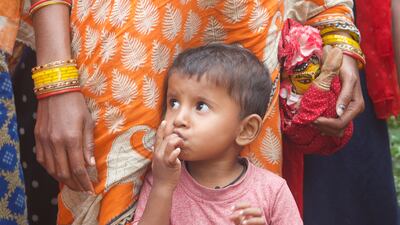
A child waits for a puppet show at his village in Kendrapara district. -
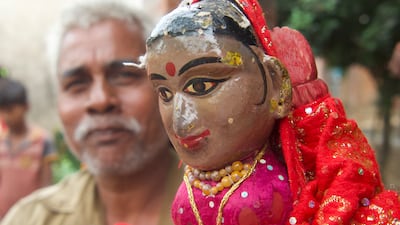
Sakhi Kandhei is a centuries-old artform in Odisha. -
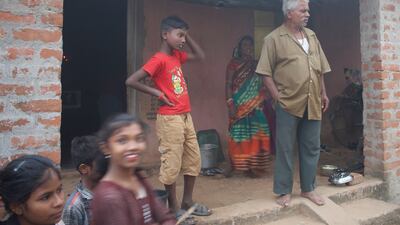
Villagers earn a living through the tradition. -

The puppets comprise three parts and are hand-made. -
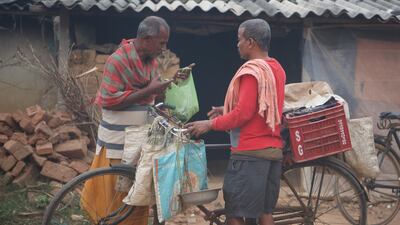
The tradition was common in rural communities in the state. -

Sakhi Kandhei performances have become increasingly rare. -
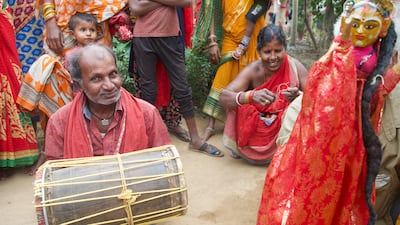
Puppeteers use a drum as part of the performance.


Old traditions
Sakhi kandhei was once a popular and in-demand art performed for entertainment, especially for children in villages. The puppets told stories of religious beliefs, rural cultures, mythology and history.
“This is an age-old art. My father performed it, my grandfather and other men were puppeteers. We learnt it from them. The government used to organise programmes for us. We performed in villages and got rice and money in return. This is how we made a living, Sirdhar Singh said.
People from the communities of snake charmers, magicians, and trapeze artists were also engaged in the art form.
A family tradition that was passed down the generations performed it to make a living.
“The artists travelled from village to village and towns and cities and even different states for the puppet shows and earned money and food in return, Mr Singh said.
But as the popularity of television grew in the early 1980s, the art of the puppeteer declined considerably.
It suffered further after the introduction of modern technology such as computers, video games, and now mobile phones and social media, Mr Singh said.
The artists hardly perform shows any more and the fading of the profession means that even their children are refusing to continue the tradition.
“With mobiles, film and dance shows, no one recognises it any more. No one wants to watch it any more.
“Now only seven [puppeteers] are left. If we seven die, this art will die with us. No young children want to learn it. My children said they do not want to roam around like me, for money,” Mr Singh said.
The artists, who for decades have received love and respect for their talent are disheartened with the demise of puppetry. They are hoping, however, for more shows, not just to keep puppetry alive but also to generate a permanent income for them.
They say the government could do more to help them.
“If the government helps us, we can train young children. If the puppet shows don’t take place, then this art form will die. We need their support to survive and keep sakhi kandhei alive,” Kedar Singh said.
The National was not able to get a comment from local officials.

